• العربية
  • فارسی
Brand
  • Iran Insight
  • Politics
  • Economy
  • Analysis
  • Special Report
  • Opinion
  • Podcast
  • Iran Insight
  • Politics
  • Economy
  • Analysis
  • Special Report
  • Opinion
  • Podcast
  • Theme
  • Language
    • العربية
    • فارسی
  • Iran Insight
  • Politics
  • Economy
  • Analysis
  • Special Report
  • Opinion
  • Podcast
All rights reserved for Volant Media UK Limited
volant media logo

US strikes on Iran won’t work without follow-through, experts say

Jan 15, 2026, 05:32 GMT

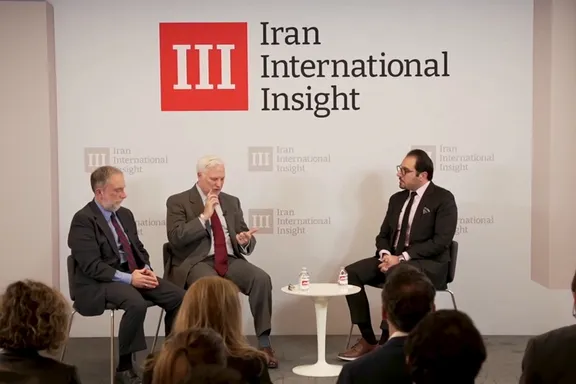
Any US military action against Iran risks falling short if it mirrors past “one-off” strikes without sustained political and economic pressure, analysts warned during an Iran International Insight town hall on Wednesday amid mounting fears of a US attack.

US President Donald Trump signaled on Tuesday that he was leaning toward a military strike on Iran when he said Iranian protesters should keep up the demonstrations and that “HELP IS ON ITS WAY.”

At least 12,000 people have been killed in Iran in the largest killing in the country's contemporary history, much of it carried out on January 8-9 during an ongoing internet shutdown, senior government and security sources told Iran International.

Joel Rayburn, a senior fellow at the Hudson Institute, and Robert Satloff, the Executive Director of the Washington Institute, believe that limited military action by the United States may briefly punish Tehran's abuses but is unlikely to stop violence unless it is followed by a broader campaign.

“In April 2017, the president responded to Bashar al Assad's use of chemical weapons by doing airstrikes. We did not follow that up with a maximum pressure campaign or a political campaign,” Rayburn said. “One year later, he used them again.”

Rayburn argued that the lesson from Syria was clear: “We can’t do this just by one-off military strikes. They have the impact, but we have to have a campaign and we have to use all the tools at our disposal.”

“We can’t just do something and move on,” he said. “If the objective is to stop the killing, then the tools have to stay in place until that objective is met.”

Satloff said he does not like the notion of a strike. "A strike sounds like something that you do and then you’re done and that you can then turn to whatever next international problem is on your agenda.”

He said the current moment presents a more direct test for the Trump administration. “Will the president’s actions bring an end to the carnage? That’s the key right now.”

Trump said on Wednesday he had been informed that the killing in Iran has stopped and Tehran would not execute any of the protesters.

Satloff cautioned against reading too much into claims that violence inside Iran may have eased.

“If indeed the killing has stopped… terrific,” Satloff said during the town hall moderated by Behnam Ben Taleblu, the senior director of the Iran Program at the Foundation for Defense of Democracies (FDD).

“But if the killing continues tomorrow, the day after, then that tweet will mean nothing and the president will know it.”

He said the 2017 strikes on Syria imposed a cost but did not fundamentally change the regime’s behavior until they were paired later with broader sanctions and diplomatic isolation.

“It was only after the second time that the US government and our allies finally said… we have to have a campaign,” Rayburn said.

Joel Rayburn, a senior fellow at the Hudson Institute
100%
Joel Rayburn, a senior fellow at the Hudson Institute

Satloff argued that Iran presents a different but related challenge, because Trump has explicitly framed his objective as stopping the killing of civilians.

“This is somewhat different than partial punishment and partial deterrence,” he said, adding that Iran now represents “a much more visible, tangible test.”

Beyond strikes: cyber, communications

Both speakers stressed that military force is only one option, and not necessarily the first one Washington should use.

Satloff argued the US should focus on “leveling the playing field” between protesters and the Iranian security apparatus.

“Let’s find some way to shut down their communications so that they can’t talk to themselves and orchestrate this nationwide crackdown,” he said. “We have ways of shutting down the communication system employed by the regime.”

Rayburn said the administration could immediately escalate non-military pressure by fully restoring what he described as the president’s early-term directive to reimpose maximum pressure on Iran.

“There is no reason not to be fully implementing the maximum pressure campaign,” he said. “That hasn’t been fully implemented yet. It can be.”

Rayburn added that Iran is now “in an even more brittle state” than during Trump’s first term.

“They are not resilient to that kind of pressure,” he said. “I think the Iranian regime wouldn’t survive that.”

'Narrow targets, civilian risks, and credibility'

While emphasizing non-kinetic options, Satloff outlined what he would recommend if military action became unavoidable.

If violence continued, he said, US action should be tightly focused on security forces responsible for repression.

“I would target very specifically the barracks and the facilities of the IRGC and the Basij,” Satloff said, while warning that civilian casualties could quickly undermine US credibility.

Robert Satloff, the Executive Director of the Washington Institute
100%
Robert Satloff, the Executive Director of the Washington Institute

“I think we have to be very careful to avoid civilians,” he said, noting that past strikes in the region showed how quickly public perception can turn when non-combatants are killed.

The United States launched airstrikes against three Iranian nuclear facilities in June in the middle of a 12-day war between Iran and Israel.

The Israeli strikes began after Tehran ignored a 60-day deadline set by President Trump to reach a deal over its disputed nuclear program.

Most Viewed

US terminates green cards of 3 Iranians tied to Islamic Republic
1

US terminates green cards of 3 Iranians tied to Islamic Republic

2
PODCAST

Worst outcome is Islamic Republic’s survival, ex-CIA official says

3
ANALYSIS

Iran brings unusually broad team to US talks to blunt future blame

4
INSIGHT

Tehran sends tough message but keeps diplomacy door open

5

Zoroastrian religious figure arrested in Iran

Banner
Banner

Spotlight

  • Tehran sends tough message but keeps diplomacy door open
    INSIGHT

    Tehran sends tough message but keeps diplomacy door open

  • Worst outcome is Islamic Republic’s survival, ex-CIA official says
    PODCAST

    Worst outcome is Islamic Republic’s survival, ex-CIA official says

  • Why the Iran-US truce is more likely to buy time than peace
    ANALYSIS

    Why the Iran-US truce is more likely to buy time than peace

  • Engaged but uncommitted: China watches Iran and US fight and talk
    ANALYSIS

    Engaged but uncommitted: China watches Iran and US fight and talk

  • A truce for the world, a reckoning for Iran’s economy
    ANALYSIS

    A truce for the world, a reckoning for Iran’s economy

  • Why the world failed to bypass the Strait of Hormuz
    ANALYSIS

    Why the world failed to bypass the Strait of Hormuz

•
•
•

More Stories

GOP senators push Trump toward action on Iran as Democrats warn of backlash

Jan 14, 2026, 01:17 GMT

Republican senators on Tuesday threw their weight behind a US attack against Iran, framing potential intervention as a path to regime change welcomed by protesters, as Democrats urged restraint and warned of backlash in interviews with Iran International.

“Help is on the way,” Republican Senator Lindsey Graham said. “Regime change is a result of the people not wanting to live in a country where a 16-year-old girl can be killed for not wearing the headscarf.”

“They don’t want to live a country governed by an Ayatollah who’s a religious fanatic,” he added. “I am following the people. They want a new life.”

Graham said the fall of the Islamic Republic would have major regional consequences.

“If this regime falls, it will be a godsend to America,” he said. “The largest state sponsor of terrorism will fall, Hamas, Hezbollah, and the good people of Iran will be in charge.”

Asked about timing, Graham said, “I’ll leave it up to the president, but if you saw his tweet today, I would say soon, because if we let it go much longer, people are going to doubt.”

Senator Markwayne Mullin also warned Tehran to take President Donald Trump’s threats seriously.

“The murderous regime and Iran needs to pay attention to what the president said,” Mullin told Iran International.

“The president made it very clear if you’re killing the innocent or simply protesting that he’ll come to the rescue and the president doesn’t bluff.”

“But it’s always on his timing when we’re ready to go,” Mullin added.

By contrast, Democratic senators urged restraint.

“My heart is broken for the people of Iran who are protesting, understandably, the economic failures and the repression of that regime,” Senator Richard Blumenthal said. “I think we should be very, very careful about any military operation there because it would backfire and actually bolster the regime.”

Senator Dick Durbin also cautioned against US intervention.

“I’m very concerned with the situation in Iran and statements made by President Trump about the demonstrators,” Durbin said. “I think we need to take care to make sure that we don’t overstep our boundaries.”

Referring to the Iraq war, he added: “When I was one of the 23 who voted against the invasion of Iraq, and I still think that that was the right vote, maybe one of the most important votes of my career.”

Iran, US say they prefer diplomacy but are ready for combat

Jan 13, 2026, 00:19 GMT

Washington and Tehran on Monday both indicated they seek talks to avoid a clash as tensions rise over Iran's deadly crackdown on protests but the bitter arch-foes indicated they were also ready to fight should diplomacy fail.

The Islamic Republic is facing one of the greatest ever challenges to its nearly 50-year rule as nationwide protests which have swelled since starting on Dec. 28 have been met with deadly force.

Eyewitnesses and medics told Iran International the preliminary death tolls since protests began on Dec. 28 had ramped up in recent days to at least 2,000 people.

The two longtime adversaries were already in a diplomatic stalemate even before US President Donald Trump repeatedly threatened attacking Iran should it kill demonstrators.

But both countries signaled openness to diplomacy on Monday.

“I think one thing President Trump is very good at is always keeping all of his options on the table,” White House Press Secretary Karoline Leavitt said on Monday.

“Airstrikes would be of the many, many options that are on the table for the commander-in-chief," she added. "Diplomacy is always the first option for the president. He told all of you last night that what you’re hearing from the Iranian regime is quite differently from the messages the administration has received privately.”

“I think the president has an interest in exploring those messages. However, with that said, the president has shown he’s unafraid to use military options if and when deemed necessary,” Leavitt continued. “Nobody knows that better than Iran.”

US air strikes capped off a surprise Israeli military attack on Iran in June which Trump said had "obliterated" Iran's nuclear sites.

Iran's foreign minister Abbas Araghchi has been in touch in recent days with Trump's special envoy Steve Witkoff, CNN and Axios reported on Monday citing sources familiar with the matter, but it remained unclear what progress the contacts achieved.

But the US Ambassador to Israel Mike Huckabee told Sky News on Monday that bringing about regime change in Iran was not Washington's aim.

"I don't think it's something that the United States is actively engaged in trying to hasten anything," he was quoted as saying. "It's a matter of respect," he added, "and this is what President Trump has framed it (as); he wants there to be recognition that the government of Iran should not murder its own people."

Iranian Supreme Leader Ali Khamenei has long rejected US demands that it end domestic uranium enrichment and rein in its missile program and support for armed allies in the region, saying it amounts to an attack on Iran's sovereignty.

But foreign minister Abbas Araghchi on Monday appeared to signal the possibility of a diplomatic off-ramp to the quarrel.

“The Islamic Republic is not seeking war, but it is fully prepared for war," he said. “The Islamic Republic is also ready for negotiations, but these talks must be fair, based on equal rights and founded on mutual respect.”

As US weighs attack, fate of Iran protests may hang in the balance

Jan 12, 2026, 21:48 GMT
•
Negar Mojtahedi

As Iran steps up a deadly crackdown on nationwide demonstrations, some analysts warned that if US President Donald Trump does not act on his vow to protect protestors, the unrest he helped galvanize may be stamped out.

Trump said on Sunday that Iranian officials had reached out seeking talks on a nuclear deal and said the United States may meet with them after repeatedly warning Tehran against killing demonstrators and mooting "very strong" military options.

Former British Army officer and military analyst Andrew Fox told Iran International that the Islamic Republic is deliberately applying maximum force early to crush the protests before Washington can act decisively.

“If (Trump) limits his intervention to just rhetoric, then clearly that is, of course, strategic restraint, but also an absolute betrayal at a critical moment,” Fox said.

“He’s made promises. It’s very clear that there were promises that the Americans were not ready to deliver.”

Trump, in a post on Truth Social last week, warned that the United States is “locked and loaded” and ready to intervene in Iran if authorities violently suppress demonstrators — statements that analysts say emboldened many to take to the streets.

“It’s questionable that this many people would have protested had Mr. Trump not made those promises,” Fox said. “So at the moment,” he added, “America potentially has blood on its hands quite frankly.”

Publicly, Iranian officials struck a defiant tone. Foreign Minister Abbas Araghchi said Iran was open to negotiations but also “fully prepared for war,” insisting the situation inside the country was under control.

Behind the scenes, however, US officials say Tehran is sending a different message.

White House Press Secretary Karoline Leavitt said an Iranian official had reached out to US Special Envoy Steve Witkoff “expressing a far different tone than what you’re seeing publicly.”

Axios earlier reported a phone call between Araghchi and Witkoff during which the two sides discussed both the protests and Iran’s nuclear program.

On the ground, the crackdown has intensified amid a near-total internet shutdown.

Medics and eyewitnesses told Iran International that the preliminary death toll over more than two weeks of unrest had surged in recent days to as many as 2,000 people.

The full scale remains impossible to verify due to communications blackouts.

New evidence suggests the state response is being conducted as a wartime operation.

A physician who treated large numbers of wounded protesters described mass-casualty conditions, overwhelmed hospitals, and the use of live ammunition and military-grade weapons by Islamic Revolutionary Guard Corps and Basij forces according to the Center for Human Rights in Iran.

The doctor said security forces operated under orders that eliminated accountability and treated civilian protests as a battlefield scenario, with injured protesters systematically identified inside hospitals and communications deliberately shut down.

To intervene or not?

Trump’s own mixed messaging, analysts say, risks compounding the damage.

“President Trump’s comments on Air Force One contained something for everyone in them,” said Jason Brodsky, the policy director for United Against Nuclear Iran (UANI), pointing to the combination of military threats, diplomacy with Tehran and outreach to the opposition.

While unpredictability can have tactical benefits, Brodsky warned that a US meeting with Iran’s leadership now “will provide relief for the regime.”

“It can prop-up the currency while demoralizing the Iranian freedom fighters on the ground,” he said. “There is great benefit for Iran in a negotiating process with the US. But no benefit for the US.”

Such talks, Brodsky said, would be “perceived by the Iranian people as external American intervention on the side of the Islamic Republic, not the Iranian people.”

“We should be giving time, space, and resources to the Iranian people,” he said, “not the Islamic Republic.”

Confidence that US military action was imminent has meanwhile begun to waver.

“Do I believe President Trump will strike Iran? Yesterday I was more confident of an attack, today, not quite as much,” said Dr. Eric Mandel, director of the Middle East Political Information Network (MEPIN).

Mandel said he had spoken with Israeli analysts saying they were confident Trump would strike but “did not know sooner or later.”

He said Washington still retains options short of a full-scale war, including seizing oil tankers tied to Iran’s shadow fleet exporting more than two million barrels of oil a day, CIA covert actions, cyber operations, kinetic action against the Islamic Revolutionary Guard Corps and Basij and restoring communications through satellite internet systems such as Starlink.

Trump said Sunday he would speak to Elon Musk about restoring internet access in Iran.

As the death toll rises and Iran remains largely cut off from the outside world, analysts warn the moment for measures is rapidly disappearing.

What comes next, they say, will determine not only the fate of Iran’s uprising — but whether US warnings are remembered as deterrence or as words that raised hope just long enough to deepen a sense of betrayal.
Tehran talks tough on Washington but tests diplomatic off-ramps

Jan 12, 2026, 17:25 GMT

Tehran on Monday escalated its public warnings to Washington, mooting retaliation for any attack while dismissing US president Donald Trump's pledges to protect protestors even as reports emerged of quiet diplomatic outreach intended to avert war.

Senior Iranian officials used coordinated statements to signal resolve against any US attack amid Tehran's deadly crackdown on nationwide protests, portraying Trump’s warnings as both dangerous and unserious.

Parliament speaker Mohammad Bagher Ghalibaf said that any American attack would prompt a sweeping response across the region.

“We have heard that you have threatened Iran,” Ghalibaf told a state-sponsored rally in Tehran on Monday, addressing Trump directly. “The defenders of Iran will teach you an unforgettable lesson.”

“All American centers and forces throughout the region will be our legitimate targets in response to any potential adventurism,” he added. “Come and see how all your capabilities in the region will be wiped out.”

The warnings were echoed by security chief Ali Larijani, who downplayed Trump’s recent remarks linking possible US action to Tehran’s handling of the protests.

“Trump says things like this a lot. Do not take him seriously,” Larijani was quoted as saying by state-affiliated media. “The Iranian nation has shown that it intends to settle accounts with the United States and Israel.”

'Under control'

Iran’s foreign minister, Abbas Araghchi told a group of foreign ambassadors in Tehran on Monday that the situation in the country is “completely under control” but that Iran was ready for war if the United States did not engage in what it called fair talks.

Referring to Trump's warning about a possible attack on Iran if the killing of protesters continues, Araghchi said: “The Islamic Republic is not seeking war, but it is fully prepared for war.”

“The Islamic Republic is also ready for negotiations, but these talks must be fair, based on equal rights, and founded on mutual respect,” he added.

But the remarks came as Axios reported that Araghchi had reached out over the weekend to US Middle East envoy Steve Witkoff, citing two sources with knowledge of the matter.

According to the report, the outreach appeared aimed at de-escalating tensions or buying time amid growing concern in Tehran over potential US moves. One source said Araghchi and Witkoff discussed the possibility of holding a meeting in the coming days.

The contrasting signals reflect the bind facing Tehran as protests continue across the country, and Washington as it gauges various courses of action and their possible consequences.

An array of witness reports and videos reviewed by Iran International points to widespread use of lethal weapons to control dissenting crowds, killing at least 2,000 people across Iran since the protests began.

US Senator Cruz says American people back Iran protests

Jan 7, 2026, 17:25 GMT

US Senator Ted Cruz told Iran International on Wednesday that the American people back ongoing protests in the country against theocratic rule and credited President Donald Trump for attacks on Iranian nuclear sites in June.

"I absolutely support the (Iranian) people. They’re rising up against a tyrannical regime, a regime that is theocratic, that is corrupt, that murders and tortures the Iranian people and the American people are cheering for the people of Iran to shake free this yoke of oppression, to have a free and democratic society," Cruz said.

The hawkish Texas lawmaker is close to Trump and is a strong backer of Israel and muscular US military stance in the Middle East.

Protests have roiled Iranian cities since December 28 and 34 demonstrators along with two members of the security forces have died according to US-based rights group HRANA.

Economic grievances sparked the unrest, which quickly transformed into anti-government rallies throughout the country.

"I think the people of Iran want to stand with America," Cruz added. "They want to stand with freedom. They want to stand with the West. And tragically, they have suffered under this radical Islamist regime."

"The Ayatollah is a zealot. He is He is a murderer, and I think the regime is fatally weakened as a consequence of losing the war. Not only did the Ayatollah lose the war," Cruz continued.

Israel launched a surprise military campaign against Iran in June which was capped off by US attacks on three key nuclear facilities. US President Donald Trump said the strikes "obliterated" Iran's atomic program.

"I will say President Trump showed bold leadership. Taking out the Iranian nuclear facilities, very few things would produce greater peace in Iran, across the world than seeing the end to this to radical regime."

Iranian authorities have said legitimate protest against economic hardships will be tolerated but what they have deemed riots will be put down. Iran has quashed with deadly force previous waves of unrest against authorities.