• العربية
  • فارسی
Brand
  • Iran Insight
  • Politics
  • Economy
  • Analysis
  • Special Report
  • Opinion
  • Podcast
  • Iran Insight
  • Politics
  • Economy
  • Analysis
  • Special Report
  • Opinion
  • Podcast
  • Theme
  • Language
    • العربية
    • فارسی
  • Iran Insight
  • Politics
  • Economy
  • Analysis
  • Special Report
  • Opinion
  • Podcast
All rights reserved for Volant Media UK Limited
volant media logo

US takes precautionary military steps as Iran unrest fuels fears of wider conflict

Jan 15, 2026, 08:25 GMT

Uncertainty over Iran’s direction deepened on Wednesday as unrest at home coincided with mixed signals across the region, with military movements and diplomatic steps raising the risk of a broader conflict.

US officials said Washington began withdrawing some personnel from military facilities in the region, describing the move as a precaution as tensions rose.

The drawdowns came as the United States weighed its response to unrest inside Iran and after repeated warnings from Tehran that any US strike would be met with retaliation against American bases in neighboring countries.

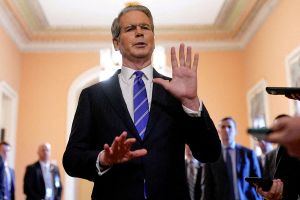
US President Donald Trump struck an ambivalent tone, telling reporters he was monitoring the situation closely and suggesting reports of killings inside Iran were easing. He said he had received what he described as “a very good statement” from Iran, while stopping short of ruling out military action.

Privately, officials and diplomats from several countries said they remained concerned that US intervention was still possible, with some suggesting there was a limited window in which action could occur.

Regional governments, including Qatar, confirmed adjustments tied to heightened tensions, while Britain also reported precautionary measures involving its personnel.

Britain said it had closed its embassy in Tehran, citing security concerns, adding to signs of diplomatic retrenchment as foreign governments reassessed their presence in Iran amid the unrest.

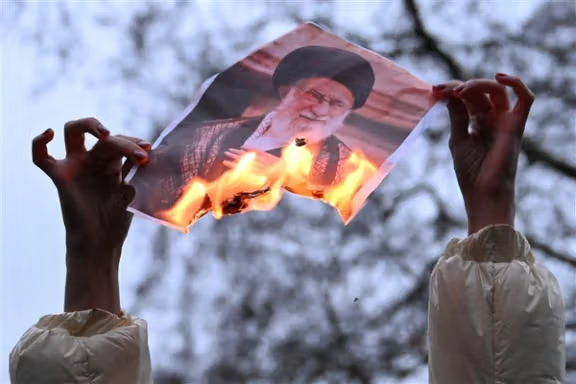
Inside Iran, the leadership has sought to project control in what officials describe as the most serious unrest in decades. Iranian authorities have blamed foreign enemies, particularly Israel and the United States, for fueling violence, while insisting calm has returned after what they describe as a brief but intense period.

In a combative television interview with Fox News, Iranian Foreign Minister Abbas Araghchi rejected allegations that Iranian security forces carried out mass killings of protesters. He said the violence stemmed from clashes with what he called foreign-backed “terrorist elements,” and portrayed the unrest as part of a wider conflict imposed on Iran.

“There was fighting between our security forces and terrorist elements,” Araghchi said, dismissing accounts of widespread repression as misinformation and accusing Israel of trying to draw the United States into war.

Human rights groups outside Iran have reported high casualty figures, while an internet blackout has restricted independent verification on the ground. The information gap has fueled uncertainty, with competing narratives from Iranian officials, foreign governments and activists.

Iran has also intensified contacts with regional states in recent days, officials said. Tehran has urged neighboring countries to prevent any US military action, warning that American bases in the region would be at risk if Iran were attacked. Direct communication between Iranian and US officials remains suspended, they added.

Despite the scale of the unrest and mounting external pressure, Western officials have said Iran’s security apparatus appears intact and the government does not look on the brink of collapse. Iranian state media has broadcast images of funerals and rallies that it presented as evidence of continued public support for the Islamic Republic.

Most Viewed

US terminates green cards of 3 Iranians tied to Islamic Republic
1

US terminates green cards of 3 Iranians tied to Islamic Republic

2
PODCAST

Worst outcome is Islamic Republic’s survival, ex-CIA official says

3
ANALYSIS

Iran brings unusually broad team to US talks to blunt future blame

4
INSIGHT

Tehran sends tough message but keeps diplomacy door open

5

Zoroastrian religious figure arrested in Iran

Banner
Banner

Spotlight

  • Tehran sends tough message but keeps diplomacy door open
    INSIGHT

    Tehran sends tough message but keeps diplomacy door open

  • Worst outcome is Islamic Republic’s survival, ex-CIA official says
    PODCAST

    Worst outcome is Islamic Republic’s survival, ex-CIA official says

  • Why the Iran-US truce is more likely to buy time than peace
    ANALYSIS

    Why the Iran-US truce is more likely to buy time than peace

  • Engaged but uncommitted: China watches Iran and US fight and talk
    ANALYSIS

    Engaged but uncommitted: China watches Iran and US fight and talk

  • A truce for the world, a reckoning for Iran’s economy
    ANALYSIS

    A truce for the world, a reckoning for Iran’s economy

  • Why the world failed to bypass the Strait of Hormuz
    ANALYSIS

    Why the world failed to bypass the Strait of Hormuz

  • Tehran leaders wiring huge sums of money out of Iran, US Treasury says

    Tehran leaders wiring huge sums of money out of Iran, US Treasury says

  • At least 12,000 killed in Iran crackdown during internet blackout

    At least 12,000 killed in Iran crackdown during internet blackout

  • US strikes on Iran won’t work without follow-through, experts say

    US strikes on Iran won’t work without follow-through, experts say

•
•
•

More Stories

Iran judiciary says detained protester Erfan Soltani not sentenced to death

Jan 15, 2026, 07:22 GMT

Iran’s judiciary said on Thursday that Erfan Soltani, a protester detained earlier this month, has not been sentenced to death, rejecting earlier claims by his family that such a ruling had been issued.

The judiciary said Soltani is being held at the central penitentiary in the city of Karaj and has been formally charged with “collusion against internal security” and “propaganda activities against the system,” according to state media.

It added that no death sentence has been issued and that capital punishment does not apply to those charges under Iranian law.

The judiciary said that if the charges are upheld by prosecutors and a court issues a legal ruling, the punishment by law would be imprisonment.

Soltani’s family had previously said that he had been sentenced to death, raising concerns among activists amid a broader crackdown on protesters following unrest across the country.

Iran has in past protest-related cases brought more serious charges such as moharebeh – commonly translated as “waging war against God” – which under the Islamic Republic’s penal code can carry the death penalty.

During earlier waves of unrest, rights groups and analysts said Iranian authorities used capital cases and charges including moharebeh and “corruption on earth” against some detainees, drawing international criticism over due process.

Tehran leaders wiring huge sums of money out of Iran, US Treasury says

Jan 15, 2026, 03:22 GMT

US Treasury Secretary Scott Bessent said on Wednesday Washington is tracking what he described as a surge of capital flight by Iran’s ruling elite, as fears grow over the possible collapse of the Islamic Republic amid unrest and threats of a US strike.

"As Treasury who carries out the sanctions we can see is we are now seeing the rats fleeing the ship because we can see millions, tens of millions of dollars being wired out of the country, snuck out of the country by the Iranian leadership," Bessent said in an interview with Newsmax.

"So they are abandoning ship, and we are seeing it come into banks and financial institutions all over the world," the Treasury Secretary added.

Iran’s nationwide protests began in late December 2025 over economic grievances but quickly evolved into an openly regime-change movement, with demonstrators calling for the end of the Islamic Republic itself.

Security forces responded by using live fire against protesters, killing as many as 12,000 people, according to Iran International’s findings.

Still, threats by US President Donald Trump to launch strikes against Iran have left the fate of the country’s leaders in limbo.

'US will trace Iran leaders' assets abroad'

In his Wednesday interview, the US Treasury Secretary vowed to trace the huge sums of money wired out of Iran by the country's leaders.

"What we do at Treasury is we follow the money, whether it is through the banking system or through digital assets. We are going to trace these assets and they will not be able to keep them."

Separately, Israel's Channel 14 reported on Wednesday that Iran's leaders have transferred $1.5 billion to escrow accounts in Dubai over the past two days.

"1.5 billion dollars have been transferred out of Iran in the last hours, not through banks but via cryptocurrency with one clear destination: Dubai," the report said citing a source familiar with the Revolutionary Guard's economic activities.

The report alleged that the Supreme Leader's son and one of his potential successors Mojtaba Khamenei is one of the people involved in these transfers.

"He transferred about $328 million to that same destination," Channel 14 said citing the unnamed source.

Iran has increasingly leaned on cryptocurrency rails to move money abroad as sanctions and banking restrictions complicate traditional transfers.

US Treasury actions in 2025 described “shadow” networks using overseas fronts and crypto transactions tied to Iranian oil revenue, portraying digital assets as one way to bypass chokepoints in the regulated financial system.

Restraint as strategy: Israel watches Iran’s unrest from afar

Jan 15, 2026, 00:04 GMT
•
Danny Citrinowicz

Israel’s apparent inaction amid Iran’s widespread unrest may look counterintuitive, but it reflects a long-standing strategic calculation rather than hesitation.

The wave of protests arrived at a sensitive moment for Israeli Prime Minister Benjamin Netanyahu: as he was pressing US President Donald Trump to nod ahead another round of Israeli strikes against Iran, especially its missile program.

For years, Netanyahu has argued in Washington that Tehran’s challenge cannot be resolved through containment or diplomacy alone, but only through the collapse of the Islamic Republic.

Against that backdrop, one might have expected Israel to seize on Iran’s internal instability and move decisively against its strategic assets. Instead, restraint has become policy.

Netanyahu is aware that any visible Israeli role could serve the interests of Iran’s rulers—by discrediting protesters as foreign-backed agents or by giving Tehran justification to escalate militarily against Israel.

Cautious calculation

Several considerations reinforce Netanyahu’s caution.

Israel is still emerging from a recent military campaign and has little appetite for being drawn into another direct confrontation with Iran. At the same time, Netanyahu continues to prefer US leadership on the Iran file, a long-standing strategic priority.

From his perspective, the most effective—and legitimate—pressure on Iran, including any potential military action, must come from the United States rather than Israel.

There is also a deeper calculation at play. Netanyahu may believe the Islamic Republic is closer than at any point in decades to a breaking point, and that overt Israeli involvement could delay or derail that process.

From this view, Israel’s most effective contribution to regime destabilization is to avoid becoming the focal point of Iranian nationalism or regime propaganda.

Restraint: pros and cons

Yet restraint carries risks of its own.

Iran’s theocratic rule may survive the current unrest and seek to exploit its vulnerability by pursuing a renewed nuclear agreement with the West. For Israel, this is a deeply troubling scenario as it could ease economic pressure on Tehran and extend the life of the Islamic Republic without addressing Israel’s core security concerns.

Nor would every political transformation in Iran necessarily serve Israeli or American interests.

A pro-Western restoration, such as the return of the Shah’s son, is far from certain. Other outcomes could include further radicalization of the regime or a decision to accelerate its nuclear program, moving more decisively toward a nuclear weapon.

In short, Israel is not rushing to exploit Iran’s internal crisis. Despite longstanding fears over Iran’s military buildup and a fundamental desire for regime change, Netanyahu is pursuing a policy of restraint shaped by caution, timing, and deference to US leadership.

Even so, restraint does not guarantee insulation. Israel could still be drawn into a broader conflict—particularly if the United States launches a military strike and Iran chooses to retaliate against Israeli targets.

For now, Israel’s posture reflects a familiar strategic logic: hoping for the best, while preparing for the worst.

‘De facto curfew’: residents describe tightened security in Iran

Jan 14, 2026, 21:11 GMT

Iranian authorities have significantly expanded the presence of security forces across multiple cities, tightening control to prevent further protests in what some residents inside Iran described as a 'de facto curfew.'

Multiple sources told Iran International that patrols and checkpoints were ubiquitous, with increased police and military deployments across urban centers, particularly in major cities.

In Tehran, daily life has slowed markedly, with many shops closed and streets quieter than usual.

Residents said movement, communications, healthcare activity, and access to educational institutions are under tight government control, describing the capital as subdued and tense, with people avoiding unnecessary travel or gatherings.

"It's like a de facto curfew," one Tehran resident said.

In Karaj, residents said that because of the dense presence of security forces, people cannot even speak comfortably with one another. Similar conditions have been reported in multiple parts of the country.

The expanded security footprint follows what rights groups and media outlets describe as a bloody crackdown on the protests.

Iran International reported on Tuesday that at least 12,000 people have been killed nationwide since the unrest began, while CBS News, citing an Iranian official, said the death toll could be as high as 20,000.

Tehran rejected those figures on Wednesday, dismissing them as claims spread by what it called “Mossad-backed” media.

‘Help on the way’

On Tuesday, US President Donald Trump urged Iranians to remain in the streets and take over state institutions, telling protesters that “help is on the way,” while exiled prince Reza Pahlavi has also called on Iranians to continue demonstrations.

The calls from abroad for sustained protest appear to be colliding with a harsher reality on the ground—at least for now.

In Shiraz, sources said security conditions intensified earlier this week, with additional military units deployed and new restrictions imposed on movement. Local notices outlining the presence of armed forces and limits on traffic circulated in the city, though no nationwide emergency measures have been formally announced.

In Sanandaj, residents reported an expanded security presence beginning earlier this week, including personnel they described as speaking Arabic rather than Persian.

Similar observations have been reported by sources in other western regions, though the identities and affiliations of the forces could not be independently verified.

Some protesters and observers alleged that forces affiliated with the Islamic Revolutionary Guard Corps, including Afghan and Iraqi recruits, have been mobilized and organized at specific locations, including a mosque in Tehran’s Gholhak district.

Iranian authorities have not commented on these claims.
Iran tightens grip on Karaj hospitals after deadly clashes, witnesses say

Jan 14, 2026, 12:47 GMT

Armed security forces surrounded hospitals and government buildings in the city of Karaj after several days of deadly unrest and, in some cases, shot wounded protesters who could not move, witnesses and medical workers said.

Witnesses said security personnel entered medical centers, removed injured protesters for undisclosed locations and fired “finishing shots” at some of those left behind, describing scenes of bodies and wounded being loaded onto trucks without separation. Iran International could not independently verify the accounts.

Residents said the city fell into an uneasy calm on Monday after clashes on Thursday and Friday followed by two days of resistance by protesters over the weekend. Motorbike units and pickup trucks carrying security forces patrolled streets, while access to hospitals was heavily restricted, witnesses said.

A taxi driver who said he witnessed the violence near Gohardasht square on Thursday said security personnel loaded both dead and wounded protesters onto trucks. “The injured were not separated from the dead,” he said, adding that many were young people.

Families gathered outside hospitals including Kasra and Qassem Soleimani, where armed personnel blocked entrances and dispersed crowds, witnesses said.

At Behesht-e Sakineh cemetery, mourners reported restrictions on burials and said authorities halted the release of bodies to prevent public funerals.

  • Security forces blocked blood donations, seized wounded protesters - paper

    Security forces blocked blood donations, seized wounded protesters - paper

Similar pressure on medical facilities was reported elsewhere.

In the northeastern city of Bojnourd, a nurse told Iran International that a local hospital had become heavily securitized, with normal shift schedules canceled and staff pressured to prioritize treatment for injured security personnel while protesters were turned away or left untreated.

Rights groups and media have reported security force raids on hospitals in other parts of Iran during the unrest, including incidents in the western city of Ilam.