West ‘killed’ Cairo nuclear accord, Iran foreign minister says
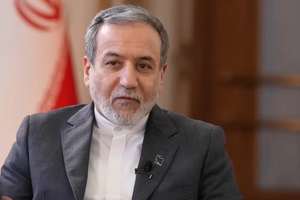
Iranian Foreign Minister Abbas Araghchi said on Friday that the United States and three European powers have “killed” the Cairo nuclear agreement through what he called a sequence of hostile actions.
“Like the diplomacy which was assaulted by Israel and the US in June, the Cairo Agreement has been killed by the US and the E3,” Araghchi wrote on X, referring to Britain, France and Germany.
He said the chain of events began when “Iran was suddenly attacked by Israel and then the US” on the eve of a new round of indirect nuclear talks.
“When Iran later signed a deal with the IAEA in Cairo to resume inspections despite the bombings, the E3 pursued UN sanctions against our people under US pressure,” he wrote.
Araghchi said that when Iran began allowing International Atomic Energy Agency inspectors access to its facilities, “the US and the E3 ganged up to censure Iran” at the agency’s Board of Governors.
“Iran is not the party that seeks to manufacture another crisis,” he added. “The official termination of the Cairo Agreement is the direct outcome of their provocations.”
Tehran says resolution is politically driven
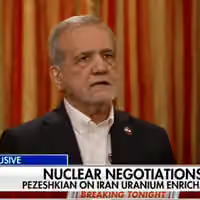
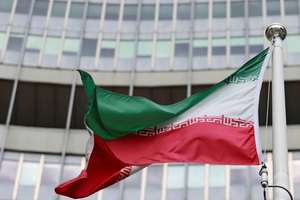
His comments followed Iran’s announcement that it will respond to a resolution passed on Thursday by the International Atomic Energy Agency’s Board of Governors, which Tehran called “illegal and unjustified.” The Foreign Ministry said the measure, backed by Washington and its European allies, was a “political misuse of the Agency” and had nullified the Cairo inspection accord reached in September.
Foreign Ministry spokesperson Esmail Baghaei said Tehran had officially informed the IAEA that the understanding reached in Cairo was “no longer valid.” “The so-called Cairo accord, which had been achieved through lengthy negotiations and Iran’s goodwill, is now considered void,” he told state media.
The ministry said the United States and the three European countries “ignored Iran’s responsible and good-faith conduct, disrupting the positive path that had emerged between Iran and the Agency, and forced Iran to declare the termination of the September 9 understanding.”
Resolution presses Iran for access after attacks
The IAEA Board of Governors adopted the Western-backed resolution urging Iran to provide full access and information about its nuclear program. Diplomats said the measure passed with 19 votes in favor, three against and 12 abstentions, with Russia, China and Niger voting against it.
The resolution calls on Iran to allow verification of its enriched uranium stockpile and inspections at sites damaged by US and Israeli airstrikes in June. Iran says those attacks killed several nuclear scientists and halted cooperation with the Agency because of security concerns.
Earlier this week, Araghchi said Washington’s approach amounted to “dictation, not negotiation,” accusing the US of trying to achieve through diplomacy what it failed to gain by force. “They want us to accept zero enrichment and limits on our defense capabilities,” he said. “This is not negotiation.”