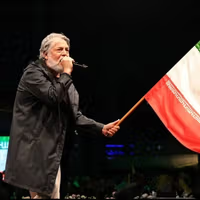
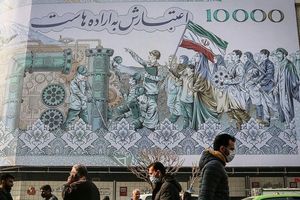
A taxi driver drinks water from a cool box in a hot summer day, Tehran, Iran, July 2025
As Iran’s capital Tehran endures its worst water crisis in living memory, few recent global cases offer clearer lessons than Cape Town in South Africa in 2018.
The city’s narrow escape from “Day Zero” offers a workable blueprint for how Tehran could still avert a breakdown of its own.
President Masoud Pezeshkian underscored the urgency last week with one of the bluntest warnings any Iranian leader has issued: without rain, Tehran may one day have to be evacuated.
Tehran typically receives 50 to 60 millimeters of rain in October and November. This year it has had none, and forecasts offer little hope.
Utility officials have called the shortage “unprecedented,” stressing that the president’s warning is “serious” and that the city “no longer has any water for excess consumption.”
The picture is stark: a megacity entering winter with no meaningful rainfall, groundwater in freefall, and consumption habits far beyond its ecological limits.
How Cape Town pulled back from the brink
Cape Town, a city of four million, endured the worst drought in four centuries beginning in 2015, when winter rains fell to less than half their long-term average for three consecutive years.
By 2018, officials warned of “Day Zero” — the moment when reservoirs would become too low to keep water flowing.
Fear spread quickly: queues for bottled water, soaring tanker prices, and social tension. But instead of losing control, city authorities responded with an unusually disciplined strategy built on strict demand cuts and complete transparency.
A 50-liter daily limit per person was imposed
Tariffs rose steeply, with high-use households paying up to ten times more
A public campaign launched under the slogan “Every Drop Counts”
Reservoir levels and the projected “Day Zero” date were posted online every day
Small desalination units, expanded wastewater reuse, and limited groundwater extraction provided backup supply
Low-income households received additional subsidies to ensure fairness
The impact was dramatic. Water use fell by more than 55 percent in under two years, from 1.2 billion liters per day to about 500 million.When rains finally returned in 2018, the reservoirs refilled. But the deeper lesson endured: transparent, collective action can shift behavior on a massive scale.
High use, high leak
Average household use in Tehran is 250 to 300 liters per person per day — roughly double that of many developed countries. Nearly one third of the city’s water disappears through leaks in its aging network.
Yet policy continues to rely on large-scale water-transfer projects that postpone, rather than resolve, the crisis.
Decades of over-pumping have pushed Tehran’s aquifers into an annual deficit of roughly 130 million cubic meters, with cumulative losses over forty years approaching 5 billion.
Southern districts now face accelerating land subsidence, which Iran’s Geological Survey warns poses “a direct threat” to the city’s infrastructure.
Once aquifers collapse, they cannot be restored.
What can be done?
Cape Town turned fear into a turning point. Tehran has yet to begin that kind of honest conversation. Years of distrust between state and society have made public cooperation far harder to mobilize.
Drawing on Cape Town’s experience, five measures stand out as immediately actionable for Tehran
Demand before supply: Network repairs, realistic pricing and public education must outrank new transfer projects.
Transparency builds trust: Citizens need clear, regular data on reservoir levels and consumption.
Scale up recycling: Treated industrial and domestic wastewater can meet a significant share of demand.
Protect the vulnerable: Pricing and rationing must account for low-income households to prevent unfair burdens.
Unify management: Fragmented authority is the biggest obstacle; Tehran needs a single, accountable command structure.
Tehran can avoid a Day Zero with concrete, credible action. The window is still open—but barely, and not for long.
A water shortage in Iran is becoming more widespread with people reporting pressure drops and low-quality water even as Tehran officials deny reports of rationing.
Viewers submitted text, voice and video messages to Iran International documenting the adversity they face in getting a consistent supply of water.
Messages from Tehran, Karaj and Hamadan to Ahvaz and cities in Sistan and Baluchestan paint a picture of worsening water access and sharp criticism for what many view as poor management.
The responses indicate that in many Iranian cities, people are facing nightly outages and notable reduction in water pressure.
Inflow to Tehran’s reservoirs has dropped by 43 percent compared with the previous water year, Behzad Parsa, managing director of the Tehran Regional Water Company, told state media this week.
Parsa described the situation as unprecedented in decades, attributing it to a 100% decrease in rainfall in Tehran province compared with long-term averages.
Pressure Drops
"If the pump doesn't work, not a drop of water comes. The pressure in upper floors is very low, and everyone has the same problem," a resident in Tehran said.
"Since last night, water has been cut off, and no media - neither domestic nor foreign - has reported it," another message said.
Energy Minister Abbas Aliabadi on Sunday called the nightly pressure cuts a temporary management tool to stabilize the city’s aging water network and reduce leakage. Similar steps taken during the summer, he said, conserved significant volumes.
"Sometimes we have no water for two full days. Summers it was electricity. Now it's water's turn," one resident of Pardis in Tehran said.
Other messages from different cities in Tehran and Karaj shared reports with the same theme: "Low pressure and frequent outages; nightly shortages repeat."
A video shows a group of students from Al-Zahra University in Tehran protesting water outages on Sunday, saying water has been rationed due to frequent cuts.
President Masoud Pezeshkian warned last week that if rainfall does not resume by the end of autumn, Tehran will face water rationing, adding, “If it still doesn’t rain, we will have no water and will have to evacuate the city.”
North, Northwest and West
Some messages from different parts of Iran echo the same issues with lower pressure and continuous shortages.
"In Rasht, the city of rain, sometimes water is cut off from sunset or pressure drops severely. Since most homes have pumps, many don't notice," one message said.
"With people's efforts and no government help, we secured drinking water. No support from the government."
"No shortages yet, but they say reservoirs are 40% down. Probably soon they'll cut water like in Tehran," a messages from Saqqez mentioned.
"The water situation in Asadabad is very bad," one message from Western Iran read. "For years, we've been bringing water from the mountains because the city's water quality is terrible."
South, Southeast and Northeast
In Khuzestan, complaints are not just about water shortages in some areas but also very poor quality in others.
"Water is there but either smells of chlorine or is muddy. When it's cleaner, it smells like rotten eggs. Pressure was very low for a few days too," a message read from Ahvaz.
"Bottled water for drinking, 20-liter jugs for cooking, tankers for usage. Curse this regime, the clerics, and the Islamic Republic," one message said.
In Sistan and Baluchistan Province, conditions are reported as more critical than elsewhere, where drinking water is supplied by jerry cans and tankers as in past years.
"No rain, and the Golestan Dam has no water. Farmers in our area no longer have the energy to plant wheat and barley; the situation is disastrous," a message from the city of Gonbad-e Kavus in Golestan Province said.
"Water is so scarce that the water heater doesn't boil. We wash dishes with lukewarm water, and for showers at night, we fill buckets from the heater. It's disastrous," one message from Mashhad said.
Some messages spoke of increased water bill amounts, lack of official accountability, and complete distrust of the government.
"They've made bills three to four times more expensive," one message said. "For three years, they've been stringing people along; now in polluted air, we're dying, and we have no water."
A woman holds an Iraqi flag at a polling station during a parliamentary election in Mosul, Iraq, November 11, 2025.
Iraq’s parliamentary election on Tuesday unfolded under the shadow of foreign influence from the United States and Iran which have for two decades vied over the future of the war-battered Arab nation.
Less than half of eligible voters reportedly registered, raising doubts that turnout will reach even 50%. Public disillusionment has depressed participation since 2005, with only two exceptions: the first post-Saddam vote that year and the 2015 election, when turnout neared 80%.
Iranian media outlets, especially those aligned with Tehran’s political factions, have been following the buildup intensely.
Conservative papers and those close to state institutions cast the vote as a measure of Iran’s remaining leverage in Baghdad.
But reform-leaning Rouydad24 cautioned that while Tehran and Washington view the election through a geopolitical lens, Iraqi voters are focused on preserving “fragile stability and economic growth,” a subtle critique of both countries’ roles.
‘Weary people’
Truska Sadeghi, a journalist monitoring the election from Paris, described the November 11 vote as “a fateful test for a country caught between crises ranging from the legitimacy of its governments to the influence of foreign powers.”
Iraqis, she said, have grown weary of “repetitive and ineffective political maneuvers,” while shifting coalitions and Iran’s declining sway in the wider “axis of resistance” have made Baghdad Tehran’s most critical arena.
The United States has repeatedly warned Iran in recent months against meddling in Iraq’s political process, urging Baghdad to distance itself from Tehran.
Iran’s foreign ministry on Monday spoke against what it deemed to be "unacceptable” foreign interference. Iraq’s foreign ministry called the statement “provocative” and urged Tehran not to get involved in the country’s internal affairs.
Despite its diminishing regional clout, Iran remains a central player in the Iraq.
Tehran-aligned groups such as Hashd al-Sha’bi and various Kata’ib factions have rebranded themselves as civilian organizations, even as their armed presence in Baghdad remains visible.
‘Stability’
Analysts including Sadeghi and Frankfurt-based Ali Sadrzadeh argue that Iran-linked networks still wield significant political and economic leverage.
Islamic Revolutionary Guard Corps-Quds Force Commander Esmail Qaani and other senior officers continue to shuttle between Iranian and Iraqi cities, meeting aligned factions to ensure “Iraq’s stability.”
A key test for the next government will be whether it can assert authority over pro-Iranian groups like Hashd al-Sha’bi, which has long sought to position itself as a parallel defense institution.
“It’s a battle over whether Iraq achieves genuine political independence or remains tethered to foreign powers,” Sadeghi said.
Whatever the result, she added, Iraq’s next government will face the same core tasks: bringing armed groups under state control, restoring public trust through credible reforms, and recalibrating relations with Iran, the United States and regional partners.
Workers rally outside the South Pars gas complex in Assaluyeh, November 11, 2025.
Thousands of contract workers at the South Pars gas complex in southern Iran held a large protest on Tuesday demanding better working conditions, fair pay, and the removal of private labor contractors, Iranian labor outlets reported.
The demonstration, held near the headquarters of the Pars Gas Complex in Assaluyeh, drew more than 3,000 workers from twelve refinery units and nearby facilities, including the Fajr Jam Gas Refinery, according to ILNA. Protesters called for changes to the job classification system, improved benefits, and the introduction of a rotation plan that would allow administrative and support staff two weeks of work followed by two weeks of rest.
They also urged officials to address the status of hired drivers, reinstate travel and housing allowances that were cut, and move toward direct employment under state companies. Many said the contractor system has left them without security, equal pay, or access to benefits given to permanent staff.
South Pars, the country’s main natural gas hub, has long been a flashpoint for labor unrest, with workers frequently demanding overdue pay and more stable contracts. Tuesday’s gathering adds to a wave of protests in Iran’s energy and industrial sectors over recent months.
Earlier in November, oil contract workers rallied outside the presidential office in Tehran, accusing the government of breaking promises to eliminate middlemen and standardize pay across the industry. Similar demonstrations have been held by petrochemical and steel workers in Ilam and Ahvaz, showing persistent frustration among Iran’s industrial labor force despite repeated pledges of reform.
A general view of the port of Kalantari in the city of Chabahar, 300 km (186 miles) east of the Strait of Hormuz
The US is trying to set up military bases near Iran’s southern port on the Gulf of Oman to tighten control over regional energy and trade routes, a senior adviser to Supreme Leader Ali Khamenei said on Tuesday.
Ali Akbar Velayati, the adviser on international affairs, said Washington’s plan to expand its presence close to Pakistan’s Gwadar port and along Iran’s southern coast is part of a wider effort to counter China’s growing influence and to secure maritime routes linking South Asia to the Middle East. “The US wants new bases near this vital area to maintain its dominance over regional trade and to contain China’s rise,” he told the official news agency IRNA.
Velayati said the US is facing growing resistance to its presence across several regions, including the Middle East and Asia. He added that Iran, as an independent and influential state, will continue to work with Asian and Islamic nations that oppose what he called Western interference and domination.
Iran’s foreign minister told parliament on Monday that the country has directed much of its diplomatic and political capacity toward supporting what it calls the “axis of resistance,” a network of regional allies opposing US and Israeli influence.
Abbas Araghchi said the ministry had prioritized “security diplomacy” and coordination with allied movements as part of a broader regional strategy. He said recent months have seen intensified confrontation with the United States and Israel, marked by assassinations and airstrikes across the region. “Under these circumstances, a significant portion of the Foreign Ministry’s efforts has been devoted to supporting the axis of resistance, effectively functioning as the foreign ministry of the axis,” he said.
Western governments have urged Iran to limit its backing for armed groups in Lebanon, Iraq and Yemen, saying such support fuels instability. Araghchi said Tehran’s diplomacy also aims to promote a multipolar order and deepen cooperation with blocs such as BRICS and the Shanghai Cooperation Organization.
Iran’s vice president told parliament on Monday that the government must adapt implementation of the Seventh Development Plan to the country’s current conditions, citing financial shortfalls, sanctions pressure and post-crisis constraints that have reshaped policy priorities.
Mohammad Reza Aref said the administration aimed to preserve social calm while preparing for “special and wartime conditions” to meet public demands, adding that many provisions of the seven-year plan require revision due to budget gaps and inherited debts.
He said the implementation of the plan must align with both its mandates and available resources, adding that the country faces structural imbalances.
He pointed out that an estimated 3 quadrillion rials (about $2.7 billion) in losses in the power and industrial sectors have weighed on economic growth.
Iran’s Seventh Development Plan, launched in 2023, is a five-year blueprint for economic, social, and cultural development aimed at reversing stagnation and reducing reliance on oil revenues. The plan targets an average 8% annual GDP growth, expansion of non-oil exports, and greater private sector investment.
The vice president told lawmakers that Iran lacks the €100 billion required to implement Article 115 of the Seventh Development Plan, which focuses on modernizing the country’s forensic and legal medicine system, and urged parliament to coordinate with the government on possible amendments.
He said the administration has moved to clear $6 billion in feedstock import debts inherited from the previous administration and stressed that strategic reserves remain sufficient to meet essential needs.
Aref added that under Articles 118 and 119 of the plan, the government is legally required to submit regular performance reports to parliament. So far, all ministries and agencies have delivered biannual progress reports to the High Council for Coordination and Oversight, enabling the government to compile its first annual assessment of implementation.
He said the Seventh Plan includes 2,179 policy clauses across 120 articles and outlines 35 national programs designed to advance growth, stability, and social justice.
Aref acknowledged, however, that several provisions, notably Article 115, remain financially unfeasible under current conditions, and called for joint legislative review to adjust targets in line with available funding.
“The Seventh Plan,” Aref said, “is a covenant among all three branches of power,” adding that its success depends on cross-sector coordination and flexibility to adjust policies as economic realities evolve.
President Masoud Pezeshkian is set to address lawmakers on Tuesday about the implementation of the plan.