Iran demands UN hold US accountable for Israeli attacks
Iran's Foreign Minister Abbas Araghchi, File photo
Iran's Foreign Minister Abbas Araghchi on Wednesday urged the United Nations to hold the United States accountable for Israeli strikes on Iran, demanding in a letter to the UN chief and Security Council that Washington pay reparations.
"The United States is obliged to fully compensate Iran and Iranian citizens for the material and moral damages resulting from these violations," Araghchi wrote in a letter, official media reported on Wednesday.
Araghchi called for an emergency session, independent investigation, ceasefire enforcement, sanctions, reparations and General Assembly condemnation.
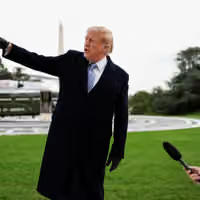
Trump said last week the US directed Israel’s initial attack on Iran during the June conflict.
“Israel attacked first. That attack was very, very powerful. I was very much in charge of that.” Trump said. “When Israel attacked Iran first, that was a great day for Israel because that attack did more damage than the rest of them put together.”
Compensation demand
Tehran first demanded US compensation in July over the war's damages, including strikes on nuclear sites—tying it to nuclear talks resumption. The US State Department dismissed it in August as "ridiculous," rejecting any liability.
Iran's UN Permanent Representative Amir Saeid Iravani wrote to Guterres and the Security Council last week, registering Trump's admission as "incontrovertible evidence" of US leadership in the June 12-day war, which caused civilian deaths and nuclear site damage.
The United States and Israel launched strikes on Iranian facilities in June after talks over Tehran’s nuclear program collapsed. A ceasefire ended the 12-day conflict, but inspections of damaged sites remain suspended under Iranian law.