• العربية
  • فارسی
Brand
  • Iran Insight
  • Politics
  • Economy
  • Analysis
  • Special Report
  • Opinion
  • Podcast
  • Iran Insight
  • Politics
  • Economy
  • Analysis
  • Special Report
  • Opinion
  • Podcast
  • Theme
  • Language
    • العربية
    • فارسی
  • Iran Insight
  • Politics
  • Economy
  • Analysis
  • Special Report
  • Opinion
  • Podcast
All rights reserved for Volant Media UK Limited
volant media logo

Iran says 67% of dams empty as autumn rains fail, capital braces for rationing

Nov 5, 2025, 11:02 GMT+0

Iran’s water authority said on Tuesday that two-thirds of the country’s dam capacity is empty and rainfall has reached historic lows, with 20 of Iran’s 31 provinces recording no precipitation since the start of the new water year in late September.

Ali Seyedzadeh, the director general of the National Water and Wastewater Management Office, told state television that rainfall across Iran since the beginning of October totaled just 2.2 millimeters -- down 83% from last year and 77% below long-term averages. 

“We are in an extremely concerning situation,” he said, warning that weather forecasts show no rain in the coming weeks.

He added that the decline has left reservoirs severely depleted, with major dams including those supplying Tehran, Isfahan, and Khuzestan operating at minimal levels.

Seyedzadeh said Tehran’s five main dams now hold less than 200 million cubic meters of water -- about one-third of their normal volume -- with the Amir Kabir Dam at only 8% of capacity and the Laar Dam at 1%.

He said nationwide water loss through aging pipelines is estimated at 15%, and called for urgent measures such as installing smart meters and water-saving devices in high-use households.

Looming water rationing in Tehran

Authorities in Tehran have warned that the capital could face water rationing within weeks as the city’s main reservoir, the Amir Kabir Dam, is nearing depletion. 

Habibi, deputy head of Tehran’s Regional Water Company, said the Amir Kabir Dam -- one of the capital’s five main water sources -- holds only about 14 million cubic meters of water, compared to 86 million cubic meters a year ago. 

“Only four or five million cubic meters remain extractable,” he told the semi-official Tasnim news agency. “We urgently need public cooperation to manage water consumption efficiently.”

“We hope to see precipitation later in the water year to make up the deficit,” Habibi said, adding that conservation “is the only short-term solution to protect Tehran’s limited water reserves.”

Officials said the dam is now 85% empty, describing the situation as critical. The company’s head, Behzad Parsa, told IRNA last week that the reservoir’s remaining capacity would cover less than two weeks of the city’s demand.

Tehran, home to nearly nine million people, depends on five dams -- all reporting sharp declines. 

The Laar and Mamloo reservoirs are at 1% and 7% capacity respectively, while only Taleghan remains above one-third. Local newspaper Haft-e Sobh warned that if autumn rains fail to materialize, “widespread rationing and water cuts” could begin across the capital.

Most Viewed

Iran International says it won’t be silenced after London arson attack
1

Iran International says it won’t be silenced after London arson attack

2
VOICES FROM IRAN

Hope and anger in Iran as fragile ceasefire persists

3

State media slam Araghchi's Hormuz tweet, say it let Trump claim victory

4
INSIGHT

How Tehran bends its own red lines to boost state rallies

5

Iran halts petrochemical exports to supply domestic market

Banner
Banner

Spotlight

  • Too early to tell who is winning Iran war, experts say
    PODCAST

    Too early to tell who is winning Iran war, experts say

  • How Tehran bends its own red lines to boost state rallies
    INSIGHT

    How Tehran bends its own red lines to boost state rallies

  • Iran blackout cripples freelancer, small business incomes
    VOICES FROM IRAN

    Iran blackout cripples freelancer, small business incomes

  • Ideology may be fading in Iran, but not in Kashmir's ‘Mini Iran'
    INSIGHT

    Ideology may be fading in Iran, but not in Kashmir's ‘Mini Iran'

  • US blockade enters murky phase as tankers spoof signals and buyers hesitate
    ANALYSIS

    US blockade enters murky phase as tankers spoof signals and buyers hesitate

  • Why the $100 billion Hormuz toll revenue is a myth
    ANALYSIS

    Why the $100 billion Hormuz toll revenue is a myth

  • Tehran’s main dam holds less than two weeks of water supply

    Tehran’s main dam holds less than two weeks of water supply

•
•
•

More Stories

Iranian MPs urge legal action against Trump, Netanyahu and Grossi

Nov 5, 2025, 11:02 GMT+0

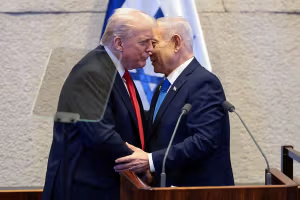
Seventy-six Iranian lawmakers urged the justice minister on Wednesday to file international complaints against US President Donald Trump, Israeli Prime Minister Benjamin Netanyahu and Rafael Grossi, head of the UN atomic watchdog.

Lawmakers said Iran must pursue official complaints before international courts over what they called crimes committed against the Iranian nation, according to state media.

They did not give details of the complaints, but Iran has previously accused Grossi of political bias and of failing to condemn US and Israeli airstrikes on Iranian nuclear sites in June.

Earlier this year, hardline media called for Grossi’s arrest and execution, while a senior judiciary official said he could face trial in absentia for “deceptive actions.” Tehran has accused the International Atomic Energy Agency of sharing sensitive nuclear data with Israel and the United States.

The appeal came a day after parliament marked the anniversary of the 1979 seizure of the US Embassy in Tehran, when lawmakers chanted “Death to America” and “Death to Israel.” During that session, Deputy Speaker Ali Nikzad said Iran would not yield to foreign pressure and accused Washington of decades of interference.

'No plan for US talks'

Tensions between Tehran and Washington remain high after a June conflict that saw US and Israeli strikes on Iranian nuclear facilities. Iranian Foreign Minister Abbas Araghchi said on Wednesday that any possible future talks with the United States would only concern the nuclear issue, adding that Tehran currently has no plans to hold talks with Washington.

Iran’s Foreign Ministry last week confirmed that messages between Tehran and Washington continue through intermediaries but said they do not amount to negotiations.

Iran’s parliament, dominated by conservatives, has repeatedly pressed the government to hold Western leaders accountable for sanctions and military actions. Lawmakers said the justice minister should take the lead in pursuing such complaints through international tribunals.

Iran says any possible talks with US would focus only on nuclear issue

Nov 5, 2025, 09:13 GMT+0

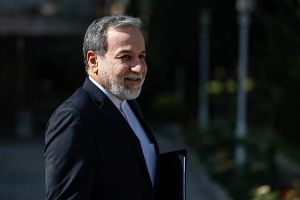
Any possible talks between Iran and the United States would be limited to the nuclear file, Foreign Minister Abbas Araghchi said on Wednesday.

Speaking after a cabinet meeting in Tehran, Araghchi said Washington had often raised missile and regional topics in past discussions, but Iran’s position was unchanged. “If there are talks with the US, they will only concern the nuclear issue,” he said.

Araghchi also added that Tehran currently has no plans for talks with the US and therefore sees no need for mediation.

Earlier this month, Araghchi told Al Jazeera that Iran would not stop uranium enrichment or hold talks over its missile program and warned that any new Israeli attack would have “bad consequences.”

He said Iran managed the June conflict with Israel effectively and prevented it from spreading to the wider region. The minister said several nuclear sites were damaged but that enrichment technology remained intact and nuclear material was still located at the bombed facilities.

  • Araghchi says Israel duped US on Iran threat, urges Trump to reverse course

    Araghchi says Israel duped US on Iran threat, urges Trump to reverse course

  • Araghchi says Iran will not halt uranium enrichment or negotiate on missiles

    Araghchi says Iran will not halt uranium enrichment or negotiate on missiles

On Sunday, Araghchi accused Israel of misleading Washington with what he called a fabricated nuclear threat and urged President Donald Trump to change course. He said Israel and the US attacked Iranian nuclear sites under “false pretenses” and cited comments from the UN atomic watchdog and Oman’s foreign minister confirming that Iran was not developing nuclear weapons.

Araghchi said Tehran’s nuclear work remains peaceful and that diplomacy, not confrontation, guides its policy. He added that Iran and Oman hold regular consultations every six months, alternating between Tehran and Muscat.

The United States and Israel launched strikes on Iranian facilities in June after talks over Tehran’s nuclear program collapsed. A ceasefire ended the 12-day conflict, but inspections of damaged sites remain suspended under Iranian law.

Russia, Iran sanctions create unprecedented offshore oil build-up - Swiss trader

Nov 5, 2025, 07:29 GMT+0

Western sanctions on Russia and Iran have led to an unprecedented buildup of oil held on tankers at sea, effectively absorbing excess supply and preventing a global glut, the head of commodities trader Gunvor Group said on Wednesday, according to Reuters.

“Through the sanctions that we’ve had around the world, an enormous amount of oil is stuck and dislocated,” Torbjorn Tornqvist, Gunvor’s chief executive, told the ADIPEC energy conference in Abu Dhabi.

“This is unprecedented, the size of that. Therefore, obviously, if all sanctions would disappear, this market would clearly be quite oversupplied,” he added.

The European Union, United Kingdom and the United States have imposed sweeping sanctions on Moscow since its invasion of Ukraine, including new US measures last month targeting Rosneft and Lukoil, Russia’s two biggest oil producers. 

Washington and its allies have also maintained restrictions on Iran’s crude exports over its nuclear program and regional activities.

Traders and analysts say the curbs have redrawn global energy flows, forcing sanctioned crude onto “dark fleet” tankers and into longer, less transparent routes that keep large volumes in transit or storage.

Tornqvist said that while the market remains tight on paper, the hidden inventory floating offshore represents a “buffer” that could quickly weigh on prices if restrictions were eased.

“Effectively, we have a shadow market operating alongside the official one,” he said, noting that the structure of the global oil trade has become more fragmented and less efficient as a result of sanctions.

Oil prices have traded in a narrow range in recent weeks, with Brent crude hovering around $84 per barrel as investors weigh supply risks from the Middle East and the lingering impact of Western sanctions on sanctioned producers.

At the same conference, Marco Dunand, chief executive and co-founder of Mercuria Energy Group, one of the world’s largest independent energy traders, said that while global inventories remain low, the volume of oil held at sea is rising, signaling a gradual build-up of surplus supply. 

He added that Western sanctions continue to act as a “wild card” in determining how much crude reaches the market, estimating that a potential surplus of around two million barrels per day could narrow to about one million. 

“The glut is forming slowly,” Dunand said, “and will probably start to hit the market in the next few months.” 

Iranian cleric says threats against Khamenei deserve death penalty

Nov 5, 2025, 04:59 GMT+0

A senior Iranian cleric said on Tuesday that threatening Supreme Leader Ali Khamenei should carry a death sentence, days after a young man died in Western Iran after filming himself burning the 86-year-old theocrat's photo.

"Any threat against the supreme leader is waging war on God, which carries a death sentence," Ahmad Khatami, a member of Iran's Assembly of Experts, said in a speech in Tehran.

Omid Sarlak was found dead in a car in western Iran on Saturday, shortly after posting a video of himself burning a photo of Khamenei. Police called it a suicide, but his family said he was killed by the state.

Mourners in city of Aligoudarz on Monday chanted slogans against Khamenei during Omid’s funeral.

In recent days, some ultra-conservative figures in Iran have called for tough sentences to curb social unrest.

"The sentence for someone who rejects the hijab is execution. If the martyrs were here today, they would skin alive those who stripped themselves bare with the slogan 'Woman, Life, Freedom,'" Hassan Hassannia, a former Islamic Revolutionary Guard Corps (IRGC) commander, said on Saturday.

Islamic Penal Code provisions for insulting the Islamic Republic's leader prescribe six months to two years in prison.

In the latest example of such imprisonment sentences, Forough Khosravi, a primary school teacher from Behbahan, was sentenced to 15 years in prison by the city's Revolutionary Court.

Two years of her sentence were for "insulting the leader" and two years for "insulting the founder of the Islamic Republic."

Iran hands 10-year sentence to man accused of spying for Israel

Nov 5, 2025, 01:28 GMT+0

Iran has sentenced a man detained during a June war with Israel in the southwestern city of Ahvaz to 10 years in prison on charges of collaborating with Israel, the Karun Human Rights Organization reported on Tuesday.

The group said the detainee, Shahham Soleimani, is about 60 years old and is being held in Ward 5 of Sheyban Prison in Ahvaz, where political prisoners are normally held, and is in poor physical condition.

The sentence was issued on Tuesday by Branch 1 of the Ahvaz Revolutionary Court under Judge Ehsan Adibi-Mehr, locally referred to by critics as the “judge of death,” according to the report.

Karun said more than 80 young men from Ahvaz were arrested in security raids after the war and transferred to Wards 5, 8 and the prison’s quarantine section, where they faced long interrogations and severe physical and psychological pressure.

It reported that detainees have been handed multi-year sentences. Charges were related to espionage and cooperation with Mossad, propaganda against the Islamic Republic and insulting Iran’s Supreme Leader Ali Khamenei, along with travel bans and mandatory participation in “reform sessions” run by the domestic enforcement militia the Basij and the Revolutionary Guard.

Last month, Iran executed a man convicted of allegedly spying for Israel’s Mossad, bringing the total number of those executed this year on such charges to 12.

In September, the UN special rapporteur on human rights in Iran said the country had executed 11 individuals on espionage charges this year, with at least nine carried out after Israel's military strike on Iran on June 13.