Iran says Tehran-Washington message exchanges continue, not talks
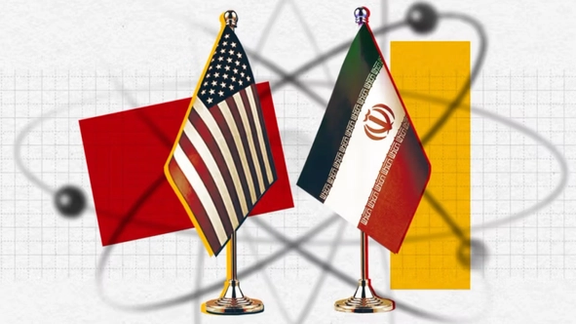
Iran is exchanging messages with the United States but has not begun negotiations, Foreign Ministry Spokesman Esmail Baghaei said on Monday during his weekly briefing.
Iran is exchanging messages with the United States but has not begun negotiations, Foreign Ministry Spokesman Esmail Baghaei said on Monday during his weekly briefing.
“Messages are still being passed through various intermediaries, but this does not in any way mean the start of a negotiation process between Iran and the United States,” Baghaei said.
“No official message was conveyed to Iran during Deputy Foreign Minister Majid Takht-Ravanchi’s trip to Oman.”
Takht-Ravanchi visited Muscat last week for a meeting of the Iran-Oman Political Strategic Committee, where he and Omani Foreign Minister Badr Albusaidi discussed regional developments and plans to expand bilateral cooperation, according to Iranian media.
Recent commentary about a restart of direct or indirect talks had been imprecise, Baghaei said, adding that Tehran has received no formal communication from Washington via Muscat and that shuttle efforts are limited to narrowing gaps.
Diplomacy, he added, remains active with neighbors and partners, including Oman, while any talks must respect Iran’s rights under international law.
IAEA must avoid ‘baseless repetition’
Baghaei called on the International Atomic Energy Agency to avoid repeating what he described as politically driven assertions about Iran’s nuclear program.
“The Director General has in fact reiterated that Iran’s nuclear activities have always been peaceful and there are no indications of a military dimension,” he said.
“The Agency should remain within its technical mandate and refrain from echoing unfounded claims made by certain parties only seeking pretexts.”
Iran suspended cooperation with IAEA inspectors after a 12-day war in June against Israel and the United States, codified via a new law passed by parliament.
Tehran’s cooperation with the Agency, he added, continues under its international commitments, but political manipulation of technical reports “undermines trust and objectivity.”
In September, Iran and the agency agreed in Cairo to restart inspections. However, after Germany, France and the United Kingdom triggered the reimposition of UN sanctions, it remained unclear whether Iran would comply.
A report by the Center for Strategic and International Studies said satellite imagery shows continued construction at a major underground nuclear facility near Natanz.
No conditions for talks with the US
Baghaei dismissed suggestions of an imminent resumption of negotiations with Washington, saying the environment was not yet suitable. “Whenever we reach the stage of negotiations, decisions will be made regarding the composition of the negotiating team and other details,” he said.
“But at present, the conditions for a meaningful dialogue are not in place.”
Iran, he said, would only enter talks that respected its rights under the Nuclear Non-Proliferation Treaty.
“Our rights and interests must be respected… If the other side develops a realistic understanding and shows respect for Iran’s legitimate rights, then we can say conditions for meaningful dialogue will exist. At this stage, we are not there yet.”
Earlier this year, Washington and Tehran held five rounds of talks over Iran’s disputed nuclear program under a 60-day deadline imposed by President Donald Trump.
When the deadline expired without a deal on June 13, Israel launched a surprise military campaign, prompting US airstrikes nine days later on June 22 that hit major nuclear sites in Isfahan, Natanz, and Fordow
‘US threats to Latin America condemned’
Baghaei also condemned what he described as US military threats toward Venezuela and other Latin American countries.
“We categorically reject the United States’ military movements in the Caribbean and Latin America,” he said. “Such actions are detrimental to international peace and security and have no legal justification.”
He cited international conventions that prohibit the use of counter-narcotics operations as grounds for violating sovereignty.
“Even under the 1988 convention on combating drug trafficking, there is a clear provision stating that such efforts cannot justify breaching national sovereignty,” Baghaei said. “The threats against Venezuela and others are legally and politically unacceptable and contradict the principles of the UN Charter.”
Baghaei said such behavior risked setting “a dangerous precedent” for international relations. “We are concerned that these actions could normalize interventions by other states elsewhere in the world.”









“They have no nuclear capability, no,” Trump said in a CBS 60 Minutes interview aired on Sunday, adding that he had “blasted the hell out of” Iran and praising US pilots for operations he said were conducted in Iranian airspace.
Trump said progress on Arab-Israeli normalization would have been impossible “if you had a nuclear Iran,” arguing that curbing Tehran’s capabilities was a prerequisite for any agreement.
He added, “You could’ve never had any kind of a deal if you had a nuclear Iran… And I blasted the hell out of ’em,” while also saying the United States halted operations, characterizing his decisions as calibrated to deter Tehran while preserving space for diplomacy. “We stopped,” he said. “When it was time to stop, we stopped.”
The president described Iran as wanting an agreement even if they don’t say it, and cast a potential understanding with Tehran as “the key to peace in the Middle East.” He did not outline new diplomatic proposals or timelines.
Iranian officials have long rejected US accusations about nuclear ambitions, saying enrichment and related activities support power generation and medical research. The International Atomic Energy Agency has previously urged Tehran to address questions about its program.
Trump’s remarks come as Washington and regional partners weigh next steps on containment and possible talks with Tehran amid intermittent back-channel messaging.
Tehran had received messages concerning the talks, Fatemeh Mohajerani, spokeswoman for President Masoud Pezeshkian’s administration, said on Sunday, but declined to identify the sender or disclosing any further details.
“Details about the nature and content of the messages will be provided at the appropriate time,” she told reporters.
Her remarks came after the Iraqi news outlet Baghdad Al-Youm, citing diplomatic sources in Tehran, reported on Friday that a message transmitted to Muscat expressed Washington’s willingness to resume nuclear negotiations with the Islamic Republic.
The US president Donald Trump had expressed his determination to reach a new agreement with Iran, the report said.
However, Tasnim News Agency, affiliated with Iran’s Revolutionary Guards, quoted an informed source on Saturday denying the report and saying that “no message has been sent by the United States through Oman.”
Oman and Qatar urge return to diplomacy
Oman’s foreign minister, Badr al-Busaidi, speaking on Saturday at Manama Dialogue conference in Bahrain, said his country hoped to return to negotiations between Iran and the United States. Oman has hosted five rounds of indirect talks between Tehran and Washington this year.
The planned sixth round in June, Al-Busaidi said, was halted after Israel’s attacks on Iran.
“Three days before the sixth round of talks was set to take place in June, Israel unleashed its bombs and missiles in an illegal and deadly act of sabotage,” he said.
The negotiations aimed at a new accord that would limit Iran’s nuclear activities in exchange for sanctions relief.
Western governments, including the United States, have accused Iran of pursuing nuclear weapons, while Tehran insists its program is solely for peaceful purposes.
Qatari prime minister and foreign minister Mohammed bin Abdulrahman Al Thani said on October 29 that Doha was working to bring both sides back to a new agreement.
“We are trying to engage with the United States and with the Iranians to make sure that the talks come back on track between the two countries, because I believe once we have the talks started, we can achieve an agreement,” Al Thani said at an event hosted by the Council on Foreign Relations think tank in New York.
“We can achieve a deal that will be better for everyone. For us in the region, for Iran, and for the United States,” Al Thani said. “Iran is my neighbor... for me, the stability of Iran is key. It’s not a luxury... it’s very important.”
Trump withdrew the United States from the 2015 nuclear deal between Iran and world powers, which had imposed strict limits on uranium enrichment in exchange for sanctions relief. In September, the United Nations reimposed its arms embargo and other sanctions on Iran over its nuclear program.
Abbas Goudarzi, spokesman for the parliament presidium, accused Rouhani of “disturbing public opinion and weakening national unity” and called on the judiciary to investigate what he described as Zarif’s “anti-Russia remarks.”
His comments, published on Saturday by Tasnim News Agency, came amid growing debate over Iran’s strategic partnership with Russia and China.
Rouhani has recently renewed calls for dialogue with the West and the United States, while Zarif said on October 17 that Moscow’s foreign policy toward Tehran rests on two red lines: “Iran must not normalize relations with the world and must not enter direct confrontation with it.”
“The judiciary must respond decisively,” Goudarzi said. “National security cannot be left in the hands of those who did nothing when in power and now seem upset to see a new global order forming.”
“Today Russia and China stand by the Islamic Republic and by truth itself, taking good positions against America’s unilateralism and condemning the wrongful actions of European countries. Unfortunately, some from within are sending negative signals."
"When they were in positions of responsibility, they leaned entirely toward the West, but now that we are witnessing a positive approach in foreign policy, the same people are pouring water into the enemy’s mill, creating obstacles and placing sticks in the wheels,” he added.

Lawmakers and former officials join criticism
Vahid Ahmadi, a member of the parliament’s National Security and Foreign Policy Committee, also rejected criticism of Iran’s alignment with Russia and China.
“Those who are sensitive about our friendship with the East are either hostile, uninformed, or influenced by certain propaganda,” he said on Saturday in remarks quoted by Fararu website.
“We have long-term 20- and 25-year agreements with Russia and China as partners, and we are acting based on the national interests of our country,” Ahmadi added.
Former foreign minister Manouchehr Mottaki, who served under President Mahmoud Ahmadinejad, also joined the criticism of Rouhani.
“During his government’s nuclear negotiations with the United States, Rouhani adopted the worst possible approach. By referring to America as ‘the village elder,’ he effectively disarmed himself and handed the upper hand to the other side,” he said.
Earlier, parliament speaker Mohammad Bagher Ghalibaf also accused Rouhani and Zarif of damaging Tehran-Moscow relations, which he described as progressing well.
Despite the 20-year strategic cooperation agreement signed earlier this year between Tehran and Moscow, the exchange has laid bare widening divisions within Iran’s political establishment over the country’s reliance on Russia, as critics warn that Moscow sees Iran largely as leverage in its standoff with the West.
The recent confrontation in June had shattered long-standing assumptions about Israel’s military power, Saeed Khatibzadeh said.
“The myth of Israel’s invincibility collapsed after Iran’s response,” he added, describing Tehran’s military action as a turning point that proved Iran’s capacity to retaliate.
Earlier this year, the United States held five rounds of negotiations with Tehran over its disputed nuclear program under a 60-day deadline set by President Donald Trump.
When no agreement was reached by the 61st day, on June 13, Israel launched a surprise military offensive, followed by US strikes on June 22 targeting key nuclear facilities in Isfahan, Natanz, and Fordow.
“Iran has no choice but to secure a decisive victory against the aggressor,” Khatibzadeh said, arguing that any attack on Iran would be met with a response aimed at ensuring that “the aggressor will undoubtedly regret its decision.”
‘We are peace-seeking, but we fight well’
Iran does not seek confrontation but will not hesitate to defend itself, Khatibzadeh said. “We are a peace-seeking people, but if war is imposed on us, we fight well… We never sought confrontation, but they chose the path of confrontation.”
The deputy minister linked Iran’s stance to what he called the “geopolitical ambitions” of the United States and Israel, urging other countries to recognize Iran’s right to defend itself.
“We have never accepted the language of force,” he said. “Our message is clear: respect, justice, and balance must define international relations.”
The 12-day conflict ended on June 24 after a US-brokered ceasefire, but global alarm over Tehran’s nuclear program deepened as 400 kilograms of Iran’s highly enriched uranium remained unaccounted for.
Tehran says the material lies buried beneath debris from US and Israeli airstrikes, rendering it unreachable, yet it has so far refused to grant international inspectors access to the damaged sites.