Survival mode: how Tehran adapts through crisis, endures decay

Ata Mohamed Tabriz
Iran analyst
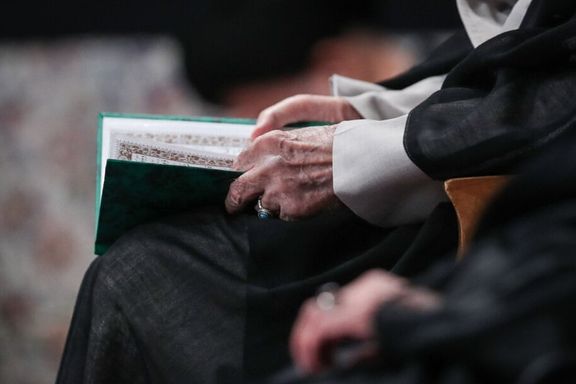
Tehran is in a tougher position after the 12-day war and the return of UN sanctions but may not be as close to collapse as some Iranians might like.
Iran analyst
Tehran is in a tougher position after the 12-day war and the return of UN sanctions but may not be as close to collapse as some Iranians might like.
Over the years, the Islamic Republic has learned through crises how to avoid breakdown by adjusting pressure and tension.
This does not mean the system is stable. But the way political actors interpret a state steadily losing ground can, paradoxically, prolong its life and dull the will to resist.
When everything is framed as “imminent collapse,” the mechanisms through which the power structure renews itself go unseen.
The Islamic Republic, precisely when it appears weak, is rebuilding itself. The rulers in Tehran are shifting from rigidity to hybridity—from total control to a contradictory mix of freedom and repression.
A new logic of survival
One sign of this shift is visible in the hijab issue. In much of Tehran and other major cities, the state has largely pulled back from strict dress enforcement, though verbal warnings have returned.
The sight of unveiled women and the freer—if still risky—operation of cafés are widely seen as retreats from the theocracy’s ideological ground.
But that retreat tells only half the story. While scaling back the morality police, the government has intensified executions and political arrests. The security apparatus advances elsewhere with renewed vigor.
In this survival logic, Tehran knows total control is neither possible nor necessary. It loosens its grip in some areas to vent pressure while consolidating power in others. This could be called controlled liberalization: limited freedoms to absorb discontent, paired with harsh repression to enforce discipline.
Even these freedoms are narrow and uneven—visible mostly in affluent parts of Tehran. In other cities, tolerance around hijab or social life is largely confined to wealthier districts. Only a small segment benefits, while the threat of arrest still hangs over all.
This display of flexibility is part of the survival mechanism—meant to defuse unrest and repair eroded legitimacy.
Redefining freedom
The Islamic Republic is trying to redefine freedom itself. Freedom becomes not a universal right but a class-based privilege without legal protection, shadowed by laws ready to repress. What is limited and controlled is sold as freedom.
This divide is not only social but psychological. Images of these narrow freedoms circulate online, creating a sense of normalcy—as if society were breathing again and the control had softened.
Yet this circulation is itself a tool of control. Power now operates not only through coercion but through the display of freedom—showing it to blunt the desire for it.
Repression, however, has not changed.
In the post-war period, mechanisms of elimination have not disappeared—they have become more complex and severe. Arrests and executions have multiplied even as scenes of openness are displayed.
These images of easing mask the reconstruction of the same machinery of fear. What has occurred bears little relation to freedom.
(Not) understanding power
The Islamic Republic has changed its governing logic, while many analysts—ignoring the full scope of that shift—still read every retreat as weakness or collapse.
Yet within those very weaknesses, the Islamic Republic has forged new methods of survival, oscillating between coercion and tolerance.
Today’s government no longer rules through rigid discipline but through fluid, contradictory behavior in which retreat and advance reinforce each other. This marks a kind of institutional learning: endurance now depends less on absolute control than on calibrating the limits of freedom and repression.
To treat weakness or non-enforcement of law as proof of collapse is to miss Tehran’s new logic. The Islamic Republic has built alternative strategies to mask fragility—ways to rebuild legitimacy and manage society amid crisis.
In today’s Iran, the system finds its strength not in closing doors but in keeping them half-open. Apparent openings and simultaneous crackdowns are two sides of the same political logic.
Understanding that logic is essential—because “weakness” is not always a prelude to “collapse.” Sometimes, it is the state’s latest strategy for survival.






In a statement carried by state television, the General Staff of the Armed Forces said comments by “uninformed or unauthorized individuals” had appeared in recent days and stressed that only official statements from its communications center represent Iran’s position. It urged media outlets to avoid reporting on such issues without coordination.
The warning came after parliament member Amirhossein Sabeti said there had been no disagreement between Iran and its key partners, Russia and China, over weapons deliveries. Sabeti said all weapons or systems that Iran requested and paid for had been delivered.
“There is no weapon we asked for from China or Russia that they did not give us,” he said earlier this week. “On the fourth day of the war, we received several air defense systems from China.”
He added that any delays in receiving equipment were due to domestic factors, not foreign unwillingness. “If there was any delay in delivery, it was from our side, not theirs,” Sabeti said, adding that Russia and China “had no ill intent” and that Iran should make better use of what he described as shared strategic interests.
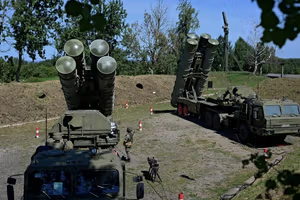
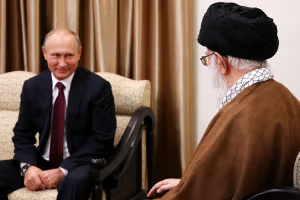
The statement came amid escalating divisions in Tehran over the country’s reliance on Moscow and Beijing.
Former president Hassan Rouhani and ex-foreign minister Mohammad Javad Zarif have questioned what they call Iran’s overreliance on Moscow, prompting sharp criticism from hardliners.
Parliament Speaker Mohammad Bagher Ghalibaf accused the two of “damaging national interests” after a video surfaced showing Rouhani noting that both Russia and China had supported UN sanctions on Iran in 2010.
Zarif separately clashed with Russian Foreign Minister Sergei Lavrov, accusing Moscow of trying to block the 2015 nuclear deal and of keeping Iran “in a state of controlled isolation.”
Several lawmakers echoed Ghalibaf’s remarks, accusing the former officials of undermining Iran’s strategic partnerships.
Addressing students and officials at a ceremony commemorating the anniversary, Khamenei said the event should be understood “from both a historical and an identity-based perspective.”
“From a historical viewpoint, without doubt, this day will be remembered as a day of pride and triumph for our nation,” he said. “It was a day when our young people stood up without fear to a power that intimidated politicians around the world, and they attacked its embassy with reasoning and purpose. It is a day of honor, a day of victory.”
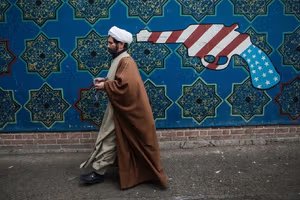
Khamenei described the embassy takeover as revealing the “true identity of the United States” and said it showed that “the essence of America’s arrogance was to see itself as entitled to dictate to others.”
“The occupation of the embassy clarified the real nature of the United States and also defined the genuine identity of the Islamic movement,” he said. “Our nation already knew the arrogant nature of America, but this incident made it even clearer.”
He linked anti-US sentiment to Iran’s modern history, citing the CIA-backed 1953 coup that overthrew Prime Minister Mohammad Mossadegh. “The American plot on the 28th of Mordad was a major blow to Iran,” he said.
“It toppled the first national government that stood against colonial powers. The Iranian nation has known ever since what a dangerous enemy America can be.”
Rejecting the view that the embassy seizure triggered hostilities between the two countries, he said the conflict “did not begin on the 13th of Aban; it began on the 28th of Mordad.”
He added: “The students uncovered a serious conspiracy against the revolution. The embassy was not an ordinary diplomatic post -- it was a center of plotting and coordination.”
Khamenei said Iran’s differences with the United States were not circumstantial. “The dispute between the Islamic Republic and America is not tactical or temporary. It is a fundamental and structural contradiction,” he said.
“Whenever America can, it acts. It supports those who attack us, it imposes sanctions, it even shoots down a passenger plane. The nature of arrogance and the nature of independence cannot coexist.”
On prospects for future relations, Khamenei said that Iran’s strength was the key to security. “We cannot predict the distant future,” he said. “But today the solution to many problems is to become strong, scientifically, militarily, economically. If the country is strong, the enemy will not dare to attack.”
He added that any improvement in ties would require a fundamental shift in US policy. “America sometimes says it wants cooperation with Iran,” he said.
“Cooperation with Iran is incompatible with supporting the Zionist regime. If one day America abandons that regime, removes its military bases from the region and stops interference, then issues could be reviewed -- but that time is not now.”
Growing debate over a legacy
While Khamenei defended the embassy seizure as a historic victory, his comments contrasted with those of several political figures who in recent years have described the event as a strategic mistake that complicated Iran’s international position.
Former parliament deputy speaker Ali Motahari said earlier this week that the takeover was “a hasty act influenced by leftist groups” that damaged Iran’s global image and “in the end worked in America’s favor.” He argued that while a short occupation could have been justifiable, prolonging it for 444 days was “unnecessary and damaging.”
Former speaker of parliament Ali Akbar Nategh-Nouri made similar remarks in past years, saying that “in the early years of the revolution there was inexperience and immaturity,” and that the embassy seizure was “a major mistake” that created long-term challenges for Iran’s foreign relations.
“Many of the difficulties we later faced began at that point,” he said, adding that reciprocal measures by Washington, including the freezing of Iranian assets, stemmed from the initial occupation.
At the same time, hardline media and conservative figures have defended the 1979 action, arguing that the embassy was then “a den of espionage” and that concerns about a repeat of the 1953 US-backed coup justified the students’ move.
Accounts from some of the former student organizers have also shed light on internal disagreements at the time.
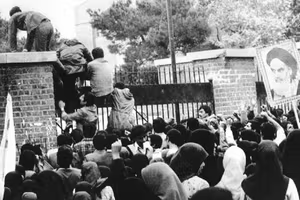
Former president Mahmoud Ahmadinejad, who represented the University of Science and Technology in student councils in 1979, was among those said to have opposed the embassy seizure -- not on diplomatic grounds, but because he believed occupying the Soviet embassy would have been more significant.
Former hostage-taker Abbas Abdi has confirmed that Ahmadinejad and a small group of others objected to the plan on those grounds.
During an interview in 2024, Ahmadinejad said, "For how much longer do we desire to remain in conflict with the US? Following the revolution, there was potential to resolve matters with the US, but certain individuals occupied the embassy, complicating matters."
In later years, figures such as Abdi and other former participants in the embassy takeover said the event should be viewed in its historical context, arguing that while it was driven by revolutionary fervor and fear of renewed foreign interference, its long-term political consequences were complex.
Analysts say such comments reflect a broader debate within Iran’s political class over the legacy of the embassy seizure and its impact on foreign policy. But Khamenei’s remarks reaffirmed his long-held view that resistance to US influence is central to Iran’s revolutionary identity.
“The United States cannot tolerate an independent Iran,” Khamenei said. “But this nation will never surrender. The path of dignity, independence and faith will continue.”