Iran helped Hezbollah rebuild command structure in Lebanon - Le Figaro
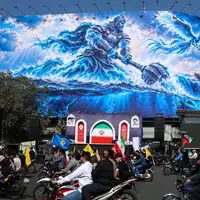
Hezbollah supporters gather to mark the first anniversary of the assassinations of Hezbollah leaders Hassan Nasrallah and Hashem Safieddine, in Tehran, Iran, October 2, 2025.
Iran’s Quds Force has been directly involved in reorganizing Hezbollah’s military network in Lebanon following the killing of Hassan Nasrallah and the group’s heavy losses in its conflict with Israel, according to an investigation by the French newspaper Le Figaro.
According to the report published on Saturday, in the days after Nasrallah’s assassination in September 2024, Hezbollah’s leadership was thrown into chaos, leaving its forces without direction. “For ten days, no one answered calls. We were like a body in a coma,” one Hezbollah member told Le Figaro.
About two weeks later, Iranian operatives led by Esmail Ghaani, commander of the Islamic Revolutionary Guards Corps’ Quds Force, arrived in Lebanon to restore order. Within ten days, the report said, they rebuilt Hezbollah’s military structure, though its political leadership remained vacant.
Founded in 1982 by Iran’s Revolutionary Guards, Hezbollah has grown into Lebanon’s most powerful military and political organization, with capabilities surpassing the national army. The group has fought multiple wars with Israel and repeatedly rejected demands to dismantle its military wing.
In August, the Lebanese cabinet ordered the army to draw up plans to disarm Hezbollah as part of a broader effort to consolidate state control over weapons under a US-backed truce with Israel. Tehran condemned the move, accusing Western powers of seeking to weaken Lebanon’s defenses.
Covert rebuilding under Iranian direction
Iran guided the creation of a new, more secretive framework separating Hezbollah’s political and military wings and bringing in younger commanders, according to Le Figaro.
Hezbollah lawmaker Ali Fayyad said the organization now operates with a shorter chain of command in which “no one knows who is responsible for what.”
While Hezbollah agreed to disarm in southern Lebanon, the report said the group continues to store weapons in the Bekaa Valley and north of the Litani River, preserving its broader network with Iranian assistance.
Tehran’s strategy, the paper added, appears aimed at maintaining Hezbollah’s role as a deterrent force while avoiding a new direct confrontation with Israel.
A Western intelligence source quoted in the report described the group as “a snake crawling in the dark -- not gone, just waiting.”
Despite financial strain linked to Syria’s economic collapse, Le Figaro said Iran’s backing remains vital to Hezbollah’s recovery. The group, it wrote, is quietly rebuilding its command hierarchy under Iranian supervision while retaining its political influence in Lebanon and preparing for “the next phase.”