• العربية
  • فارسی
Brand
  • Iran Insight
  • Politics
  • Economy
  • Analysis
  • Special Report
  • Opinion
  • Podcast
  • Iran Insight
  • Politics
  • Economy
  • Analysis
  • Special Report
  • Opinion
  • Podcast
  • Theme
  • Language
    • العربية
    • فارسی
  • Iran Insight
  • Politics
  • Economy
  • Analysis
  • Special Report
  • Opinion
  • Podcast
All rights reserved for Volant Media UK Limited
volant media logo
OPINION

In Iran, Western journalists prioritize access over truth

Mehdi ParpanchiMark Dubowitz
Mehdi Parpanchi,
Mark Dubowitz
Oct 19, 2025, 14:00 GMT+1Updated: 00:10 GMT+0
 Iranian women look at jewellery displayed in a store in Tehran, Iran, September 27, 2025.
Iranian women look at jewellery displayed in a store in Tehran, Iran, September 27, 2025.

Jon Snow, the longtime British broadcaster, once spoke at a London roundtable about his trips to Tehran. Asked how Channel 4 gained such easy access to Iranian officials, he paused and replied, “They whistle, and we go.”

It was a rare moment of honesty — and a metaphor for a deeper failure in Western journalism. For decades, many correspondents have mistaken access for understanding and permission for credibility.

This reporting perpetuates the illusion that a “moderate” or “reformist” faction within the clerical regime is always on the brink of pursuing a more friendly policy toward the West — if only Washington and its partners would be more conciliatory.

At the same time, this coverage conceals the essential truth that a younger, connected, and defiantly secular generation rejects religious dictatorship.

To report from Iran, Western journalists must operate under state supervision. Their “fixers” are often regime-approved minders who decide which families they can meet, which streets they can visit, and what stories they can tell. The price of defiance is expulsion. Most choose to stay, and so they comply.

The result is journalism that reports through the regime’s lens. Coverage mirrors Tehran’s narrative while ignoring its contradictions.

When Iran invited Western media to cover the recent 12-day war with Israel, many major outlets accepted. Yet none mentioned the most visible fact on Tehran’s streets: women walking unveiled in courageous defiance of the law and regime threats.

Instead, their dispatches focused narrowly on civilian casualties, using regime-selected witnesses and identical talking points. Access was preserved; truth was not.

Since 1979, Western coverage has lagged a decade behind Iran’s reality.

In the early years of the revolution, reporters portrayed a nation united behind Ayatollah Khomeini, ignoring the liberals, nationalists, and religious dissenters who opposed him.

Two decades later, President Mohammad Khatami was cast as proof that “reformers” were emerging inside the system. In fact, his 1997 victory was a bottom-up protest vote, not a top-down project of change.

Ever since, journalists have recycled the same script: “moderates” versus “hardliners.” They still describe every election as a “battle for Iran’s future,” though every candidate operates within red lines drawn by Supreme Leader Ali Khamenei.

The 2015 nuclear deal was touted as the triumph of moderation under President Hassan Rouhani — yet it was conceived and authorized by Khamenei himself.

While foreign correspondents chase factional drama, Iran’s people have transformed. A younger, connected, and defiantly secular generation has rejected clerical control.

The revolt of Iranian women — from the “Woman, Life, Freedom” uprising of 2022–23 to daily acts of unveiled defiance — represents the most sustained challenge to the Islamic Republic since its founding.

But these stories are rarely told. At their height, protests command the attention of Western journalists. When they abate, often because of bloody suppression, it is back to the old story about alleged “moderates.”

When Western correspondents appear on air from Tehran wearing the compulsory hijab, they explain it as “respect for local culture.” But there is nothing cultural about coercion. Millions of Iranian women are risking imprisonment to defy that law, while foreign journalists are complicit in its perpetuation.

There are exceptions. VICE News correspondent Isobel Yeung chose honesty over access in her 2023 documentary on post-Mahsa Amini Iran. She’s unlikely to receive another visa. Meanwhile, the same media that rail against limits on press briefings in Washington submit meekly to the censorship of a theocracy.

This is more than a journalistic sin; it’s a strategic failure. Policymakers rely on the press to gauge Iran’s internal dynamics. When the media misread the country, so do the governments that read them.

Washington and Europe have spent years betting on “moderates” who don’t exist, negotiating with powerless presidents, and failing to see the possibility that the Islamic Republic will collapse from within.

Ultimately, those who pay the price are Iranians themselves.

Jon Snow’s line — “They whistle, and we go” — should be engraved above every newsroom desk that covers Iran. It captures the moral inversion of access journalism: the more the regime whistles, the faster the press runs.

Iran today is not the country Western reporters still describe. It is a nation where millions quietly rebel, where women lead a moral revolution, and where a dictatorship survives because it guns down dissenters while outsiders echoing the Islamic Republic’s preferred narrative.

The choice for Western journalists is clear: keep obeying the whistle — or finally listen to the voices on the street.

Most Viewed

100 days after carnage: Iran economy reels from war, inflation, unemployment
1
INSIGHT

100 days after carnage: Iran economy reels from war, inflation, unemployment

2
INSIGHT

Ghalibaf defends Iran-US talks amid hardline backlash

3
INSIGHT

A nation in limbo: 100 days after the massacre, has the world moved on?

4
ANALYSIS

From instability to influence: Pakistan’s pivotal role in US-Iran diplomacy

5
ANALYSIS

100 days on: why Iran’s January protests spread across social classes

Banner
Banner

Spotlight

  • War-hit homeowners feel abandoned as Iran’s reconstruction aid fades

    War-hit homeowners feel abandoned as Iran’s reconstruction aid fades

  • 100 days on: the anatomy of Iran’s January crackdown
    INSIGHT

    100 days on: the anatomy of Iran’s January crackdown

  • Ghalibaf defends Iran-US talks amid hardline backlash
    INSIGHT

    Ghalibaf defends Iran-US talks amid hardline backlash

  • 100 days on: why Iran’s January protests spread across social classes
    ANALYSIS

    100 days on: why Iran’s January protests spread across social classes

  • From instability to influence: Pakistan’s pivotal role in US-Iran diplomacy
    ANALYSIS

    From instability to influence: Pakistan’s pivotal role in US-Iran diplomacy

  • A nation in limbo: 100 days after the massacre, has the world moved on?
    INSIGHT

    A nation in limbo: 100 days after the massacre, has the world moved on?

•
•
•

More Stories

Iran executes man accused of spying for Israel in Qom

Oct 19, 2025, 13:16 GMT+1

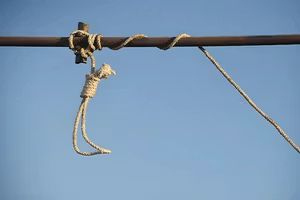
Iran executed a man on Saturday convicted of spying for Israel’s Mossad intelligence service, the judiciary said on Sunday, the second such execution reported in less than a month.

Kazem Mousavi, head of the judiciary in Qom province, said the unnamed man was executed on Saturday morning after the Supreme Court upheld his death sentence and rejected a clemency request.

“The spy’s sentence was carried out after being found guilty of moharebeh (enmity against God) and corruption on earth,” Mousavi told the judiciary’s news agency Mizan.

He said the man began cooperating with Israeli intelligence in October 2023 and was arrested four months later after sending classified information through online channels.

According to Mizan, the defendant confessed to meeting a Mossad officer, transmitting sensitive data, and receiving payment for his work.

  • Iran executes man accused of spying for Israel

    Iran executes man accused of spying for Israel

  • Iran executes political prisoner accused of spying for Israel

    Iran executes political prisoner accused of spying for Israel

The execution follows the late September hanging of Bahman Choubi-asl, a database specialist accused of providing information to Mossad in meetings abroad, including in India and Ireland.

Earlier in September, Iran also executed political prisoner Babak Shahbazi over similar charges.

Last month, the UN special rapporteur on human rights in Iran said the country had executed 11 individuals on espionage charges this year, with at least nine carried out after Israel's military strike on Iran on June 13. Saturday's execution brings the total to at least 12.

Iran urges Islamic parliaments to back boycott of Israel

Oct 19, 2025, 13:14 GMT+1

Iranian Vice Speaker of Parliament Hamidreza Hajibabaei called on Muslim countries’ parliaments to pass binding laws imposing a complete economic, trade, and political boycott of Israel during a speech at the Inter-Parliamentary Union (IPU) meeting in Geneva.

Hajibabaei said Iran “firmly supports the legitimate resistance of the Palestinian people” and the creation of an independent Palestinian state with Jerusalem as its capital.

He urged Muslim unity against what he described as Israel’s “decades-long impunity for war crimes.”

Speaking at the 151st IPU Assembly -- which focuses on humanitarian norms and inclusive democracy -- Hajibabaei warned that any temporary ceasefire should not mean “forgetting justice or accountability.”

He added that global action was needed to prosecute those responsible for crimes in Gaza and said Islamic solidarity was key to achieving “a just and lasting peace for Palestine.”

Iran accuses Israel lobby of orchestrating drone display at UK parliament

Oct 19, 2025, 11:59 GMT+1

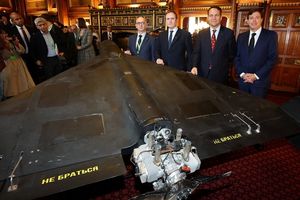
Iran’s Foreign Minister Abbas Araghchi has denounced the display of a drone in the British Parliament allegedly linked to Tehran, calling it “a pathetic show” staged by the Israeli lobby and its backers.

In a post written in Polish on X, Araghchi said, “The exhibition in the British Parliament of a drone falsely and maliciously attributed to Iran is a pathetic scene staged by the Israeli lobby and its sponsors.”

He added that “those hostile to friendly relations between Iran and Europe are creating fabricated narratives that do not reflect the historical ties -- including between Iran and Poland.”

Araghchi added that Tehran remained ready to engage in technical talks and exchange of documents to clarify the facts, dismissing what he called “an absurd performance.”

The remarks came days after Iran summoned Poland’s chargé d’affaires in Tehran to protest Polish Foreign Minister Radoslaw Sikorski’s participation in an event in London that featured a Shahed-136 drone allegedly used by Russia in its war in Ukraine.

  • Iran summons Polish diplomat over London drone display

    Iran summons Polish diplomat over London drone display

  • Iran denies involvement in UK-linked plots after MI5 warning

    Iran denies involvement in UK-linked plots after MI5 warning

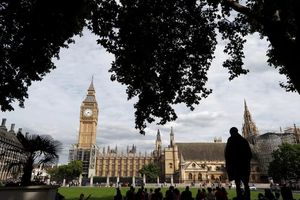
The display, organized by the US-based advocacy group United Against Nuclear Iran (UANI), was held at the Houses of Parliament and attended by Western and Ukrainian officials.

Tehran condemned the exhibition as a politically motivated act, accusing organizers of spreading “baseless and repetitive accusations” about Iran’s drone program.

Iran says it supplied drones to Russia before the war began, but denies providing weapons for use in Ukraine. Western governments and Kyiv say Iranian-designed Shahed drones, now produced in Russia under the name Geran, have played a key role in Moscow’s air strikes.

Araghchi’s statement also followed a sharp exchange between Tehran and London over British intelligence claims of Iranian-linked plots on UK soil. MI5 chief Ken McCallum said last week that more than 20 Iran-related operations had been disrupted over the past year, describing Tehran as one of the UK’s most active hostile state actors.

Iran helped Hezbollah rebuild command structure in Lebanon - Le Figaro

Oct 19, 2025, 10:20 GMT+1

Iran’s Quds Force has been directly involved in reorganizing Hezbollah’s military network in Lebanon following the killing of Hassan Nasrallah and the group’s heavy losses in its conflict with Israel, according to an investigation by the French newspaper Le Figaro.

According to the report published on Saturday, in the days after Nasrallah’s assassination in September 2024, Hezbollah’s leadership was thrown into chaos, leaving its forces without direction. “For ten days, no one answered calls. We were like a body in a coma,” one Hezbollah member told Le Figaro.

About two weeks later, Iranian operatives led by Esmail Ghaani, commander of the Islamic Revolutionary Guards Corps’ Quds Force, arrived in Lebanon to restore order. Within ten days, the report said, they rebuilt Hezbollah’s military structure, though its political leadership remained vacant.

Founded in 1982 by Iran’s Revolutionary Guards, Hezbollah has grown into Lebanon’s most powerful military and political organization, with capabilities surpassing the national army. The group has fought multiple wars with Israel and repeatedly rejected demands to dismantle its military wing.

In August, the Lebanese cabinet ordered the army to draw up plans to disarm Hezbollah as part of a broader effort to consolidate state control over weapons under a US-backed truce with Israel. Tehran condemned the move, accusing Western powers of seeking to weaken Lebanon’s defenses.

Covert rebuilding under Iranian direction

Iran guided the creation of a new, more secretive framework separating Hezbollah’s political and military wings and bringing in younger commanders, according to Le Figaro.

Hezbollah lawmaker Ali Fayyad said the organization now operates with a shorter chain of command in which “no one knows who is responsible for what.”

While Hezbollah agreed to disarm in southern Lebanon, the report said the group continues to store weapons in the Bekaa Valley and north of the Litani River, preserving its broader network with Iranian assistance.

Tehran’s strategy, the paper added, appears aimed at maintaining Hezbollah’s role as a deterrent force while avoiding a new direct confrontation with Israel.

A Western intelligence source quoted in the report described the group as “a snake crawling in the dark -- not gone, just waiting.”

Despite financial strain linked to Syria’s economic collapse, Le Figaro said Iran’s backing remains vital to Hezbollah’s recovery. The group, it wrote, is quietly rebuilding its command hierarchy under Iranian supervision while retaining its political influence in Lebanon and preparing for “the next phase.”

Russia, China back Iran’s view on end of UN sanctions, top diplomat says

Oct 19, 2025, 08:16 GMT+1

Russia and China agree with Tehran that UN sanctions on Iran have not been automatically reimposed and that the Security Council resolution endorsing the 2015 nuclear deal has now expired on October 18, Iran’s Foreign Minister Abbas Araghchi said on Saturday.

“The view of the Islamic Republic of Iran and countries such as Russia and China, which are permanent members of the Security Council, is that contrary to the position of the United States and some European countries, the snapback mechanism has not been triggered and resolution 2231 has formally expired,” Araghchi said in remarks published by ISNA.

“With the resolution’s expiration, all restrictions imposed by the Security Council on the Islamic Republic of Iran have been completely lifted and the issue of Iran is no longer on the council’s agenda.”

The position, Araghchi said, had gained broad support. “More than 120 countries adopted this view in the final document of the Non-Aligned Movement foreign ministers’ meeting in Uganda,” he said.

“The Russian Federation, as a permanent member and the current president of the Security Council, has also issued an official statement rejecting the return to previous resolutions.”

  • Iran no longer bound by 2015 nuclear deal restrictions, Araghchi tells UN

    Iran no longer bound by 2015 nuclear deal restrictions, Araghchi tells UN

Strategic partnership with Moscow

The relationship between Tehran and Moscow strengthened through the signing of a 20-year cooperation agreement, the foreign minister added.

“The comprehensive partnership between Iran and Russia provides a firm basis for expanding cooperation in all fields and safeguarding the common interests of the two countries,” Araghchi said.

“This relationship is rooted in mutual trust, shared interests and a long-term strategic outlook.”

He also confirmed that Iran, Russia and China had exchanged joint communications with the UN Security Council and the secretary-general over recent months expressing a common stance on the expiration of the resolution and rejection of the European move to revive sanctions.

Russian UN envoy Mikhail Ulyanov wrote on X on Saturday that under paragraph 8 of resolution 2231, “the UN Security Council has concluded today the consideration of the Iranian nuclear issue and the item ‘Non-proliferation’ is removed from the list of matters of which the Council is seized.”

Response to European action

In a letter to the UN secretary-general and the council president, Araghchi said the termination of the resolution was “in full accordance with its explicit provisions.”

He wrote that Iran had “implemented the JCPOA in good faith and with full precision,” while accusing the United States of “grossly violating international law” by withdrawing from the accord in 2018.

The European powers’ decision in August to trigger the snapback mechanism, he said, had “no legal, procedural or political basis,” adding that any comment to reinstate expired resolutions was “null and void.”

Iran and its partners would “focus on strengthening their collective stance at the Security Council and maintaining national unity to advance the country’s higher interests,” Araghchi concluded.