• العربية
  • فارسی
Brand
  • Iran Insight
  • Politics
  • Economy
  • Analysis
  • Special Report
  • Opinion
  • Podcast
  • Iran Insight
  • Politics
  • Economy
  • Analysis
  • Special Report
  • Opinion
  • Podcast
  • Theme
  • Language
    • العربية
    • فارسی
  • Iran Insight
  • Politics
  • Economy
  • Analysis
  • Special Report
  • Opinion
  • Podcast
All rights reserved for Volant Media UK Limited
volant media logo

Government wheat purchases plunge as drought hits Iran
Sep 4, 2025, 21:46 GMT+1Updated: 01:33 GMT+0

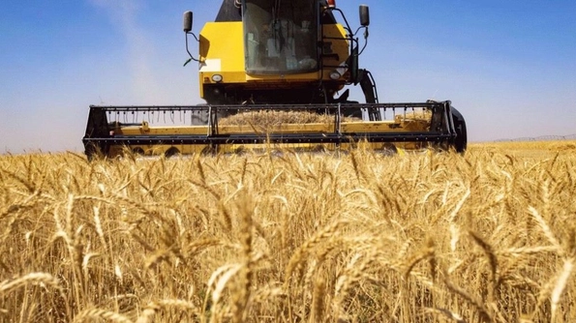
Government wheat procurement in Iran dipped by over a third this year due to declining production, officials said on Thursday, as drought and financial woes continue to plague the economy.

In Iran, the term “guaranteed purchase of wheat” refers to a government program whereby the Government Trading Corporation (GTC) commits to buying wheat from domestic farmers at a pre-established, fixed price.

The government says the policy shields farmers from volatile market prices and ensures a stable income by offering a predictable price while also enabling the government to manage reserves of the staple crop and guarantee supply.

However, state-guaranteed purchases had dropped to 700,000 tons, Attaollah Hashemi, head of the National Wheat Farmers Foundation, told ISNA news agency on Thursday.

'Risks ahead'

“This year’s guaranteed purchases have decreased by 35 percent compared to last year, a decline that is a direct result of reduced production caused by drought and insufficient rainfall,” he said.

The government still owes some farmers payments for wheat deliveries but promised settlement soon, Hashemi added. He warned that “reliance on wheat imports could bring serious risks for the country.”

According to US Department of Agriculture data, the country's wheat production for the 2024/25 season is projected at around 16 million metric tons.

Despite these figures, Iran’s import needs can vary: the FAO projects wheat import requirements for the 2024/25 marketing year (April–March) at 1.3 million tons.

However, due to drought-induced production shortfalls, imports are expected to rise in the current calendar year to about 4.5 million tons, according to state media.

Traditional flood irrigation of agricultural land in Iran
100%
Traditional flood irrigation of agricultural land in Iran

Water crisis

Agriculture Minister Gholamreza Nouri Ghezaljeh recently described the situation as unprecedented. “From the perspective of food security, we are in the most difficult circumstances,” he said, citing poor economic conditions and what he called the worst droughts in memory.

Production had fallen by 35 to 40 percent due to energy shortages and irrigation problems, Ghadamali Bourbour, deputy head of the Wheat Farmers Foundation, said in late August.

“This decline is rare in Iran’s agricultural history,” he said, adding that the trend would also push up dairy and meat prices.

Despite repeated water cuts across cities, official data show that 80 to 90 percent of Iran’s consumption still goes to agriculture, much of it under traditional methods.

With procurement falling and drought intensifying, the government faces rising pressure to reform or risk deeper food insecurity.


Most Viewed

Ghalibaf defends Iran-US talks amid hardline backlash
1
INSIGHT

Ghalibaf defends Iran-US talks amid hardline backlash

2
INSIGHT

100 days after carnage: Iran economy reels from war, inflation, unemployment

3
INSIGHT

A nation in limbo: 100 days after the massacre, has the world moved on?

4
ANALYSIS

From instability to influence: Pakistan’s pivotal role in US-Iran diplomacy

5
ANALYSIS

100 days on: why Iran’s January protests spread across social classes

Banner
Banner

Spotlight

  • War-hit homeowners feel abandoned as Iran’s reconstruction aid fades

    War-hit homeowners feel abandoned as Iran’s reconstruction aid fades

  • 100 days on: the anatomy of Iran’s January crackdown
    INSIGHT

    100 days on: the anatomy of Iran’s January crackdown

  • Ghalibaf defends Iran-US talks amid hardline backlash
    INSIGHT

    Ghalibaf defends Iran-US talks amid hardline backlash

  • 100 days on: why Iran’s January protests spread across social classes
    ANALYSIS

    100 days on: why Iran’s January protests spread across social classes

  • From instability to influence: Pakistan’s pivotal role in US-Iran diplomacy
    ANALYSIS

    From instability to influence: Pakistan’s pivotal role in US-Iran diplomacy

  • A nation in limbo: 100 days after the massacre, has the world moved on?
    INSIGHT

    A nation in limbo: 100 days after the massacre, has the world moved on?

•
•
•

More Stories

Iran's Russia and China ties exposed by war, Israeli think-tank says

Sep 4, 2025, 17:10 GMT+1

A brief Mideast war in June war exposed the weakness of Iran's ties with key allies China and Russia according to an Israeli think-tank, exposing Tehran's isolation in one of its weakest moments.

“The policy of Moscow and Beijing, which consisted of fairly mild condemnations of the Israeli and US strikes in Iran, sparked criticism and disappointment in Tehran," a research paper from the Institute of National Security Studies (INSS) said.

“It also reinforced the Iranian assessment that its reliance on Russia and China remains limited, particularly in the event of a military confrontation with Israel and the United States," the report by Danny Citrinowicz and Raz Zimmt added.

The 12-day war, initiated by a surprise campaign of Israeli strikes and assassinations on June 13 which killed senior military figures and nuclear experts, saw Iran fighting both Israel and the US, while China and Russia resisted involvement.

The US struck Iran's three biggest nuclear facilities while Israel took control of Iran's aerial defense systems and destroyed swathes of military and nuclear infrastructure, along with civilian sites such as Evin Prison, leaving its foe much weakened.

Israel too suffered major blows with Iranian missile barrages which struck military and civilian infrastructure.

“It is clear that for now, Iran has no viable alternative to continuing its political, economic, and security partnership, as limited as it may be, with Russia and China, especially given the escalating tensions between Tehran and Europe,” the paper said, referring to the imminent threat of a snapback of UN sanctions due by the end of the month from Britain, France and Germany.

"Likewise, Russia and China, who view Iran as a junior partner in a coalition against the West and the United States, have no real alternative to Tehran, and they are expected to continue the partnership as long as it serves their interests,” the authors said.

Iran relies on China as its number one buyer of oil, and has deep ties with Russia militarily as a supplier of a kamikaze drone which has been key to Moscow's war effort in Ukraine.

100%

A diplomatic tightrope

Iranian President Masoud Pezeshkian attended a major military parade in Beijing on Wednesday marking the 80th anniversary of Japan's surrender in World War II.

President Xi Jinping, flanked by Russian President Vladimir Putin and North Korean leader Kim Jong Un, used the parade to project China's military strength, and Pezeshkian appeared to be nearer the back of assembled heads of state.

“(China and Russia) would not hesitate to sacrifice Iran to advance important strategic goals, such as improving relations with Washington," the Israeli researchers added.

The paper noted that there was some caution in Iran's often raucous political discourse about directly criticizing the Eurasian allies.

“Circles identified with the conservative and hardliner wing of Iran’s leadership refrained from voicing similar criticism and instead expressed understanding of Russia and China’s conduct,” the paper said.

“For example, Yadollah Javani, the head of the political bureau of the Islamic Revolutionary Guards Corps, declared that Iran had not requested assistance from Russia or China during the war, emphasizing that the military cooperation agreement between Tehran and Moscow does not obligate Russia to support Iran in wartime.”

Condemnation from Beijing and Moscow

China's foreign ministry "strongly condemned" the Israeli and US strikes, urging de-escalation while Russia slammed them as "unprovoked and unacceptable" in a statement through the Russian state news agency RIA Novosti.

In March, the three nations carried out a joint naval drill in the Gulf of Oman, an annual drill the three allies performed in recent years as ties deepened.

“At the conclusion of Operation Rising Lion, pragmatic circles in Iran voiced criticism mainly at Russia and, to a lesser extent, China for refraining from providing assistance to Iran during the war and limiting themselves to condemning the Israeli and American strikes, especially given Iran’s significant military support for Russia since its invasion of Ukraine in February 2022,” the researchers said, echoing the fears in Iran itself of too much dependence on the two allies.

Iran’s renewed push to bypass the dollar faces long odds

Sep 4, 2025, 16:23 GMT+1
•
Dalga Khatinoglu

Iran has once again floated the idea of replacing the US dollar with local currencies in trade with its partners, but so far the push has gone nowhere.

None of Tehran’s counterparts, including Russia, has agreed to settle transactions in national currencies, leaving Iran isolated despite years of lobbying.

At the Shanghai Cooperation Organization (SCO) summit on September 1, President Masoud Pezeshkian repeated the call.

A day earlier in Tianjin, China, he unveiled a new initiative under the title “SCO Special Accounts and Settlements,”describing it as a three-pronged plan to “reduce the effects of illegal sanctions on SCO members.”

What’s the proposal?

According to Pezeshkian, the initiative has three components:

  • Expanding the use of national currencies and reducing dependence on the dollar.
  • Establishing shared digital infrastructure and adopting central bank digital currencies (CBDCs) for faster, more secure payments.
  • Creating a multilateral currency-swap fund to support sanctioned members or those facing liquidity crises.

Pezeshkian argued that the plan could boost the “economic resilience” of SCO countries and turn the bloc into “a successful model for building a multipolar, fair financial order resistant to external pressure.”

Is it realistic?

The hurdles are steep.

SCO members’ national currencies lack international credibility and many are volatile. The Iranian rial has lost 99 percent of its value in the past two decades, while the Russian ruble has sharply fluctuated since the Ukraine war.

Over the past five years, all SCO currencies—except Tajikistan’s—have depreciated.

Trade imbalances add to the problem.

Chinese customs data show China’s exports to India, Pakistan, and Uzbekistan are seven times larger than its imports from them. With Tajikistan, the imbalance reaches tenfold.

China, with a $150 billion annual trade surplus with those countries, is unlikely to accept settlement in their weak currencies—and even if it did, they would be of little use in trade with third parties.

Energy trade underscores the limits further.

Of China’s $512 billion in total trade with SCO members last year, $90 billion was fossil fuel imports. About 80 percent of global energy transactions—especially oil—are conducted in US dollars. Even the euro and pound play only marginal roles.

Beyond energy, the dominance of the dollar and euro in global commerce is overwhelming: the dollar accounts for more than 65 percent of trade transactions, the euro about 20 percent.

China’s yuan makes up just 3–4 percent, mostly in neighboring countries.

The core problem

Above all, Iran remains on FATF’s blacklist, which restricts transactions regardless of currency. Whether in dollars, euros, yuan, or local money, doing business with Iran carries legal and financial risks.

For these reasons, Tehran’s latest de-dollarization push is less a practical plan than an aspirational talking point.

Currency weakness, trade imbalances, dollar dominance in energy, and Iran’s isolation from the global financial system make the proposal unworkable.

Adding to the difficulty, Washington has taken a firm line against such initiatives, warning the BRICS bloc over de-dollarization efforts and threatening more sanctions and tariffs if they advance.

Iran says Australian ambassador left after Canberra expelled its envoy

Sep 4, 2025, 12:32 GMT+1

Australia’s ambassador has left Tehran after Canberra expelled Iran’s envoy last month over alleged arson attacks on Jewish sites, Foreign Ministry spokesperson Esmaeil Baghaei said on Thursday.

Baghaei said Iran reduced Australia’s diplomatic presence in response. “According to diplomatic norms and laws, in reaction to Australia’s action, we have also reciprocally reduced the level of Australia’s diplomatic presence in Iran,” he said.

He called the expulsion of Iran’s ambassador “unjustified” and added: “We do not welcome the reduction in relations, because we believe there was no reason or justification for this action, and this issue will affect the relations between the two nations.”

Canberra’s move

Australia last month ordered Iranian Ambassador Ahmad Sadeghi and three other diplomats to leave within seven days.

Prime Minister Anthony Albanese said the Australian Security Intelligence Organisation had evidence Iran directed two arson attacks on Jewish sites in Sydney and Melbourne in 2024.

Albanese said at the time that Australian diplomats had already left Tehran and were operating from a third country.

  • Australia expels Iranian envoy after blaming Tehran for antisemitic attacks

    Australia expels Iranian envoy after blaming Tehran for antisemitic attacks

  • Hardline daily urges Iran to punish Britain over Australia's expulsion of envoy

    Hardline daily urges Iran to punish Britain over Australia's expulsion of envoy

  • Australia links synagogue arson to Iran through funding trail

    Australia links synagogue arson to Iran through funding trail

Iran rejects charges

Iran dismissed the allegations as baseless and politically motivated. Baghaei said last month that “any inappropriate diplomatic action will be answered in kind,” accusing Canberra of acting under domestic political pressure.

“The concept being invoked [antisemitism] has no place in our religion,” he said, calling it part of a Western narrative. Baghaei also linked the decision to pro-Palestinian protests in Australia against Israel’s war in Gaza.

During a pro-Palestinian march across Sydney’s Harbour Bridge earlier last month, some demonstrators carried images of Iran’s Supreme Leader Ali Khamenei. Israeli Foreign Minister Gideon Sa’ar condemned the rally, calling Khamenei “the most dangerous leader of fundamentalist Islam” and accusing protesters of aligning with radical elements.

Iranians control Venezuelan drone facilities as US warships deploy

Sep 4, 2025, 12:01 GMT+1

Venezuela’s drone industry, built on Iranian designs, is still overseen by Iranian specialists who block local staff from entering without permission amid a standoff over US warships deployed in the Caribbean, the Miami Herald reported.

The Herald said the drone program began in 2006 when Caracas signed a military deal with Tehran. Iranian firm Qods Aviation Industries supplied assembly kits, Venezuelan engineers trained in Iran, and Iranian teams later worked at the El Libertador Air Base in Maracay.

The program has since produced reconnaissance, armed and kamikaze drones modeled on Iranian systems.

“Cooperation with Iran was essential. Not only could Venezuela never have developed drones on its own, but even today it’s the Iranians who control those facilities. Venezuelan personnel can’t enter without their authorization,” one source who asked not to be identified told the Miami Herald.

The paper said it interviewed half a dozen people familiar with the ties between Caracas and Tehran and reviewed Venezuelan government documents — some signed by Chávez — that showed billions of dollars were funneled into the partnership.

Many projects were disguised as civilian ventures, such as bicycle or tractor factories, but served as fronts for more sensitive military work. At the core, Chávez sought weapons that could challenge US military power, the Herald reported.

  • US fines freight forwarder over use of Venezuelan airline tied to Iran’s Mahan Air

    US fines freight forwarder over use of Venezuelan airline tied to Iran’s Mahan Air

  • Iran-linked operatives may have entered US with Venezuelan passports - Daily Mail

    Iran-linked operatives may have entered US with Venezuelan passports - Daily Mail

US alarm over drones

Analysts at US think tanks, including the Center for Strategic and International Studies and the Southern Command’s Diálogo Initiative, have described the drones as a “new asymmetric threat.”

They warn that the systems could be used not only against domestic opponents but also transferred to other governments or armed groups in Latin America.

Military buildup

Defense Minister Vladimir Padrino said earlier this month that Venezuela will deploy drones, warships and about 15,000 troops near Colombia. He said the move is aimed at defending sovereignty and combating drug trafficking.

The Trump administration has ordered guided-missile destroyers, amphibious ships, a cruiser, a submarine and thousands of Marines to the region as part of what it calls anti-narcotics operations. Caracas called the buildup hostile and appealed to the United Nations to intervene.

Broader Iran-Venezuela links

Concerns about Tehran’s role in Venezuela extend beyond drones. Earlier this month, the Daily Mail reported that more than 10,000 individuals from Iran, Syria, and Lebanon were allegedly granted Venezuelan passports between 2010 and 2019. Former US officials told the paper some recipients may already be in the United States.

  • Iran-linked oil network used naval mortgages to move sanctioned crude - FT

    Iran-linked oil network used naval mortgages to move sanctioned crude - FT

Iran shifts from confrontation to caution over Zangezur Corridor - Daily Sabah

Sep 4, 2025, 11:32 GMT+1

Iran has toned down its opposition to the proposed Zangezur Corridor linking Azerbaijan to its exclave of Nakhchivan, adopting a more cautious stance after years of confrontation, Turkish newspaper Daily Sabah said in an opinion article on Thursday.

The project, part of the August 8 peace agreement signed in Washington between Azerbaijan and Armenia with US mediation, has long been opposed by Tehran.

According to Daily Sabah, Iranian officials feared the corridor could sever Iran’s land link to Armenia, weaken its regional transit role and strengthen Turkish and Azerbaijani influence in the South Caucasus.

In the past, Iran reinforced border positions, staged military drills and issued sharp warnings against what one adviser to Supreme Leader Ali Khamenei called an “American corridor.”

But President Masoud Pezeshkian and his government have recently struck a more measured tone.

Government spokesperson Fatemeh Mohajerani said the Iran-Armenia border would remain intact, while Pezeshkian told reporters that Tehran’s “core concerns had been taken into account” and welcomed the peace deal as a positive step.

Pezeshkian visited Yerevan soon after the agreement, where Armenian Prime Minister Nikol Pashinyan reassured him that Armenia’s sovereignty would not be compromised and no foreign troops would be stationed in the corridor.

Analyst Mustafa Caner wrote that Iran’s new approach reflects limited capacity to confront multiple crises at once. Unlike conservative figures in Tehran who warn of foreign interference, the government has refrained from military escalation and is pursuing diplomacy to secure its position.





