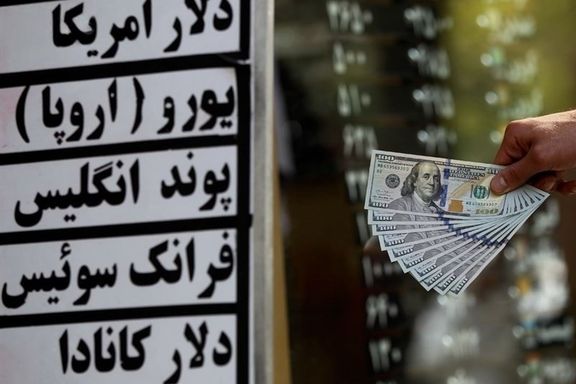
Iran has once again floated the idea of replacing the US dollar with local currencies in trade with its partners, but so far the push has gone nowhere.
None of Tehran’s counterparts, including Russia, has agreed to settle transactions in national currencies, leaving Iran isolated despite years of lobbying.
At the Shanghai Cooperation Organization (SCO) summit on September 1, President Masoud Pezeshkian repeated the call.
A day earlier in Tianjin, China, he unveiled a new initiative under the title “SCO Special Accounts and Settlements,”describing it as a three-pronged plan to “reduce the effects of illegal sanctions on SCO members.”
What’s the proposal?
According to Pezeshkian, the initiative has three components:
Expanding the use of national currencies and reducing dependence on the dollar.
Establishing shared digital infrastructure and adopting central bank digital currencies (CBDCs) for faster, more secure payments.
Creating a multilateral currency-swap fund to support sanctioned members or those facing liquidity crises.
Pezeshkian argued that the plan could boost the “economic resilience” of SCO countries and turn the bloc into “a successful model for building a multipolar, fair financial order resistant to external pressure.”
Is it realistic?
The hurdles are steep.
SCO members’ national currencies lack international credibility and many are volatile. The Iranian rial has lost 99 percent of its value in the past two decades, while the Russian ruble has sharply fluctuated since the Ukraine war.
Over the past five years, all SCO currencies—except Tajikistan’s—have depreciated.
Trade imbalances add to the problem.
Chinese customs data show China’s exports to India, Pakistan, and Uzbekistan are seven times larger than its imports from them. With Tajikistan, the imbalance reaches tenfold.
China, with a $150 billion annual trade surplus with those countries, is unlikely to accept settlement in their weak currencies—and even if it did, they would be of little use in trade with third parties.
Energy trade underscores the limits further.
Of China’s $512 billion in total trade with SCO members last year, $90 billion was fossil fuel imports. About 80 percent of global energy transactions—especially oil—are conducted in US dollars. Even the euro and pound play only marginal roles.
Beyond energy, the dominance of the dollar and euro in global commerce is overwhelming: the dollar accounts for more than 65 percent of trade transactions, the euro about 20 percent.
China’s yuan makes up just 3–4 percent, mostly in neighboring countries.
The core problem
Above all, Iran remains on FATF’s blacklist, which restricts transactions regardless of currency. Whether in dollars, euros, yuan, or local money, doing business with Iran carries legal and financial risks.
For these reasons, Tehran’s latest de-dollarization push is less a practical plan than an aspirational talking point.
Currency weakness, trade imbalances, dollar dominance in energy, and Iran’s isolation from the global financial system make the proposal unworkable.
Adding to the difficulty, Washington has taken a firm line against such initiatives, warning the BRICS bloc over de-dollarization efforts and threatening more sanctions and tariffs if they advance.
File photo of an aircraft operated by Iran’s Mahan Air
The US Treasury Department said on Wednesday that international freight forwarder Fracht FWO Inc. has agreed to pay $1.61 million to settle violations of US sanctions, including dealings involving Iran’s Mahan Air, a carrier long accused by Washington of supporting terrorism.
Treasury’s Office of Foreign Assets Control (OFAC) said the Houston-based company contracted in May 2022 with Venezuela’s state-run airline EMTRASUR, a subsidiary of CONVIASA, to transport car parts from Mexico to Argentina.
The flight used an aircraft that had previously been blocked for being operated by Mahan Air and was crewed by Iranian nationals.
OFAC said the transactions amounted to apparent breaches of US sanctions on Iran, Venezuela, weapons proliferation and terrorism.
“Fracht conferred a direct financial benefit of approximately $935,000 to the blocked entity EMTRASUR, providing substantial revenue to the Maduro regime and specifically relating to use of an aircraft blocked for terrorism and proliferation,” the Treasury statement said.
Washington blacklisted Mahan Air in 2011, accusing it of supporting Iran’s Islamic Revolutionary Guard Corps. Although the aircraft later changed registration to a Venezuelan tail number, OFAC said it remained blocked property because of its origin and continuing links to the Iranian airline.
The Treasury added that Fracht executives disregarded internal compliance procedures and red flags, such as the aircraft’s Venezuelan registration and EMTRASUR’s ownership, when approving the charter. The case was deemed “egregious” and not voluntarily disclosed.
Still, the penalty was reduced from a potential $2.1 million after Fracht cooperated with investigators and undertook extensive compliance reforms, including firing the employee who arranged the deal and hiring nine sanctions specialists.
The United States has repeatedly accused Mahan Air of using commercial cover to move military equipment and personnel to support Tehran’s allies in the Middle East.
Former president Hassan Rouhani vists a Revolutionary Guards' base, Tehran, Iran, September 2015
Former Iranian president Hassan Rouhani has called for the exit of intelligence and security forces from the economy in a rare sweeping call for reform by a former key player in Tehran's political and security establishment.
“To fulfill the people’s will, let the armed forces stick to their core duties—nothing else. The economy isn’t their job. Propaganda, domestic politics or foreign policy aren’t either,” Rouhani said in a video message posted on his official website on Wednesday.
Rouhani argued that if the Islamic Republic expected its people's support against American and Israeli foes, it must deliver on its promises and avoid corruption.
“An intelligence agency involved in business or trade isn’t intelligence,” Rouhani said.
Reform attempts
The state dominates the economy through oil, banking, and strategic industries, while the IRGC plays a major role in commerce, limiting private sector freedom.
Calls for reform gained the fore during the presidency of Mohammad Khatami from 1997 to 2005, but the momentum waned and gave way to the rise of hardline governments such as that of Mahmoud Ahmadinejad.
Rouhani, his successor, adopted a more pragmatic stance and championed a 2015 nuclear deal which earned him the ire of hardliners and has been shut out of high-profile politics since.
A protege of Akbar Hashemi Rafsanjani, a founding father of the Islamic Revolution, Rouhani was a longtime head of Iran's powerful Supreme National Security Council before his presidency.
Despite his fall from favor, Rouhani is among the few figures considered a potential successor of 86-year-old Supreme Leader Ali Khamenei, though his chances have likely ebbed in recent years amid opposition by conservatives.
Popular will
Rouhani also suggested Iran's courts were beholden to entrenched interests, undermining society.
“People want an independent judiciary," he added. "To strengthen domestic governance, this is the path.”
In Iran, the judiciary is closely aligned with theocratic principles, often prioritizing state ideology and well-connected figures over impartiality.
Courts enforce strict Islamic laws, regulate social behavior, mandate the Islamic veil and police public expression.
Rouhani said solidarity between Tehran and its people he says was won in a brief war this summer could be deepened if authorities pursued a measured foreign policy.
“If we do all this and avoid unnecessary foreign policy conflicts or enmities, we’ll have a strong, unified nation standing behind its leadership,” he added.
Since the June 24 ceasefire between Iran and Israel following 12 days of conflict, Tehran has increasingly embraced nationalist symbols, including imagery and figures from the pre-Islamic era, both in public and during state broadcasts.
Iran’s judiciary has forcefully defended a disgraced oil tycoon from accusations by the central bank that he had not paid back his debts after he was convicted in one of the country's biggest ever corruption cases.
The clash over Babak Zanjani, whom Iranian media outlets say Tehran has recruited back into business as new sanctions loom, appears to indicate policy divisions among key institutions as the country reels from a damaging war in June.
Judiciary spokesman Asghar Jahangir on Wednesday rejected a statement last month by the central bank's governor saying Zanjani had only repaid about $15 million of a total $1.9 billion in oil revenue he was convicted of embezzling.
“At a time when the country needs calm, the judiciary cautioned central bank governor Mohammadreza Farzin to avoid comments that could disturb public opinion,” Jahangir added. The matter “rests solely with the courts," he said.
Zanjani's original 2016 conviction on fraud and money laundering charges earned him a death sentence, which was commuted to a 20-year prison term last year by Iran's Supreme Leader Ali Khamenei. He was released in April.
A wily evader of Western sanctions on Iran, Zanjani was widely reviled by many Iranians struggling in straitened economic circumstances but prized by officialdom for his craft in securing oil exports, the main source of state revenue.
“The defendant served his sentence without a single day’s leave until the introduction of his assets, which were even greater in value than the debt,” Jahangir said. “Claims that these assets were not returned have no valid legal basis.”
From air fresheners to oil billions
Babak Zanjani, born in 1951, was the prime defendant in one of Iran’s biggest corruption cases. He once said that during his military service he was the driver of the central bank governor and used the connection to trade hard currency—an account the bank has denied.
What is clear is that he developed ties with the Revolutionary Guards’ Khatam al-Anbia engineering arm through Ahmad Vahid Dastjerdi, then head of the IRGC cooperative foundation.
Babak Zanjani in front of a plane belonging to Qeshm Air, the airline he used to own before being jailed
Before that, Zanjani had worked in small businesses, from producing air fresheners on Kish Island to selling sheep hides abroad. His fortunes changed in 2007 when he began supplying parts for IRGC projects.
In 2010, Zanjani became a crucial oil broker under Oil Minister Rostam Ghasemi. He acquired Malaysia’s First Islamic Investment Bank to channel oil revenues and built a network of exchanges in the United Arab Emirates and Tajikistan.
A 2012 decree signed by three ministers and the central bank governor allowed 14.5 percent of oil revenues to flow into his bank—a key focus of his eventual indictment.
In the last year and a half of Mahmoud Ahmadinejad’s presidency, Zanjani not only took delivery of crude shipments offshore but also received that 14.5 percent of oil sales directly, leaving him with a large debt to the oil ministry.
At the same time, his Sorinet holding bought domestic carrier Qeshm Air, extending his empire into aviation.
Fall and rise
Only months before his downfall, Zanjani called himself an “economic Basij member,” a reference to a domestic enforcement militia loyal to the Islamic authorities.
In 2013, after disputes with then-President Hassan Rouhani's government, he was arrested. In March 2016 judiciary spokesman Gholamhossein Mohseni Eje’i announced that Zanjani and two associates had been convicted as so-called corruptors on earth and sentenced to death.
The Supreme Court upheld the ruling but allowed clemency if he returned the funds.
Babak Zanjani in a court session
“As the assets were returned and the debt was settled, the Supreme Leader granted clemency, reducing his sentence to 20 years,” his lawyer said in April 2024. He was released in December 2024.
Reports this year suggested Zanjani had resumed business activities, including launching an airline called Dot-One with 32 aircraft, as well as ventures in ride-hailing, shipping and rail imports.
In May, an $800 million contract between the transport ministry and a company linked to him marked his apparent full rehabilitation, sparking controversy.
A worker stands inside a Tehran building destroyed by an Israeli strike, June 2025
New lows once unthinkable in Iran—from assassinations of senior officials to the gutting of air defenses—have already been plumbed, yet Tehran’s rulers remain impervious to these new realities, inviting the prospect of an even harsher reckoning.
The first decisive break came with the 2019 assassination of General Qassem Soleimani, the commander who embodied Iran’s regional network of armed allies and whose elimination was once considered beyond the realm of possibility.
For years, Soleimani symbolized Iran’s ability to project influence across the Middle East. Western policymakers and Israeli officials acknowledged his central role in destabilizing the region, but the notion of his actually being killed was long dismissed as outlandish.
Memoirs and statements from American and Israeli officials confirm he was repeatedly in their crosshairs until January 2020, when President Donald Trump ordered a drone strike on his convoy in Baghdad.
The attack, initially conceived as a joint mission with Israel before it withdrew at the last moment, shattered the regime’s myth of its own invincibility.
Arms broken
Soleimani’s death not only removed Iran’s most visible strategist but also disrupted the command structure of its allied armed groups—damage that remains unrepaired.
If Soleimani’s killing marked the first taboo broken, the next was direct military action on Iranian soil.
For decades, the idea of such strikes lingered at the margins of debate. It was occasionally invoked as a deterrent but rarely treated as feasible.
That barrier has now fallen.
Israeli and American precision airstrikes and even temporary control of Iranian airspace have made operations inside Iran a lived reality.
The bombing of sites deep within the country shows that thresholds once thought inviolable have already been crossed.
Head in the sand
In today’s climate, where the targeting of senior officials has become normalized and attacks on Iranian territory draw limited diplomatic shock, Tehran continues to pursue demands increasingly out of step with global realities.
The Islamic Republic’s insistence on uranium enrichment and nuclear advances, after years of secrecy and deception, has lost its leverage.
None of the old deterrents carry weight: not threats to close strategic straits, not promises of “harsh revenge,” not missile parades or military drills.
What once projected strength now reads as ritual.
By denying the scale of these shifts and clinging to exhausted strategies, Iran’s leaders only accelerate the erosion of their position.
What was once taboo—strikes on leaders, attacks on Iranian territory—is now well-trod precedent, and Tehran’s refusal to confront these realities may only hasten its own undoing.
A man holds up an Iranian flag in an event commemorating those killed by Israeli strikes, Tabriz, Iran, July 28, 2025
A senior cleric’s claim that Iran’s Supreme Leader endorsed new indirect talks with Washington has raised questions about divisions in Tehran, after Ali Khamenei himself appeared to rule out negotiations in a recent speech.
“The principle of negotiation, even in an indirect form with the United States, was endorsed by the Leader after the war,” said Abdolhossein Khosropanah, Secretary of the Supreme Council of the Cultural Revolution.
Days earlier, on August 24, Khamenei had struck a very different tone, eschewing talks and accusing Washington of seeking Iran’s “surrender.”
The veteran theocrat called the standoff over Tehran's nuclear program “unsolvable” and vowed the Islamic Republic would never bow to US pressure.
Khosropanah’s apparently conflicting citation surprised many. “Why would an official from a cultural body comment on national security?” analyst Damoon Mohammadi told Iran International.
Khamenei, he suggested, may have deliberately floated the idea through an unlikely figure to test domestic reaction.
The contrasting statements underscore intensifying infighting over Iran’s future course.
With the stakes raised by the 12-day war with Israel and the looming prospect of UN sanctions snapping back, Tehran’s factions are split between those urging pragmatic engagement and hardliners who insist any compromise would mean capitulation.
Moderates push diplomacy
President Masoud Pezeshkian has hinted at cautious engagement, despite heavy criticism at home.
Meeting Turkish President Recep Tayyip Erdogan at the Shanghai Cooperation Organization summit in China, he said Iran was ready for indirect dialogue with Washington so long as its nuclear rights were recognized.
Foreign Ministry spokesperson Esmail Baghaei echoed that line, saying Tehran would reinstate IAEA inspections and reduce enrichment to 3.67% if its sovereign right to enrichment were respected.
Hardliners resist
Former negotiator Saeed Jalili remains fiercely opposed, likening pro-diplomacy figures in early August to the Israelites who worshipped the golden calf in Moses’ absence—a possible jab at officials emboldened by Khamenei’s limited public appearances since the war.
Ultra-conservative commentator Mohammadsadegh Shahbazi wrote on X: “There are options beyond negotiation. International structures can be challenged. We must show that Europe and America are not our only paths.”
Washington unmoved
Despite the rhetoric, officials acknowledge Washington has shown no interest in talks. Deputy Foreign Minister Majid Takht-Ravanchi told Iranian media managers in a closed-door meeting Saturday—according to information obtained by Iran International—that the White House had ignored Tehran’s outreach.
Another deputy, Kazem Gharibabadi, reportedly disclosed last week: “We have sent messages to Washington 15 times in different ways to restart the negotiations, but we have not received any response.”
The last round, mediated by Oman, collapsed when the US demanded Iran curb enrichment on its own soil—a demand Khamenei branded a red line. With diplomacy stalled, Israel struck Iranian sites, triggering the 12-day war.