• العربية
  • فارسی
Brand
  • Iran Insight
  • Politics
  • Economy
  • Analysis
  • Special Report
  • Opinion
  • Podcast
  • Iran Insight
  • Politics
  • Economy
  • Analysis
  • Special Report
  • Opinion
  • Podcast
  • Theme
  • Language
    • العربية
    • فارسی
  • Iran Insight
  • Politics
  • Economy
  • Analysis
  • Special Report
  • Opinion
  • Podcast
All rights reserved for Volant Media UK Limited
volant media logo

Cleric says Iran’s Supreme Leader highlights hope in crises to keep public resilient

May 2, 2025, 11:06 GMT+1

Tehran’s interim Friday prayer leader said Iran’s Supreme Leader Ali Khamenei emphasizes positive aspects during national tragedies to keep the public from despair.

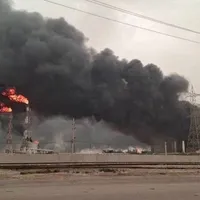
“In every unforeseen disaster that affects the nation, the Leader not only offers condolences and empathy but also highlights the positive aspects, so people remain hopeful and engaged,” Kazem Seddiqi said on Friday, referring to last week's explosion at Shahid Rajaei port.

Seddiqi added that judicial and security authorities are investigating possible negligence related to the blast, under special orders from the judiciary chief.

Kazem Seddiqi
100%
Kazem Seddiqi

Most Viewed

IRGC-linked media hints at threat to Persian Gulf undersea internet cables
1

IRGC-linked media hints at threat to Persian Gulf undersea internet cables

2

Iran Guards say two ships seized in Hormuz after ceasefire extension

3
EXCLUSIVE

Strikes on petrochemical hubs leave Iran short of plastics

4
EXCLUSIVE

Family told missing teen was alive, then received his body 60 days later

5
TEHRAN INSIDER

The future has been switched off here

Banner
Banner

Spotlight

  • As Tehran digs in, ordinary Iranians pay the price
    INSIGHT

    As Tehran digs in, ordinary Iranians pay the price

  • Internet Pro or Censor Pro? Iran rolls out a new service
    ANALYSIS

    Internet Pro or Censor Pro? Iran rolls out a new service

  • Strikes on petrochemical hubs leave Iran short of plastics
    EXCLUSIVE

    Strikes on petrochemical hubs leave Iran short of plastics

  • Diplomacy tolls at Hormuz as conflict returns to its doorstep
    OPINION

    Diplomacy tolls at Hormuz as conflict returns to its doorstep

  • Opposition to US talks grows in Tehran as ceasefire deadline nears
    INSIGHT

    Opposition to US talks grows in Tehran as ceasefire deadline nears

  • The future has been switched off here
    TEHRAN INSIDER

    The future has been switched off here

•
•
•

More Stories

Pads in plain sight: marketing campaign sparks awkward debate in Iran

May 2, 2025, 10:39 GMT+1
•
Sara Omatali

A new marketing display by Iranian brand My Lady featuring transparent packaging for sanitary pads has ignited online debate, revealing the deep cultural discomfort still surrounding menstruation in Iran.

The display, first posted by a user on the social media platform X last week, showed a row of pads visible in see-through folders—an abrupt break from the longstanding norm of black plastic bags and whispered requests at the counter.

The post quickly surpassed one million views and gathered thousands of likes and shares. “From black plastic to product albums to help us choose better. What a path we’ve come, woman!” wrote one user, who reposted the image with commentary that resonated widely.

Others joined the conversation with similar stories of resisting the imposed shame around buying menstrual products in public.

The marketing choice—practical on its face—has gained symbolic weight in a country where women’s bodies are policed not just through law but through entrenched taboos.

“Seven years ago, when My Lady launched its maxi pads, we had to secretly open samples for customers,” wrote a user identifying as a company marketer. “The store manager scolded us, said it was shameless. So we made a discreet booklet with three samples stuck inside—like contraband.”

The move to make pads visibly accessible in stores echoes moments from the 2022 protests, when women were photographed covering surveillance cameras in Tehran’s subway with sanitary pads—turning a product once treated as unmentionable into a symbol of defiance.

That imagery reinforced a broader shift: menstruation was no longer something to be hidden, but something women could use—literally and figuratively—to resist.

In a post viewed more than 800 times, another X user described how, in smaller towns, buying pads still carries a strong social stigma. “I’d say put it in a regular bag, and I’d relish the look on the seller’s face,” she wrote. “You could see them thinking, ‘How shameless the new generation has become.’ It was deeply satisfying.”

That stigma, rooted in religious and patriarchal frameworks, frames menstruation as impure. Across various cultures with strong religious influences, menstruating women are often deemed unclean and barred from certain spaces. The expectation is silence—both about the blood and the discomfort.

In Iran, where the Islamic Republic’s laws tightly govern gender expression and public morality, that silence is rigorously enforced.

Still, the shift is underway. A handful of men have joined the conversation online, recalling how they were dispatched to buy pads to shield female relatives from embarrassment.

“I’d run home with the black bag, praying no one saw me,” one wrote. But others mocked the change, reflecting a lingering cultural divide. Of 84 replies under one widely shared post, 11 came from male accounts opposing the visibility initiative.

The company behind the display, My Lady, has previously drawn official backlash. In March, following the release of a video marking International Women’s Day—one that referenced women’s exclusion from stadiums and legal rights—their Instagram page was taken down. Still, the public rallied, citing the brand’s decade-long focus on education and taboo-breaking.

The rise of transparent packaging may not end the stigma, but its presence in plain sight signals a societal reckoning.

The journey from hushed exchanges to open acknowledgment continues, carried forward by a generation of women unwilling to be hidden.

No damage to oil facilities in Rajaei port blast, Iranian official says

May 2, 2025, 10:31 GMT+1

An explosion at Iran’s Shahid Rajaei port caused no damage to nearby oil infrastructure, a senior oil official said on Friday.

“There was no damage to oil facilities during the explosion at Shahid Rajaei port,” said Mohammad Sadegh Azimifar, Deputy Oil Minister and head of the National Iranian Oil Products Distribution Company.

He added that safety conditions at the site remain acceptable. “From a safety perspective, the situation is under control, and deficiencies in passive defense and HSE are being addressed,” he said, referring to health, safety, and environment standards designed to protect workers and minimize environmental risks.

Iran’s top military adviser says Trump policies will weaken US

May 2, 2025, 10:24 GMT+1

A senior Iranian military official said President Donald Trump’s policies are destabilizing the United States and could accelerate what he called its global decline.

“Trump’s destructive and unlawful behavior has disrupted America internally and created instability internationally,” said Major General Yahya Safavi, top military adviser to Iran’s Supreme Leader, according to Iranian state media.

“His confrontational approach has caused tensions with many countries and undermined global order,” Safavi said on Friday.

In contrast, Safavi described Iran’s Supreme Leader Ali Khamenei as “wise, just, courageous, and humble,” saying, “Such a combination of qualities is rarely seen in a leader.”

Yahya Safavi
100%
Yahya Safavi

Israel expected to act alone if it strikes Iran during US nuclear talks - AP

May 2, 2025, 10:00 GMT+1

Israel would likely carry out a strike on Iran alone if military action were taken while nuclear negotiations between the United States and Iran continue, an Israeli official told the Associated Press.

“It is understood that should Israel choose to carry out a strike on Iran, it would likely be doing so alone — so long as negotiations are underway,” said the official, who spoke on condition of anonymity to discuss sensitive diplomacy.

Prime Minister Benjamin Netanyahu has said Iran will not be allowed to obtain nuclear weapons. “I said to President Trump that I hope that this is what the negotiators will do,” he said in a recent speech. “But I said one way or the other – Iran will not have nuclear weapons.”

“He can’t do anything that goes against Trump. He’s paralyzed,” said Yoel Guzansky, an Iran expert at the Institute for National Security Studies, about the Israeli prime minister.

“He was banking on Israel’s position relative to Iran to improve under Trump. In practice, it’s the opposite,” said Eytan Gilboa, a US-Israel relations expert at Bar-Ilan University.

Israel's Prime Minister Benjamin Netanyahu and US President Donald Trump.
100%
Israel's Prime Minister Benjamin Netanyahu and US President Donald Trump.

Port official says at least 200 killed in Iran blast, calls explosion ‘preventable’

May 2, 2025, 09:30 GMT+1

An official customs agent said the explosion at Iran’s Shahid Rajaei port was foreseeable and blamed poor infrastructure and container congestion for the deadly incident, which he said killed at least 200 people.

Teimour Bahengam, who was present at the port during the blast, told local media that outdated equipment, oil leaks, and a buildup of over 200,000 containers created dangerous conditions. “This explosion was predictable,” he said. “The machinery is old, the ground is contaminated, and safety protocols are lacking.”

The blast occurred around 12:05 p.m. in the Sina terminal area of the port, shattering windows and sending debris flying across the customs zone. “Nothing was left intact,” Bahengam said, describing doors and windows blown out as far as two kilometers from the site.

Authorities have not confirmed an official death toll. Bahengam said more than 17 bodies were recovered from a single container, and added that at least 200 people were killed. “The blood of each of them is on the government’s hands,” he said.

He also criticized delays in customs processing and currency allocation, which he said had contributed to overcrowding and mismanagement at the port.

100%