• العربية
  • فارسی
Brand
  • Iran Insight
  • Politics
  • Economy
  • Analysis
  • Special Report
  • Opinion
  • Podcast
  • Iran Insight
  • Politics
  • Economy
  • Analysis
  • Special Report
  • Opinion
  • Podcast
  • Theme
  • Language
    • العربية
    • فارسی
  • Iran Insight
  • Politics
  • Economy
  • Analysis
  • Special Report
  • Opinion
  • Podcast
All rights reserved for Volant Media UK Limited
volant media logo

China, Russia and Iran to discuss nuclear issue in Beijing
Mar 12, 2025, 07:58 GMT+0Updated: 11:35 GMT+0

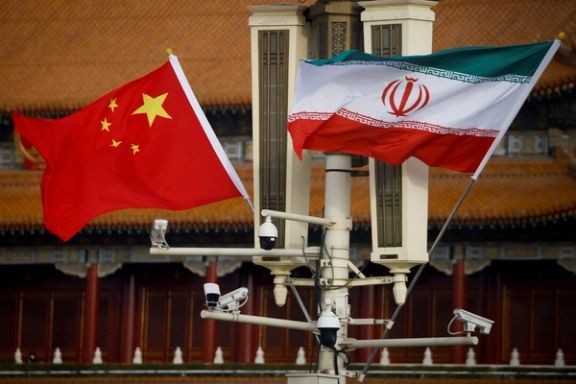
China will host discussions with Russia and Iran on the Iranian nuclear issue in Beijing on March 14, the Chinese foreign ministry announced on Wednesday.

Vice Foreign Minister Ma Zhaoxu will chair the meeting, the ministry confirmed during a regular press conference.

While details of the agenda were not immediately disclosed, the Beijing meeting is expected to focus on potential avenues for reviving diplomatic efforts as the Trump administration has demanded talks for a new deal that would permanently block Tehran's ability to produce nuclear weapons.

The announcement follows remarks by Russian Foreign Minister Sergei Lavrov, who said that Russia has discussed the situation surrounding Iran's nuclear deal with the United States and maintains some contact with European nations on the issue.

"We discussed the situation in the Persian Gulf. We discussed the joint comprehensive action program on the Iran nuclear issue. We are in favor of restoring the original program from which the Americans dropped during the first Trump government. There are some contacts on the European side," Lavrov said, according to Russia's TASS news agency.

"What is worrying is that there are some indications that the Americans would like this new deal to be accompanied by political conditions, insisting that there should be some verifiable arrangement for Iran not to support groups in Iraq, in Lebanon, in Syria, anywhere, which I don't think is going to fly," he added.

He said Russia would be in favor of resuming the format which developed the original JCPOA deal endorsed by the Security Council, though recently, the UN's nuclear chief said it was "an empty shell", with little hope of its revival.

Russia and China have close ties with Iran and were signatories of the 2015 JCPOA nuclear agreement which US President Donald Trump withdrew from in 2018 before imposing heavy sanctions on Tehran.

As Iran’s nuclear standoff with the West intensifies, Russia has positioned itself as a key diplomatic actor, proposing talks with Washington.

Russian Deputy Foreign Minister Sergei Ryabkov met with Iranian Ambassador Kazem Jalali last week to discuss international efforts to resolve issues surrounding Iran's nuclear program.

Moscow has agreed to assist the US in communicating with Iran on various issues, including its nuclear program and support for regional anti-US proxies, according to a Bloomberg report.

Esmail Baghaei, the spokesperson for Iran's Ministry of Foreign Affairs, was also quoted by Iranian domestic media on Wednesday confirming that the trilateral meeting between Iran, China, and Russia at the level of deputy foreign ministers will be held this Friday in Beijing, focusing on developments related to the nuclear issue and the lifting of sanctions.

According to Baghaei, discussions will also cover other topics of interest such as trade and economy.


Most Viewed

Iran negotiators ordered to return after internal rift over Islamabad talks
1
EXCLUSIVE

Iran negotiators ordered to return after internal rift over Islamabad talks

2
ANALYSIS

US blockade enters murky phase as tankers spoof signals and buyers hesitate

3
ANALYSIS

Why the $100 billion Hormuz toll revenue is a myth

4

US tightens financial squeeze on Iran, warns banks over oil money flows

5
ANALYSIS

US blockade targets Iran oil boom amid regional disruption

Banner
Banner

Spotlight

  • Hardliners push Hormuz ‘red line’ as US blockade tests Iran’s leverage
    INSIGHT

    Hardliners push Hormuz ‘red line’ as US blockade tests Iran’s leverage

  • Ideology may be fading in Iran, but not in Kashmir's ‘Mini Iran'
    INSIGHT

    Ideology may be fading in Iran, but not in Kashmir's ‘Mini Iran'

  • War damage amounts to $3,000 per Iranian, with blockade set to add to losses
    INSIGHT

    War damage amounts to $3,000 per Iranian, with blockade set to add to losses

  • Why the $100 billion Hormuz toll revenue is a myth
    ANALYSIS

    Why the $100 billion Hormuz toll revenue is a myth

  • US blockade targets Iran oil boom amid regional disruption
    ANALYSIS

    US blockade targets Iran oil boom amid regional disruption

  • Iran's digital economy battered by prolonged blackout
    INSIGHT

    Iran's digital economy battered by prolonged blackout

•
•
•

More Stories

Iran's Pezeshkian bashes Trump threat: 'do whatever the hell you want'

Mar 11, 2025, 18:43 GMT+0

Iran's President Masoud Pezeshkian lambasted US President Donald Trump's threat of military action if Tehran did not come to a nuclear deal, saying the Islamic Republic would not be forced to negotiate.

"What (Trump) did to that Zelensky is truly shameful," the relative moderate president said, referring to an oval office scrap between Trump and the Ukrainian president - Washington's erstwhile wartime partner.

Iranian officials have cited the blowup as a sign of the United States' fickleness and bullying on the world stage. Tehran has resisted Trump's overtures for a new deal over its nuclear program and its Supreme Leader Ali Khamenei has ruled out talks.

"It is unacceptable to say, ‘We give orders to do this (or) not to do that," Pezeshkian said. "I will not come to (negotiate with you). Do whatever the hell you want!"

Faced with deepening economic malaise wrought by US-led sanctions, Pezeshkian had repeatedly advocated for talks with Washington to chip away at Iran's isolation and mitigate deepening financial pain which threatens unrest.

Khamenei, Iran's top decision-maker, has repeatedly rejected the notion after insisting the United States cannot be trusted.

Hardliners orchestrated the ouster of two moderate members of Pezeshkian's cabinet, hamstringing his economic and diplomatic agenda and leading some commentators to predict his resignation.

Iran denies seeking a nuclear weapon but the UN's nuclear watchdog last week pointed to a sharp rise in Tehran's stockpile of highly enriched uranium.

The United States and European Union said Iran's activities serve no credible civilian purpose and demanded it immediately desist.

EU calls for international deal to end Iran nuclear standoff

Mar 11, 2025, 17:17 GMT+0

The European Union's top diplomat on Tuesday called for an international nuclear deal with Iran along the lines of a 2015 agreement, days after US President Donald Trump mooted military action to dismantle it.

High Representative Kaja Kallas's remarks signal an important policy statement by the bloc after Washington and Tehran jousted over whether the so-called Joint Comprehensive Plan of Action (JCPOA) from which Trump withdrew in his first term can be a basis for a renewed agreement.

"The constant expansion of Iran’s nuclear programme fully contradicts Iran’s own commitments as endorsed by the Security Council," Kallas said at a United Nations Security Council session on EU-UN cooperation.

"At the same time, a multilateral approach, like the JCPOA was, is key. There is no sustainable alternative to a diplomatic solution."

Iran denies seeking a nuclear weapon but the UN's nuclear watchdog last week pointed to a sharp rise in Tehran's stockpile of highly enriched uranium.

The United States and European Union said Iran's activities serve no credible civilian purpose and demanded it immediately desist.

Trump said on Thursday that Tehran would need to ditch a nuclear program much of the West views as a precursor to building nuclear weapons or face military force.

The hawkish US president has not specified whether the JCPOA, from which he withdrew in his first term after bashing it as too lenient, would be the basis of the talks or whether he sought any international buy-in for a new deal.

Rejecting the idea of a renewed agreement, the Revolutionary Guards' Tasnim news agency said a deal already existed in the form of the JCPOA.

Iran's ally Russia has said it is willing to mediate and Moscow's envoy to the UN nuclear watchdog said on Monday that the JCPOA remains the essential foundation for any future negotiations on Iran's nuclear program.

Kallas went on to criticize Iran's aid to Russia in its full-scale invasion of Ukraine.

"Russia has brought others – North Korea, Iran – to support its colonial battle too."

"Iran’s military support to Russia, including the delivery of ballistic missiles, is a major threat to international security," she added.


Iran neither takes orders nor seeks permission for nuclear activities, says VP

Mar 11, 2025, 10:10 GMT+0

Iran's First Vice President Mohammad Reza Aref said Tehran will not seek permission from any country for its nuclear activities, while rejecting allegations that it is pursuing nuclear weapons.

"We neither take orders nor seek permission regarding our nuclear technology," Aref said on Tuesday.

He said that Iran's nuclear program is focused on peaceful development and guided by religious principles, pointing out that Iran abides by the Supreme Leader’s fatwa (religious decree) prohibiting the development of nuclear weapons.

“If a fatwa prohibits nuclear weapons development and permits peaceful nuclear technology, all state institutions will comply," he said.

In an October 2019 speech, Khamenei said that building and maintaining nuclear weapons is "absolutely haram," meaning strictly forbidden under Islamic law.

Several officials have in the last year hinted at Iran's nuclear capabilities. Last April, after Iran's inaugural aerial barrage on Israel, a senior IRGC commander warned that Tehran could change its nuclear policies if Israel continues to threaten to attack Iran’s nuclear sites.

Ahmad Haghtalab, who is in charge of the security of Iran’s nuclear sites, said: “If the Zionist regime wants to use the threat of attacking nuclear sites to put pressure on Iran, it is possible and conceivable for the Islamic Republic to revise its nuclear doctrine and policies, and deviate from its past declared considerations."

Just this week, Iran's foreign minister said the country’s nuclear program cannot be destroyed by military means, citing the program's widespread dispersion and robust protection.

During an interview at the Iranian consulate in Jeddah on Friday, Abbas Araghchi told AFP, “Iran's nuclear program cannot be destroyed through military operations" because the technology is ingrained, facilities are dispersed and protected, and Iran would retaliate proportionally.

Bluffs, uncertainty and threat of war shape Iran's debate on US talks

Mar 11, 2025, 08:14 GMT+0
•
Behrouz Turani

While Iran denies receiving a letter from President Donald Trump demanding nuclear talks, statements by Supreme Leader Ali Khamenei, the foreign ministry and Iran's UN ambassador Saeed Iravani appear to be responses to it.

The officials' statements suggest that the letter or message contained a mix of carrots and sticks. They also indicate that Iran may be open to Trump’s proposals, provided the talks remain strictly focused on the nuclear issue, as Iravani stated.

Iravani further suggested that Iran can take part in talks with America only to convince Washington that its nuclear program is peaceful.

At another level, media, commentators, and politicians seem perplexed by Trump’s approach. As political analyst Ali Bigdeli told the pro-reform daily Arman Melli, “Trump’s statements about Iran have confused everyone.” He added that “Trump disregards diplomatic protocols and seeks to stage a show of power.”

“He wants to overwhelm the other side, leaving them uncertain about how to respond,” Bigdeli said. Given this, he suggested that Iran might be better off using European mediators rather than engaging with Trump directly.

At the same time, in a commentary in the reformist daily Shargh, Iran's former ambassador to Riyadh Mohammad Hosseini has predicted that "the possibility of a military attack by the United States and Israel on Iran is serious and highly likely in the near future."

Hosseini outlined 10 reasons and indicators suggesting that an attack on Iran is imminent. These include the shared Israeli and US assessment of a shifting balance of power in the region, Iran’s declining ability to respond to threats, and officials in both countries recognizing the weakening ties between the Iranian people and their government.

Hosseini added that Israel and the United States recognize Iran has accelerated uranium enrichment to weaponization levels. He also noted that both countries are aware of Iran’s loss of strategic depth in the region and the likelihood that Russia could use Iran as a bargaining chip in negotiations over Ukraine.

Ali Hossein Ghazizadeh, London-based Iran International analyst, said that Trump understands Iranians will not agree to negotiations under pressure, yet he insists on talks solely to demonstrate that Iran is unwilling to engage.

Meanwhile, former diplomat Fereydoun Majlesi told local media that IAEA Chief Rafael Grossi is concerned about the possible weaponization of Tehran's nuclear program. Another concern for the West is nuclear proliferation in the region as a result of regional countries' rivalry with Iran.

He noted that the United Arab Emirates has already built a nuclear power plant, and Turkey and Saudi Arabia may also be encouraged to develop their own nuclear programs. Majlesi added that Grossi recognizes Iran's ability to effectively circumvent US economic sanctions, making it less likely to abandon enrichment. He quoted Grossi as saying that Iran’s nuclear program has gained new momentum since the US withdrew from the 2015 nuclear deal.

Former chairman of the Iranian parliament's foreign relations committee, Heshmatollah Falahatpisheh, told the conservative Nameh News website that Trump's threats against Iran are mere "bluffs" and that now is not the right time for Iran to negotiate with him.

State TV commentator Hassan Hanizadeh also dismissed Trump's "war or negotiation" rhetoric as "empty threats," arguing that Trump has no real intention of negotiating with Iran.

Meanwhile, Iran's former chief diplomat in London, Jalal Sadatian, told Nameh News that while Trump might soften his stance on Iran’s nuclear program, he is unlikely to change his broader approach to dealing with Iran.

UN Security Council to meet over Iran's stockpile of uranium

Mar 11, 2025, 07:26 GMT+0

The United Nations Security Council will meet behind closed doors on Wednesday over Iran's growing stock of nearly weapons grade uranium, diplomats said on Monday.

Six UN Security Council members—France, Greece, Panama, South Korea, Britain, and the US—called for the urgent meeting to discuss Iran's non-compliance with IAEA requests for information on undeclared nuclear material, the sources said.

They want Iran to provide the UN watchdog with "the information necessary to clarify outstanding issues related to undeclared nuclear material detected at multiple locations in Iran," diplomats said.

The request also calls for discussions on Iran's obligations under its safeguards agreement with the IAEA.

The IAEA has warned of Iran’s rapid uranium enrichment to up to 60% purity, close to the roughly 90% weapons-grade level.

Western states argue that uranium enrichment to such high levels is unjustifiable for civilian purposes and unprecedented outside of nuclear weapons programs.

Tehran has denied wanting to develop a nuclear weapon.

Iran’s UN mission has not commented on the news.

In 2015, Iran signed the Joint Comprehensive Plan of Action (JCPOA) with Britain, Germany, France, the US, Russia, and China, trading sanctions relief for nuclear program restrictions.

The US withdrew from the JCPOA in 2018 under President Trump, prompting Iran to scale back its commitments.

Britain, France, and Germany have informed the UN Security Council of their readiness to trigger a "snapback" of international sanctions to prevent Iran from acquiring nuclear weapons, a measure they will lose the ability to enact on October 18th.

Trump has instructed his UN envoy to collaborate with allies on reimposing sanctions.

On Monday, Moscow's envoy to the UN nuclear watchdog said that the JCPOA remains the cornerstone for future Iran nuclear talks.

Speaking to Izvestia, Mikhail Ulyanov warned that the current deadlock risks uncontrolled escalation, emphasizing the JCPOA's irreplaceable role as a starting point for new negotiations, despite its "half-disassembled state" and IAEA chief, Rafael Grossi, calling JCPOA "an empty shell" last month.