• العربية
  • فارسی
Brand
  • Iran Insight
  • Politics
  • Economy
  • Analysis
  • Special Report
  • Opinion
  • Podcast
  • Iran Insight
  • Politics
  • Economy
  • Analysis
  • Special Report
  • Opinion
  • Podcast
  • Theme
  • Language
    • العربية
    • فارسی
  • Iran Insight
  • Politics
  • Economy
  • Analysis
  • Special Report
  • Opinion
  • Podcast
All rights reserved for Volant Media UK Limited
volant media logo

Former Iranian VP calls for officials’ dismissal over energy crisis

Feb 15, 2025, 15:20 GMT+0Updated: 17:04 GMT+0

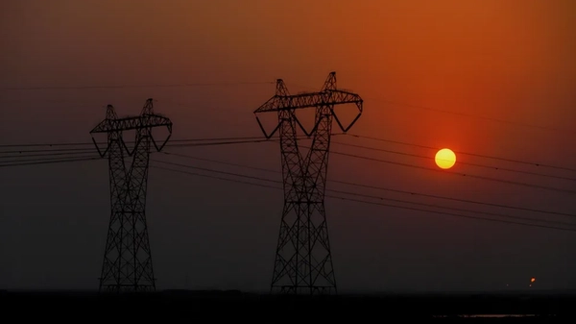
Veteran politician and former Vice President Es’haq Jahangiri has called for the dismissal of officials responsible for Iran’s energy crisis, arguing that widespread power outages could have been prevented even without the country’s oil and gas resources.

“Even if we had no oil and gas, we should not have reached this situation this winter,” Jahangiri said at the Energy Imbalance and Solutions Congress, criticizing officials for failing to secure adequate fuel supplies for power plants.

He criticized the lack of emergency measures, asking, “Could we not have imported two shiploads of diesel to keep power plants running and avoid becoming a laughingstock?”

The former official warned that continued mismanagement could lead to even more severe disruptions in the future.

Power shortages in the cold season have led to public anger and sporadic protests as overall economic crisis deepened and prices soared.

Days of protests in the small town of Dehdasht and at the University of Tehran have underscored growing public anger toward the government. Despite a heavy security presence, residents have also voiced their frustration over power outages and rising living costs by shouting anti-government slogans from their apartment windows each night.

Sporadic demonstrations also occurred in other cities earlier this week, including Shiraz, Yazd, Tehran, Parand, Shazand, Bukan, Hashtgerd, and Kamyaran.

Protesters have directed much of their ire at Supreme Leader Ali Khamenei, chanting slogans calling for his removal and condemning the government’s failure to manage the ongoing crisis.

Widespread blackouts have forced school and government office closures across multiple provinces on some days, with authorities blaming the outages on high gas consumption and limited supplies. Iran has the world's second largest natural gas reserves but production is declining due to lack of technology and investment.

The Iranian rial recently hit an all-time low, with the US dollar briefly reaching 940,000 rials before experiencing a slight recovery. Essential goods such as rice, dairy, and cooking oil have seen price hikes up to 110% over the past year, deepening financial hardships for Iranian households.

Despite mounting crises, top officials, including President Masoud Pezeshkian and Parliament Speaker Mohammad Bagher Ghalibaf, have continued to praise Supreme Leader Khamenei’s rejection of negotiations with the United States. Meanwhile, calls are growing from those who see diplomacy as a possible way to ease the economic strain caused by sanctions.

Most Viewed

State media slam Araghchi's Hormuz tweet, say it let Trump claim victory
1

State media slam Araghchi's Hormuz tweet, say it let Trump claim victory

2

Iran International says it won’t be silenced after London arson attack

3
INSIGHT

How Tehran bends its own red lines to boost state rallies

4
OPINION

The Hormuz get out of jail card turned to a grave

5

Iran halts petrochemical exports to supply domestic market

Banner
Banner

Spotlight

  • Too early to tell who is winning Iran war, experts say
    PODCAST

    Too early to tell who is winning Iran war, experts say

  • How Tehran bends its own red lines to boost state rallies
    INSIGHT

    How Tehran bends its own red lines to boost state rallies

  • Iran blackout cripples freelancer, small business incomes
    VOICES FROM IRAN

    Iran blackout cripples freelancer, small business incomes

  • Ideology may be fading in Iran, but not in Kashmir's ‘Mini Iran'
    INSIGHT

    Ideology may be fading in Iran, but not in Kashmir's ‘Mini Iran'

  • US blockade enters murky phase as tankers spoof signals and buyers hesitate
    ANALYSIS

    US blockade enters murky phase as tankers spoof signals and buyers hesitate

  • Why the $100 billion Hormuz toll revenue is a myth
    ANALYSIS

    Why the $100 billion Hormuz toll revenue is a myth

•
•
•

More Stories

Protests persist over death of Iranian university student

Feb 15, 2025, 12:14 GMT+0

Protests over the death of a 19-year-old University of Tehran student continue to intensify, as others gathered in front of the university's central library on Saturday amid reports of a heavy security presence on the main campus.

Amir Mohammad Khaleghi, an undergraduate in business management, was fatally attacked by robbers with a cold weapon near the university dormitory on February 13. The victim died from his wounds in hospital. The incident has sparked widespread anger among students, who accuse university officials of failing to ensure their safety.

The unrest began Friday, when students organized a sit-in at the courtyard of Tehran University’s dormitory complex. Security forces and plainclothes agents surrounded the campus, arresting four students.

Although the detained students were later released under pressure from their peers, reports of excessive force, including one protester sustaining a broken nose, have added to the outrage.

The National Student Guild Council released a statement holding university officials responsible for years of neglect that led to unsafe dormitory conditions.

“The loss of a 19-year-old student is the tragic result of years of inaction and misplaced priorities,” the statement said, citing repeated violence and theft at the dormitory's back entrance.

Students have expressed their anger through chants like "IRGC, you are our murderer" and "The blood spilled cannot be erased." Some shouted "Death to the Islamic Republic" and "Death to Khamenei" from dormitory windows.

Nationwide solidarity is growing, with students from universities such as Amir Kabir, Sharif, and Tabriz condemning the suppression of protesters and expressing sympathy with University of Tehran students.

Exiled Prince Reza Pahlavi called on students, university professors, and various segments of the Iranian people on Friday to support the protesting students of the University of Tehran and to ensure that the killing of Khaleghi and the suppression of students do not come without a cost for the authorities.

"The killing of Amir Mohammad Khaleghi and the violence against protesting students at Tehran University's dormitory once again demonstrated how incapable the Islamic Republic is in ensuring the security of the nation. Instead of protecting the lives and rights of its citizens, it becomes the primary source of insecurity through suppression, arrests, and killings. Ignoring human tragedies is merely a part of the entirely destructive record of this anti-Iranian regime," he wrote on X.

Nobel Peace Prize laureate Narges Mohammadi also voiced support, urging Iranians to stand with the protesters: "Let’s not leave the young protesters alone."

In response, the Minister of Science Hossein Simayee Sarraf, announced plans to install surveillance cameras and security kiosks in vulnerable campus areas. He also confirmed the resignation of the dormitory manager.

The Tehran Prosecutor’s Office said it has assigned a special judicial investigator to the case and suspects arrested in connection with the murder.

Vice President Mohammad Reza Aref has also called for an immediate investigation.

The overall political and social situation in Iran is tense due to the worsening of economic crisis, rising inflation accompanied by rising poverty.

As the protests persist, the government’s response thus far suggests an attempt to avoid the heavy-handed crackdowns seen during previous rounds of university unrest. Efforts to engage in dialogue and implement security measures appear aimed at calming tensions without further escalation. However, given the Islamic Republic’s history of suppressing dissent, the possibility of a harsher response cannot be ruled out.

Tehran slams US deportation of Iranian illegal migrants

Feb 15, 2025, 10:30 GMT+0

Iran’s government on Saturday condemned the treatment of Iranian nationals deported from the United States to Panama, calling it harsh and inhumane.

This marks the latest in a series of deportations under policies implemented during Donald Trump’s presidency, which have sent undocumented migrants to countries including Colombia, Venezuela, Brazil, Guatemala, Panama and the Guantanamo Bay military base in Cuba.

Iran’s Foreign Ministry spokesperson Esmail Baghaei urged the US to uphold international norms in its treatment of immigrants. He said that Iran “will spare no effort in protecting its citizens abroad,” adding that the Iranian Interests Protection Office in Washington and diplomatic missions in South America have been instructed to assist deported Iranians.

“Iran is the homeland of all Iranians, and our compatriots can freely return to their homeland and travel,” Baghaei said.

This follows the deportation of at least 12 Iranian migrants who had illegally entered the US via Mexico. The migrants were detained and flown to Panama on a US military plane, a move that has drawn significant scrutiny.

The deportees say they were shackled and handcuffed during the transfer and are now confined to a Panamanian hotel under US government oversight. According to the deportees, the US appears intent on erasing any evidence that they had ever entered the country.

It is not clear how many applied for political asylum in the US, but some report being stranded without money, internet access, or legal counsel, and they fear being sent back to Iran.

Among them is Artemis Ghasemzadeh, who told Iran International TV that she and others were initially told they were being moved to a camp in Texas.

“The security personnel didn’t tell us where we were going, and when we landed, we saw Panama’s flag on their uniforms,” she said.

Ghasemzadeh described their current confinement, saying, “We are monitored, denied legal help, and terrified we might be sent back to Iran.”

Ghasemzadeh also said that many of the group had entered the US legally before or shortly after Trump took office. “The US says we are illegal immigrants, but we are not. We have all approved documents,” she added.

The deportees say they fled Iran to escape persecution for their involvement in anti-government protests or religious conversion to Christianity—both punishable by severe measures in Iran, including imprisonment or execution.

Iran has faced international criticism for its crackdown on dissent, with thousands arrested and hundreds killed during protests since the 2022 death of Mahsa Amini in custody. Several protesters have been executed without fair trials, and many others are at imminent risk of execution.

Panamanian officials have said the deportees will remain in shelters temporarily before being repatriated to their home countries. However, the group’s future remains uncertain as they contend with the fear of life-threatening consequences should they return to Iran.

Iran says it is in indirect talks with Syria’s new government

Feb 15, 2025, 08:54 GMT+0

Tehran has exchanged positive messages with Syria’s new government, an official revealed, but will make its final decision on its future role in the country “at the appropriate time.”

“We are monitoring the developments in Syria with deliberation and patience and will make our specific decision when the time is right,” Mohammadreza Raouf Sheibani, Iran’s special representative for West Asia, said in an interview published Saturday.

He confirmed the recent remarks of Syrian Foreign Minister Asaad Hassan al-Shibani about an exchange of “positive messages” between Tehran and Damascus following the overthrow of Bashar al-Assad’s government in December.

Iran's Shiite clerical government became deeply involved in Syria's civil war early in the conflict, sending regular and proxy forces to defend Bashar al-Assad's rule.

Al-Shibani, speaking at the World Government Summit in Dubai earlier this week, stressed that while Syria has received “clear and positive messages” from both Iran and Russia, these messages need to be translated into “a clear policy that makes the Syrian people feel reassured.”

Iran and Russia, Assad’s main backers during the brutal conflict that began in 2011, played key roles in maintaining his grip on power until a rapid rebel offensive last December forced him into exile in Moscow. Since then, both countries have sought to maintain influence in Syria while navigating the new political landscape.

Europe has taken a clear stance in supporting Syria’s new leadership, with French President Emmanuel Macron pledging assistance in countering terrorism and preventing the return of Iranian-backed militias. “The priority is ensuring that Syria does not become a logistical platform for militias linked to Iran, which pursue a regional destabilization agenda,” Macron said at a recent conference in Paris attended by key regional and Western powers.

Iran, which invested heavily in Assad’s survival—reportedly spending at least $30-$50 billion—now faces the challenge of recalibrating its strategy. Supreme Leader Ali Khamenei has vowed on multiple occasions to reclaim Iran’s influence in Syria, adding further tension to an already complex situation.

Iran’s oil sales to China plummet, revenue decline deepens

Feb 15, 2025, 08:41 GMT+0
•
Dalga Khatinoglu

After the Chinese government banned sanctioned oil tankers from entering Shandong port—China’s largest terminal for Iranian oil—China’s imports of Iranian crude fell by more than half in January.

Findings by Iran International show that while Iran’s oil sales to China dropped sharply last month, the decline in export revenues began months earlier, coinciding with US sanctions on dozens of tankers carrying Iranian crude.

The Biden administration imposed sanctions on dozens of tankers carrying Iranian oil after Iran’s missile attack on Israel in early October last year. While this initially led to a relative decline in Iranian oil offloading at Chinese ports, the real blow came in early January when China, fearing potential US sanctions under Donald Trump's administration, prohibited sanctioned oil tankers from entering Shandong port.

Iran’s only oil customers are small, independent Chinese refineries, known as "teapots," most of which are based in Shandong, where 90% of Iranian oil cargoes is discharged.

Data from Kpler shows that Iran’s oil deliveries to China fell below 850,000 barrels per day in January, compared to over 1.8 million barrels per day in October last year.

Homayoun Falakshahi, a senior analysis at Kpler told Iran International that Iran’s floating oil reserves have also tripled to 35 million barrels during this period. This explains the discrepancy between Iran’s claims of steady shipments and falling deliveries to China.

Most tankers are anchored in the waters off Singapore and Malaysia, while the Islamic Republic is seeking non-sanctioned vessels to transport the shipments to Shandong port.

100%

Oil export revenues collapse, far exceeding decline in sales

Although Iran’s oil deliveries volume to China saw a relative drop in late 2024 and experienced a steep plunge in January, Iranian customs data indicates that the sharp decline in the country’s oil revenues began as early as October last year.

From March to September 2024, customs and government officials regularly reported monthly oil revenue figures. However, they had remained silent in since October until Iran’s Abdolnasser Hemmati, the minister of economic affairs recently referenced oil export revenues briefly in a tweet about the country’s foreign trade.

The latest data published by Iran’s Customs Administration indicated that the country had exported $23 billion worth of oil in the first six months of the current Iranian fiscal year (March 21 to September 21). No further official figures were released until Hemmati, citing customs data, announced that Iran’s oil export revenue had reached $30 billion over the past ten months.

In simple terms, Iran’s monthly oil export revenue has plunged from $3.83 billion in the first half of the fiscal year (March-September), to just $1.75 billion over the past four months.

It remains unclear why Iran’s oil revenues have plummeted far more than the drop in crude sales volume to China. However, it appears that latest sanctions by the Biden administration on dozens of tankers in October 2024 have significantly increased the cost of transporting Iranian oil to China, leading to a severe revenue decline.

Moreover, Iran’s oil exports to Syria have also halted in recent months following the collapse of Bashar al-Assad’s government. However, with a daily export volume of only around 60,000 barrels, this alone cannot explain the halving of Iran’s oil revenues over the past four months.

Since October last year, the Iranian rial has also suffered a sharp devaluation, with the US dollar surging from around 600,000 rials to 900,000 rials in the free market—highlighting a major challenge for the Iranian government in meeting the country’s foreign currency needs.

Russia’s Challenge for Iran

In the final days of the Biden administration, Washington sanctioned over 180 oil tankers carrying Russian crude oil. According to Reuters, this move has caused the cost of chartering non-sanctioned tankers for transporting Russian oil to China to increase 3.5-fold. As a result, some previously non-sanctioned vessels that were involved in smuggling Iranian oil have shifted toward Russia, making it even more difficult for Iran to find non-sanctioned tankers to transport its oil to Chinese ports.

In this regard, TankerTrackers reported on February 13 that a very large crude carrier (VLCC), previously engaged in smuggling Iranian oil, is now en route to China with 1.9 million barrels of Russian crude.

Similarly, Kpler has confirmed that several large tankers that previously operated for Iran are now serving Russia.

Meanwhile, Russia’s floating oil storage has surpassed 88 million barrels, and it appears that the country’s logistical challenges won’t be resolved anytime soon.

To free Israeli hostages Iran must feel the pain, ex-intel officer says

Feb 14, 2025, 22:00 GMT+0
•
Negar Mojtahedi

An ultimatum by US President Donald Trump to Hamas is doomed to fail unless Tehran faces a genuine threat and consequences for backing the group, Michael Pregent, a former US Intelligence officer and military adviser told Eye for Iran podcast.

“Tehran needs to feel under threat, and they need to feel pain,” said Pregent.

"What kind of pressure can the Trump administration put on Iran to get those hostages released? They just simply have to say, you are going to be held accountable for every hostage that's killed or delay in the release of every hostage."

The United States, Pregent said, should exert economic pressure on Iran, discourage Iraqi cooperation with Tehran and more directly confront armed affiliates in the region such as the Houthis in Yemen, Lebanese Hezbollah and Hamas itself.

"If the regime told Hamas to release, they would release," Pregent said, referring to Iranian authorities and Israeli hostages Hamas seized in an Oct. 7, 2023 attack.

Trump on Monday warned of dire consequence if all the remaining hostages are not released on Saturday.

“As far as I’m concerned, if all of the hostages aren’t returned by Saturday at 12 o’clock – I think it’s an appropriate time – I would say, cancel it (ceasefire) and all bets are off and let hell break out,” the president told reporters in the White House.

Trump’s comments represent one of the most direct threats aimed at the Iran-backed group by any Western leader. He also says he seeks to seize and control Gaza, the coastal enclave that has been run by Hamas.

The Islamic Republic provides material, financial and ideological support to its Palestinian ally. According to a 2020 US state department report, Iran provides about $100 million annually to Palestinian militant groups, including Hamas.

Qatar's role

Pregent, who served under former director of the Central Intelligence Agency, General David Petraeus in Iraq, describes Trump as a tough and effective leader.

The Republican President understands the Middle East, Pregent said, but added that some members of the administration are too close to Qatar.

“That funding either silences a critic or results in praise for what Qatar is doing. We hear these things like Qatar is doing God's work,” said Pregent. “When it comes to Witkoff, we know that they bought a property in New York for $623 million. That's in The New York Times. I'm not saying that he's bought and paid for.”

Steve Witkoff, once a prominent real estate investor, is the US Special Envoy to the Middle East, who played a pivotal role in brokering a major ceasefire and hostage exchange agreement between Israel and Hamas.

A New York Times report alleges that Witkoff was involved with two sovereign wealth funds when he bought and sold a Manhattan hotel in 2018 prior to working in government. The Qatar investment authority purchased the hotel for $623 million helping to secure a buyout for Witkoff and his partners.

The most senior leader of Hamas outside of Gaza was living in Qatar up until recently, but the political office of Hamas in Doha is now permanently closed, Qatar’s foreign ministry spokesperson told various Western-media outlets.

Qatar, a tiny island in the Persian Gulf, has become the world’s lead hostage-negotiator. The small energy-rich state, with the help of Egypt, has been working with the US and Israel on a Israel-Gaza ceasefire for much of the conflict.

In 2023, just before October 7, Doha brokered a deal between Washington and Tehran that saw the release of US hostages inside Iran in exchange for the release of 6 billion to Tehran in frozen assets.

“You cannot succeed if you continue to play into the hands of the arsonist playing firefighter, you know, in the role of Qatar. If you really want to get a release, Tehran needs to be involved,” said Pregent.

Pregent said while Iran influences Hamas, Qatar influences the US.

“What I'm saying is it’s pretty hard to criticize Qatar when they buy you out of a financial situation that you are in. That's what I'm talking about with this influence,” added Pregent.

If Doha continues to lead negotiations, and Tehran doesn't face consequences for its support of Hamas, Pregent insisted, there can be no progress to end the conflict.

"If that doesn't happen, then nothing."