• العربية
  • فارسی
Brand
  • Iran Insight
  • Politics
  • Economy
  • Analysis
  • Special Report
  • Opinion
  • Podcast
  • Iran Insight
  • Politics
  • Economy
  • Analysis
  • Special Report
  • Opinion
  • Podcast
  • Theme
  • Language
    • العربية
    • فارسی
  • Iran Insight
  • Politics
  • Economy
  • Analysis
  • Special Report
  • Opinion
  • Podcast
All rights reserved for Volant Media UK Limited
volant media logo

Iranian media debate US talks, Russia’s intentions

Behrouz Turani
Behrouz Turani

Iran International

Feb 14, 2025, 10:52 GMT+0

Divisions over US negotiations, economic hardship from sanctions, and concerns that Russia may use Iran’s nuclear program as leverage with Washington dominate debate in Tehran’s government-controlled media.

Addressing the uncertainty surrounding foreign policy and relations with the United States after Khamenei's rejection of talks, the centrist daily Ham Mihan wrote, "What Khamenei said highlighted a tactic rather than a strategy. Conservatives should not assume that their hardline stance has prevailed over the Reformists' push for compromise, nor should Reformists be discouraged by Khamenei's latest remarks on negotiations."

Meanwhile, Reformist figure Mostafa Hashemi-Taba criticized President Masoud Pezeshkian’s “national reconciliation” policy, particularly his cooperation with hardliners and their growing influence in the government. In a commentary in Shargh, Hashemi-Taba questioned the lack of consensus with hardliners on Iran’s most pressing foreign policy issues. "Well, you advanced a national reconciliation plan, but what happened next? You could claim success if there were some agreements among officials on how to address Iran’s problems."

"If you still insist that what you pursued was truly national reconciliation, then ask yourself—so what? What’s next? Beyond repeatedly stating your desire to solve the country’s problems, what concrete steps will you take?" Hashemi-Taba challenged Pezeshkian, criticizing his inaction and his government's lack of a clear plan.

He also condemned Iran’s ruling circles for “claiming to be revolutionary while squandering the country’s resources.”

Meanwhile, hardliners continued to reject President Trump's offer for negotiations. The hardline daily Farhikhtegan accused Iranian reformists of "trying to pave the way for talks with America by distorting Trump's statement and pretending his behavior is normal."

The newspaper acknowledged that the people face serious economic and financial hardships, stating, “The government cannot tackle the nation's increasing dissatisfaction and foreign pressures at the same time." However, it echoed Supreme Leader Ali Khamenei and hardliners, insisting that the government should address the crisis without turning to negotiations with the United States.

Hardliners have maintained this argument for the past seven years, but without the removal of US sanctions, the government has limited options to revive the economy.

Farhikhtegan further accused reformists of idealism and attempting to downplay what it called Trump’s anti-Iran executive memorandum, stating, "They are lost in their dreams, ignoring reality."

The news of a lengthy phone call between Trump and Russia’s Vladimir Putin intensified debate in Tehran’s media over Moscow’s true intentions and its possible plans to use Iran as a bargaining chip with the US president.

Even before that phone call, the centrist website Entekhab quoted Mahmoud Shouri, deputy director of the Iranian and Eurasian Studies Center, as saying, "At present, Russia has no opportunity to intervene in discussions between Iran and the United States over Tehran’s nuclear program. However, Moscow is certainly uneasy about the program becoming unmanageable."

Shouri added, "Russia does not want Iran to become a nuclear power, but Iran should not be preoccupied with Moscow’s concerns, as Russia does not play a decisive role in the future of Iran’s nuclear program."

These remarks came days after Moscow’s ambassador in Tehran told the press, "Negotiations with Iran will not yield results without Moscow and Beijing." He emphasized that "Russia supports the 5+1 framework for talks with Iran, but unfortunately, Western countries are trying to exclude Russia and China from the negotiations."

Most Viewed

Ghalibaf defends Iran-US talks amid hardline backlash
1
INSIGHT

Ghalibaf defends Iran-US talks amid hardline backlash

2
ANALYSIS

From instability to influence: Pakistan’s pivotal role in US-Iran diplomacy

3
ANALYSIS

100 days on: why Iran’s January protests spread across social classes

4

War-hit homeowners feel abandoned as Iran’s reconstruction aid fades

5

Iran says no decision yet on talks as Pakistan prepares to host US team

Banner
Banner

Spotlight

  • The politics of pink: how Iran uses cuteness to rebrand violence
    ANALYSIS

    The politics of pink: how Iran uses cuteness to rebrand violence

  • Bread shortages, soaring prices strain households in Iran, residents say
    VOICES FROM IRAN

    Bread shortages, soaring prices strain households in Iran, residents say

  • War-hit homeowners feel abandoned as Iran’s reconstruction aid fades

    War-hit homeowners feel abandoned as Iran’s reconstruction aid fades

  • 100 days on: the anatomy of Iran’s January crackdown
    INSIGHT

    100 days on: the anatomy of Iran’s January crackdown

  • Ghalibaf defends Iran-US talks amid hardline backlash
    INSIGHT

    Ghalibaf defends Iran-US talks amid hardline backlash

  • From instability to influence: Pakistan’s pivotal role in US-Iran diplomacy
    ANALYSIS

    From instability to influence: Pakistan’s pivotal role in US-Iran diplomacy

•
•
•

More Stories

US lawmakers call for Europe to trigger snapback sanctions on Iran

Feb 14, 2025, 10:20 GMT+0

US lawmakers are urging European allies to reinstate strict United Nations sanctions on Iran, citing Tehran’s continued violations of the 2015 nuclear deal.

A bipartisan resolution, introduced in both the Senate and the House, calls on the United Kingdom, France, and Germany to trigger the “snapback” mechanism that would restore comprehensive sanctions on Iran through the UN Security Council.

The Senate version of the legislation is being led by Sen. Pete Ricketts (R-Neb.), the number two Republican on the Senate Foreign Relations Committee, with 11 cosponsors.

"Iran is the leading state sponsor of terrorism, and their actions have led to the murder of American servicemembers," Ricketts said. "Iran’s possession of a nuclear weapon would threaten our security and the security of our allies. Snapback sanctions are key to ensuring that President Trump’s maximum pressure campaign is successful."

In the House of Representatives, Reps. Claudia Tenney (R-NY) and Josh Gottheimer (D-NJ) have introduced companion legislation, urging European nations to act before key provisions of the Iran deal expire in October 2025.

"These snapback sanctions would include export controls, travel bans, asset freezes, and other restrictions on those involved in Iranian nuclear and missile activities," a press release shared on Tenney's website read.

The 2015 agreement, formally known as the Joint Comprehensive Plan of Action (JCPOA), had lifted UN, US, and EU sanctions on Iran in exchange for commitments to limit its nuclear program. The Trump administration withdrew the US from the deal in 2018, implementing a "maximum pressure" sanctions effort. In response, Iran later restricted access for international inspectors and resumed uranium enrichment beyond permitted levels.

The US lawmakers' call comes amid reports from the International Atomic Energy Agency (IAEA) that Iran is enriching uranium to 60% purity, just below the 90% threshold for weapons-grade material. IAEA Director Rafael Grossi warned that there is no civilian use for uranium enriched to such a level, raising concerns over Tehran's nuclear intentions.

With the October 2025 deadline looming, US lawmakers are pressing their European counterparts to act swiftly and decisively, warning that failure to reimpose sanctions could further embolden Iran’s nuclear ambitions.

Iran, China and Russia aim for Tehran's dominance of Mideast, senator says

Feb 13, 2025, 19:46 GMT+0

The leaders of US adversaries Iran, Russia and China are working together to dominate their respective regions and undermine US security and values, Senator John Kennedy said on Thursday.

"I am convinced, based on classified classified information, that President Xi in China is working with President Putin in Russia and is working with the Ayatollah in Iran against the United States of America and western values, including, but not limited to freedom," the Louisiana Republican said in congress.

Russia plays a pivotal role in Iran's nuclear infrastructure, leading initiatives such as the expansion of the Bushehr Nuclear Power Plant. Iranian drones have aided Russia's full-scale invasion of Ukraine, leading to stricter US-led sanctions.

Iran's president said shortly after the election of President Donald Trump that the country seeks greater cooperation with Beijing and Moscow to confront what he called Washington's unilateralism.

"I believe their ultimate goal was to have Iran dominate the Middle East," Kennedy added, saying Moscow sought to hold sway over Eastern and Central Europe.

China's Xi Jinping, whom Kennedy described as "the quarterback of this ball club" would control the Indo-Pacific, sub-Saharan Africa and South America.

Tehran and Beijing inked a comprehensive strategic partnership in 2016 aimed at increasing bilateral trade to $600 billion by 2026. However, trade volume reached just $12.5 billion last year according to the International Monetary Fund.

China remains Iran's largest trade partner and purchases nearly all of Iran's crude oil in defiance of US sanctions.

"I don't want America to be the world's policeman, but I don't want President Xi or President Putin or the Ayatollah in Iran to be the world's policeman either," Kennedy said.

The objectives of our enemies, if I am correct, is not a world that would be safe for America. Weakness invites the wars. We have to spend more money on defense."

Fellow Republican senators on Tuesday told Iran International that Supreme Leader Ali Khamenei was unwise to dismiss nuclear talks with the United States and President Trump is no paper tiger.

Experts doubt effectiveness of Trump’s oil sanctions on Iran

Feb 13, 2025, 12:38 GMT+0
•
Mardo Soghom

Despite President Donald Trump's announcement to reinstate his maximum pressure sanctions on Iran, experts doubt the policy can truly cut Tehran's oil shipments to force the concessions he seeks.

Although concerned about Trump's announcement last week, officials in Tehran insist that the country will continue its oil exports through illicit channels, drawing parallels to Russian oil sales.

Iran's oil minister said this week that Trump's sanctions policy on Tehran has failed, along with his goal of cutting Iran's oil exports to zero.

"The more they restrict us, the more complex our response will be," Mohsen Paknejad was quoted as saying by state media. "The dream of cutting Iran's oil exports to zero is one they will never achieve."

The CEO of the National Iranian Oil Company, Hamid Boord, said on February 13, "We are striving to ensure that oil exports continue without interruption despite possible challenges, so that Iran's economic engine does not stop."

Iran’s oil-dependent economy has faced severe financial difficulties since 2018, when President Trump withdrew from the 2015 JCPOA nuclear deal and imposed oil export sanctions on Tehran.

This cut exports to the 200,000–300,000 barrels per day range for the remainder of his first term, though shipments rose after Joe Biden took office. Shortly after returning to the White House, Trump vowed to bring Iran’s oil exports down to zero until Iran fully renounces its nuclear weapons option.

However, some analysts doubt whether the Trump administration can significantly curb Iran’s oil exports, which continue to flow to China through a shadow fleet of tankers and various circumvention methods.

Javier Blas, a Bloomberg columnist covering energy and commodities, expressed serious doubt this week about the US ability to curb Russian, Iranian and Venezuelan oil smuggling efforts.

He pointed to the substantial profits involved in the trade for numerous shipping companies and middlemen, who are adept at finding ways to benefit from illicit shipments.

“The sums involved are so vast and the business so lucrative that everyone involved — sellers, buyers and intermediaries — is highly motivated to find alternative routes, tricks and ploys to keep the wheels turning. Over time, the enforcers grow tired and the smugglers become wiser,” Blas argued.

The Paris-based International Energy Agency (IEA) expressed doubt on February 13 if recent additional sanctions imposed on Russia by the United States can reduce illicit shipments.

"Time and again, oil markets have shown remarkable resilience and adaptability in the face of major challenges – and this time is unlikely to be different," the IEA said.

Blas also pointed that industrial countries are sensitive to higher oil prices, which weakens their willingness to engage in real and tough sanctions enforcement.

In addition, Blas drew attention to Trump’s apparent uncertainty when he announced the return of maximum pressure against Iran.

“On paper, it was a strong action. But Trump undermined his own thunder by saying, pen in hand, that he was ‘torn about’ the memo. ‘Everyone wants me to sign it,’ he said, adding ‘I’m signing this, but I’m unhappy to do it’, Blas wrote.

He also argued that after Trump’s directive, no major sanctions enforcement action took place by his administration.

A separate statement was issued announcing measures against Iran’s oil shipping network, but the move targeted a single large oil tanker and two small ones. "Over the last few years, Iran has relied on more than 500 tankers to move its oil," it said.

Other oil experts have also voiced doubts to Iran International. “We’re not yet convinced that Iran’s oil exports will drop to the levels seen in May 2019, mainly because there wasn’t an extensive global dark fleet available back then, unlike what we have today," Tanker Trackers said last week.

Dozens arrested protesting continued house arrest of 2009 protests leaders

Feb 13, 2025, 11:45 GMT+0
•
Maryam Sinaiee

Iran's security forces on Thursday arrested dozens who gathered in central Tehran to protest the ongoing house arrest of the 2009 Green Movement leaders.

The protest was called to demand an end to the incarceration of former prime minister and presidential candidate Mir-Hossein Mousavi and his wife, Zahra Rahnavard, held in their home since February 2011.

It was the first such public demonstration since the couple were effectively jailed alongside the other 2009 leader, former parliamentary speaker Mehdi Karroubi, who also rejected the results of Iran's election that year.

Marking the 14th anniversary of the day the house arrest began, several hundreds gathered in Tehran for a "silent rally" that had been called a couple of days earlier by dissident activist Rahim Ghomeishi, a 60-year-old former IRGC member and Iran-Iraq War veteran who had spent four years as a prisoner of war in Iraq.

Ghomeishi was detained on Wednesday along with two other activists who had backed his call to action, Akbar Danesh-Sararoudi and Naser Daneshfar.

Their social media campaign received backing from over 500 former IRGC members, war veterans, and their families, who joined a few thousand for the silent protest on Thursday, according to the organizers.

Shortly after, Iran's security forces who had been stationed in and around the announced location arrested dozens including known activists and ordinary citizens.

Crackdown, arrests, and intimidation

On Thursday, Ardshir Amir-Arjomand, a former Mousavi advisor and spokesman for the Iranian Green Movement’s Coordinating Council, claimed that security forces blocked several activists from leaving their homes to participate in the rally.

Ghomeishi had previously announced that he and other veterans planned to stage a peaceful, “silent” protest outside the main gate of Tehran University to oppose the continued house arrest of political figures and the imprisonment of activists.

He also insisted that the law allows citizens to protest peacefully whenever they wish, and authorities cannot deny this right to them under the pretext that the country is in “sensitive circumstances” or that the “enemy” may exploit their protests for its own propaganda purposes.

Ghomeishi also said the group had informed the Interior Ministry and “other official bodies” of the intention to hold a rally but had not heard back from them, assuming that there was no objection to the plan.

While Article 27 of Iran’s constitution technically allows peaceful assembly, authorities almost categorically deny permits for opposition protests, citing “sensitive circumstances” or the risk of “enemy propaganda” or ignore their permit requests. At the same time, pro-regime vigilante groups face no such restrictions.

Assembly permits are often denied to most political groups, effectively suppressing their protests. In contrast, hardliner vigilante groups are allowed to hold rallies freely, without authorization.

After Thursday's crackdown, Azar Mansouri, the head of the Reformist Front, protested in an X post.

He wrote: "Why do some people freely hold gatherings and meetings anywhere ... without permission, chant slogans against the president and his team, and have ironclad immunity, but another group, who happen to be veterans of the country, are arrested before holding a peaceful gathering?"

Information received from Iranians on the ground by Iran International TV on Thursday and eyewitness reports on social media, described a heavy security presence on Enghelab Avenue and around Tehran University hours before the planned demonstration. Videos showed police cars and vans lining the streets.

One witness told Iran International that around 1,000 uniformed officers—including both male and female forces—were stationed near the university, along with nearly as many plainclothes agents. Officers stopped and searched people, checking their phones for footage.

Iran International has learned that the government’s Information office instructed local media and journalists not to report on the crackdown.

In addition to the initial arrests, several university students and Saeed and Saeedeh Montazeri—children of the late dissident cleric Ayatollah Hossein-Ali Montazeri— and Hossein Loghmanian, a former lawmaker and also a war veteran, were detained when they attempted to join the rally.

The case has gained international attention. Back in 2017, the US State Department said of the pair's house arrest: "Their continued house arrest contradicts Iran’s international obligations including those under the International Covenant on Civil and Political Rights, to which Iran is a state party, to provide minimum fair trial guarantees and not to subject citizens to arbitrary arrest or detention.

"We join the international community in condemning the continued arbitrary detention of these three individuals without charges or fair trials and in calling for their immediate release."

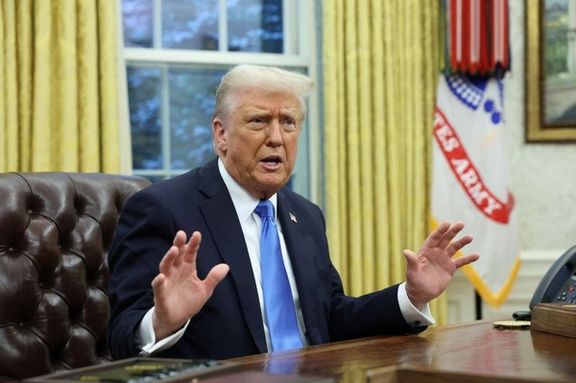
Rubio's Mideast trip to focus on countering Iran

Feb 13, 2025, 11:16 GMT+0

US Secretary of State Marco Rubio's trip to the Middle East will heavily focus on countering the destabilizing activities of Iran and its proxies, as well as securing the release of hostages held by Hamas, the State Department announced.

Rubio's itinerary includes stops in Israel, Saudi Arabia, and the United Arab Emirates from February 15-18, following participation in the Munich Security Conference and G7 Foreign Ministers' Meeting starting February 13.

The State Department emphasized that discussions with senior officials will center on advancing regional cooperation, stability, and peace,with a key component being addressing the threat posed by Iran.

“The trip will center on freeing American and all other hostages from Hamas captivity, advancing to Phase II of the ceasefire agreement in Gaza, and countering the destabilizing activities of the Iranian regime and its proxies.”

On February 4, Trump signed a directive reviving his so-called maximum pressure policy on Iran from his first term aimed at driving the Islamic Republic's oil exports to zero. After signing the memorandum, he said he would prefer a deal with Tehran to an Israeli attack on their nuclear sites.

Iranian President Masoud Pezeshkian insisted on Wednesday that the country would not yield to external threats after US President Donald Trump mooted the bombing of its adversary earlier this week.