• العربية
  • فارسی
Brand
  • Iran Insight
  • Politics
  • Economy
  • Analysis
  • Special Report
  • Opinion
  • Podcast
  • Iran Insight
  • Politics
  • Economy
  • Analysis
  • Special Report
  • Opinion
  • Podcast
  • Theme
  • Language
    • العربية
    • فارسی
  • Iran Insight
  • Politics
  • Economy
  • Analysis
  • Special Report
  • Opinion
  • Podcast
All rights reserved for Volant Media UK Limited
volant media logo

US-Iran talks possible if Trump dials down rhetoric - conservative daily

Behrouz Turani
Behrouz Turani

Iran International

Feb 12, 2025, 11:00 GMT+0Updated: 17:18 GMT+0
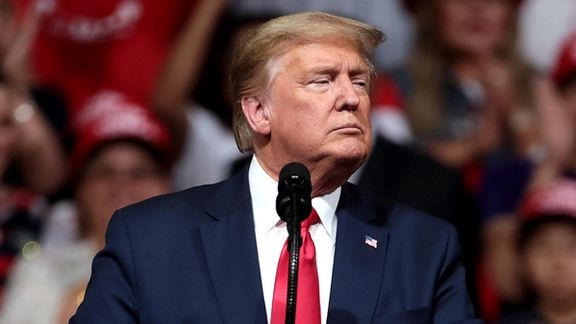
US President Donald Trump

Negotiations between Iran and the United States remain possible if President Donald Trump adopts a less "confrontational and arrogant" tone toward Tehran, wrote the editor of a conservative newspaper founded by Supreme Leader Ali Khamenei.

In a sign of growing internal debate, Massih Mohajeri of the Jomhouri Eslami newspaper sharply criticized officials and media figures who brand supporters of negotiations as “infiltrators” and “dishonored elements”, describing this stance as “utterly against freedom of expression.”

Despite Khamenei’s strong opposition to talks with the United States, some Iranian officials and media have continued to discuss the possibility of negotiations.

Though Mohajeri—personally appointed by Khamenei as the paper’s editor—did not name specific targets, his remarks were widely interpreted as aimed at ultraconservative lawmakers and Kayhan, another newspaper funded by Khamenei.

Mohajeri argued that such individuals and media outlets oppose the principles and teachings of Islam and cannot persuade public opinion to reject negotiations.

Meanwhile, Vice President Mohammad Reza Aref reinforced Khamenei’s stance against talks with the Trump administration.

"Both sides should benefit from transactions, but I believe there is no profit in dealing with the United States. Trump has shown that he is not trustworthy," he said, adding that "Trump may be trusted only if he is reformed, and that is unlikely to happen."

Massih Mohajeri, editor of an influential daily in Tehran. Undated
100%
Massih Mohajeri, editor of an influential daily in Tehran

Kourosh Ahmadi, a former Iranian diplomat who served at Iran’s mission to the United Nations in New York, highlighted what he called a disinformation campaign by Iranian officials aiming to distort Trump’s message to Tehran. He also dismissed as “meaningless” the claim that negotiations are tantamount to surrender, arguing instead that maintaining a tough stance can compel the other side to retreat or modify its position.

Ahmadi added that as it has been stated in a White House document issued last week, "the fact that negotiation has become a taboo in Iran is not understandable."

He said that the National Security Presidential Memorandum (NSPM) signed by Trump is aimed at "restoring maximum pressure on the government of the Islamic Republic of Iran, denying Iran all paths to a nuclear weapon, and countering Iran’s malign influence abroad."

He further characterized Iranian Parliament Speaker Mohammad Bagher Ghalibaf's statement, that alleged Trump wishes to disarm Iran, as disinformation and fake news and added that only the text that has been signed by Trump should be considered as his and the White House's official view.

However, he noted, "During the first two weeks after his inauguration, Trump created some hope for the start of negotiations with Iran. I have no idea what led to the unexpected shift in his position." Ahmadi suggested that Trump's approach might have been a negotiation tactic, similar to his dealings with Mexico and Panama, where he initially took an aggressive stance but softened his tone once he saw signs of agreement from the other side.

Despite perceptions in Tehran that Trump has taken a harsher stance toward the Islamic Republic, his position remains unchanged from his first term. This time, however, he has balanced his renewed “maximum pressure” strategy with a stronger emphasis on seeking peace through diplomacy.

The former Iranian diplomat urged officials to consider Trump's memorandum and the White House statement within a broader context to avoid being misled. He also cautioned those influenced by the disinformation campaign, emphasizing that "proper decision-making requires accurate information."

In his editorial, Mohajeri emphasized that the Iranian constitution grants everyone the right to express their views, including on negotiations with the United States. However, he reiterated that "Khamenei is the one who has the final say about relations with the United States" and criticized Trump’s approach, stating, "The US president spoke arrogantly and put forward irrational expectations."

"If the US president gives up his arrogant rhetoric and speaks modestly with Iran, then the roads to negotiation are open," he concluded.

Most Viewed

Iran International says it won’t be silenced after London arson attack
1

Iran International says it won’t be silenced after London arson attack

2
VOICES FROM IRAN

Hope and anger in Iran as fragile ceasefire persists

3
INSIGHT

How Tehran bends its own red lines to boost state rallies

4

Iran halts petrochemical exports to supply domestic market

5

US arrests Iranian national over alleged Basij-linked visa fraud

Banner
Banner

Spotlight

  • Too early to tell who is winning Iran war, experts say
    PODCAST

    Too early to tell who is winning Iran war, experts say

  • How Tehran bends its own red lines to boost state rallies
    INSIGHT

    How Tehran bends its own red lines to boost state rallies

  • Iran blackout cripples freelancer, small business incomes
    VOICES FROM IRAN

    Iran blackout cripples freelancer, small business incomes

  • Ideology may be fading in Iran, but not in Kashmir's ‘Mini Iran'
    INSIGHT

    Ideology may be fading in Iran, but not in Kashmir's ‘Mini Iran'

  • US blockade enters murky phase as tankers spoof signals and buyers hesitate
    ANALYSIS

    US blockade enters murky phase as tankers spoof signals and buyers hesitate

  • Why the $100 billion Hormuz toll revenue is a myth
    ANALYSIS

    Why the $100 billion Hormuz toll revenue is a myth

•
•
•

More Stories

Iran says country will not bow to US coercion

Feb 12, 2025, 08:30 GMT+0

Iran’s government spokesperson doubled down on the country's rejection of negotiations with the United States, arguing that Tehran will not bow to pressure and Washington does not understand the language of diplomacy.

"Negotiation is a strategic approach that Iran, as a nation committed to dialogue, has always pursued," the Fatemeh Mohajerani said following a cabinet meeting. However, she emphasized that "coercion and maximum pressure cannot be called negotiation."

She added that while Iranians will not bow to force or double standards. "You cannot issue maximum pressure policies with a smile and then claim to seek negotiations," she said.

US President Donald Trump has said he much prefers a deal over Iran's nuclear program over any military confrontation but reimposed harsh sanctions from his first term.

On February 5, Trump signed a presidential directive to resume his "maximum pressure" policy against the Islamic Republic, with the aim of reducing its oil exports to zero.

Trump also told Fox News "there are two ways to stop Tehran from developing a nuclear weapon: ‘With bombs or with a written piece of paper’."

Iran's Supreme Leader Ali Khamenei has expressed opposition to negotiating with the US, saying such talks "have no impact on solving the country’s problems"."Negotiating would not be wise, intelligent or honorable," added Khamenei, who is the ultimate decision-makers on all matters of state.

On Monday, during state-led celebrations marking the anniversary of the Islamic Revolution, several officials criticized Trump’s threats and the issue of negotiations.

In a speech, President Masoud Pezeshkian said, "Trump says, ‘Let’s negotiate,’ but signs every possible conspiracy against Iran and then claims he is ready for talks." Earlier, Pezeshkian said, "Our enemies think that if they besiege us, we will die of hunger," aligning with Khamenei’s stance against negotiations.


Iran’s expanding cyber operations call for rethinking US response

Feb 12, 2025, 08:12 GMT+0
•
Nariman Gharib

Iran has expanded its cyber warfare capabilities in recent years, exposing vulnerabilities in US defenses, meddling in election campaigns even, while policymakers in Washington debate the proper response.

As a cyber espionage investigator focused on Iranian state-sponsored hacking, I’ve observed these operations evolve steadily—from initial reconnaissance to targeted intrusions.

Even when US agencies unmask these hackers, legal and enforcement actions often drag on for months or years, allowing adversaries to rebrand and operate under new aliases.

Yaser Balaghi Inalou, one of three Iranian hackers recently indicted by the Department of Justice for a hack and leak operation targeting the 2024 presidential election, was exposed as early as 2015 by the Israeli security firm Check Point.

Had US agencies exposed him at the time, it might have fractured his network and even disrupted the attack on Donald Trump’s 2024 campaign.

With President Trump’s second term underway and the possibility of deepened tensions between Tehran and Washington, a cohesive and decisive strategy to address this threat seems imperative.

Intelligence agencies may unmask hackers quickly. But those unmasked would regroup and evolve if legal and enforcement responses are delayed. Greater collaboration may be required between federal agencies like the FBI and the Department of Homeland Security, even with private cybersecurity firms, to ensure swift countermeasures such as targeted sanctions and asset freezes.

Also important would be rebuilding trust in US whistleblower programs. Insider intelligence from those with firsthand knowledge of Iranian cyber operations—whether from inside Iran or abroad—can be invaluable.

The current track record of the Rewards for Justice (RFJ) program discourages potential informants. Its FAQ page still highlights cases from 1995 and 2007, with no reference to payouts for whistleblowers in Iranian cyber operations.

Providing a recent example on its website or social media could restore credibility and encourage more people to come forward. As it stands, many of those engaging with the program on social media view it as more of a stunt than a serious incentive.

Public exposure of Iranian cyber operatives is another critical measure. Many operatives hide behind the guise of IT professionals. Publishing updated lists of identified operatives in English and Persian could help rid these groups of the secrecy on which they rely.

Sanctions and asset seizures also remain powerful tools. Iran’s cyber operations are largely directed by state entities like the Ministry of Intelligence and the Islamic Revolutionary Guard Corps (IRGC), already designated as a terrorist organization by the US. Expanding efforts to track and freeze financial assets tied to these entities could significantly disrupt Tehran’s ability to fund its hacker networks.

The importance of swift and proportional countermeasures cannot be overstated. Delayed responses—sometimes by as much as a year—reduce deterrence and embolden threat actors.

Strengthening alliances and building a collective defense mechanism would also enhance deterrence by creating a more formidable response.

The United States relies on digital systems, from essential public services to financial networks. As the reliance grows, so does the threat posed by Iranian cyber operations, likely expanding as Tehran tries to avoid traditional military confrontation.

With the changing of the guards in Washington, new policies should be devised to protect the US digital infrastructure while holding Iran accountable for its online aggression. The implications of inaction are clear—continued vulnerability and escalating threats.

Iranians anxious as inflation soars after Khamenei rejects US talks

Feb 12, 2025, 07:57 GMT+0
•
Maryam Sinaiee

The rapid depreciation of Iran's national currency in recent weeks amid fading prospects of direct talks with the US has deeply unsettled many Iranians who face ruin in their daily lives and businesses.

Concerns over further devaluation of the rial are troubling not only ordinary citizens facing soaring prices for essentials like food, housing, and medicine but also producers reliant on imported raw materials.

“As a manufacturer, I must say I can no longer continue production under these circumstances,” Kambiz Ghasemi Jokar, a manufacturer of protective film, posted on X on February 9. He assured customers he would fulfill existing orders but lamented that maintaining his business was no longer viable given the uncertainty.

The rapid fall of the Iranian currency has fueled fears of hyperinflation. “A dollar at 900,000 rials means the destruction of the middle class, civil servants, retirees, and renters, while corruption increases,” Narges Molaei, an Iranian X user.

To reassure the public, Central Bank of Iran’s Economic Deputy Mohammad Shirijan told the Iranian Labour News Agency (ILNA) on Tuesday that inflationary effects from rising forex rates would be minimized.

However, inflation expectations have spiked since late December, when the dollar stood at around 760,000 rials, and especially after Supreme Leader Ali Khamenei’s speech last week rejecting talks with the U.S.

With the Iranian New Year approaching (March 20), demand for imported goods which need foreign currency is increasing, likely pushing rates even higher.

The price of gold has surged alongside the dollar, as many rush to convert savings into gold. Reports circulating online, which have not been verified by Iran International, suggest authorities have restricted bank accounts of forex exchanges and gold traders on Tuesday to curb further price hikes.

“They’ve locked the market—there have been virtually no transactions today,” a gold trader claimed on X. The reports also indicated that curbside forex dealers on Tehran’s Ferdowsi Street, the country’s foreign exchange hub, were intimidated into halting trades.

On Monday, February 10—the anniversary of the Islamic Revolution and a public holiday—citizens reported the rial had fallen to around 940,000 per dollar in the open market.

On Tuesday, state-linked media such as Tasnim News Agency claimed the rate had dropped below 900,000 but social media posts suggested otherwise, with some online forex platforms still reporting rates above 910,000.

The Tehran Stock Exchange (TSE) also reacted to the uncertainties and the looming danger of maximum pressure sanctions on Tuesday with a 1.32 percent drop in its index.

Economic expert Dalga Khatinoglu told Iran International that exchange rates often spike after political shocks—such as Khamenei’s speech or Iran’s recent missile attacks on Israel—but stabilize afterward, though never returning to previous levels.

He also said Iran’s oil revenue has declined, as exports dropped from 1.9 million barrels per day (bpd) in September to around 1.4 million bpd. Meanwhile, US sanctions on 45 oil tankers have increased transportation costs, further restricting Iran’s access to foreign currency.

Ultra-hardliners blame the relatively moderate government—particularly Economy Minister Abdolnaser Hemmati—for the economic turmoil including the chaos in the forex market.

On Tuesday, nearly 90 lawmakers submitted a motion to impeach Hemmati, which has now been referred to Parliament’s Economic Committee for review.

Any aggression will have severe consequences, Iran warns Trump

Feb 11, 2025, 21:43 GMT+0

Iran's envoy to the United Nations has condemned Donald Trump’s threat to use force against the Islamic Republic, warning that any act of aggression will have severe consequences for which the US will bear full responsibility.

"The Islamic Republic of Iran firmly rejects and condemns this reckless threat," Iran's permanent ambassador to the UN Amir-Saeid Iravani said in a Tuesday letter to the UN Security Council.

In his letter, he cited Trump's interviews with The New York Post, in which he said he would prefer a deal with Iran to "bombing the hell out of it."

Trump also told Fox News "there are two ways to stop Tehran from developing a nuclear weapon: ‘With bombs or with a written piece of paper’."

In his letter to the Security Council, Iravani said, "The UN Security Council must not remain silent in the face of such brazen rhetoric, as normalizing the threat to use force sets a dangerous precedent and must be unequivocally condemned."

He warned that "any act of aggression will have severe consequences, for which the US will bear full responsibility."

"As a responsible member of the United Nations, committed to upholding peace, security, and international cooperation, Iran will resolutely defend its sovereignty, territorial integrity, and national interests against any hostile action."

Khamenei 'foolish' to reject US talks and Trump is no paper tiger, senators say

Feb 11, 2025, 20:50 GMT+0
•
Arash Aalaei

Iran's Supreme Leader is unwise to dismiss nuclear talks with the United States and President Donald Trump will bring a muscular approach to confronting its Mideast foe, two US senators told Iran International on Tuesday.

Asked about Iran's Supreme Leader Ali Khamenei's characterization of any negotiations with Washington over Tehran's disputed nuclear program as unwise, Republican Senator Rick Scott said, "I think he's foolish."

"If you look at everything he's been trying to do, it's failed," the Florida Senator said at the sidelines of a bipartisan luncheon, citing setbacks to Iran's network of militant allies in the region at the hands of Israel's US-armed military.

Senator Rick Scott
100%
Senator Rick Scott

The 15-month campaign has put on the backfoot an array of Islamist armed factions in the occupied Palestinian territories, Lebanon, Iraq and Yemen have long been funded and armed by Tehran.

Israel decapitated the leadership of Hezbollah in Lebanon and helped bring about the downfall of the Assad dynasty in Syria, Iran's oldest Arab ally.

The blows and a direct attack on Iran on Oct. 26 have left Iran weakened and brought the issue of Iran's disputed nuclear program and a deal to resolve it in greater focus.

"Clearly everybody would rather them decide not to have a nuclear weapon and stop giving money to their proxies," Scott said. "We feel sorry for the people of Iran, but they're going to have to take matters in their own hand and get a better government."

Trump has said he much prefers a deal over Iran's nuclear program over any military confrontation but reimposed harsh sanctions from his first term.

The renewal of the so-called "maximum pressure" campaign has cheered Iran hawks in Washington, mostly Republicans, who long criticized what they viewed as a permissive attitude by the Joe Biden administration on Iran.

Democrats meanwhile have struggled to mount an effective opposition to Trump's blizzard of executive orders aimed at downsizing government and reining in policy priorities they championed under Biden.

Their qualms with Trump in the foreign policy sphere have mostly focused on the planned gutting of USAID, the world's largest donor of humanitarian aid.

"Quite honestly, Iran has gotten really used to a paper tiger in the White House," Senator Kevin Cramer of North Dakota said. "They no longer have that. And I think we have to flex our muscles and then back up whatever it is we say."

Cramer told Iran International's Arash Aalaei that Khamenei's remarks ought not to shock Washington but rather bring into focus the nature of their adversary, expressing no misgivings about Trump's stated reluctance to punish Iran and preference for an agreement.

"I have no doubt that when (Trump) says he wants to sit down and negotiate, he's going to be negotiating with somebody who he's got a headlock on."






