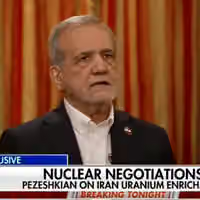
"The US says it is sanctioning Iran, but if we manage our resources well and maintain good relations with our neighbors, how can a country with such capacity and longstanding ties with its neighbors be easily sanctioned?" President Masoud Pezeshkian said in an event held at the country's energy ministry.
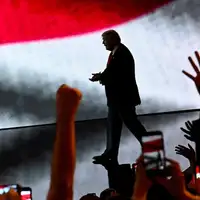
His comments came one day after the US president restored his so-called maximum pressure policy on Iran with a presidential memorandum signed ahead of his meeting with Israeli Prime Minister Benjamin Netanyahu in Washington DC.
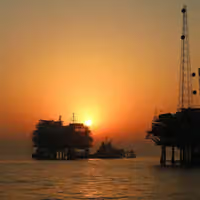
In Trump's first term in office, Iran's oil exports were reduced to near zero after he re-imposed the sanctions that had been lifted under a 2015 nuclear deal between Tehran and world powers. Under former US President Joe Biden, however, Iran's oil exports increased starting in 2021 as Tehran found ways to circumvent the curbs.
"They think everything we have depends on oil and want to block our oil exports, while there are many ways to neutralize their objectives," Pezeshkian said Wednesday.
However, he did not address Trump's mooted openness to engage in conversations with his Iranian counterpart after signing the directive.
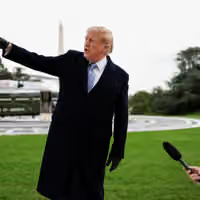
"I would reach out (to Iranians). I'm the one that doesn't care whether I reach out or they reach out. A lot of people say let them reach out," Trump told reporters on Tuesday. "To me it doesn't matter. It's just talks. I want to see peace in the Middle East and elsewhere."
Iran's First Vice President Mohammad Reza Aref said that although a meeting between "two human beings" is not impossible, engaging in talks with Trump is not currently on the Islamic Republic's agenda.
The Iranian government spokeswoman also reacted to Trump's remarks regarding his readiness to negotiate with the Iranian president.
"Our country's foreign policy has always been based on a set of fixed principles. We follow three key principles: the dignity of the country and its people, wisdom in understanding underlying issues, and expediency," Fatemeh Mohajerani said.
"All national matters, particularly relations with other countries, are pursued based on these principles."