• العربية
  • فارسی
Brand
  • Iran Insight
  • Politics
  • Economy
  • Analysis
  • Special Report
  • Opinion
  • Podcast
  • Iran Insight
  • Politics
  • Economy
  • Analysis
  • Special Report
  • Opinion
  • Podcast
  • Theme
  • Language
    • العربية
    • فارسی
  • Iran Insight
  • Politics
  • Economy
  • Analysis
  • Special Report
  • Opinion
  • Podcast
All rights reserved for Volant Media UK Limited
volant media logo

Trump picks Iran critic for key Middle East role
Jan 4, 2025, 12:40 GMT+0Updated: 11:57 GMT+0
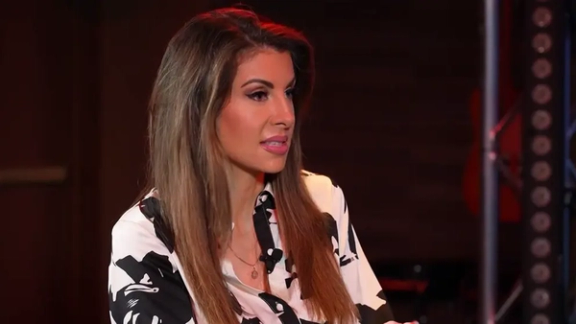
Morgan Ortagus in an exclusive interview with Iran International on June 26, 2024.

President-elect Donald Trump on Friday named Morgan Ortagus, a former State Department spokesperson and prominent critic of Iran, as Deputy Special Presidential Envoy for Middle East Peace.

The announcement signals a continued emphasis on the administration’s tough approach on Tehran but comes with Trump’s acknowledgment of past tensions with his appointee.

“I am pleased to announce Morgan Ortagus as Deputy Special Presidential Envoy for Middle East Peace… Early on Morgan fought me for three years, but hopefully has learned her lesson,” Trump wrote on Truth Social. “She will hopefully be an asset to Steve [Witkoff, Trump’s Special Envoy to the Middle East].”

Ortagus is recognized as a significant figure in US foreign policy, serving as the State Department spokesperson during Trump’s presidency. In this role, she communicated US positions on global issues, often focusing on Iran, China, and the Middle East.

She expressed hope in a tweet after being appointed that under Trump peace and stability will return to the Middle East.

A hardline approach to Iran

Ortagus consistently echoed and defended the Trump administration’s maximum pressure campaign against Iran. This policy aimed to isolate Tehran diplomatically and economically following the US withdrawal from the 2015 nuclear agreement (JCPOA) in 2018.

Ortagus argued that the sanctions undermined Iran’s ability to fund regional proxy groups and its missile development program.

She supported the US exit from the JCPOA, describing the agreement as inadequate in addressing Iran’s regional interventions and nuclear ambitions.

"Under the current trajectory, the Iranian regime will get a nuclear weapon in the next administration unless we have a president with the fortitude to stop it," said Ortagus in an exclusive interview with Iran International in June.

Ortagus highlighted the US’s backing of domestic protests in Iran, attributing the country’s economic and social struggles to the government’s policies.

100%

"Khamenei's thugs killed 1,500 Iranians on the streets of Iran last November,” Ortagus wrote, quoting one of Khamenei's tweets in August 2020. “At least 23 were children. They deserved freedom and a future.”

She was referring to the fall of 2019, when widespread protests broke out across Iran following a sudden threefold increase in gas prices. Thousands of protesters were arrested. Many victims sustained gunshot wounds to the upper chest, indicating that security forces were operating under shoot-to-kill orders.

Ortagus has consistently portrayed Iran’s missile program as a global threat and accused Tehran of supporting militant groups.

Joining a team led by Steve Witkoff, Ortagus’s appointment comes at a time of heightened tensions in the Middle East. Her focus on pressuring Tehran aligns with Trump’s broader foreign policy objectives.


Most Viewed

State media slam Araghchi's Hormuz tweet, say it let Trump claim victory
1

State media slam Araghchi's Hormuz tweet, say it let Trump claim victory

2
OPINION

The Hormuz get out of jail card turned to a grave

3
INSIGHT

How Tehran bends its own red lines to boost state rallies

4

Iran International says it won’t be silenced after London arson attack

5
VOICES FROM IRAN

Iran blackout cripples freelancer, small business incomes

Banner
Banner

Spotlight

  • Too early to tell who is winning Iran war, experts say
    PODCAST

    Too early to tell who is winning Iran war, experts say

  • How Tehran bends its own red lines to boost state rallies
    INSIGHT

    How Tehran bends its own red lines to boost state rallies

  • Iran blackout cripples freelancer, small business incomes
    VOICES FROM IRAN

    Iran blackout cripples freelancer, small business incomes

  • Ideology may be fading in Iran, but not in Kashmir's ‘Mini Iran'
    INSIGHT

    Ideology may be fading in Iran, but not in Kashmir's ‘Mini Iran'

  • US blockade enters murky phase as tankers spoof signals and buyers hesitate
    ANALYSIS

    US blockade enters murky phase as tankers spoof signals and buyers hesitate

  • Why the $100 billion Hormuz toll revenue is a myth
    ANALYSIS

    Why the $100 billion Hormuz toll revenue is a myth

Tweet unavailable

•
•
•

More Stories

Former diplomat urges Iran to appoint envoy to mend ties with US

Jan 4, 2025, 11:33 GMT+0

A former Iranian diplomat has suggested that Tehran appoint a special representative to engage with the Trump administration and work toward resolving disputes with Washington.

Speaking to the Faraz Daily website in Tehran, Nosratollah Tajik noted that the 2020 killing of IRGC commander Qasem Soleimani remains a significant factor shaping Iran’s adversarial stance. However, he stressed that "Tehran should not allow this issue to harm Iran's national interests." Tajik also highlighted that, unlike Trump’s first term (2017–2021), Iran cannot afford to ignore him once he takes office at the White House.

The most significant point raised by Tajik, one rarely addressed by other Iranian politicians, was his suggestion that President Massoud Pezeshkian appoint a special representative to focus on restoring Iran's ties with the United States and initiating efforts to ease tensions between Tehran and Washington.

Tajik also cautioned the West that Iran retains significant assets in the Middle East despite the fall of Bashar al-Assad in Syria. He pointed out that Iran remains capable of exploiting the fragile situation in eastern Syria to its advantage.

In a controversial statement, Tajik claimed that "the perception that Iran is on the verge of acquiring nuclear weapons serves as its strongest bargaining chip" in negotiations with the West.

However, he acknowledged that factors such as the prolonged war in Gaza, escalating tensions between Iran and Israel, and Assad's fall have created a highly complex environment for any potential negotiations between Iran and the US.

Tajik remarked, "Trump and Iran are well-acquainted with each other. However, the US President-elect has yet to fully unveil his policies toward Iran for his new term." Reflecting on Trump’s 2018 withdrawal from the JCPOA nuclear deal, which severely impacted Iran’s economy, Tajik noted, "The exit also harmed US interests, as Iran significantly scaled back its commitments under the agreement."

He warned that if Trump has learned from that experience, it could reshape future relations between the two countries. "If not, no positive outcome can be expected," Tajik concluded.

In a related development, Eghtesad News in Tehran highlighted remarks from several Iranian politicians regarding the prospects for talks between Iran and the Trump administration. The outlet noted Trump’s recent statement indicating that he does not wish to harm Iran but seeks to contain its nuclear ambitions to prevent Tehran from reaching the point of no return and acquiring nuclear weapons.

Eghtesad News quoted Hamid Aboutalebi, an advisor to former President Hassan Rouhani, who, in an open letter to President Massoud Pezeshkian, urged Iran not to miss what he called a "historic opportunity" to redefine relations with the United States. In the letter, Aboutalebi also suggested that Pezeshkian congratulate Trump on his election victory. The website also pointed out that several Iranian newspapers have recently advocated for improved relations with the United States.

The website also quoted conservative analyst Reza Salehi as saying that "Compared to his Democratic predecessor, Trump can take more positive steps to mend Washington's ties with Iran." Salehi reiterated: "Trump wants to make a deal. He wishes to end wars and prevent any new war."

Eghtesad News then quoted former Vice President Mohamad Ali Abtahi as saying that "Iran needs to benefit from the opportunity as Trump wishes to win the credit for resolving the dispute with Iran.”

Meanwhile, Heshmatollah Falahatpisheh, the former head of the Iranian parliament's national security and foreign relations committee, stated in a commentary that "Iran is not a priority for Trump." He dismissed Tehran’s efforts to signal readiness for talks with the incoming Trump administration as "futile."

Yemen takes Syria’s place in Iran’s security doctrine, says former commander

Jan 4, 2025, 09:44 GMT+0

Yemen has replaced Syria in Iran's security doctrine after the fall of Bashar al-Assad, according to Hossein Allahkaram, a former IRGC commander and one of the founders of the paramilitary force Ansar-e Hezbollah.

"Simply put, Syria served as a kind of backbone and connector for the axis of resistance, playing an unparalleled role in any potential offensive against the northern front of Palestine. However, within the framework of the strategic ideology, this role has now been transferred to Yemen following the loss of Syria," he said.

Iran-backed militias in the region have become weaker as Israel has launched attacks on Hamas and Hezbollah, both part of what Iran calls the Resistance Axis. Meanwhile, the Houthis in Yemen have escalated their attacks. Since October 7, they have fired drones and missiles almost daily toward Israel, describing these actions as solidarity with Palestinians in Gaza. They have also made commercial traffic unsafe in the Red Sea by targeting vessels moving to or from the Suez Canal.

In September, Iran International reported that approximately 300 Palestinian and Yemeni fighters were undergoing military training inside Iran, according to a source familiar with the matter.

Last week, the United Nations Security Council warned Iran against further escalations by the Houthis, the Tehran-allied armed group in Yemen.

Gas supply to 12 petrochemical plants in Iran cut off, official says

Jan 4, 2025, 09:02 GMT+0

Amid Iran's winter energy crisis, natural gas supplies to 12 petrochemical plants have been suspended due to high residential demand, an Iranian official announced Saturday.

"If residential consumption drops by just 10%, more gas can be directed to industrial units," said Ahmad Mahdavi Abhari, Secretary General of the Petrochemical Industry Employers Association. He made the remarks during a signing event between the National Petrochemical Company and two petrochemical facilities.

Mahdavi also criticized the Ministry of Oil for delays in finalizing investment contracts for petrochemical companies in the upstream gas sector. He urged the government to expedite these agreements to support the industry during this critical time.

Meanwhile, Oil Minister Mohsen Paknejad said on Wednesday that Iran needs $45 billion in investment to tackle its persistent winter energy shortages and worsening air pollution.

The funds are vital for boosting gas production to meet the targets outlined in Iran's long-term development plan, which informs the country's budgets and industrial policies.

"According to the Seventh Development Plan, gas production must reach 1.4 billion cubic meters per day," Paknejad said. "To achieve this goal, $45 billion of investment is required."

He added that most of the funding must be directed toward developing gas fields and upgrading related infrastructure. However, he did not mention Iran's difficulty in securing advanced Western technology for boosting gas extraction at its main fields in the Persian Gulf.

Successive Iranian governments have struggled to cope with rising consumption, particularly during the colder months when power plants often rely on polluting fuels, further exacerbating air quality issues in urban areas.

Why 2025 is set to be tougher for Iran

Jan 3, 2025, 21:07 GMT+0
•
Negar Mojtahedi

At the start of 2024, Iran appeared to be riding high: ever closer to the threshold of nuclear weapons, its regional allies harassed Israel on multiple fronts and its Yemeni acolytes the Houthis choked commercial traffic from the Red Sea.

85-year-old Iranian Supreme Leader Ali Khamenei's method of projecting power abroad and tightening his grip at home appeared to be working.

What a difference a year makes.

Tehran's affiliates Palestinian Hamas and Lebanese Hezbollah have been decimated by Israel while Islamist rebels hostile to Iran toppled Syria's Assad dynasty, a key ally.

Iran is now adrift in a decisive year, Kamran Matin, an international relations scholar at the University of Sussex told the Eye for Iran podcast.

“All of this has come together and created a very difficult environment for the Islamic Republic, all of which is even more difficult to deal with in light of the Supreme leader's deteriorating health and his age,” said Matin.

Iran’s regional and international strategy is closely tied to how it can control and shore up influence domestically.

Part of the modus operandi of the Iranian system is to blame domestic troubles on sanctions and regional conflicts, promising that investment in nuclear infrastructure and militant proxies can buttress its standing in a dangerous neighborhood.

That rationale, Matin said, has evaporated and the mystique of Iran’s regional strength has lost its luster.

There have been 54 anti-government protests in Iran since Dec 26 and Jan 2 of this year according to the Foundation for Defense of Democracies (FDD), a Washington DC-based think tank critical of the Islamic Republic.

Iran now faces a sobering realization of its diminished stature.

Race for a deal, or the bomb?

Up against deepening economic malaise as Iran’s currency slips to new lows, an energy crisis which has stoked protests and the loss of regional muscle which deterred enemies, Iran’s rulers now have limited options.

They are at a crossroads, with each path presenting huge risks: race toward a nuclear bomb as an ultimate security guarantee or make concessions to President Donald Trump and compromise the state's very raison d'etre as a scourge of empire.

The answer may hinge on Trump’s plan for Tehran, a country that according to American intelligence has allegedly plotted to kill him.

The president-elect, who has surrounded himself with Iran hawks for his next administration has suggested bombing Iran into “smithereens" for the alleged assassination attempt.

At the very least, Trump will likely apply maximum pressure and more economic sanctions on an already crippled economy, which would squeeze Iran's rulers further.

“It's unclear how Iran is able to negotiate with some sort of strength to be able to extract any concession from the United States and Western powers,” said Matin.

Iranian officials and state media Iran moot talks with Trump more eagerly, tamping down their former rhetoric of resistance and confrontation.

That could signal fear amongst the ruling elite and an understanding of their weakened position, said Matin.

In a speech last month after the collapse of Assad, Iran’s Supreme Leader Ayatollah Ali Khamenei addressed a somber crowd, blaming Israel and the United States for Iran not intervening to save its ally.

“Khamenei basically declared this impotence that American and Israelis had closed all the roads and so on and so forth,” said Matin on the speech, which was devoid of Khamenei's usual affirmations of strength.

The last standing in the Axis of Resistance - the Houthis

The Islamic Republic's woes may mean an opening for the Americans like never before that could force Iran to bargain away its regional satrapies, or face attack.

“Trump is much more willing to take on Iran, given how Israel has basically neutralized Iran's proxy forces,” said Matin on the changing tides.

Yemen's Houthis, Iran's last relatively robust military ally, will likely be a priority.

The Iran-backed group has fired drones and missiles towards Israel frequently for over a year, describing it as an act of solidarity with Palestinians in Gaza.

The Washington Institute for Near East Policy's Maritime Attack Tracker recently tallied 106 confirmed Houthis strikes on shipping since November 2023.

"There have been many more attacks recently on (the Houthis) by Israel and the US-led coalition," Matin said.

"So it may well be that they will also be pacified over time, especially if Iran itself is weakened. And maybe one of the elements in the future talks between Iran and the US would be Iran stopping its supply of advanced weapons to Houthis."

Indirect impact of Trump: a loss of Russia for Iran?

The return of president-elect Trump to the White House will likely mean yet more bad news for Iran’s Islamic establishment.

One of Trump’s first goals is to fulfill his promise to end the war in Ukraine.

If Trump follows through as he is forecasted to, Iran will lose leverage with key ally Russia, another partnership that helped it project power on the world stage.

That would lead to another major blow to the Islamic Republic.

“Russia is likely to restore its damaged relations with the West, with the United States in particular," Matin said. "That also means in turn that Russia does not necessarily need to accommodate Iran's demands or needs in order to keep Iran on board in terms of supplying drones and other weapons to Russia to be used in Ukraine.”

Ukraine's foreign ministry in early September said Russia had launched 8,060 Iran-developed Shahed drones at Ukraine since 2022, according to a Reuters report.

Syria, formerly an Iranian satellite state, was another issue binding Moscow and Tehran.

"Both of them were involved supporting Assad regime. Neither of them are there anymore. What really binds Iran and Russia together is this wider tension each of these countries have with the West, with the United States,” Matin said.

It seems with Iran's dwindling influence, domestic unrest and battered allies throughout the region, 2025 is poised to be a decisive year for Tehran.

To watch the full Eye for Iran episode with Kamran Matin, click on YouTube or listen on Spotify, Apple, Amazon, Castbox or any other major podcast platform.

Iran exported nearly 2 billion barrels of oil under Biden administration, UANI says

Jan 3, 2025, 19:56 GMT+0

Iran has exported nearly 1.98 billion barrels of oil over the past four years since US President Joe Biden took office, United Against Nuclear Iran (UANI) said in its annual Tanker Tracker report released on Friday.

Despite ongoing US sanctions, Iran increased its output by more than 10 percent in 2024, according to the US-based advocacy group.

China continued as the largest importer, receiving 533 million barrels, up 24% from the previous year, accounting for 91% of Iran’s total exports.

The shift towards Iran's National Iranian Tanker Company (NITC) for direct loadings marked a significant change in Iran's oil export strategy. Previously, foreign-flagged vessels were commonly used to transport oil directly from Iranian ports, circumventing sanctions.

"In 2024, Iran relied more on its NITC fleet for direct loadings, departing from past practices where foreign-flagged vessels often carried oil directly from Iranian ports," UANI said, adding that it has identified 132 new vessels smuggling Iranian oil, raising the total to 477.

The organization emphasized the need for stronger action against companies enabling the evasion of sanctions, with a focus on prosecuting tanker captains involved in illicit activities.