• العربية
  • فارسی
Brand
  • Iran Insight
  • Politics
  • Economy
  • Analysis
  • Special Report
  • Opinion
  • Podcast
  • Iran Insight
  • Politics
  • Economy
  • Analysis
  • Special Report
  • Opinion
  • Podcast
  • Theme
  • Language
    • العربية
    • فارسی
  • Iran Insight
  • Politics
  • Economy
  • Analysis
  • Special Report
  • Opinion
  • Podcast
All rights reserved for Volant Media UK Limited
volant media logo

Suicide bombing in southern Iran kills intelligence official

Dec 28, 2024, 18:50 GMT+0Updated: 16:46 GMT+0
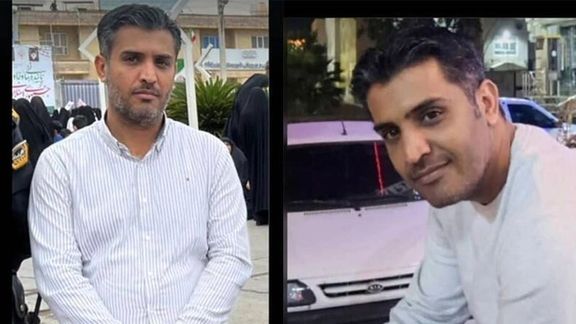
The two police officers targeted in the suicide bombing in southern Iran on Dec. 28, 2024

A suicide bomber attacked the front of a police headquarters in Bandar Lengeh in southern Iran on Saturday night, killing the head of the port city's military intelligence, the IRGC-affiliated Tasnim News reported.

Captain Mojtaba Shahidi Takhti succumbed to his injuries in the hospital, and one accompanying officer identified as Captain Javad Chatr-Sahar was also injured, the report said citing the local governor.

The bomber was positioned on the two police officers' exit route and triggered the explosion with a remote control, the report by Tasnim said.

Security forces promptly arrived at the scene after the incident and confirmed the attacker was also killed, governor Foad Moradzadeh said.

It was not immediately clear who was behind the attack.

Jaish Al-Adl militants who seek to break away from Iran operate more in Iran’s southeast rather than its central coast.

Radical Sunni Islamic State militants have also launched repeated deadly suicide attacks against state and military targets in the Shi’ite theocracy.

Shahidi Takhti and the other officer injured in the attack "were immediately transported to the hospital," governor Moradzadeh added. However, the former succumbed to the injuries despite the efforts of the medical team.

The condition of injured officer Chatr-Sahar is currently reported as stable, a local judiciary official was quoted as saying.

Most Viewed

US blockade enters murky phase as tankers spoof signals and buyers hesitate
1
ANALYSIS

US blockade enters murky phase as tankers spoof signals and buyers hesitate

2

US tightens financial squeeze on Iran, warns banks over oil money flows

3
INSIGHT

Ideology may be fading in Iran, but not in Kashmir's ‘Mini Iran'

4
INSIGHT

Hardliners push Hormuz ‘red line’ as US blockade tests Iran’s leverage

5
VOICES FROM IRAN

Hope and anger in Iran as fragile ceasefire persists

Banner
Banner

Spotlight

  • Hardliners push Hormuz ‘red line’ as US blockade tests Iran’s leverage
    INSIGHT

    Hardliners push Hormuz ‘red line’ as US blockade tests Iran’s leverage

  • Ideology may be fading in Iran, but not in Kashmir's ‘Mini Iran'
    INSIGHT

    Ideology may be fading in Iran, but not in Kashmir's ‘Mini Iran'

  • War damage amounts to $3,000 per Iranian, with blockade set to add to losses
    INSIGHT

    War damage amounts to $3,000 per Iranian, with blockade set to add to losses

  • Why the $100 billion Hormuz toll revenue is a myth
    ANALYSIS

    Why the $100 billion Hormuz toll revenue is a myth

  • US blockade targets Iran oil boom amid regional disruption
    ANALYSIS

    US blockade targets Iran oil boom amid regional disruption

  • Iran's digital economy battered by prolonged blackout
    INSIGHT

    Iran's digital economy battered by prolonged blackout

•
•
•

More Stories

Launching military drills, Iran says it is not next after Syria

Dec 28, 2024, 17:25 GMT+0

Iran’s defense minister announced a surprise series of military drills starting Saturday to show the Islamic Republic would not crumble easily like Bashar al-Assad's Syria.

"They are signaling that Yemen and Iran are next after Syria. But the truth is, it is their turn next, as these powers won’t leave them alone," Aziz Nassirzadeh said in remarks carried by Iranian media.

The United States, he said, employs Israel - a "70-year-old cancerous tumor" - to exploit the Middle East's resources, in familiar rhetoric for top Tehran officials.

“We have no issues on the hard warfare front. We are building power by all means and will remain prepared.” Nassirzadeh said, speaking on Friday during a ceremony commemorating Razi Mousavi, a Revolutionary Guards commander killed in Syria last year.

The drills, described as a display of Iran’s strengthened defensive capabilities, come in response to growing regional tensions and threats by Israeli officials to strike Iran directly if their Yemeni Houthi allies keep up missile attacks.

Earlier this week, Gholamali Rashid, commander of IRGC’s Khatam al-Anbiya Central Headquarters had mooted plans for “powerful defensive and offensive drills” in the coming weeks.

The announcement follows threats by Iranian officials that Tehran would launch True Promise 3, a third retaliatory attack against Israel in response to its October airstrikes on Iran.

However, after the fall of al-Assad’s in Syria, Tehran’s rhetoric on direct retaliation has subsided, with a focus now shifting to defensive readiness.

Nassirzadeh remarked: “We no longer have a presence in Syria, but even our statements instill fear in the enemy, leading them to issue warnings against us. Their fear stems from the strength of the resistance.”

Iranian Supreme Leader Ali Khamenei has previously vowed to reclaim Syria from opposition forces and encouraged Syrian youth to resist the new government. However, Syrian interim Foreign Minister Asaad Hassan Sheibani recently issued a warning to Iran, urging it to avoid interference in the country’s affairs.

The military drills starting Saturday are seen as part of Iran’s efforts to bolster its defensive posture as military setbacks abroad put the home front into focus.

Iran has plunged into multiple crisis in recent weeks, with energy shortages and a rapidly falling currency, creating a sense of weakness amid popular discontent.

Italy negotiates journalist swap with Iran - La Repubblica

Dec 28, 2024, 16:30 GMT+0

Italy is negotiating for the release of a journalist detained in Iran via a potential exchange for an Iranian citizen arrested in Milan at the request of the United Sates, according to Italian daily La Repubblica.

“The subject of Italy’s negotiations with Iranian officials has been the release of Mohammad Abedini Najafabadi in exchange for Cecilia Sala,” the daily reported.

Although La Repubblica linked Sala’s case to a potential swap involving Abedini, sources in the Italian Foreign Ministry denied he was part of the negotiations. Some officials also ruled out financial exchanges.

Cecilia Sala, 29, a newspaper journalist and podcaster, has been jailed in Iran on unknown charges for over a week.

Her arrest is widely seen as retaliation for the arrest of Abedini, whom US authorities say provided materials for a deadly Iran-linked drone attack on US troops in Jordan.

He was apprehended at Milan’s Malpensa Airport on December 16 and investigators found in his luggage electronic components linked to the US charges.

Earlier this month, the US Justice Department charged Abedini and another Iranian, Mahdi Mohammad Sadeghi - who was arrested in the United States - with conspiring to export sensitive US technology to Iran’s Revolutionary Guards.

Iran last week summoned a senior Italian diplomat and the Swiss ambassador in Tehran, who represents US interests in the country, over the US and Italian arrest of the two Iranians, Iranian media reported.

Prime Minister Giorgia Meloni and Foreign Minister Antonio Tajani are leading diplomatic efforts, supported by Italy’s External Intelligence and Security Agency (AISE), Italian news outlets reported.

The Italian Ministry of Foreign Affairs initially kept Sala’s arrest confidential, aiming for a quiet resolution, the newspaper reported. Her detention has again highlighted Iran’s use of foreign detainees as leverage in international negotiations.

'Hostage-taking'

The International Federation of Journalists called for Sala’s immediate release, with secretary-general Anthony Bellanger condemning Tehran’s tactics as political leverage.

Nobel laureate Shirin Ebadi echoed the criticism, describing Sala’s detention as hostage-taking and extortion and warning that such practices would persist without stronger Western policies.

Prior to her detention, Sala had reported on contentious topics in Iran, including widespread defiance of mandatory hijab laws and the presidency of Masoud Pezeshkian.

As diplomatic talks continue, the case highlights broader tensions over Iran’s exploitation of detainees for political gains, a practice condemned by rights groups and Western nations.

Iran's political discourse sharpens amid mounting crises

Dec 28, 2024, 11:57 GMT+0
•
Mardo Soghom

Several analysts, officials and media outlets in Iran are warning that multiple crises have gripped the country in recent months and those in charge should deal with this reality.

“In recent months, the surge in both the number and variety of major challenges has intensified, pushing the situation beyond mere concern. Issues that were previously warned about as future risks have now become reality, exposing their full impact and severity,” Massoud Nili, professor of economics in Tehran, warned on social media.

Thousands of social media posts and numerous media reports from Tehran reflect a growing sense of decline and instability gripping the country. Multiple economic crises, including severe energy shortages and a rapidly depreciating currency, have converged with significant regional setbacks. Among these is the recent ousting of Bashar al-Assad, a major blow to Tehran’s regional standing. After investing tens of billions of dollars to sustain Assad’s rule, the Islamist opposition seized the capital, Damascus, in a matter of days, underscoring the fragility of Iran’s regional influence.

Ali Rabiei, the president's social affairs advisor, has highlighted the pressing issue of "social fatigue" in a recent op-ed published by the newspaper Shargh. In his analysis, Rabiei examined the current challenges facing the country and criticized the approach taken by the government's opponents. He urged Masoud Pezeshkian to prioritize addressing this growing societal concern, emphasizing its critical role in shaping the nation’s future.

“Iran's society is grappling with profound exhaustion, with younger generations showing signs of rebellion against the status quo. Addressing this widespread social fatigue demands a comprehensive effort to rebuild the nation’s social fabric. While foreign investment may not be immediately necessary for this endeavor, it is undeniable that prolonged sanctions have significantly contributed to the prevailing sense of despair, leaving deep social and political scars,” Rabiei wrote.

The most visible symbol of the current crisis, apart from shortages of electricity, is the rapid decline of the rial. The Iranian currency stands at a historic low against major currencies, with the US dollar trading well-above 810,000 rials on Saturday. The battered currency has lost one-third of its value since early September, when Israeli attacks weakened Tehran’s main regional military arm, the Lebanese Hezbollah.

Islamic Republic's aging leader, Ali Khamenei, has been largely silent on the growing crises at home, focusing his public remarks on regional developments. On December 22, he denied that Tehran has regional proxies, while at the same time threatening Syria's new government with impending instability.

A Reformist figure, Ataollah Mohajerani, warned the government of the continuing influence of the military in politics in an article published on Saturday, drawing a parallel with India and Pakistan, arguing that Iran risks becoming another state where the armed forces dictate policy. He then urged President Pezeshkian and other officials to pay attention to people’s demands.

“The government must pay attention to the people, seeing them clearly and hearing their voices. Ignoring their concerns risks a day when the public responds with a forceful, bitter, and unmistakable message.”
Iranian armed forces threaten ‘decisive’ action amid regional tensions

Dec 28, 2024, 09:39 GMT+0

Iran’s armed forces have threatened a forceful response to any aggression on the country.

“The powerful Armed Forces of Iran, with full strength and complete readiness, are always prepared to deliver a decisive and crushing response to any threat,” said the General Staff of the Armed Forces in a statement on Saturday.

The recent overthrow of Syrian President Bashar al-Assad has dealt a significant blow to Iran's influence in the Middle East.

As a key ally and conduit for Iranian support to groups like Hezbollah, Assad's government was central to Iran's proxies. His fall disrupts these alliances and supply routes, diminishing Iran's regional leverage.

Air pollution claims 40,000 lives in Iran, health official warns

Dec 28, 2024, 09:12 GMT+0

Air pollution caused more than 40,000 deaths in Iran last year, Deputy Health Minister Alireza Raisi revealed, marking a sharp rise of 10 to 12 percent compared to previous years.

“The majority of these deaths were due to cardiovascular diseases, strokes, respiratory issues, and cancers,” Raisi said in a Saturday interview.

He described the growing toll as a public health crisis, urging immediate action to improve air quality.

Air pollution in Iran has become a critical public health concern, particularly in major cities like Tehran, Ahvaz, and Isfahan. It is driven by factors such as high levels of vehicle emissions, industrial activities, reliance on low-quality fuel, and natural phenomena like dust storms.