• العربية
  • فارسی
Brand
  • Iran Insight
  • Politics
  • Economy
  • Analysis
  • Special Report
  • Opinion
  • Podcast
  • Iran Insight
  • Politics
  • Economy
  • Analysis
  • Special Report
  • Opinion
  • Podcast
  • Theme
  • Language
    • العربية
    • فارسی
  • Iran Insight
  • Politics
  • Economy
  • Analysis
  • Special Report
  • Opinion
  • Podcast
All rights reserved for Volant Media UK Limited
volant media logo

Iranian pundits propose ways to ease US tensions after Trump victory

Nov 11, 2024, 10:25 GMT+0Updated: 15:24 GMT+0
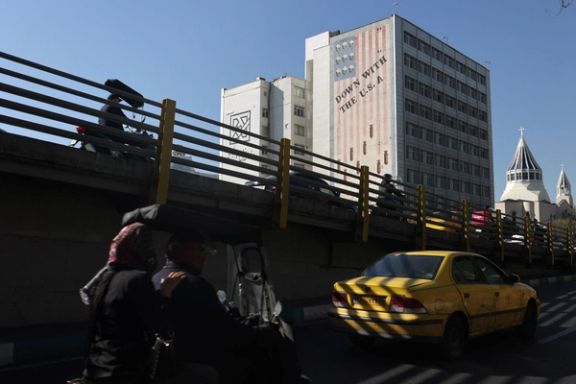
An anti-US mural is seen on a street in Tehran, Iran November 6, 2024.

Many experts and political commentators speaking to Iran's state-controlled media agree that Tehran now faces a United States with greater political coherence after Donald Trump’s election.

Abolfazl Fateh, former head of the state-owned Iranian Students News Agency (ISNA) and a prominent reformist figure in Iran, echoed this sentiment in a commentary for Etemad newspaper. He argued that Trump’s victory in the US election is likely to have far-reaching consequences for his opponents and increase concerns in many countries.

"Iran will need to come up with a new strategy as Trump, Netanyahu and their European and regional allies are likely to form a unified front," Fateh said, adding that "the Islamic Republic needs new plans and a new strategy to protect Iran's interests for the next two months before Trump takes office and for the next four years when he will be in the White House."

Fateh also argued that Trump is unlikely to spare his opponents and critics, both in the US and abroad, who may be entering a turbulent period. He carefully hinted without mentioning the Iranian government that some may need to reassess their positions on human rights policies.

Fateh further suggested that Trump’s victory could become the catalyst for a global political and military alliance among right-wing forces. He argued that this marks a new phase of globalization, with influential super-capitalists like Elon Musk ushering in an era focused on the digital economy, while Trump steers the direction of global politics and economics.

Fateh warned that Iran should be vigilant for a potential alliance between Trump and Arab and European states that have previously challenged Iran’s sovereignty over three Persian Gulf islands. He cautioned Iranian leaders, noting that Trump’s stance on Iran is rooted in a complex history.

In contrast, in an article titled "Trump's Comeback and Iran's Strategy," Etemad columnist Ali Ahangar commended Iranian officials for remaining unfazed by Trump’s return. He described Iran’s approach to the United States as “forward-looking.”

In a somewhat unusual argument, Ahangar suggested that Iran effectively blocked the United States from rejoining the 2015 nuclear deal during Biden’s administration, asserting that Iranian leaders had anticipated the November 5, 2024, election outcome. As a result, Iran maintained its uranium enrichment capabilities, while avoiding theJCPOA agreements automatic trigger mechanism for more sanctions.

Another indication that Iran was not caught off guard by Trump’s victory, Ahangar argued, is its leadership’s support for the rise of a "pacifist and moderate government" under Masoud Pezeshkian, who advocates for "negotiation and reconciliation." This move, he said, signaled to the world that Iran is forward-looking and open to dialogue.

Meanwhile, he emphasized that as the Middle East engages in a high-stakes struggle, it is Iran that plays the defining role. “Trump now has two options: pursue a dignified negotiation with a government seeking reconciliation or confront a Middle East racing at full speed toward nuclear armament.” Ahangar added, “Iran’s choice is one of negotiation while maintaining its dignity. Now it’s the United States’ turn to decide its path forward.”

In a separate commentary, foreign policy analyst Abdolreza Faraji-Rad reviewed Trump’s past relations with Iran, particularly his decision to withdraw from the nuclear deal, and concluded that Trump’s approach toward Iran will partly hinge on Iran’s strategy with the incoming US administration.

Faraji-Rad noted that Trump sought to initiate negotiations with Iran near the end of his term in 2020, but Iran was unprepared, especially following the killing of IRGC Quds Force Commander Qasem Soleimani. “Now, we have to wait and see how President Pezeshkian will approach the possibility of negotiations with Trump,” he wrote.

He added, “Pezeshkian has the potential to advance negotiations with Trump, but he must adapt his tactics to achieve relief from sanctions; otherwise, tensions will escalate. If Trump concludes that Iran is unwilling to negotiate, he will undoubtedly revert to his maximum pressure policy.”

However, Iran watchers understand that Pezeshkian’s actions ultimately depend on Supreme Leader Khamenei’s directives. Persuading Khamenei to endorse meaningful negotiations is likely more crucial than the specific approach Pezeshkian takes to move discussions forward.

Most Viewed

100 days after carnage: Iran economy reels from war, inflation, unemployment
1
INSIGHT

100 days after carnage: Iran economy reels from war, inflation, unemployment

2
INSIGHT

Ghalibaf defends Iran-US talks amid hardline backlash

3
EXCLUSIVE

Iranian assaulted in London amid concern over threats to regime critics

4

IRGC fires at Indian vessel in Hormuz

5
INSIGHT

A nation in limbo: 100 days after the massacre, has the world moved on?

Banner
Banner

Spotlight

  • War-hit homeowners feel abandoned as Iran’s reconstruction aid fades

    War-hit homeowners feel abandoned as Iran’s reconstruction aid fades

  • 100 days on: the anatomy of Iran’s January crackdown
    INSIGHT

    100 days on: the anatomy of Iran’s January crackdown

  • Ghalibaf defends Iran-US talks amid hardline backlash
    INSIGHT

    Ghalibaf defends Iran-US talks amid hardline backlash

  • 100 days on: why Iran’s January protests spread across social classes
    ANALYSIS

    100 days on: why Iran’s January protests spread across social classes

  • From instability to influence: Pakistan’s pivotal role in US-Iran diplomacy
    ANALYSIS

    From instability to influence: Pakistan’s pivotal role in US-Iran diplomacy

  • A nation in limbo: 100 days after the massacre, has the world moved on?
    INSIGHT

    A nation in limbo: 100 days after the massacre, has the world moved on?

•
•
•

More Stories

Trump's fix for the Middle East could be Jared Kushner, again

Nov 11, 2024, 05:00 GMT+0
•
Negar Mojtahedi

Donald Trump’s second presidency could accomplish peace in the Middle East and his son-in-law Jared Kushner is the ticket, one American academic and Trump insider told Iran International.

Speaking on the Eye for Iran podcast, Jeff Sonnenfeld, who has known the president-elect for decades, assisted Kushner in the 2019 Peace through Prosperity conference in Bahrain, which outlined the Abraham Accords.

The US mediated the agreements between the United Arab Emirates, Bahrain, Morocco and Israel, with the intent of normalizing ties between the Arab states and Israel. Since its inception in 2020, the UAE and Israel, for example have deepened ties across economic and defense domains.

Sonnenfeld told Iran International that Trump often rules with a divide and conquer method and that the Abraham Accords was an anomaly.

The reason for this: Jared Kushner.

“This was the anomaly where I think it's Jared's brilliance that he yielded to weaving it together,” said Sonnenfeld on Eye for Iran.

Sonnenfeld, an associate dean at Yale University, wrote critiques of Trump’s show the Apprentice. Him and Trump formed a friendship after the then- business mogul complained about the academic’s harsh reviews of his show and business practices.

Flashforward to Trump’s first presidency and Sonnenfeld was asked by the President to join his son-in-law in a summit that led to the monumental agreements normalizing relations between Israel and some Arab countries.

An extension of the Abraham Accords could be on the horizon with a second Trump presidency if Kushner gets back into his role.

“If he [Kushner] gets drafted back into the middle East, his currency there is still fantastic. And he could, he could regenerate a lot of this.”

According to an Israeli publication, Israel Hayom, Kushner has returned to assist the president-elect in preparing for the incoming administration, citing a source close to the matter.

It is expected that Trump will have a tougher stance on Iran than his predecessor Joe Biden.

Oil sales are a critical source of funding for Iran, representing up to 70 percent of government revenues.

During his first presidency, Trump imposed sanctions on Iran's oil exports, which reduced the volume of Iranian oil exports by 95 percent, cutting Iranian oil revenues by about $50 billion.

Sonnenfeld believes Trump would go after Iranian revenues by re-enforcing oil sanctions. He said during the first Trump administration, Sonnenfeld said the lost oil supply was replaced by increased production from other Persian Gulf countries like Saudi Arabia that led to the fall of global oil prices.

During the Biden administration, enforcement of these sanctions lapsed. According to the Energy Information Agency (EIA), which published a report about Iran’s petroleum exports, Iran sold $144 billion in the first three years of the Biden administration. That's$100 billion more than what Tehran exported in the last two years of the Trump administration when the oil sanctions were in effect.

Then there’s the nuclear issue.

Donald Trump has repeatedly said during recent interviews and the campaign trail that he would not allow Iran to be a nuclear power. He characterized a nuclear Iran as a threat to Israel and regional security in the Middle East, and he is poised to re-prioritize Iranian nuclear disarmament.

Iran is closer to a nuclear bomb. The International Atomic Energy Agency (IAEA) has said that Iran's estimated stockpile of enriched uranium had reached more than 30 times the limit set out in the 2015 nuclear agreement between Tehran and world powers. Iran maintains that their nuclear ambitions are peaceful.

One new factor for Trump this time around is that Israel has considerably weakened Iran’s deterrence by crushing both Hamas and Hezbollah. That has created an environment where the Islamic Republic is in a more vulnerable position. But none of this means war, said Sonnenfeld.

In Trump’s victory speech, he said: “I'm not going to start a war. I'm going to stop wars.”

Sonnenfeld predicts a more peaceful Mideast under Trump's leadership with the influence and guidance of his son-in-law. He also doesn’t foresee war as the means to get there, in fact, an extension of the Abraham Accords and maximum pressure is what he views as the path going forward.

You can watch the full episode of Eye for Iran featuring Jeff Sonnenfeld on YouTube, or listen on Spotify, Castbox, Apple or Amazon.


Retired teachers protest in Iran over unpaid benefits, overdue pensions

Nov 10, 2024, 19:26 GMT+0
•
Azadeh Akbari

Retired educators from provinces nationwide gathered outside Tehran’s Ministry of Education on Sunday, protesting unpaid end-of-service compensation and demanding action on delayed pensions.

These retirees, who include those who traveled from cities across Iran, say they have yet to receive 60 percent of their promised retirement benefits after 30 years of teaching.

An image circulating on social media shows a retiree who traveled from another province and slept overnight in a Tehran park to attend the protest.
100%
An image circulating on social media shows a retiree who traveled from another province and slept overnight in a Tehran park to attend the protest.

During the demonstration, they chanted slogans such as “Incompetent minister, resign, resign,” “A nation has never seen such injustice,” “One fewer embezzlement, and our problem is solved,” and “Teacher, rise up to end discrimination.”

Images circulating on social media show that some retirees had slept in Tehran’s parks the night before, braving the cold to ensure they could attend the protest.

Reports from retiree and teacher networks indicate that the protest will continue on Monday, November 11, outside the Ministry of Education building in Tehran.

Last month the minister of education, Alireza Kazemi said that 50 percent of retiree payments would be allocated in the budget for the current and next fiscal years to address payment delays. However, these retired educators, some of whom have been waiting over a year post-retirement, have yet to receive their end-of-service bonuses.

This protest follows an earlier demonstration on October 22, when retirees gathered outside Tehran’s Social Security Organization.

Despite promises from the authorities, the retirees say that delays in their unpaid wages are eroding the value of their money, ILNA reported on Sunday.

Amid rising tensions with Israel, the Iranian rial last week plunged to a historic low of less than 1/10,000th of its pre-Islamic Republic value, trading at over 705,000 rials to the US dollar in Iran's free market

Amid soaring inflation over 40%, the rial’s continued decline has deepened Iran's economic crisis, leaving retirees struggling as their unpaid pensions lose value daily.

London-based Iranian labor rights activist Sattar Rahmani says the protests were entirely self-organized, with retirees independently mobilizing across cities in Iran, gathering outside the ministry in Tehran to once again voice their long-standing demands.

He sharply criticized Masoud Pezeshkian’s administration’s budget for next year as “entirely military-oriented,” emphasizing that funds have been allocated to security forces while essential sectors like education are neglected.

Pezeshkian unveiled next year’s budget recently, allocating nearly 20% of Iran’s oil export revenue—estimated to exceed $10 billion—exclusively to the Revolutionary Guard.

“There should be a budget set aside to ensure that the needs of education are met, so that teachers can be supported and don’t end up living below the poverty line,” Rahmani said in an interview with Iran International. He argued that Pezeshkian's administration is continuing the militaristic approach of Raisi’s government, leaving crucial societal needs, like education, unmet.

Five IRGC forces killed by insurgents in Iran's southeast

Nov 10, 2024, 19:21 GMT+0

Five Revolutionary Guard forces were killed after insurgents attacked a border outpost in the restive Sistan-Baluchestan province in southeastern Iran, in the latest case of ping-pong clashes between the two sides over the past few weeks, local authorities announced.

The militants attacked a watchtower in Sirkan area of Saravan near the Iranian-Pakistani border on Sunday evening, killing five members of the IRGC's Basij paramilitary forces, Mansour Bijar, the governor-general of Sistan-Baluchestan, told the state-run television.

Bijar stated that the victims were all local Baloch Sunni Muslims, while the insurgents were neither Baloch nor Sunni and had come from the neighboring country.

The victims have been identified as Abdulrahman Baluchzahi, Shahbakhsh Baluchzahi, Abdullah Baluchzahi, Wahid Baluchzahi, and Bashir Sepahi.

A photo released by IRGC-affiliated media purportedly showing the five victims of the attack
100%
A photo released by IRGC-affiliated media purportedly showing the five victims of the attack

The IRGC's Ground Force announced in a statement that the assailants are at large, and the Revolutionary Guard has launched a manhunt.

Videos released by local news outlets like Haalvsh show IRGC surveillance drones flying over the city of Saravan to find the militants.

The attack came nine days after four militants were killed and eight others arrested in a joint operation by the IRGC and the Islamic Republic's intelligence ministry.

The November 1 operation was launched in response to an October 26 attack by Sunni Baloch group Jaish al-Adl in the city of Taftan in southeastern Iran, during which 10 Iranian border guards were killed.

The Jaish al-Adl attack was condemned by the United Nations Security Council as a "cowardly terrorist attack."

Iran's Sistan-Baluchestan province has been the site of numerous attacks attributed to Jaish al-Adl, a group known for its history of ambushes, bombings, and other violent operations, resulting in the deaths of both civilians and security personnel.

Jaish al-Adl advocates for an independent Balochistan that includes Baloch communities on both sides of the Iran-Pakistan border and has carried out numerous armed attacks in southeastern Iran.

In January, the IRGC announced it had carried out missile and drone strikes on the militant group’s bases within Pakistani territory. The rare cross-border offensive angered Pakistani officials and led Islamabad to respond with airstrikes on several sites in southeastern Iran.

New corruption allegations portray Khamenei's son as best for succession

Nov 10, 2024, 15:30 GMT+0
•
Morad Vaisi

Revelations of major high-level corruption by a former lawmaker have shaken Iran’s political landscape, with many viewing the exposure as a tactic to bolster Mojtaba Khamenei’s candidacy to succeed his father as Supreme Leader.

The release of a 2.5-hour interview in which Abbas Palizdar discusses a 54,000-page document detailing corruption cases involving 52 senior officials and their inner circles has sent shockwaves through Iran’s political sphere, sparking numerous questions about possible motives.

The selective nature of these revelations that mainly target officials who are no longer alive or relevant, coupled with the timing of their release, suggests a calculated strategy rather than a genuine commitment to fighting corruption.

Throughout the interview, Palizdar, who served as the secretary of the Judiciary Inquiry and Review Committee in the parliament in early 2000s and is an apparent ally of Mojtaba Khamenei, used every opportunity to portray him as a potential savior who can cleanse the establishment of corruption.

By spotlighting the misdeeds of past leaders, particularly those who are deceased or out of power, the revelations appear to be deflecting attention from ongoing corruption, while positioning Mojtaba Khamenei as a viable successor. This strategy, noted by social media commentators in the absence of a free press, aims to shape public perception amidst growing discontent.

"Based on the information I have, I hope that his [Mojtaba Khamenei’s] succession will happen soon," Palizdar stated. "With Mojtaba stepping into the country’s leadership, we can expect fundamental reforms. There’s no one more knowledgeable about executive matters and the country’s situation than him. He also has the strength to crush economic corruption at its core."

However, some commentators speaking on Persian language networks outside Iran noted that the allegations of corruption could have also been aimed at discrediting Khamenei and his son. After all, all the cases mentioned happened under Ali Khamenei's watch.

Among the names of corrupt officials revealed by Palizdar are Mohammad Yazdi and Mahmoud Hashemi Shahroudi, both former heads of Iran's all-powerful judiciary, and Gholam-Ali Haddad-Adel, a former parliament speaker and Mojtaba Khamenei’s father-in-law.

Palizdar said Yazdi, the first head of the judiciary after the 1979 revolution, held his position for 10. He added Yazdi used his position to secure control of Dena Tire Company for his family, seize 3,000 hectares of land in northern Iran, and even use seized judicial funds as personal property. Yazdi enjoyed Khamenei's support during his tenure.

Palizdar also accused Shahroudi, who led the judiciary for the next 10 years after Yazdi, of taking the Mouteh gold mine in Isfahan and cleric Mohammad Emami Kashani, Khamenei’s representative to lead Tehran Friday prayers, of taking the Dehbid stone mine in Fars province, among the biggest in the world.

Mojtaba Khamenei, now 55 years old, became more prominent in discussions of succession after Mehdi Karroubi, a cleric under house arrest, directly accused him of playing a critical role in securing Mahmoud Ahmadinejad’s victory in the 2005 presidential election.

In April 2023, a leaked document reportedly from a confidential meeting between senior IRGC commanders and the Supreme Leader suggested that Mojtaba Khamenei was actively pursuing the succession project. The document also implied that Mojtaba had begun influencing high-level appointments, bypassing figures such as Ebrahim Raisi, a former frontrunner for leadership.

The theory of Mojtaba Khamenei’s succession gained further attention following the death of Ebrahim Raisi in a helicopter crash earlier this year.

Sadegh Mohammadi, Vice President of the General Assembly of the Society of Seminary Teachers of Qom, described Mojtaba Khamenei as a “jurisprudent and Muslim scholar” in March. He also suggested that Mojtaba could be “one of the future leadership candidates.”

Arab Israelis say retaliatory attack on Iran 'too weak'

Nov 10, 2024, 14:51 GMT+0

New polling data reveals an equal divide among Israel’s Jewish population over the intensity of last month’s retaliatory airstrikes on Iran, while most Arab respondents consider the bombardment too weak.

The Israeli Democracy Institute found that on the Left and in the Center, the largest proportion of respondents think that the response was appropriately strong (46% and 48%, respectively), while a large minority hold that the response was too weak (Left, 28%; Center, 32%).

On the Right, however, the largest share of respondents (51%) think the response was too weak, and 41% that it was appropriately strong.

Responses were analyzed by vote in the 2022 Knesset elections. The IDI said: “We found a surprising degree of agreement, for which we have no satisfactory explanation, between the Zionist right-wing parties—the Likud and Religious Zionism, the majority of whose voters think that Israel’s response to the Iranian missile attack was too weak (50.5% and 56%, respectively).”

Of the Arab parties, Ra’am and Balad, voters are even more of the opinion that Israel’s response was too weak (54% and 67%, respectively), the IDI found.

In Israel, its Arab population is made up of Druze, Muslims, Christians and Baha'i.

In terms of the national mood while Israel is fighting Iran’s militias from across the region, the IDI found things have improved.

“Presumably due to Israel’s military successes in Lebanon, and perhaps due to the repulsion of the Iranian missile strike with relatively minor damage, we found a substantial increase in optimism among the Israeli public this month about the future of national security, and a slight increase in optimism about the future of democratic rule,” the center said.

Israel and Iran’s war of attrition escalated this year following Iran’s inaugural attack on Israel in April. It followed the alleged Israeli airstrike on the Iranian consulate in Damascus which killed at least two senior Quds Force generals and other IRGC figures.

A second Iranian attack followed on October 1 in retaliation for the targeted killings of Hezbollah and Hamas leaders. Israel retaliated on October 26, targeting key strategic sites in Iran.

An alleged Israeli attack on July 31 killed the political head of Iran-backed Hamas, Ismail Haniyeh, in Tehran. Another air strike in September killed the head of Hezbollah in Lebanon, Hassan Nasrallah, triggering almost 200 ballistic missiles to be fired at the Jewish state last month. Israel retaliated with an hours-long aerial attack on critical infrastructure and military sites.