• العربية
  • فارسی
Brand
  • Iran Insight
  • Politics
  • Economy
  • Analysis
  • Special Report
  • Opinion
  • Podcast
  • Iran Insight
  • Politics
  • Economy
  • Analysis
  • Special Report
  • Opinion
  • Podcast
  • Theme
  • Language
    • العربية
    • فارسی
  • Iran Insight
  • Politics
  • Economy
  • Analysis
  • Special Report
  • Opinion
  • Podcast
All rights reserved for Volant Media UK Limited
volant media logo

Iran brokers secret Russia-Houthi missile talks - Reuters
Sep 25, 2024, 09:44 GMT+1Updated: 14:53 GMT+1
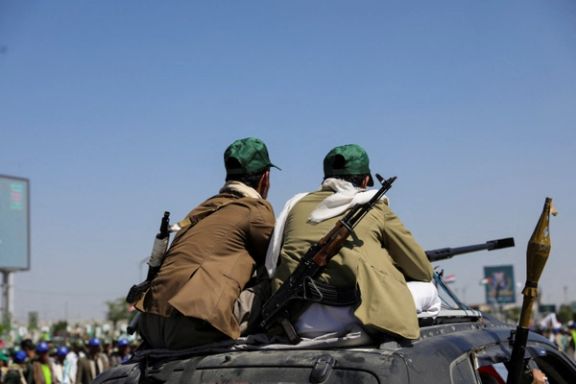
Houthi-mobilized fighters ride atop a car in Sanaa, Yemen September 21, 2024.

Iran has facilitated secret negotiations between Russia and Yemen's Houthis in order for Moscow to provide the militia with advanced anti-ship missiles amid the Red Sea blockade.

Three sources confirmed to Reuters that discussions are ongoing, although Russia has not yet committed to providing the Yakhont supersonic missiles, also known as P-800 Oniks.

Such weapons would enhance the Houthis' ability to strike commercial vessels in the Red Sea with greater accuracy amid the blockade which began in November, posing a heightened threat to US and European warships defending the area.

Amid the ongoing war in Gaza, the Houthis, claiming solidarity with Iran-backed Hamas, have enforced a maritime blockade of the Red Sea, targeting commercial shipping, on the orders of Iran's Supreme Leader, Ali Khamenei.

Initially focused on the Red Sea, these attacks have now extended to other key waterways, including the Indian Ocean, disrupting international shipping and resulting in dozens of international seamen unrelated to Israel being taken hostage.

A US-led coalition of over 20 nations has mobilized to address the threat to global trade and the freedom of movement in the vital maritime corridors.

"Russia is negotiating with the Houthis for the transfer of Yakhont supersonic anti-ship missiles," a Western intelligence source told Reuters. "The Iranians are brokering the talks but do not want to have their signature over it."

In July, The Wall Street Journal reported that Russia was considering sending the missiles. In August, CNN reported that Russia had prepared to deliver missiles and other military equipment to the Houthis but pulled back last minute amid behind-the-scenes efforts by the United States and Saudi Arabia to halt the transfer.

Two regional officials said that the Houthis and Russians met in Tehran at least twice this year and that talks to supply dozens of missiles, which have a range of about 300 km (186 miles), were ongoing, with further meetings expected in the coming weeks.

For years, Iran has been accused of supplying the Houthis with funding, weapons and technical expertise, enabling the group to develop long-range missiles and drones. These shipments, often disguised as commercial cargo, have sometimes been intercepted by US naval forces and other international military operations.

In early September, the Houthis reached central Israel with a missile for the first time, which they claimed was hypersonic. The missile landed in an open area near Ben Gurion International Airport, causing no casualties and minimal damage.

Following the incident, Israeli Prime Minister Benjamin Netanyahu vowed that Israel would exact a "heavy price" on the Houthis, who control northern Yemen. In a press conference, Iranian President Masoud Pezeshkian denied that Tehran had supplied hypersonic missiles to the Houthis or short-range ballistic missiles to Russia.


Most Viewed

Iran International says it won’t be silenced after London arson attack
1

Iran International says it won’t be silenced after London arson attack

2

State media slam Araghchi's Hormuz tweet, say it let Trump claim victory

3
VOICES FROM IRAN

Hope and anger in Iran as fragile ceasefire persists

4
INSIGHT

How Tehran bends its own red lines to boost state rallies

5

Iran halts petrochemical exports to supply domestic market

Banner
Banner

Spotlight

  • Too early to tell who is winning Iran war, experts say
    PODCAST

    Too early to tell who is winning Iran war, experts say

  • How Tehran bends its own red lines to boost state rallies
    INSIGHT

    How Tehran bends its own red lines to boost state rallies

  • Iran blackout cripples freelancer, small business incomes
    VOICES FROM IRAN

    Iran blackout cripples freelancer, small business incomes

  • Ideology may be fading in Iran, but not in Kashmir's ‘Mini Iran'
    INSIGHT

    Ideology may be fading in Iran, but not in Kashmir's ‘Mini Iran'

  • US blockade enters murky phase as tankers spoof signals and buyers hesitate
    ANALYSIS

    US blockade enters murky phase as tankers spoof signals and buyers hesitate

  • Why the $100 billion Hormuz toll revenue is a myth
    ANALYSIS

    Why the $100 billion Hormuz toll revenue is a myth

•
•
•

More Stories

Paris ties with Tehran depend on fate of nationals held in Iran - Macron

Sep 25, 2024, 09:44 GMT+1

French President Emmanuel Macron told his Iranian counterpart that an improvement in bilateral relations could only happen if there was an immediate release of three French nationals held in Iran.

"The President of the Republic stressed the need to obtain without delay the release of the three French nationals arbitrarily held hostage in Iranian prisons for two years in undignified conditions, an imperative prerequisite for any improvement in bilateral relations with France," the French presidency said in a statement.

Macron met Iranian President Masoud Pezeshkian on the sidelines of the UN General Assembly in New York.

According to the Iranian readout of the meeting, Pezeshkian criticized France’s support for Israel in its war with Iran-backed militant group Hamas. He said, “The continuation of Israel’s crimes could lead to a situation that is out of control.”

Last year, the French government accused Iran of adopting a policy of "state hostage-taking" and "blackmail," intensifying calls for the release of French nationals detained in Iran.

Cecile Kohler, a teacher and head of the National Federation of Education, Culture and Vocational Training (FNEC FP-FO), and her partner Jacques Paris, also a member of the same trade union, were arrested on May 8, 2022. They are accused by Iranian authorities of inciting labor protests, charges both their families and the French government deny.

Apart from the couple, other French citizens detained in Iran include Olivier, known only by his first name, and Louis Arnaud, a banking consultant sentenced in 2022 to five years in jail on national security charges.

Iran ready to engage world powers on nuclear deal, Pezeshkian tells UN

Sep 24, 2024, 22:10 GMT+1

President Masoud Pezeshkian said Iran could work with world powers over a deal on its nuclear program if other parties renewed their obligations to the lapsed agreement, in a debut speech to the UN General Assembly on Tuesday.

"We are ready to engage with JCPOA participants. If JCPOA commitments are implemented fully and in good faith, dialogue on other issues can follow," Pezeshkian said, referring to the Joint Comprehensive Plan of Action.

It was his most high-profile moment on the world stage since being elected following the death of his hardline predecessor Ebrahim Raisi in a helicopter crash in August.

The relative moderate ran on a platform of alleviating the country's ever-worsening economy and standards of living by engaging with foreign powers in order to ease sanctions.

But decision-making in the theocratic country ultimately rests with Supreme Leader Ali Khamenei, who has championed confronting the United States and Israel in the region, earning sanctions from the West.

"I aim to lay a strong foundation for my country's entry into a new era, positioning it to play an effective and constructive role in the evolving global order," Pezeshkian added.

Director General of the International Atomic Energy Agency (IAEA) Rafael Grossi told Iran International: "Iran has to give the IAEA some answers on a number of things that have not been clarified for some time."

Regional Tensions

The remarks come on the heels of a sharp escalation of cross-border combat between Israel and Iran-backed Hezbollah in Lebanon as the Jewish state launched air strikes targeting the group which killed nearly 600 people on Monday.

"It is imperative that the international community should immediately stop the violence and bring about a permanent ceasefire in Gaza and bring an end to the desperate barbarism of Israel in Lebanon before it engulfs the region and the world," Pezeshkian said of the recent violence.

"No amount of barbaric violence can restore (Israel's) myth of invincibility," he added.

The president did not discuss Iran's role in supporting Hezbollah or other groups it leads as part of the so-called Axis of Resistance comprising Islamist militias armed by Tehran which have been fighting Israel in a nearly-year-old conflict.

Around 300 Palestinian and Yemeni fighters are holding military training exercises inside Iran, a source familiar with the matter told Iran International, in what appears to be part of a broader effort by Iran's Revolutionary Guards (IRGC) to prepare its regional allies for potential future operations.

In New York, Iran's delegation is allowed to travel only within the area between their accommodation at the Millennium Hilton Hotel and the UN headquarters and the route to and from the airport, a security source told Iran International on Tuesday.

The United States, Israel's main backer, considered Iran a state sponsor of terrorism and efforts to engage anew with Tehran foundered during the administration of Joe Biden.

However, Pezeshkian defended the Islamic Republic's regional policies, declaring that it has been supporting "popular liberation movements." He also reiterated Tehran's support for anti-Israeli protests around the globe. "We have been siding with the people across the world, who have flooded the streets in outrage against Israeli atroci es; we condemn Israeli crimes against humanity."

Iran and Russia

Since Pezeshkian's election, the issue of Tehran's continued support for Russia's war on Ukraine has gained a new significance. The United States and European powers hit the country with fresh sanctions this month over allegations Iran was shipping missiles to Russia to aid its attacks on Ukraine, a charge Tehran denies. But Iran has also denied having supplied thousands of kamikaze drones to Russia since mid-2022, which is well-documented and not in dispute.

The Iranian drones are often used during massive Russia missile attacks on Ukrainian cities and infrastructure to overwhelm Kyiv's Western provided air defenses, therefore angering European powers, who have been imposing sanctions on Iranian individuals and companies.

Despite these, Pezeshkian said Iran hoped to see a negotiated solution to that conflict.

"We seek lasting peace and security for the people of Ukraine and Russia. The Islamic Republic of Iran opposes war and emphasizes the urgent need to end military hostilities in Ukraine."

The G7, an organization of seven of the world's largest economies, warned Iran of potential further sanctions if the country continues with its destabilizing actions in the Middle East.

In a statement Tuesday, the foreign ministers of the United States, Britain, France, Germany, Canada, Italy and Japan (G7) condemned Iran’s transfer of ballistic missiles and drones to Russia for use in Ukraine, calling for an immediate halt to the shipments.

Palestinian, Yemeni fighters train inside Iran - sources

Sep 24, 2024, 19:11 GMT+1

Around 300 Palestinian and Yemeni fighters are holding military training exercises inside Iran, a source familiar with the matter told Iran International, even as President Masoud Pezeshkian is due to deliver a message of regional peace to the UN General Assembly in New York.

The drills are being held at a base 110 km (68 miles) south of the capital Tehran and come at a time of heightened tension across the region, the source added, particularly in Lebanon where Israeli air strikes have killed nearly 600 people in a single day.

Due to the sensitivity of the matter, the source spoke to Iran International on condition of anonymity.

The Shaheed Shabani facility has regularly hosted training sessions for Iran’s allied armed groups in the region, including Houthis, Hezbollah, Hamas, and Palestinian Islamic Jihad.

Over the past decade, this base has become a hub for training aimed at strengthening what Iran calls the Axis of Resistance, a transnational network of armed Islamists dedicated to confronting Israel and the United States.

This latest drill appears to be part of a broader effort by Iran's Revolutionary Guards (IRGC) to prepare its regional allies for potential future operations.

It is focused on “ground assaults, building seizures, and hostage-taking tactics ... (and) guerrilla warfare techniques, bomb-making, and advanced weapons use,” according to the source speaking to Iran International on condition of anonymity.

Shaheed Shabani base is located 110 km south of Iran's capital Tehran
100%
Shaheed Shabani base is located 110 km south of Iran's capital Tehran

Multiple such exercises have been held over the past year inside Iran, the source said. Those participating in the trainings arrive from Lebanon, Yemen, and Syria.

Some stay longer than others, getting additional, specialized instructions on the assembly and operation of advanced weaponry, the source added

Earlier this year, the Daily Telegraph reported that Yemen's Houthis were trained at Khamenei Academy of Naval Sciences and Technology in Ziba Kenar on the Caspian coastline north of Iran.

Another site was on Farur Island, a small, uninhabited island in the Persian Gulf controlled by the IRGC's naval forces, the Telegraph report alleged.

Iran’s continued investment in training its regional allies has raised alarm among neighboring countries and Western powers who view these forces as central to Tehran’s strategy of extending its influence in the Middle East.

The Islamic Republic says its actions are part of a defensive strategy to counter threats from Israel and the West.

Pezeshkian must focus on real de-escalation at UN, senior ex-MP says

Sep 24, 2024, 18:35 GMT+1

Iran must prioritize genuine de-escalation as tensions flare in the Mideast, an influential former parliamentarian and political commentator has written ahead of President Massoud Pezeshkian's debut speech at the UN General Assembly.

"Now that Pezeshkian has come into office with the slogan of de-escalation, some are trying to drag him into sanctions and tensions," Heshmatollah Falahatpisheh, a former head of the National Security Committee of the parliament and a foreign policy analyst, told private Iranian news agency Fararu.

"His duty is to the nation, or at least to the part of the nation that trusted and voted for him expecting change, especially in foreign policy."

Some factions oppose Pezeshkian's push to reduce tensions with Western countries to ease sanctions, while supporters hold on to the hope that he will follow through on his promises.

Falahatpisheh emphasized that past diplomatic approaches have failed to yield results and Pezeshkian must pursue a path more committed to genuine change.

No more talk

"The era of speech-centered diplomacy has passed ... Most past presidents have taken trips that haven’t been fruitful," Falahatpisheh said.

"If this trip is no different, it will turn into a costly and ineffective one for the country. Those who have imposed costly foreign policies must be held accountable. The Iranian people have the right to question those who imposed high-tension policies."

Iran's President Masoud Pezeshkian arrived in New York on September 22, 2024 to attend UNGA
100%
Iran's President Masoud Pezeshkian arrived in New York on September 22, 2024 to attend UNGA

Sanctions imposed on Iran, primarily by the United States and its allies, have harmed the country’s economy and the everyday lives of its citizens. These sanctions, especially those targeting Iran's banking, oil, and trade sectors, have led to inflation, reduced purchasing power, and a scarcity of essential goods.

The national currency, the rial, has devalued, making imports more expensive and driving up the prices of food, medicine, and other essentials. While the government attempts to provide basic commodities at subsidized rates, many still struggle with rising costs.

Medicines, particularly those for chronic and rare diseases, are often difficult to obtain despite exemptions on humanitarian goods due to logistical barriers and banking restrictions.

Calls for de-escalation and accountability

Falahatpisheh pointed out that many of those who initially opposed the FATF and JCPOA six years ago now support reviving these agreements, recognizing the need to address the costs of sanctions and tensions.

"If Pezeshkian wants to act differently from the past, he should initiate a serious de-escalation strategy, and this must begin and take shape in New York. We expect him to pursue maximum de-escalation with the world."

Sanctions have also affected employment, with reduced foreign investments and trade opportunities leading to job losses in various sectors. Youth unemployment remains high, while businesses, especially small and medium-sized enterprises, face difficulties in securing the materials and funds needed to operate.

These economic pressures have led to widespread discontent, with many Iranians calling for solutions to ease their daily hardships.

In recent years, the strain has pushed people to the streets in protest, demanding economic relief and political reforms.

"The experience of the past 11 months has shown that since Iran and the US delayed making their indirect negotiations in Oman serious, both sides have entered a highly challenging field designed by Benjamin Netanyahu," Falahatpisheh added, referring to Iranian nuclear talks.

"Despite the enmity between Iran and the US, neither wants tensions in the region. Unfortunately, the Oman negotiation table has been removed, and both sides are now stuck."

Iranian President Masoud Pezeshkian during a meeting with American media representatives in New York, September 23, 2024
100%
Iranian President Masoud Pezeshkian during a meeting with American media representatives in New York, September 23, 2024

Israeli president Herzog claps back at Iran's Pezeshkian over Lebanon

Sep 24, 2024, 16:35 GMT+1

Israeli President Isaac Herzog on Tuesday rejected an assertion by Iranian President Masoud Pezeshkian the previous day that Israel is trying to draw Iran into direct conflict, accusing Israel's foe of already playing an active role in regional instability.

Speaking to journalists in New York on the sidelines of the United Nations General Assembly on Monday, Pezeshkian accused Israel of trying to provoke Iran into joining the conflict between Israel and the Iran-backed Hezbollah in Lebanon, warning of the "irreversible" consequences of further instability in the Middle East.

"We want to live in peace; we don't want war," he said, calling for a resolution through dialogue.

In an interview with CNBC, Herzog rebuffed Pezeshkian, accusing Iran of destabilizing the region through its Revolutionary Guard Corps - a transnational paramilitary organization which supports armed Islamist groups such as Hezbollah, Hamas, Islamic Jihad, and the Houthis.

"The Iranian president says something, and yet his National Guards are leading the entire region into the abyss by ongoing terror," Herzog said.

Herzog questioned how smaller factions like Yemen's Houthis have acquired advanced weapons such as ballistic and cruise missiles while emphasizing Israel's view of Hezbollah as a grave threat.

"Hezbollah is a terrorist army which has basically hijacked a nation called Lebanon ... We care for them, we want to enable a peaceful future between us and Lebanon."

Pezeshkian, who assumed the presidency following a July election, also reiterated Iran's support for Hezbollah during an interview with CNN that aired on Monday while warning against escalation.

"The danger does exist that the fire of events taking place [in Lebanon] will expand to the entire region," Pezeshkian warned.

The ongoing conflict between Israel and Hezbollah has resulted in significant casualties, with Lebanese health authorities reporting over 550 deaths in recent days from Israeli attacks.

Israel has carried out extensive aerial bombardments it says target Hezbollah infrastructure in Lebanon, marking one of the deadliest periods since Lebanon's civil war.





