• العربية
  • فارسی
Brand
  • Iran Insight
  • Politics
  • Economy
  • Analysis
  • Special Report
  • Opinion
  • Podcast
  • Iran Insight
  • Politics
  • Economy
  • Analysis
  • Special Report
  • Opinion
  • Podcast
  • Theme
  • Language
    • العربية
    • فارسی
  • Iran Insight
  • Politics
  • Economy
  • Analysis
  • Special Report
  • Opinion
  • Podcast
All rights reserved for Volant Media UK Limited
volant media logo

Iranian Nobel laureate Ebadi criticizes Iran’s new ‘reformist’ president

Jul 6, 2024, 13:50 GMT+1
Shirin Ebadi
Shirin Ebadi

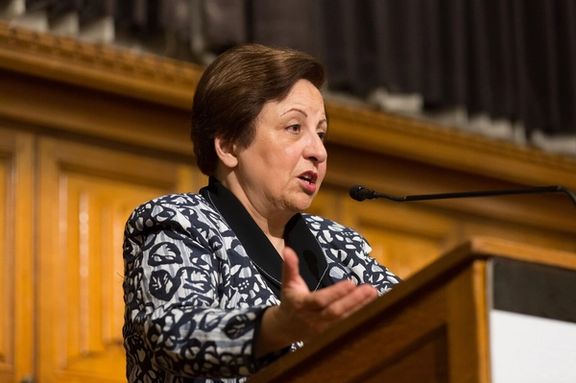
In the aftermath of Iran’s July 5 presidential runoff and 'reformist' candidate Masoud Pezeshkian's ascent to the presidency, Nobel Peace Prize laureate Shirin Ebadi has voiced strong criticism of 'reformists' in general and the newly elected president.

“Masoud Pezeshkian, a candidate close to reformists, became the President in an election where the majority of people did not participate,” she wrote in a post on Instagram on Saturday, highlighting the historically low voter turnout.

Ebadi asserted that Pezeshkian has assumed office amid a backdrop of political and security puzzles following the death of hardliner President Ebrahim Raisi in a helicopter crash on May 19. She added that Pezeshkian’s presidency is “another step for a third defeat of reformists,” referring to the failures of the two previous 'reformist' presidents, Mohammad Khatami and Hassan Rouhani, to address the country's woes.

She questioned whether the 'reformists' will now address the concerns of Iranians. Ebadi raised issues such as whether internet restrictions would be lifted or further tightened, and addressed the dire working conditions of workers across multiple sectors in Iran struggling to make ends meet. She further asked whether the quality of life, particularly for impoverished ethnic minorities in Iran's eastern Sistan-Baluchestan province and Kurdistan province in the northwest, would improve, and if the country's resources would be better managed to ensure adequate water in southwestern Khuzestan province are addressed.

"The reformists and moderates entered the political arena to salvage the regime," Ebadi concluded underscoring that without fundamental changes, “the will of the people” could become a powerful force that challenges and potentially dismantles the Islamic Republic.

Most Viewed

US blockade enters murky phase as tankers spoof signals and buyers hesitate
1
ANALYSIS

US blockade enters murky phase as tankers spoof signals and buyers hesitate

2
INSIGHT

Ideology may be fading in Iran, but not in Kashmir's ‘Mini Iran'

3
INSIGHT

Hardliners push Hormuz ‘red line’ as US blockade tests Iran’s leverage

4
VOICES FROM IRAN

Hope and anger in Iran as fragile ceasefire persists

5

US sanctions oil network tied to Iranian tycoon Shamkhani

Banner
Banner

Spotlight

  • Hardliners push Hormuz ‘red line’ as US blockade tests Iran’s leverage
    INSIGHT

    Hardliners push Hormuz ‘red line’ as US blockade tests Iran’s leverage

  • Ideology may be fading in Iran, but not in Kashmir's ‘Mini Iran'
    INSIGHT

    Ideology may be fading in Iran, but not in Kashmir's ‘Mini Iran'

  • War damage amounts to $3,000 per Iranian, with blockade set to add to losses
    INSIGHT

    War damage amounts to $3,000 per Iranian, with blockade set to add to losses

  • Why the $100 billion Hormuz toll revenue is a myth
    ANALYSIS

    Why the $100 billion Hormuz toll revenue is a myth

  • US blockade targets Iran oil boom amid regional disruption
    ANALYSIS

    US blockade targets Iran oil boom amid regional disruption

  • Iran's digital economy battered by prolonged blackout
    INSIGHT

    Iran's digital economy battered by prolonged blackout

•
•
•

More Stories

Global leaders congratulate Iran's Pezeshkian on presidential victory

Jul 6, 2024, 13:36 GMT+1

With the announcement of Masoud Pezeshkian as the winner of the July 5th Iranian presidential runoff vote, leaders from around the world have extended their congratulations.

The presidents of China, Russia, Syria, the Republic of Azerbaijan, and Iraq, as well as the prime ministers of India and Pakistan, the foreign minister of Venezuela, and Saudi Arabia’s king and crown prince were among the officials who congratulated the Iranian president-elect on his victory.

Saudi Arabia has called for bolstering ties following Pezeshkian's election. The kingdom's king and crown prince congratulated Pezeshkian through the official Saudi Press Agency (SPA) on Saturday. "I affirm my keenness on developing and deepening the relations between our countries and people and serve our mutual interests," SPA quoted Saudi Crown Prince Mohammed bin Salman as saying.

According to Chinese state media Xinhua, Chinese President Xi Jinping congratulated Pezeshkian and expressed his willingness to advance the China-Iran comprehensive strategic partnership. "I am willing to work with the President to lead the China-Iran comprehensive strategic partnership towards deeper advancement," Xi stated, as reported by Xinhua.

Russian President Vladimir Putin also extended his congratulations, with the Kremlin releasing a statement on Saturday. "I hope that your activities as president will contribute to further building up constructive bilateral cooperation in all areas for the benefit of our friendly peoples, in the interests of simplifying regional security and stability," Putin said.

Syrian President Bashar Assad sent a congratulatory message, emphasizing the goal of strengthening strategic relations and exploring new avenues for bilateral cooperation between Syria and Iran.

Indian President Narendra Modi congratulated Pezeshkian, expressing his anticipation of working closely to enhance "the warm and long-standing" bilateral relationship. “Looking forward to working closely with you to further strengthen our warm and long-standing bilateral relationship for the benefit of our peoples and the region,” Modi stated.

Pakistan’s Prime Minister Shehbaz Sharif and President Asif Ali Zardari also congratulated Pezeshkian.

“As neighboring countries, Pakistan & Iran enjoy a close & historic relationship. We must ensure a bright future for our two peoples through mutually beneficial cooperation,” Sharif wrote on X on Saturday.

In a post on X, Zardari reiterated that “Pakistan & Iran enjoy fraternal ties” and expressed hope that under Pezeshkian’s leadership, the relations between the two countries would grow.

In a statement on Saturday, the Venezuelan government extended congratulations to Pezeshkian.

“President-elect Pezeshkian and the Iranian nation enjoy the unwavering support of Venezuelan President Nicolás Maduro, whose goal is to deepen fraternal relations between the two nations through a comprehensive strategic alliance, fostering mutually beneficial cooperation and contributing to multiple global consolidations.”

Iran’s ex-Central Bank chief calls for resolving issues with the US

Jul 6, 2024, 11:26 GMT+1

Former chief of Iran’s Central Bank, Abdolnaser Hemmati, told local media that one of the first tasks for the new president should be reaching an agreement with the West to lift sanctions.

In the first 100 days, “it is important to establish a policy of understanding with the United States and the three European powers to reduce sanctions and thus lower inflationary expectations. The government's first step should be to suppress these inflationary expectations,” Hemmati, a critic of Iran’s hardliners stated.

Nuclear negotiations by the Biden administration and Britain, France and Germany, which started in April 2021 failed to forge a new agreement to revive the Obama-era JCPOA nuclear deal. As a result, Trump administration’s oil export and international banking sanctions remained in place seriously impacting Iran’s weak economy.

Hemmati and numerous other experts and analysts in Tehran have long called for a change of course by the Islamic government, which has increasingly adopted a more hardline posture since 2020, not only in foreign policy but also in its repressive measures against social and political freedoms. Many hope that the election of the relatively moderate Masoud Pezeshkian can bring about a measure of change in both foreign and domestic policies.

The former chief banker is considered a ‘reformist’ who was a candidate in the 2021 presidential election when the hardliner candidate Ebrahim Raisi was elected amid heavy-handed engineering of the election process. He registered as a candidate again for the latest presidential elections but the notorious Guardian Council rejected his qualification.

“In the first 100 days, the government must demonstrate that it does not intend to continue the previous erroneous path,” Hemmati said. Although the new president, Masoud Pezeshkian has made many promises, he has offered few concrete plans for change. He has emphasized the need to improve relations with the international community, but when it comes to the United States, everyone believes the key is in Supreme Leader Ali Khamenei’s hand.

However, beyond improving ties with the West and lifting of sanctions, the government needs to open up the state-controlled economy to more market competition, Hemmati emphasized. “It is important to announce the main economic policy of distancing from a command economy and implementing primary policies based on competitive strategies to align and integrate the private sector with the state economy.”

Hemmati also highlighted his concern about Iran’s annual inflation rate hovering around 50 percent. The government must “correct wrong decisions to control the budget deficit and manage variables that lead to increased inflation."

With sanctions stifling oil revenues, the government has resorted to printing money to balance its budget, which has fueled runaway inflation in the past five years.

Calling for the president to be able to exercise his constitutional power, Hemmati said there is no need for a stronger or weaker president, but the constitution should be respected and applied in regards with presidential authority.

Iranian political prisoner Jalalian denied medical care in 17th year

Jul 6, 2024, 10:03 GMT+1

Zeinab Jalalian, one of the longest-serving female political prisoners in Iran, is in her 17th year of life imprisonment in the central city of Yazd, enduring severe health issues without proper medical care.

On Friday, the Human Rights Activist Network in Iran (HRANA) reported that Jalalian, despite suffering from multiple physical ailments, has been consistently denied the necessary medical attention and hospital transfers.

“Ms. Jalalian suffers from pterygium (an eye disease) as well as kidney and gastrointestinal diseases. Recently, due to pain in her right side, she was transferred to the prison infirmary. She was examined by the prison doctor, but no specialized treatment was provided. This political prisoner requires hospitalization and specialized care, yet the relevant authorities continue to prevent her transfer,” wrote HRANA.

Jalalian was arrested on February 26, 2008, while traveling on an intercity minibus in western Iran. Agents of the Ministry of Intelligence apprehended her at the entrance to the city, in front of dozens of passengers. During her detainment, Jalalian was subjected to severe physical and psychological torture, as reported by multiple rights groups.

In December 2008, she was sentenced to death by the Revolutionary Court in Kermanshah on charges of “enmity against God” (moharebeh) through “armed action against the Islamic Republic, membership of PJAK, possession and maintenance of military weapons and equipment, and propaganda activities in favor of anti-state groups” according to Kurdistan Human Rights Network (KHRN). Her sentence was commuted from execution to life imprisonment in October 2011.

In 2016, the UN Working Group on Arbitrary Detention determined that she was detained for the peaceful exercise of her rights to freedom of expression and association and denied her right to a fair trial. Amnesty International has repeatedly called on the Iranian authorities for her immediate release.

In January this year, Amnesty urged for her release again and stated that despite the findings of the UN Working Group on Arbitrary Detention, “Iranian authorities continued to subject Zeynab Jalalian to torture by deliberately denying her healthcare to coerce her into providing a videotaped ‘confession’ and ‘repenting’ for her past activities. Following at least two COVID-19 infections, Zeynab Jalalian has developed a lung condition and has trouble breathing – a condition that needs proper treatment.”

Jalalian has been transferred multiple times between various prisons, including Khoi, Qarchak, Varamin, Evin, Kerman, Kermanshah, and Yazd, without any leave. Her health has deteriorated significantly, with no respite from the prison authorities.

Numerous reports have highlighted the systemic neglect of medical treatment for political prisoners in Iran, resulting in the deaths of several inmates in the past.

Who is Iran's new president and what has he promised voters?

Jul 6, 2024, 09:52 GMT+1
•
Maryam Sinaiee

Masoud Pezeshkian, the relatively moderate of the two finalists was declared the ninth president of Iran after securing 53.6 percent of the votes in the July 5 runoff against ultra hardliner Saeed Jalili with 44.3 percent.

Pezeshkian who considers himself an independent was backed by the Reform Front in the snap elections of June 28 that followed the death of hardliner President Ebrahim Raisi in a helicopter crash on May 19.

The pro-reform candidate secured over 7 million votes more than the first round and nearly 3 million votes more than his ultra-hardliner rival, according to official figures announced by the government.

The first round of the elections in which the turnout dropped to a record low of around 40 percent was widely boycotted by various political groups, activists, and disillusioned Iranians.

According to official figures, which many in the opposition are challenging, turnout in Friday’s runoff election increased by about ten percent to 49.8 percent. In Iran's tightly government-controlled electoral process, these figures cannot be independently verified.

The new president made many promises during his campaign, but as was the case with other candidates, detailed plans were lacking.

Pezeshkian advocates engagement in constructive talks with Western powers to revive the JCPOA nuclear deal and to lift the sanctions that he says have crippled the Iranian economy since the withdrawal of the United States from the agreement in 2018. He has not offered any concrete plans for such a move which requires the approval of Supreme Leader Ali Khamenei.

He has also insisted that Iran needs to accede to international conventions prescribed by the anti-money laundering Financial Action Task Force (FATF) to allow international banking ties. Iran has been on FATF’s blacklist since February 2020.

Former Foreign Minister Mohammad-Javad Zarif who campaigned for Pezeshkian relentlessly in the past few weeks is likely to be chosen for a senior position in his cabinet. The position of foreign minister is said to have been reserved for Zarif’s former deputy and nuclear negotiator Abbas Araghchi.

Pezeshkian said during campaign debates that lower-income and vulnerable Iranians would not pay taxes if he won the elections. He has also vowed free healthcare for the lower income and vulnerable families.

Ali Tayebnia, an economist and former minister of commerce in the government of Hassan Rouhani (2013-1017), is widely believed to be at the helm of Pezeshkian’s economic team. Tayebnia is believed to be a support of free market economy, as Iran suffers from overwhelming government control and ownership.

The 70-year-old heart surgeon, lawmaker and first deputy speaker of parliament (2016 – 2020), and veteran of the Iran-Iraq War (1980-88) has on various occasions admitted to helping impose the hijab on women in the early years of the Islamic Republic but has promised voters to put an end to the violent enforcement of the Islamic dress code by morality police enforcers.

Pezeshkian is known for his fiery speeches in the parliament against the government’s bloody crackdown on protesters in 2009.

In a tweet a day after Amini’s death, Pezeshkian strongly criticized the violence against her and said “arresting a girl for her hijab and handing her corpse to her family” was unacceptable in the Islamic Republic and shameful. He later said he had been barred by the Guardian Council from standing in the March 2024 parliamentary elections due to his protest to Amini’s killing.

He has also been critical of the house arrest of the leaders of the Green Movement who have been detained in their residences since 2011.

Pezeshkian had served as health minister under the reformist Mohammad Khatami from 2001 to 2005. Khatami who abstained from voting in the parliamentary elections of March in protest to the extensive disqualification of non-hardliners supported Pezeshkian and voted for him.

Pezeshkian’s additional votes in the runoff elections probably came from some of those who had boycotted the first round as well as some of the supporters of the Parliament Speaker Mohammad-Bagher Ghalibaf, who lost in the first round.

Pezeshkian’s approval to run by the ultra-hardline election watchdog, the Guardian Council, came as a surprise. He had previously registered for the presidency in 2013 but withdrew and registered again in 2020, only to be disqualified by the Guardian Council.
Biden admin criticized for allowing Iran elections on US soil again

Jul 6, 2024, 03:23 GMT+1

The Biden administration’s decision to allow Iran to hold votes on US soil sparked controversy on Friday, as Iranian-American activists gathered outside some polling stations to protest against those entering to cast their votes in Iran’s presidential election.

The campaign to boycott Iran’s election has been stronger than ever this year, leading to a record low turnout in the first round of the election. The turnout appears to have improved in the runoff according to official figures.

Outside Iran, the turnout is usually much lower than inside the country. But this time it has been even lower, and the opposition to those voting has been much stronger.

Witness reports and video clips published on social media show Iranian protesters gathering in front of Iran’s Interests Section (IIS) in Washington D.C. and confronting those going in and out. Similar videos have emerged from other polling stations in the neighboring states of Virginia and Maryland.

At least one station (in Tysons, VA) is reported to have been shut down following protests.

The US government had granted permission for 35 polling stations across the country, according to data published on the IIS website. The decision to allow voting for Iran’s election was criticized by activists who say the Biden administration should have followed the Canadian government and refused to allow stations to be set up in the United States.

It is unclear how many of those stations have in fact been set up and collected votes. In the first round, Voice of America conducted a study and found that out of 33 polling stations, 18 likely held voting. This was confirmed through Voice of America contacting 12 hotels and observing 6 stations based on social media images.

The main polling station was the IIS office in Washington DC. Iran International’s Ardavan Roozbeh, who spent the day outside the premises, said Iranian officials seemed to have purposefully scheduled many consular appointments for election day to drag Iranians to IIS to create a “participation illusion.”

“About 50 people were queuing from 8am, holding their passports and other documents,” Roozbeh said. “It seemed like they were queuing to vote, but they were just there for consular services and had no option because their appointment was scheduled for that day.”

The IIS represents the Islamic Republic in the US and offers consular services to Iranian-Americans.