• العربية
  • فارسی
Brand
  • Iran Insight
  • Politics
  • Economy
  • Analysis
  • Special Report
  • Opinion
  • Podcast
  • Iran Insight
  • Politics
  • Economy
  • Analysis
  • Special Report
  • Opinion
  • Podcast
  • Theme
  • Language
    • العربية
    • فارسی
  • Iran Insight
  • Politics
  • Economy
  • Analysis
  • Special Report
  • Opinion
  • Podcast
All rights reserved for Volant Media UK Limited
volant media logo

Iran’s Statistics Center Reports Housing Inflation After Months Of Silence
Iran International Newsroom
Oct 22, 2023, 23:47 GMT+1Updated: 11:43 GMT+0
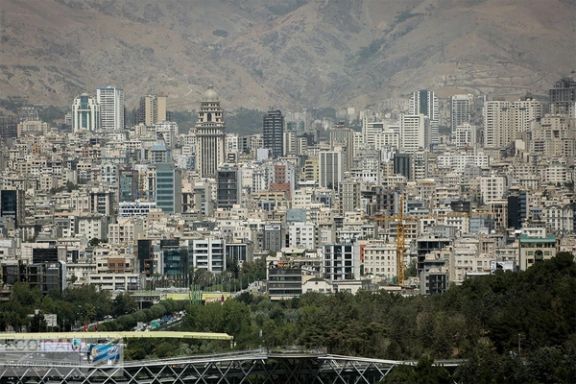
A view from the capital Tehran

Amid the Iran-funded Hamas war with Israel, Iran’s Statistics Center has finally released a report on housing inflation after eight months of withholding data. 

According to the center, housing prices in Tehran have risen 84 percent since last year, a figure so big that it may be the reason behind the government’s reluctance to publish the data. The data blackout deteriorated the already murky situation of the capital’s housing market.

The newly released data indicate that the average price per square meter of housing in Tehran has increased 20-fold in the past eight years. In 2015, the average price was about 40 million rials, and now it is about 800 million rials (about $1,600 in today’s exchange rate). Back in 2015, the dollar was traded at about 30,000 rials, meaning that the average price per square meter was about $1,200. 

Buying property for Iranian wage-earners has become virtually impossible with an average monthly salary of about $200. The rents have also increased across Iran so drastically that currently more than half of a household's income will be spent on rent. In Tehran, the proportion is even more alarming, with workers spending an astounding 100 percent of their wages on housing expenses. The minimum wage for a married worker with all benefits hovers just above $180 per month, while the minimum cost of food for an average three-person household is at least $140 to $160.

Iran’s leading economic newspaper Donyaye Eghtesad (World of Economy) reported Sunday that considering the inflation rate and the government's failure to actualize its announced economic plans, the country’s budget deficit will further increase this year, as is the case in Iran every fiscal year. The daily added that in the previous year, the government covered part of the budget deficit by borrowing from banks, raising government's debts to the banks by 150 percent. 

Whenever the government seeks loans from banks, it pushes the Central Bank of Iran to print more money to supply the funds. As a result of the increasing money supply, the rial has fallen 12-fold in the past five years and has halved in value in the past one year. It is now trading around 500,000 to one US dollar.

Abdolnasser Hemmati, the former governor of Iran's central bank who is among the most outspoken critics of the current administration, said Sunday that macroeconomic indicators prove that the country’s economic woes stem from a lack of proper governance and financial policies over the past three decades. 

Bemoaning the country’s meager annual growth rate, the chief banker under former president Hassan Rouhani said "investment and efficiency" are among the main influential factors in economic growth. He claimed that ‘efficiency’ is a term only used on paper in government’s five-year development plans that never materializes. 

Additionally, Bahram Shakouri, a member of Iran’s Chamber of Commerce, also criticized the administration of President Ebrahim Raisi for its policies regarding attracting investment. He stated, “When domestic investors are disappointed, how can we expect foreign capital owners to be willing to invest in the country?" adding that there is no investment security in Iran until the country improves its relations with the international community and connects its banking system to the world. 

Earlier in the month, the deputy chief of the Central Bank of Iran, Mohamamd Shirijian, claimed that Iran's GDP grew by 4% in 2022, and the growth rate in Q1 and Q2 of 2023 increased 5.3 and 6.2 percent, respectively. The claims seem to contradict a report by reformist daily Ham-Mihan also in October that forecast a budget deficit twice as big as the figure in the previous year. The paper said if the country’s revenues in the second half of the Iranian year (which ends in March 2024) mirror the trend in the first six months, the budget deficit would significantly worsen in comparison with last year.

It is very difficult to judge the veracity of the Central Bank's optimistic claim, given the lack of any positive movement in Iran's currency markets or the nearly 50-percent annual inflation rate. The current government dominated by hardliners is notorious for making outlandish claims of economic success.

Against the backdrop of all its economic hardships, the regime has been spending heavily on the development of its drone and missile technology and gives hundreds of millions of dollars per yet to its proxy militia groups, such as Hamas that has rained thousands of rockets on Israel since its multi-thronged operation earlier this month in spite of its people in Gaza unable to eat and drink.

Economist Parviz Jahed said Saturday that 45 million of Iran’s 88 million population live in poverty, another reason that justifies Iranians to chant "Neither Gaza nor Lebanon, I sacrifice my life for Iran" during their anti-government protests, showing the frustration with the regime’s allocation of resources.



Most Viewed

Iran negotiators ordered to return after internal rift over Islamabad talks
1
EXCLUSIVE

Iran negotiators ordered to return after internal rift over Islamabad talks

2
ANALYSIS

US blockade enters murky phase as tankers spoof signals and buyers hesitate

3
ANALYSIS

Why the $100 billion Hormuz toll revenue is a myth

4

US tightens financial squeeze on Iran, warns banks over oil money flows

5
ANALYSIS

US blockade targets Iran oil boom amid regional disruption

Banner
Banner

Spotlight

  • Hardliners push Hormuz ‘red line’ as US blockade tests Iran’s leverage
    INSIGHT

    Hardliners push Hormuz ‘red line’ as US blockade tests Iran’s leverage

  • Ideology may be fading in Iran, but not in Kashmir's ‘Mini Iran'
    INSIGHT

    Ideology may be fading in Iran, but not in Kashmir's ‘Mini Iran'

  • War damage amounts to $3,000 per Iranian, with blockade set to add to losses
    INSIGHT

    War damage amounts to $3,000 per Iranian, with blockade set to add to losses

  • Why the $100 billion Hormuz toll revenue is a myth
    ANALYSIS

    Why the $100 billion Hormuz toll revenue is a myth

  • US blockade targets Iran oil boom amid regional disruption
    ANALYSIS

    US blockade targets Iran oil boom amid regional disruption

  • Iran's digital economy battered by prolonged blackout
    INSIGHT

    Iran's digital economy battered by prolonged blackout

•
•
•

More Stories

Explosion At Iranian Power Plant Claims Lives

Oct 22, 2023, 20:04 GMT+1

An explosion has rocked the Parand power plant on the outskirts of Tehran, with at least two dead and several others injured.

Governor Omid Ahmadi, who is overseeing Robat Karim County where the power plant is located, attributed the explosion to "staffers' negligence." The blast occurred in a gas pipeline responsible for delivering fuel to the plant's turbines.

Ahmadi further claimed despite damage to a section of the gas pipeline, the power plant's operations continued without interruption with no reports of damage to its infrastructure.

The Parand power plant, designed to generate 50 megawatts of electricity, was part of a plan to connect it to the national power grid, aiming to address voltage issues within the capital's electricity network.

The incident is part of a series of unexplained explosions and fires that have plagued various Iranian military, nuclear, and industrial facilities since mid-2020.

Of particular note is a significant fire that erupted on January 28 in an Iranian military industry factory in Esfahan, suspected to be a result of a drone strike. While authorities have not provided comprehensive explanations for the incidents, they have linked several high-profile sabotage attacks on facilities to Israel. Israel has not officially claimed responsibility for any of these events.

Exodus Of Iran's Healthcare Professionals Continues

Oct 22, 2023, 16:52 GMT+1

Masoud Pezeshkian, a member of the Iranian parliament, has warned of the growing migration of healthcare professionals threatening to leave the country in a dire shortage.

In an interview with Rouydad 24, Pezeshkian stated that, while precise statistics on doctor emigration are lacking, it is evident that a significant number have left Iran for various reasons.

“Those who have remained are often constrained by low salaries, making it increasingly challenging to maintain their quality of life. With a monthly income equivalent to $200 to $300, many healthcare professionals find it difficult to afford housing and their children's education,” he said.

Driven by a combination of economic hardships, professional constraints, and the lack of social and political freedoms, a growing number of healthcare professionals, including physicians, dentists, midwives, and nurses, have either emigrated in recent years or are actively planning to do so.

He emphasized that the primary challenge driving the exodus is financial, as low salaries and high living costs push professionals to seek better opportunities abroad. Despite Iran's abundant resources, which include oil, gas, minerals, water, and a well-educated workforce, mismanagement, and a failure to utilize these resources efficiently contribute to the country's economic challenges.

Pezeshkian concluded by warning that the consequences of the ongoing healthcare professional migration crisis will become apparent in the coming years, sentiments echoed now for many months, worsened since the uprising of the Women, Life, Freedom movement last September.

In February, Mohammad Sharifi-Moghadam, a member of the central council of Iran's Nurses’ Organization, estimated that between 2,500 to 3,000 nurses emigrate from Iran annually.

More recently, in May, MP Hossein Ali Shahriari, chairman of the Iranian parliament's Health and Treatment Committee, said Around 10,000 healthcare practitioners have left Iran over the past two years to work in the Arab world.

Iran Continues Threats To Enter Hamas-Israel Conflict

Oct 22, 2023, 15:17 GMT+1

Iranian officials continue to signal the possibility of an expanded front against Israel, despite repeated denials of the regime's green light to the Hamas attack on Israel.

Fadahossein Maleki, a member of the National Security Committee in the Iranian Parliament, said, "If Israel continues its ruthless operations, we will form a new front, extending far beyond the 1973 front [Yom Kippur War], which led to Israel's defeat. In the new front, Iran will play a significant role."

As thousands of Israelis and Palestinians continue to lose their lives in the conflict initiated by Hamas which bombarded Israel with thousands of missiles and an infiltration of its terror troops on October 7, he said the wave of support seen around the world is because "Palestine and its people hold a special place among the Muslim world."

Iran's proxy Hezbollah has already been actively attempting to infiltrate Israel's northern border in addition to sending UAVs and anti-tank missiles since the war began. Last week, Iran's Yemen proxy, the Houthis, also sent cruise missiles and drones launched toward Israel, intercepted by the US Navy.

Supporting the events of October 7 when Hamas declared war on Israel, Maleki justified the terror group's attack which saw hundreds of civilians slaughtered, including pregnant women, children and the elderly. A further 212 or more are being held hostage by the terror group in Gaza.

He said, "The actions taken by Hamas are, in fact, a response to the excessive Israeli aggression, where they showed no mercy towards the people. Such actions have led to a wave of hatred against Israel in the Islamic world, especially among the Muslim community."

Maleki is one of a stream of regime officials pushing for escalation, including Iran's Minister of Foreign Affairs, Hossein Amir-Abdollahian, who has been issuing almost daily threats of aggression claiming that its proxies will be activated if Israel does not offer a ceasefire.


50 Detained In Zahedan Friday Protests, 13 Children

Oct 22, 2023, 13:37 GMT+1

Fifty people have been arrested during the Friday protests in the volatile city of Zahedan, including 13 children.

US-based Human Rights Activists News Agency (HRANA) shared videos on social media showing the presence of special guard forces around the Makki Mosque and the use of significant force during the arrests of numerous citizens in the city.

In response to the recent crackdown on protesters, Fazl ul-Rahman Kouhi, the Friday prayer Imam of Pashamag village in Sarbaz County, Sistan and Baluchestan, stated that "the attack of military forces on the worshipers in Zahedan is no less oppressive than the actions of Israel against the people of Palestine."

Notably, Kouhi himself had been detained in 2019, and Sunni clergymen in Baluchestan are currently facing pressure from the Iranian regime.

In the images from the protests on Friday, participants chanted slogans such as "Neither Gaza nor Lebanon, My Life for Iran" and "From Zahedan to Gaza, the Whole World is Shaking."

Recent reports indicate an escalation in pressure on Sunni and Baluch clerics to discourage the Friday protests in various cities within the province. Nevertheless, the weekly protests by Zahedan residents persist.


Reformists Question Integrity Of Iran’s Upcoming Elections

Oct 22, 2023, 12:22 GMT+1
•
Iran International Newsroom

As candidates registered for Iran's parliamentary elections, politicians in the reform camp expressed concern regarding the potential disqualification of many candidates.

On the initial day of registration October 19, a total of 959 candidates officially entered the race, with the registration process set to continue for an additional week. Earlier, an unofficial registration process saw approximately 49,000 candidates vying for the 290 parliamentary seats in Iran's Majles, in the elections scheduled for March.

The registration unfolds in the midst of widespread observations that the Majles (parliament) no longer holds a pivotal role in decision-making within Iran. Supreme Leader Ali Khamenei has significantly curtailed the parliament's authority by transferring key decision-making responsibilities to the heads of the government's three branches or the Expediency Council, a non-elected body whose members are directly appointed by Khamenei.

Simultaneously, grievances persist regarding the vetting process, as the Guardian Council, responsible for approving candidates, often arbitrarily disqualifies individuals who do not align with Khamenei's preferences. In recent rounds of presidential and parliamentary elections, the Council disqualified all reformist and moderate candidates, effectively consolidating power in Iran in the hands of ultraconservatives who have exhibited inefficiency in their governance.

Certain reformist figures have already chosen to boycott the elections, while others, such as former President Mohammad Khatami, have declared their decision not to participate, though they have not explicitly announced a formal boycott.

The Spokesman for the Reform Front, Javad Emam (undated)
100%
The Spokesman for the Reform Front, Javad Emam

The Spokesman for the Reform Front, Javad Emam, told the press that in fact "It is not the reformists, but those who deprived the people of fair elections who have boycotted the upcoming parliamentary elections."

He elaborated by saying, "We have no issues with the ballot box, as it represents the will of the nation. However, regrettably, the people have been denied the opportunity for a fair electoral process through the ballot boxes." Emam went on to express his perspective that "The current state of affairs in Iran deviates from the ideals of the 1979 revolution. The people have been deprived of their constitutional right to shape their own destiny." He further added, "This deviation from the Constitutional Law calls for the restoration of the people's political participation."

The spokesperson also emphasized that the public's trust in the government has been severely eroded following the protests of the previous year. As long as this trust remains unrestored, “we, as reformists, find it challenging to engage people's interest in participating in elections.”

Meanwhile, centrist politician Gholamhossein Karbaschi said in an interview with the official news agency IRNA that "If reformists wish to boycott the elections, they had better declare this boycott publicly rather than keeping silent about it."

He made it clear that he is no longer a member of the reform front, adding that "I do not like the political taste of the Reform Front." Karbaschi had earlier declared his opposition to a woman, Azar Mansoori, being the leader of the front. In this interview he said: "The Reform Camp's former leader, Behzad Nabavi preferred reform over revolution."

Further explaining his opposition to boycotting the elections, Karbaschi reiterated that "Blind radicalism in the reform front will not lead to anywhere." He explained that reformist cannot be in the reform camp and be part of the opposition at the same time, but this is a situation that has been imposed on the reform camp by the government.

Karbaschi’s criticism of reformists contrasts with the opinion of the anti-regime opposition that sees them as responsible for keeping the Islamic Republic alive, by promising people reforms for 25 years.

Former President Hassan Rouhai had earlier warned Iran's ruling ultraconservatives in a message to his own Moderation and Development Party that the government is wasting the opportunity for coming to an understanding with the people and that if the government fails to pave the way for everyone's political participation, it is likely to lose its ability to solve domestic and international problems.