• العربية
  • فارسی
Brand
  • Iran Insight
  • Politics
  • Economy
  • Analysis
  • Special Report
  • Opinion
  • Podcast
  • Iran Insight
  • Politics
  • Economy
  • Analysis
  • Special Report
  • Opinion
  • Podcast
  • Theme
  • Language
    • العربية
    • فارسی
  • Iran Insight
  • Politics
  • Economy
  • Analysis
  • Special Report
  • Opinion
  • Podcast
All rights reserved for Volant Media UK Limited
volant media logo

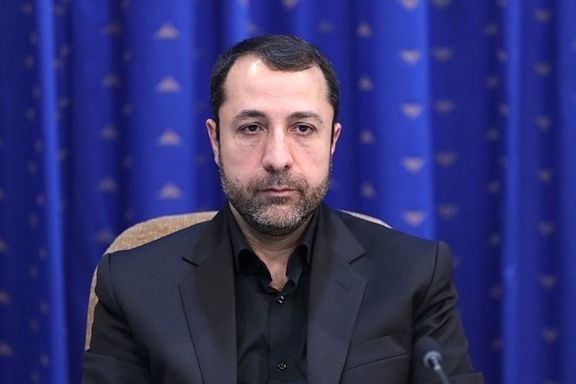
Former Central Bank Governor Tipped To Be Iran's New Envoy To Qatar
Aug 27, 2023, 18:59 GMT+1
 Iran's new ambassador to Qatar Ali Salehabadi
Iran's new ambassador to Qatar Ali Salehabadi

Iran’s media have reported that Ali Salehabadi, former governor of Iran's Central Bank, is set to assume the position of Iran's new ambassador to Qatar.

Salehabadi resigned as the governmental head of the Central Bank in December 2022 amid nationwide economic challenges. His new potential appointment appears timely as it coincides with the unfreezing of $6 billion of Iranian assets to Qatari banks and Iran’s hostage release of US citizens.

While no official confirmation has been released by either the Iranian government or Qatari authorities, this speculative appointment raises eyebrows due to Salehabadi's extensive financial background.

Salehabadi's tenure as the head of Iran's Central Bank was marked by a period of economic turbulence and uncertainty. Last year’s departure from the Central Bank was attributed to the complex economic problems that Iran faced during his term, including inflationary pressures and international sanctions.

The potential selection of Salehabadi as Iran's ambassador to Qatar, a role often filled by career diplomats, indicates a strategic shift in Iran's diplomatic approach. Experts speculate that this move might reflect Iran's intention to leverage Salehabadi's financial expertise to navigate the economic intricacies of the region, especially in light of the recent unfreezing of assets.

Iran’s deal with the US, which led to the release of the frozen funds, has been a point of contention within the international community. Critics argue that unfreezing these assets could inadvertently provide Iran with more resources to support its oppressive regime towards its citizens, while proponents suggest that it might pave the way for improved diplomatic relations.
Most Viewed

Iran negotiators ordered to return after internal rift over Islamabad talks
1
EXCLUSIVE

Iran negotiators ordered to return after internal rift over Islamabad talks

2
ANALYSIS

US blockade enters murky phase as tankers spoof signals and buyers hesitate

3
ANALYSIS

Why the $100 billion Hormuz toll revenue is a myth

4

US tightens financial squeeze on Iran, warns banks over oil money flows

5
ANALYSIS

US blockade targets Iran oil boom amid regional disruption

Banner
Banner

Spotlight

  • Hardliners push Hormuz ‘red line’ as US blockade tests Iran’s leverage
    INSIGHT

    Hardliners push Hormuz ‘red line’ as US blockade tests Iran’s leverage

  • Ideology may be fading in Iran, but not in Kashmir's ‘Mini Iran'
    INSIGHT

    Ideology may be fading in Iran, but not in Kashmir's ‘Mini Iran'

  • War damage amounts to $3,000 per Iranian, with blockade set to add to losses
    INSIGHT

    War damage amounts to $3,000 per Iranian, with blockade set to add to losses

  • Why the $100 billion Hormuz toll revenue is a myth
    ANALYSIS

    Why the $100 billion Hormuz toll revenue is a myth

  • US blockade targets Iran oil boom amid regional disruption
    ANALYSIS

    US blockade targets Iran oil boom amid regional disruption

  • Iran's digital economy battered by prolonged blackout
    INSIGHT

    Iran's digital economy battered by prolonged blackout

•
•
•

More Stories

Oil Leak Detected in Iran's Vital Kharg Island Transmission Pipeline

Aug 27, 2023, 18:13 GMT+1

An oil leak has been detected in a crucial transmission pipeline connecting the strategic Kharg Island south of Iran to the mainland port of Genaveh.

According to a report from the semi-official Tasnim news agency on Sunday, two vessels have been dispatched to the coasts of Kharg and Genaveh to facilitate the clean-up operations and to mitigate potential environmental and economic repercussions.

"To prevent oil leakage on the seabed from the pipelines, diving teams have been dispatched," an official from Bushehr province said.v

While the exact extent of the spill remains undisclosed, authorities have revealed that officials from Bushehr province have mobilized diving teams to prevent further oil leakage on the seabed from the pipelines.

Kharg Island, located 25 kilometres off the Gulf coast of Iran, holds importance as a critical oil terminal responsible for a significant portion of the country's oil exports. Therefore, a prompt response to the leak will safeguard not only the environment but also Iran's crucial economic interests. Further updates will be provided as the situation develops.

Iranian Lawyers' Protests Continues Against Parliamentary Decision

Aug 27, 2023, 18:02 GMT+1

Iranian lawyers remain up in arms and are protesting from various regions after a recent decision by the government to take away their independent authority.

On August 20th, a demonstration, organized jointly by lawyers' association directors and the Central Bar Association, in response to a decision by the parliament to remove their autonomy was met with security forces who attempted to prevent their protests outside the parliament building.

The protesters were denied access to their mobile phones, which were confiscated and they were barred entry. This is directly in conflict with the independence and autonomy of the associations in Iran, which has been in place for more than seven decades.

Previous protests have taken place in front of the Guardian Council's premises, and further protests at the parliament building are planned against the decision that transfers key authorities held by lawyers' associations – including license issuance and exam conduction – to the Ministry of Economy and Finance.

This increased security and quelling of freedom of speech aligns with intensified measures by the regime to discourage possible protests ahead of the anniversary of last year’s nationwide uprising, ignited by the death of Mahsa Amini in police custody.

More than 500 protesters were killed and over 22,000 were arrested during the regime’s crackdown. Although protesters were given harsh sentences and were denied legal representation and due process in most cases, independent lawyers were the only hope of the prisoners to have their voices heard in Iran and abroad.

Bar associations, as long-standing professional and legal institutions in Iran, have consistently encountered pressures from governmental bodies and the judiciary, and have gradually lost authority as the regime has restricted their movements.


Iran Says It Can Help Solve Pakistan Energy Crisis With Low Price Fuel

Aug 27, 2023, 15:05 GMT+1

Iran’s new ambassador to Pakistan has said Iran can help to solve Pakistan's energy crisis by supplying electricity, gas and oil at the "lowest price."

Speaking to local media in Islamabad on Saturday, Reza Amiri Moghadam, who was appointed as Iran's new ambassador in June, said that the Islamic Republic would be able to relieve Pakistan's electricity and gas shortages with cheap fuel.

His comments come three weeks after the Iranian Foreign Minister Hossein Amir-Abdollahian visited Pakistan and their Ministry of Energy announced that a new contract had been signed to increase electricity imports from Tehran.

During his unofficial discussions with the media, Moghadam also claimed that the gas pipeline project and Iran's gas purchase from Pakistan wouldn't be threatened by US sanctions.

Iran itself is facing severe energy shortages, but President Ebrahim Raisi’s administration has continued to increase electricity and gas exports mostly to Iraq, Pakistan, and Afghanistan.

In addition to increasing gas exports, various reports indicate that Iran has resorted to extensive mazut combustion in power plants and industries to compensate for domestic gas shortages. Mazut is the most polluting fossil fuel and leads to severe air pollution.

Earlier this year, Tehran warned Islamabad that if it fails to complete its share of the gas pipeline project by March 2024, it would have to pay around $18 billion in fines. Washington opposes the construction of this pipeline and considers it a violation of US and Western sanctions against Iran.

Iran Acknowledges Qatar, Oman's Mediation In Release Of Frozen Assets

Aug 27, 2023, 12:49 GMT+1

Iran's foreign minister has expressed his gratitude for the mediation efforts of Qatar and Oman in the ongoing process to release Tehran's frozen assets.

Hossein Amir-Abdollahian made separate telephone conversations to his Omani and Qatari counterparts during which he recognized and commended their mediation efforts to facilitate negotiations to unfreeze Iran's assets.

These discussions also underline the multifaceted nature of Iran's diplomatic engagement, encompassing broader bilateral economic, political, and regional matters.

Earlier this month, Iran and the United States announced that $6 billion frozen in South Korea due to US sanctions will be released through Qatari mediation, as Iran releases five US hostages from prison into home detention.

The Iranians insist that the release of the US citizens was part of a prisoner exchange agreement not related to the release of the funds. However, it is clear that the hostages are being kept in Tehran until the money reaches Iranian bank accounts in Qatar.

Currently, the funds are with the central bank of Switzerland, which is exchanging them into Euros gradually and will transfer to Qatar where Iran will be able to access them.

World Bank Study Says Iran Facing Serious Economic Risks

Aug 27, 2023, 11:46 GMT+1
•
Iran International Newsroom

Iran’s economy is facing significant medium-term internal and external risks, the World Bank’s Iran Economic Monitor (IEM) said in its latest report this month.

While domestically, “there is a risk of escalating social tensions and strikes in manufacturing,” externally, Iran faces “the possibility of an even weaker global demand for oil, a sharper decline in oil prices, and the intensification of US sanctions.”

The chances for more US sanctions, however, are low, as the Biden administration this month agreed to release around $9 billion of Iran’s frozen funds in Iraq and South Korea in a hostage release deal. The administration has not announced any new sanctions in the past 80 days, despite no change in Tehran’s foreign policy and regional behavior.

The IEM report says that less sanctions enforcement is one of the factors that can lower the mid-term risks to Iran’s economy, coupled with higher oil prices and more trade with China, which is its main oil customer.

“On the upside, a partial waiver of sanctions, or stronger ties with neighboring countries and China, could provide a boost to oil and non-oil growth,” the World Bank group said.

An atrium is seen at the World Bank headquarters in Washington, October 14, 2017.
100%
An atrium is seen at the World Bank headquarters in Washington, October 14, 2017.

This assessment by the IEM was reflected in what the head of Iran’s Budget and Planning Organization, Davoud Manzour, stated on Sunday. “The difficult conditions imposed by sanctions as an external factor have cast a shadow over Iran’s economy,” he conceded.

“Ongoing economic sanctions, slowing global demand, and energy shortages drive the economic outlook. GDP growth is projected to remain modest in the medium term, with both oil and non-oil GDP underperforming due to ongoing sanctions and years of underinvestment,” the World Bank study pinpointed.

Although international organizations collect most of their data on Iran from government sources, which are often contradictory and less than reliable, but the IEM report overall did capture the serious weaknesses in the country’s governing and economic management systems.

Iran must undertake significant reforms to deal with multiple crises it faces, the IEM argued. “To ensure a sustainable growth rate in the face of multiple crises, significant reforms are necessary, including those on the fiscal side and the banking sector,” the report covering the spring and summer period concluded.

The report emphasized that the Islamic Republic needs structural fiscal reforms to balance expenditures with government revenues, specially amid continuing sanctions that directly impact the oil-dependent economy.

While the centralized and mostly government-controlled economy has muddled through with oil-export revenues for four decades, but structural issues have added up and made matters worse when in the past decade oil sanctions have reduced the government’s leeway to stay afloat.

The report, addressing these structural issues also mentioned the fragile banking system, mostly controlled by the government. “The banking system faces multiple and longstanding challenges including negative capital adequacy ratio and high non-performing loans.”

Iran International reported August 22, that Iran’s central bank has decided to dissolve several non-liable banks and savings and loan institutions. These institutions present an extra risk for a government that already relies on printing money to pay its bills. But dissolving a few banks or merging them with others does not solve the structural problems in the banking system, including political interference and opaque operations.

“Addressing these challenges requires enhanced bank supervision, the implementation of international regulations and best practices for asset classification, liquidity management, and internal controls,” the IEM added.