• العربية
  • فارسی
Brand
  • Iran Insight
  • Politics
  • Economy
  • Analysis
  • Special Report
  • Opinion
  • Podcast
  • Iran Insight
  • Politics
  • Economy
  • Analysis
  • Special Report
  • Opinion
  • Podcast
  • Theme
  • Language
    • العربية
    • فارسی
  • Iran Insight
  • Politics
  • Economy
  • Analysis
  • Special Report
  • Opinion
  • Podcast
All rights reserved for Volant Media UK Limited
volant media logo

Jailed Presidential Daughter Urges Civil Disobedience In Iran
Iran International Newsroom
Aug 21, 2023, 08:07 GMT+1Updated: 17:54 GMT+1

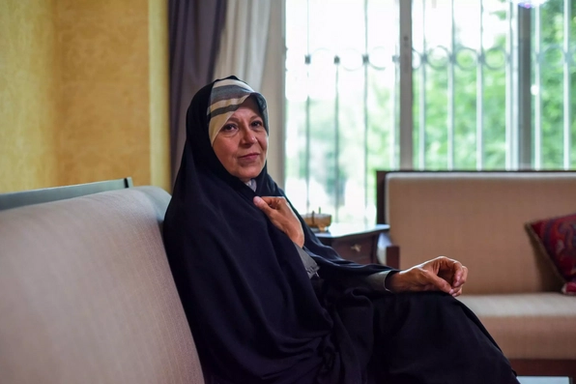
Faezeh Hashemi, the jailed daughter of a former president has written from prison that Iranians have long moved past the reformists and reject the Islamic Republic.

In a letter from prison addressed to a top reformist politician, Hossein Marashi, she criticized him for urging the people to vote in the upcoming March parliamentary elections. "Our weapon is our refusal, and testing the proven is a mistake," Hashemi said referring to a widespread belief in Iran that it matters little which regime faction wins elections. Marashi happens to be Hashemi’s maternal uncle.

In July, Marashi had expressed deep pessimism about regime politicians but nevertheless urged the people to vote. "I have no hope in Iranian politicians. The elites in the society should come forward with determination and make their point, and whatever they need to do. I have hope that the people will change the scene."

He was reacting to an earlier letter from Hashemi urging voters to boycott the elections on the same grounds that all previous elections, whether won by conservatives or reformists did not alter the regime’s core domestic and foreign policies.

Hashemi, daughter of late President Ali Akbar Hashemi Rafsanjani, was arrested in September 2022, days after nationwide anti-regime protests broke out, as the government tried to control the situation by detaining well-known critics and many journalists. She was sentenced to a five-year prison term in January.

Rafsanjani and Khamenei in 1980s
100%
Rafsanjani and Khamenei in 1980s

Faezeh’s father was the second most powerful man in the Islamic regime in the 1990s and early 2000s, when he served as president (1989-1997) and held influence and key positions, until Supreme Leader Ali Khamenei gradually pushed him aside. Rafsanjani was the key cleric who helped Khamenei succeed the founder of the Islamic Republic, Ruhollah Khomeini when he died in 1989, although he did not have the required clerical rank and credentials for the post.

Khamenei’s men continued to persecute members of the Hashemi clan, who had become affluent and had legal vulnerabilities that could be exploited by Khamenei’s courts and intelligence services. Faezeh Hashemi who served as a member of parliament, became increasingly estranged from the regime and began defending women’s rights and hurling criticism at the regime that indirectly targeted Khamenei. She was tip-toeing on dangerous ground, and the regime could not take a risk once angry protesters poured into the streets after Mahsa Amini died in hijab police custody last September, and she was jailed.

Hashemi lashed out at the regime in her letter: "Issues like absolute power [of Supreme Leader], the complete dominance of the IRGC in all areas, aggressive foreign policy, the shameful economic situation, lawlessness, deceit and hypocrisy, manipulation, disregard for national interests and public demands, lack of a national perspective, security-driven control over all matters, lack of rationality and strategy in governing the country, extensive and systemic corruption and destruction, severe suppression of any criticism and unjust judicial verdicts, general disillusionment and public hatred of the situation..."

In another part of her letter, Hashemi considered the people's solution to be "engaging in civil disobedience," "ignoring the demands [of officials]," and "increasing pressure and pushing them into a corner."

Hashemi also called her father’s death in January 2017 a “martyrdom”, referring to suspicions that he was killed by regime agents. Rafsanjani died at 82 while enjoying himself in a swimming pool where there were no witnesses. The family called his death “suspicious”but did not take any legal action, which would hardly achieve any results given the total submission of courts and police to the Revolutionary Guard and intelligence agencies ultimately controlled by Khamenei.


Most Viewed

US terminates green cards of 3 Iranians tied to Islamic Republic
1

US terminates green cards of 3 Iranians tied to Islamic Republic

2
PODCAST

Worst outcome is Islamic Republic’s survival, ex-CIA official says

3
ANALYSIS

Iran brings unusually broad team to US talks to blunt future blame

4
INSIGHT

Tehran sends tough message but keeps diplomacy door open

5

Zoroastrian religious figure arrested in Iran

Banner
Banner

Spotlight

  • Tehran sends tough message but keeps diplomacy door open
    INSIGHT

    Tehran sends tough message but keeps diplomacy door open

  • Worst outcome is Islamic Republic’s survival, ex-CIA official says
    PODCAST

    Worst outcome is Islamic Republic’s survival, ex-CIA official says

  • Why the Iran-US truce is more likely to buy time than peace
    ANALYSIS

    Why the Iran-US truce is more likely to buy time than peace

  • Engaged but uncommitted: China watches Iran and US fight and talk
    ANALYSIS

    Engaged but uncommitted: China watches Iran and US fight and talk

  • A truce for the world, a reckoning for Iran’s economy
    ANALYSIS

    A truce for the world, a reckoning for Iran’s economy

  • Why the world failed to bypass the Strait of Hormuz
    ANALYSIS

    Why the world failed to bypass the Strait of Hormuz

•
•
•

More Stories

Détente With Saudi Leads To Foreign Policy Debate In Iran

Aug 20, 2023, 23:39 GMT+1
•
Iran International Newsroom

The ongoing détente between Iran and Saudi Arabia has triggered debates in Tehran-based media, with increasing calls for a major shift in foreign policy.

While hardliners are generally cautious, those who favor a change in Theran’s foreign policy toward less confrontation with regional countries and the West, showcase the détente with Riyadh as an example of what needs to be done to save Iran from its current economic crisis.

Writing in the relatively independent website Aftab News, specialist on Arab issues Abolfazl Karimi warned Iran’s hardliners and officials not to underestimate Saudi Crown Prince Mohammed bin Salman. He notes that some regime figures wring their hands waiting for bin Salaman’s grand ideas to fail and perhaps drag Saudi Arabia into chaos and mayhem. However, they should not overlook the Arab prince’s personality and determination to bring change and make the Kingdom a formidable rival to Iran.

Karimi argues that bin Salman has the positive attitude of accepting his weaknesses and limitations. He is also enthusiastic about new technologies and is determined to encourage his country’s youth to take the initiative. His style of governance is also strong with upholding meritocracy instead of the Middle Eastern habit of preferring family and clan ties. He is persistent and follows issues until to their full resolution.

Saudi Arabia's Crown Prince Mohammed bin Salman (right) in a meeting with US Secretary of State Antony Blinken in Jeddah in Jeddah, June 7, 2023
100%
Saudi Arabia's Crown Prince Mohammed bin Salman (right) in a meeting with US Secretary of State Antony Blinken in Jeddah in Jeddah, June 7, 2023

Another relatively independent website, Rouydad24 on Sunday published an article headlined, “Why does the Islamic Republic incur costs for itself in foreign policy?” Blaming the hardliners, the website cited ultraconservative figures in the recent past berating Saudi Arabia and bin-Salman, while now they are speaking softly and with respect, when Iran’s foreign minister visits the kingdom.

Abdolreza Farajirad, a former Iranian ambassador to Hungary and Belgium told Fararu website Sunday that Iran must do its utmost to be a part of bin Salman’s vision in forging a “European Union” in the Middle East. Iran has no choice but to be a part of this trend, with open and region-wide economic ties, cross-investments and trade.

The former diplomat and expert argued that the prospect of full relations between Saudi Arabia and Israel should not impede Iran’s openness toward its Arab neighbors, some of whom have established relations with the Jewish state. Iran is now less sensitive to Muslim countries establishing ties with Israel, unlike in the past when Tehran would react very negatively, Farajirad maintained.

He argued, however, that “Iran must first shake off [US and European] sanctions and embark on a new economic phase” of foreign policy, in order to join a regional coalition of progress and development.

This approach is what many other pundits and even regime politicians have been advocating in the past three years, as US sanctions have evidently crippled Iran’s economy. But few would dare to say openly that resolving the nuclear dispute with the West depends on the will of Iran’s ruler Ali Khamenei.

Farajirad stated his conviction that bilateral diplomatic visit with Arab neighbors is not sufficient to propel Iran into a whole new era of regional relations. He insisted that Tehran must first establish mutual trust with Riyadh, although he did not mention Iran’s confrontational policy in the middle East, given that he was speaking to a media outlet in Tehran.

The Revolutionary Guard have been arming the Houthis in Yemen with sophisticated missiles and drone that they have used to attack Saudi Arabia. Iran has also established an array of Shiite proxy militia forces throughout the region, which Riyadh and its Sunni Arab allies see as Tehran’s plan to dominate the neighboring countries.

Iran Summons Swedish, Danish Envoys Over Quran Burning

Aug 20, 2023, 22:51 GMT+1

Iran's foreign ministry has summoned the Swedish and Danish charges d'affaires in Tehran to protest the burning and damaging of copies of the Quran in the two countries.

Anti-Islam activists in Denmark and Sweden have burned or damaged several copies of the Muslim holy book in recent months, prompting outrage in the Muslim world and demands that the Nordic governments ban such acts.

Governments in both countries have condemned the burnings and said they are considering new laws aimed at preventing such acts.

"Iran lays the full responsibility and the serious repercussions of the Holy Quran's desecration on the Swedish and Danish governments," state media cited the head of the Iranian Foreign Ministry's human rights department as saying.

The Iranian government has strongly condemned the desecrations and officials have threatened the perpetrators with severe punishment.

Earlier in August, an Iranian born artist shredded a copy the Quran outside the Iranian embassy in the Danish capital Copenhagen

Two other incident involved Salwan Momika, an Iraqi immigrant, who burned the Quran in front of the central mosque in Stockholm on the first day of Eid al-Adha in late June, after obtaining a permit for a demonstration from the Swedish government. He repeated the desecration, this time in front of the Iraqi embassy in Stockholm on July 20.

(With reporting by Reuters)

Realtor Arrested In Iran Over Sale Of Apartemnt To A Dog

Aug 20, 2023, 21:54 GMT+1

A real estate agency is sealed off and its owner arrested in Iran after a video went viral of the property agency transferring the ownership of an apartment to a dog.

The footage showed an Iranian couple signing a contract transferring the title of their apartment to their small furry white dog Chester.

In the video, which seems like a practical joke, the agent is shown describing the property while Chester's owner places his pawprint on the deed.

Iran’s police issued a statement on Sunday announcing the arrest and the shutdown of the agency, with Tehran’s deputy prosecutor Reza Tabar mentioning “issuing an invalid contract for an apartment unit” as the reason behind the arrest. He added that “this action is illegal and was meant to demean the norms of society.”

The Islamic Republic regime views keeping dogs as a symbol of Westernization that can be dangerous and should be prohibited. Dogs are generally considered 'impure' in Islam and banned in public places by some majority-Muslim countries including Saudi Arabia. Iranian parliamentarians in November proposed a bill banning selling and keeping of pets.

Lawmakers backing the measure claimed the ban was meant to protect public health. While working dogs have always been common in Iran’s rural areas and on farms, keeping pets has only recently become fashionable in urban areas despite occasional police crackdowns.

Iranian Commander Visits Russia’s Army 2023 Expo

Aug 20, 2023, 20:04 GMT+1

Iran’s Army Ground Forces Commander Kioumars Haydari has traveled to Moscow as Iranian-made drones are on display in a military exhibition.

Invited by his Russian counterpart, Haydari is scheduled to visit several military technology and education centers as well as holding meetings with officials from the Russian armed forces and the Ministry of Defense.

Several other Iranian military officials have also visited Russia's annual Army International Military-Technical Forum which opened in Moscow last week. Iran’s delegation, led by Deputy Chief of Staff of Iran's Armed Forces, Aziz Nasirzadeh, has been a consistent presence at the event, dubbed Army 2023.

Last week, Russian Defense Minister Army General Sergey Shoigu also visited Iran’s military stand at the Army 2023 Forum, an event where Russia’s leading defense companies displayed some 1,500 of their products.

According to the Moscow Times, the event is an opportunity for Moscow to show off its "war trophies," Ukrainian and Western-made equipment captured on the battlefields of Ukraine.

Iran has previously denied allegations of sending armed drones to Russia during the conflict that ensued after Moscow's invasion of Ukraine. The Iranian government stated that any such shipments, if they did occur, took place before the war. However, Russia has used hundreds of these drones indicating recurring shipments.

Nevertheless, Russia's utilization of Iranian-made drones for attacks on Ukrainian infrastructure and civilian targets has drawn international criticism. Western powers have raised concerns over Iran's involvement in arming Russia with these drones, along with the possibility of supplying additional weaponry and ammunition.

Iran’s Intelligence Minister Calls European Hostages ‘Spies’

Aug 20, 2023, 11:35 GMT+1
•
Mardo Soghom

Iran’s minister of intelligence Esmail Khatib said Sunday that secret services are holding “spies from Sweden, France and Britain,” referring to some Western hostages.

Without providing names or details about the detainees, the intelligence minister even claimed that despite foreign pressures some of the “spies have been executed.”

Iran executed Iranian-Swedish political activist and former leader of the Arab Struggle Movement for the Liberation of Ahwaz (ASMLA) Habib Chaab (Asyud) in May.

In January, Iran executed British-Iranian national Alireza Akbari, after sentencing the former Iranian deputy defense minister to death on charges of spying for Britain.

Khatib, who is a hardliner cleric, was addressing the 24th assembly of senior Revolutionary Guard officers in Tehran, where he praised Iran’s multiple intelligence services for working together to thwart “enemy conspiracies” and domestic threats.

Habib Farajollah Chaab (center), also known as Habib Asyud, during a court session in Tehran   (undated)
100%
Habib Farajollah Chaab (center), also known as Habib Asyud, during a court session in Tehran

Khatib reiterated the regime’s ideological precept that “the enemy” continues to plot against the Islamic Republic, which has become a “global power.” He claimed that “50 intelligence services” around the world have set up “Iran desks” to be able to confront “a new global power.”

The term “enemy” is a favorite word used by Iran’s ruler Ali Khamenei to refer to the United States, Israel and their allies and partners, but Khatib did not elaborate about who these 50 adversaries around the world are.

Although Iran has released several European high-profile hostages this year, including French and Belgian prisoners held on spying charges, it is not clear how many more are left behind.

French Foreign Minister Catherine Colonna, who spoke in May after the release of two French hostages, said more work is needed “because there are, unfortunately, too many who are detained without reason in Iran.” Apparently, four French citizens and numerous other Europeans remain incarcerated in Iran.

While intelligence minister Khatib boasted about holding European “spies” he did not mention the five American hostages who were released into house arrest earlier this month after a deal with the Biden administration to unblock $6 billion of Iran’s money in South Korea.

The deal has triggered a lot of criticism in the United States, where politicians and some analysts have voiced fear that essentially paying $1.2 billion per hostage will embolden the Islamic Republic and other adversaries to take Americans hostage. Iranian hardliners certainly see the deal as ransom payment by the United States.

A firebrand senior ayatollah, Ahmad Alamolhoda on Friday called the release of Iran’s frozen funds by the US “a humiliation” and a “ransom” in exchange for “their spies.” The cleric is close to Khamenei and is the father-in-law of President Ebrahim Raisi.

Khatib also reiterated that “the enemy’s” aim is to destabilize Iran and reduce participation in the upcoming parliamentary elections in March. The regime has blamed anti-government protests on US and Israeli plots, while it killed more than 500 civilians, injured thousands and has arrested around 22,000 since last September.

Regime politicians and many analysts in Iran believe that voter turnout will be low in March, simply because hardliners prevented other regime loyalists to run both in the 2020 parliamentary and in the 2021 presidential elections. People see no real choice and are deeply angered by the current economic and political crises. They do not believe that Khamenei will change his Anti-West foreign policy and sanctions will continue to increase hardships they face.