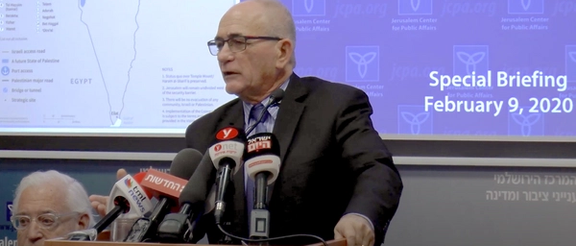
Yossi Kuperwasser served as the head of the research division in the Israel Defense Force (IDF) Military Intelligence division and Director General of the Israel Ministry of Strategic Affairs.
A leading Israeli security expert has told Iran International that Khamenei’s regime will use the $6 billion hostage payment to “suppress the Iranian people.”
As part of a secretive deal reached with Iran’s regime, the Biden administration will funnel $6 billion in sanctioned oil revenue to Tehran in exchange for the release of five unjustly detained Americans. The US government will also free jailed Iranians as part of the controversial deal.
Gen. (Res.) Yossi Kuperwasser, now a senior researcher at the Israeli Defense Security Forum, said “Money is fungible” and added the amount of money that will be sent to Iran is, according to media reports, more than $6 billion.
The Islamic Republic “can use the money to fund terrorist proxies and armaments,” said Kuperwasser, who was the former head of the Research Division at the Israel Defense Forces Intelligence Corps.
He noted the hostage payment deal is “acquiescence to the Iranian policy of kidnapping to force the International community to do what it wants.”
Belgian Aid worker Olivier Vandecasteele, 42, who was arrested on a visit to Iran in February 2022 and sentenced to 40 years in prison on charges including spying, is welcomed by his family in Belgium after a swap deal with an Iranian diplomat imprisoned in Belgium for a failed bomb plot.
He said the current deal is “another sign to accept the malign behavior of the Iranian regime. The IRGC has not yet been proscribed as a terrorist organization by the Europeans and the United Kingdom.” Kuperwasser, who was also the Director General of the Ministry of Strategic Affairs, said the Western countries “are not doing anything to enrage the mullah regime.”
He continued that “This is a dangerous situation. The international community allows Iran to be a [nuclear] threshold state.” Kuperwasser outlined the three pre-conditions for Iran’s atomic weapons program.
He said,“the fissile material is there” for Iran’s nuclear weapons program and the “delivery system is basically there,” adding that only “The weaponization is missing.” Iran has amassed enough enriched uranium for at least two nuclear weapons, experts say.
Kuperwasser said against the backdrop of the astonishingly fast progress Iran’s regime has made with respect to its nuclear weapons program, the hostage payment deal worries the Israeli security establishment.
He noted that Israel’s prime minister Benjamin Netanyahu issued a statement about the hostage agreement, in which he scorned the deal that will pump $6 billon into the coffers of the clerical regime. Netanyahu said Israel’s policy against the Iranian regime will not be sidelined by Biden’s efforts to reach a new nuclear deal with Tehran.
Last week, Iran International reported that critics of Biden’s new deal to free American hostages say it will only emboldens the Iranian regime’s hostage-taking policy.
Kupperwasser said in October more sanctions will be lifted on Iran’s regime at the UN. Ballistic missile sanctions imposed on Iran in a 2015 UN resolution will expire on October 18.
Asked whether Iran deserved an "oil for food" deal, Mohebali said, "Iranian officials should have thought of this before their policies led to its nuclear case being referred to the UN Security Council.
Iran has effectively lost its political and financial independence after its nuclear case was handed over to United Nations Security Council, he said, and a series of resolutions were issued against it (2006-2012). Mohebali argued that at the present time also Iran has little control over its international economic and financial transactions, as other states decide what it can have and to what extent.
As regards possible links between the prisoner swap and nuclear negotiations, Mohebali said these are two different issues. The prisoner swap is important for the United States from a humanitarian perspective and Iran is interested in repatriating its money. But the nuclear negotiations must be discussed within a different context.
Former Iranian diplomat Qasem Mohebali
He added that the prisoner swap will be a positive point for US President Joe Biden and other US Democrats although there is still a long way before the elections. Iran and the United States have many different matters to discuss, the former diplomat pointed out, including the nuclear issue, the Middle east, human rights, missile development, terrorism and most recently Iran's contribution to Russia's war against Ukraine. Every single one of these issues should be dealt with separately, a package deal involving all of them looks is not very likely.
Mohebali added, it is unlikely that Iran and the United States start negotiations about these matters before 2025 after the US elections. Iran is not certain about the policies of the next administration and is not certain if it will stand by an agreement with the Biden Administration.
"What US government is currently doing is helping innocent individuals to get out of prison. However, its political rivals might question the payments made during the swap. At the same time, others accuse the US of taking Iran's assets hostage. Still others might ask whether the prisoners to be released are Iranians or US citizens," Mohebali explained.
Meanwhile, in an article about what might go wrong in a deal between Iran and the US, proreform website Fararu wrote: "The test agreement to secure the release of Iran's assets and the freedom of prisoners in the two countries might come across problems and its entirety could come under a shadow of doubt during the weeks before it is finalized."
The website argued that despite the apparent diplomatic victory, it is still too early to be optimistic about the deal. One of the hindrances might be the deployment of US Marines to oversee shipping along the Strait of Hormuz.
Referring to Qatar's role in forging the Iran-US deal, Fararu wrote that Doha does not want to see any tension between Iran and the United States. Nonetheless, despite Qatar's help, there is still the danger of a conflict between Iran and Washington in the volatile Persian Gulf.
According to Fararu, at the same time, domestic politics both in Iran and the United States can make matters complicated. The Biden Administration has already been accused by some US lawmakers and others of bribing the Islamic Republic. In an August 14 tweet, Holly Dagres, a senior fellow at the Atlantic Council wrote that she told AFP: "if a hostage deal is implemented around the Mahsa Amini protests anniversary, it'll be a win for the clerical establishment. Doing a deal with the United States around such a sensitive period is, in essence, communicating to protesters that Washington doesn't care about their plight.”
Meanwhile, United Against of Nuclear Iran (UANI) on the same date quoted the White House Spokesman as having said that "Iran will only be able to use the $6 billion [released by South Korea] for “humanitarian purposes.” However, UANI asked: “In a competition for the funds between the Islamic Revolutionary Guard Corps and the public health of the Iranian people, who do you think wins?”
A US flag flutters in the background as members of the Marines and the Navy stand on a deck of the USS Bataan, a Navy Wasp-class amphibious assault ship, deployed to the Persian Gulf in July.
As the United States has acknowledged a hostage release deal with Iran, the US Navy has repeatedly warned of threats to commercial shipping in the Persian Gulf.
"There is a heightened threat, a heightened risk to regional mariners in terms of seizures" by Iran in the strait, Commander Tim Hawkins, spokesman for the US Navy's Fifth Fleet said Wednesday.
A deal announced a week ago will see five US citizens held hostage in Iran to leave the country in exchange for the United States agreeing to release $6 billion dollars of Iranian funds frozen in South Korea due to sanctions.
The deal is said to be a first step to reduce tensions with Tehran, but the US Navy has been beefing up it forces in the Persian Gulf to prevent attacks by Iran’s Revolutionary Guard on commercial shipping, especially in the Strait of Hormuz.
"Right now, our focus is on … increasing our presence in and near the Strait of Hormuz to ensure security and stability in a very critical waterway," Hawkins told AFP at the US Naval base in Bahrain. This casts a shadow of doubt on the theory that tensions with Iran would ebb by a prisoner release in return for its frozen assets.
USS Bataan (LHD-5) and Harpers Ferry-class dock landing ship USS Carter Hall (LSD-50) form a strait transit formation behind the San Antonio-class amphibious transport dock ship USS Mesa Verde (LPD 19) during Composite Training Unit Exercise (C2X), Atlantic Ocean, May 21, 2023.
"The International Maritime Security Construct is notifying regional mariners of appropriate precautions to minimize the risk of seizure based on current regional tensions, which we seek to de-escalate," Commander Timothy Hawkins, spokesman for the Bahrain-based US Fifth Fleet, said late on Saturday. The US Navy has deployed squadrons of F-16 and F-18 warplanes, more warships, and Marines to its forces in the region since early July, a sign of serious concern over Iran’s intentions.
However, multiple media reports indicate that the deal to release $6 billion from South Korea for the US hostages might be the prelude to more informal agreements between Tehran and Washington. In fact, the US has also agreed to Iraq releasing around $11 billion of Iranian funds frozen at its banks, and Japan appears to be the next country to release $3 billion.
The Biden administration on a track of secret talks to convince Tehran to perhaps put a temporary cap on its uranium enrichment, denies any informal deals.
The State Department without denying secret talks said, “we are not close to any kind of deal. We do not have any kind of agreement.” A spokesperson asked during a press briefing to categorically deny that there is an unwritten or informal understanding with Iran said, “Iran must first de-escalate to create any kind of space for future diplomacy. But at this time, we have – do not have any kind of agreement on any purported nuclear agenda.”
However, The Wall Street Journal reported August 11 that “Iran has significantly slowed the pace at which it is accumulating near-weapons-grade enriched uranium and has diluted some of its stockpile.” Also, if there were no secret deals beyond the release of hostages, the US would have hardly agreed to the release of $11 billion from Iraq and possibly more from Japan. Without a larger deal, the total amount would mean that the Biden administration paid more than $3 billion for each hostage, a historic ransom.
Whether Washington reached only a hostage deal with Tehran or a wider informal nuclear agreement, it knows that none of these means Theran has deescalated. Hence the warnings to commercial ships traversing the Persian Gulf.
A view of the US Capitol Building in Washington, DC, December 21, 2020
A group of US lawmakers have called on the White House to respond to threats that prevent American firms from offloading confiscated oil cargo belonging to Iran.
In a letter released on Wednesday, the bipartisan group of US lawmakers from the House and Senate have asked the Biden administration to address “unprecedented intimidation” tactics from Iran that have prevented the transfer of seized oil from Suez Rajan, a tanker anchored off the coast of Texas, near Galveston about 50 miles (80 km) from Houston.
The letter was organized by Senator Joni Ernst (R-IA) and Representative Elise Stefanik (R-NY) and signed by Sens. Richard Blumenthal (D-CT), Lindsay Graham (R-SC), Bill Hagerty (R-TN) and Kevin Cramer (R-ND) and Reps. Josh Gottheimer (D-NJ), Jim Banks (R-IN), Don Davis (D-NC) and Max Miller (R-OH).
The US seized the Iranian oil onboard the ship late in May in accordance with the US sanctions, but the oil has reportedly not yet been offloaded as US federal prosecutors have faced challenges in auctioning off the 800,000 barrels of oil aboard the Greek tanker. The lawmakers estimated the value of the oil to be $56 million.
Senior IRGC commanders (from left) Alireza Tangsiri, Mohammad-Ali Jafari, and Ali Fadavi in August 2018
“Companies with any exposure whatsoever in the Persian Gulf are literally afraid to do it,” said a Houston-based energy executive involved in the matter in July.
Noting that the enforcement of sanctions will become irrelevant if American citizens and companies involved constantly live in fear of Iranian retaliation, the letter reads, “The ability for a designated Foreign Terrorist Organization (FTO) to prevent the transfer of seized assets within US territorial waters is an unprecedented intimidation effort that threatens to undermine our Nation’s security.”
“Current public reporting that such an operation cannot be completed due to Iranian threats against US companies and persons undermines the success of this seizure and imperils the US government’s ability to successfully complete future seizures,” added the lawmakers. "It is imperative that the Administration make clear that Iran and designated Foreign Terrorist Organizations cannot prevent our government from carrying out legitimate law enforcement operations."
US seizures of Iranian oil contribute money to the US Victims of State Sponsored Terrorism Fund (USVSST Fund), which compensates victims of attacks. The current interagency counter-IRGC petroleum seizure program requires 75 percent of the seized profits to be transferred to the fund, which according to an unnamed official, has insufficient assets for a round of payments next year to the nearly 16,000 Americans.
The program is most effective when properly resourced and enforced, the lawmakers said, noting that “Since 2019, the program has seized over $200 million in Iranian oil. This program, which has also generated over $41 million for the US government's Treasury Forfeiture Fund, is depriving the IRGC of significant resources, which it uses to engage in terrorism targeting American citizens and our allies and partners around the world."
The call for action to liquidate the confiscated oil came against the backdrop of Washington agreeing to release $6 billion in Iranian funds frozen in South Korea in exchange for five US citizens taken hostage by Tehran. The deal, which is rumored to have other secret aspects, may end up releasing at least $13 billion more in the future.
An Iraqi man walks at the headquarters of the Central Bank of Iraq in Baghdad, Iraq August 15, 2023.
Iraq’s central bank governor Ali al-Allaq says the country has started a war against its banking system being abused for currency smuggling.
"It is really a battle, because the people benefiting from this situation and those harmed (by the new measures) will try in various ways to continue their illegal activities," Allaq told Reuters, referring to implementing US dollar supply restrictions on Iraq to prevent smuggling of banknotes to Iran.
Allaq did not mention Iran by name and said he did not have data on how much of Iraq's dollars has been smuggled to Iran or other neighboring countries, including Turkey and Syria, before the United States tightened regulations in November.
Muhammad Nuri Aziz, a member of the Iraqi parliament, said on a television show last week that Iraqi Prime Minister Mohammed Shia al-Sudani and the country’s central bank are aware of the schemes Iran uses to get hold of US dollars it desperately needs amid US sanctions. The lawmaker noted that the smuggling started during Mustafa Al-Kadhimi's term as prime minister and still continues. Without providing any context or details, the Iraqi lawmaker alleged that Iran prints Iraqi dinars in Argentina, exchanges the money to US dollars in Iraq, from where it is smuggled to Iran by trucks.
Reuters’ Timour Azhari said in a report, “Iraq's government is reliant on Washington's continued goodwill to ensure oil revenues and finances do not face US censure, but it came to power with the support of powerful, Tehran-backed groups and so cannot afford to alienate Iran. The latter groups have accused the US of meddling in Iraq's internal affairs and creating a currency crisis, as businesses either struggling or unwilling to abide by the new measures sourced dollars from exchange shops, driving down the value of the Iraqi dinar.”
Iraqi central bank (CBI) Governor Ali Al-Allaq speaks during an interview with Reuters in Baghdad, Iraq August 15, 2023.
Iraq has more than $100 billion dollars in reserves, Allaq said, but could not freely intervene in the market to bring the rate down due to the restrictions.
Late in July, 14 Iraqi private banks sanctioned by Washington as part of a wider crackdown over helping to siphon US dollars to Iran said they were ready to challenge the measures and face audits and called on Iraqi authorities to provide assistance. The credibility of the Iraqi banking system has been tarnished due to the Islamic Republic's influence, and US financial restrictions have tightened on Baghdad because evidently all Iraqi banks have had interactions with the Islamic Republic.
The US barred the Iraqi banks from conducting dollar transactions as part of a wider crackdown on dollar smuggling to Iran. The latest sanctions, along with earlier ones, have left nearly a third of Iraq's 72 banks blacklisted, two Iraqi central bank officials said. The dinar has been falling against the dollar since the New York Federal Reserve imposed tighter controls on international dollar transactions by commercial Iraqi banks in November to halt the illegal siphoning of dollars to Iran.
Allaq said that action related to transfers from 2022, before a new platform that aimed to improve transparency went live. He said the central bank was undertaking a review of the banking sector and introducing new regulations that he said would likely see some banks close.
"It would be very normal in the coming period to see a reduction in the (number of private banks)," he said. "There are always side-effects, but at the same time we have a responsibility to protect the country's interests by trying to find the necessary means for monitoring and oversight so as not to expose the country to any issues on this front," he said.
'TRANSFORMATION'
The US measures have targeted Iraq's so-called dollar auction, where the central bank requests dollars from the US Federal Reserve before selling them to commercial banks, which in turn sell the funds to businesses in the highly import-dependent economy.
US and Iraqi officials have said the auction allowed large sums of money to be illegitimately acquired by groups who would provide fake invoices and then either transfer or physically smuggle the funds to neighboring countries, chiefly Iran.
A feature of a highly informal economy, the system was also used by thousands of small businesses that are not registered with the state, Allaq said, a widespread phenomenon in Iraq that allows them to dodge taxes and customs fees.
Since January the central bank has asked banks to provide detailed information on senders and recipients of transfers via an online platform.
When companies began trying to use the platform in January, less than 20% of requests were approved by US authorities, Allaq said. That number had now risen to around 85 percent, signaling growing ease with the new regulations, he said.
"It is not just an electronic platform, it will lead to a total reorganization of trade and the movement of money, and control on a lot of avenues for suspicious activity."
South Korean won, Chinese yuan and Japanese yen notes are seen on US 100 dollar notes in this file photo illustration shot December 15, 2015.
As Iran is about to get access to its frozen oil revenues while its crude exports are bouncing to record levels, Iranians are debating how the regime spends its money.
Tehran has managed to increase its oil trade with China to the highest level in at least a decade as rising global prices make the discounted crude more attractive, Bloomberg cited information from data intelligence firm Kpler on Wednesday, a claim that regime officials have been boasting about for the past few months. A question still stands that if Iran is making more money despite the US sanctions, how come the country is suffering from such ever-growing economic woes.
However, Iranian analysts who see the regime as incapable of spending oil revenues in a wise manner doubt that any additional income can mitigate the current economic crisis.
Economist Ali Saadvandi told Ruydad24 Wednesday that the regime has wasted approximately $1.5 trillion of its oil revenues over the past 20 years, implying that the funds blocked in foreign banks due to US sanctions will be squandered upon release to Iranian authorities.
Economist Ali Saadvandi
Last week, Iran and Washington reached an agreement whereby five US citizens detained in Iran would be released while $6 billion of Iranian assets in South Korea would be unfrozen and sent to accounts in Qatar that Iran could access to purchase humanitarian needs.
Saadvandi believes that instead of investment in infrastructure, the $6 billion will reach the coffers of the regime in about a month will be spent on food “as it has been the case for the past 40 years.”
President Ebrahim Raisi also said on Wednesday that Iran's released assets abroad will be used to enhance domestic production. US officials have said Iranian funds will be put in restricted accounts and used for humanitarian purposes such as buying food or medicine, but US officials remain tight-lipped on whether “ordinary people”willsee any benefitof the released funds, or will it simply get channeled into the regime’s military machine.
Meanwhile, as Iran International reported this week, additional media reports suggest not only a $6 billion release from South Korean banks, but also the unlocking of frozen funds in Iraq (estimated between $11-12 billion) and over $3 billion from Japan. These funds will be held in Qatar and Oman.
Economist Hossein Raghfar told Fararu, a moderate website, that the regime does not have a good track record of investment in different sectors. A major part of the economy is based on selling natural resources very cheap – or in some cases free – through connections with senior officials, masquerading as privatization. “Since the ninth government (the administration of President Mahmoud Ahmadinejad in 2005), we have been witnessing the pillaging of national resources and the outflow of the country's main capital,” he said.
Economist Hossein Raghfar
"The outflow of the country's capital, which includes assets earned from oil and gas revenues as well as natural resources is an example of this trend,” he underlined. “Since 2011, the net investment has been negative.”
“Turkey has borrowed over $400 million from the European Union and also generates revenue from tourism and energy transfers..."
He argued that "Saudi Arabia and other countries in the southern Persian Gulf region have also succeeded in making significant investments in various sectors, including emerging fields like artificial intelligence due to substantial revenues from oil exports, commodity sales, trade, and relatively small populations, ” Raghfar added.