• العربية
  • فارسی
Brand
  • Iran Insight
  • Politics
  • Economy
  • Analysis
  • Special Report
  • Opinion
  • Podcast
  • Iran Insight
  • Politics
  • Economy
  • Analysis
  • Special Report
  • Opinion
  • Podcast
  • Theme
  • Language
    • العربية
    • فارسی
  • Iran Insight
  • Politics
  • Economy
  • Analysis
  • Special Report
  • Opinion
  • Podcast
All rights reserved for Volant Media UK Limited
volant media logo

Targeting Iran’s Leadership, MAHSA Act Introduced At US Senate
Iran International Newsroom
Jul 28, 2023, 13:03 GMT+1Updated: 17:37 GMT+1
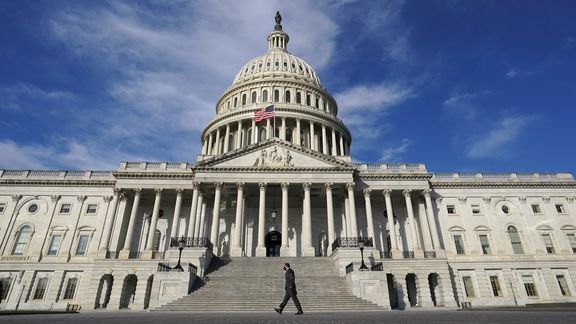
The US Capitol building

The bipartisan Mahsa Amini Human Rights and Security Accountability (MAHSA) Act has been submitted to the US Senate, seeking more sanctions on Iranian leadership.

Following a unanimous approval at US House of Representatives Foreign Affairs Committee in April, Senators Marco Rubio (R-FL) and Alex Padilla (D-CA) introduced the bipartisan legislation to the Senate on Thursday, potentially tightening the noose on top leaders of the regime -- the Supreme Leader and the President as well as their inner circles – over human rights abuses and support for terrorism.

“The Ayatollah’s systematic human rights violations against the Iranian people are barbaric," Rubio said, underlining that “as a State Sponsor of Terrorism, the Iranian regime has actively wreaked havoc against its own people and countless other nations.”

The MAHSA Act – which has 68 Republican and 60 Democrat cosponsors – and is supported by the National Union for Democracy in Iran (NUFDI), United Against Nuclear Iran (UANI) and the American Israel Public Affairs Committee (AIPAC), was first introduced by Representatives Jim Banks (R-IN) and Eric Swalwell (D-CA) during the 117th Congress in January, about four months into pro-democracy and anti-regime protests following the death of 22-year-old Iranian-Kurdish woman Mahsa Amini at the hands of Iran's hijab police.

US Sen. Marco Rubio (R-FL) speaking during a Senate Committee  (May 2020)
100%
US Sen. Marco Rubio (R-FL) speaking during a Senate Committee

Essentially similar and a companion to the one passed in the House committee, the MAHSA Act will potentially commit the administration to report to Congress in 90 days after the date of the enactment and periodically thereafter, making determinations about whether certain existing sanctions apply to specified persons and impose the applicable sanctions.

“The US must evaluate and re-amp economic pressure against Senior Iranian regime officials who are actively partaking in the crackdown of Iranian protesters and civilians,” Rubio added in a statement.

Senator Padilla said, “Iranian protesters have demonstrated tremendous courage in voicing their outrage toward the Iranian regime after the brutal murder of Mahsa Amini,” noting that “we must do our part to hold Iranian leaders accountable for their violent crackdown of these protests and the regime’s ongoing repression, censorship, and abuse against its people.”

Senator Alex Padilla (D-CA)  (March 2021)
100%
Senator Alex Padilla (D-CA)

The bipartisan bicameral move requires the executive branch to impose applicable sanctions on Ali Khamenei, his office and his appointees, as well as President Ebrahim Raisi and his cabinet officials, foundations and other entities affiliated with the Supreme Leader under section 105(c) of the Comprehensive Iran Sanctions, Accountability, and Divestment Act of 2010, section 7031 (c) of the Department of State, Foreign Operations, and Related Programs Appropriations Act, 2021, and Executive Orders 13876, 13553, 13224, and 13818.

“The Supreme Leader is an institution of the Islamic Republic of Iran...that holds ultimate authority over Iran’s judiciary and security apparatus, including the Ministry of Intelligence and Security, law enforcement forces under the Interior Ministry, the Islamic Revolutionary Guard Corps (IRGC), and the Basij, a nationwide volunteer paramilitary group, subordinate to the IRGC, all of which have engaged in human rights abuses in Iran,” read a paragraph of the MAHSA Act.

Some lobbyists and a few lawmakers have been seeking to dilute the act, describing it as “Islamophobic” or “not leading to any increased sanctions” because Khamenei and Raisi were already sanctioned by the US. NIAC, advocating non-confrontational policies toward the Islamic Republic, said in a statement that “the bill would make it more difficult for a President to lift sanctions on these officials as part of any diplomatic agreement... This bill does not include a sunset and would target the offices themselves, rather than individuals. As a result, it would remain in effect indefinitely and be applied to any future Supreme Leader or President of Iran until its repeal."

Amini’s death in September 2022 led to the boldest revolt against the clerical regime since its establishment in 1979 in Iran in what became known as the Woman, Life, Freedom movement. More than 500 people have been killed in the nationwide rallies, nearly 20,000 detained, and seven executed on trumped up charges.

Most Viewed

Iran International says it won’t be silenced after London arson attack
1

Iran International says it won’t be silenced after London arson attack

2
VOICES FROM IRAN

Hope and anger in Iran as fragile ceasefire persists

3

State media slam Araghchi's Hormuz tweet, say it let Trump claim victory

4
INSIGHT

How Tehran bends its own red lines to boost state rallies

5

Iran halts petrochemical exports to supply domestic market

Banner
Banner

Spotlight

  • Too early to tell who is winning Iran war, experts say
    PODCAST

    Too early to tell who is winning Iran war, experts say

  • How Tehran bends its own red lines to boost state rallies
    INSIGHT

    How Tehran bends its own red lines to boost state rallies

  • Iran blackout cripples freelancer, small business incomes
    VOICES FROM IRAN

    Iran blackout cripples freelancer, small business incomes

  • Ideology may be fading in Iran, but not in Kashmir's ‘Mini Iran'
    INSIGHT

    Ideology may be fading in Iran, but not in Kashmir's ‘Mini Iran'

  • US blockade enters murky phase as tankers spoof signals and buyers hesitate
    ANALYSIS

    US blockade enters murky phase as tankers spoof signals and buyers hesitate

  • Why the $100 billion Hormuz toll revenue is a myth
    ANALYSIS

    Why the $100 billion Hormuz toll revenue is a myth

•
•
•

More Stories

Lawmaker Says Iranians Still Under Pressure Of 2022 Protests

Jul 28, 2023, 08:17 GMT+1
•
Iran International Newsroom

A member of the Iranian parliament's national security committee acknowledges that the consequences of last year's protests continue to impact the nation's psychology.

Jalil Rahimi Jahanabadi further warned Iranian officials that exerting pressure on the people under these circumstances would be a mistake. He added that the people are already suffering from immense economic pressures and might not tolerate any further tension.

Recalling his own experience, Jahanabadi shared that during a shopping trip in Tehran, he witnessed a strikingly large number of morality police vans without any official emblem or logo, surrounded by a sizable number of policemen and women. He expressed concern over the overwhelming security presence, causing difficulties for people and vehicles to move around freely.

Jahanabadi stated, "I do not know who has planned and is steering this move, but I can tell you with absolute assurance that no other government in the world will do anything similar, as this will certainly distance the people from the government."

According to the lawmaker, the Police Intelligence Chief mentioned that there are no vehicles marked as morality police in the streets, and the police only maintain an operational presence. However, Jahanabadi expressed his confusion about what "operational presence" actually entails and emphasized that whatever it is, it is a foolish act not in the state's best interest.

Lawmaker Jalil Rahimi Jahanabadi (undated)
100%
Lawmaker Jalil Rahimi Jahanabadi

He further asserted, "You cannot push people to embrace Islam by using force." Jahanabadi highlighted that the government is aware of how people feel about the morality police, but no one in the government is willing to take responsibility for its presence in the streets.

Last September, the morality police arrested Mahsa Amini, a young Kurdish woman visiting the capital, Hours later she was transferred to hospital with fatal head wounds and died three days later. Her death in custody triggered several months of nationwide protests, which were marked by the brutality of security forces.

Last September Morality police arrested Mahdavi Amini, a young Kurdish woman visiting the capital and later reportedly murdered her at the Morality Police’s detention Center for not wearing the appropriate hijab. Mahsa’s death in custody triggered several months of nationwide protests in Iran that were marked by the brutality of security forces. 

A report released by Amnesty International this week raised alarm over the Iranian authorities' intensified crackdown on women and girls defying compulsory hijab.

“The organization has revealed the severe oppression faced by those who choose not to wear headscarves in public, with patrols enforcing the veiling and threatening legal action against those who defy it,” the report said, adding that “The situation has escalated further, with videos circulating on social media showing women being violently assaulted in Tehran and Rasht, while security forces have used teargas against people trying to help women escape arrests.”

Following the reports about the resurgence of the morality police to the streets, Agnès Callamard, Amnesty International’s Secretary General, commented, “Morality policing in Iran is back. The authorities are not fooling anyone by removing the insignia of the ‘morality’ police…, while emboldening the enforcers of the Islamic Republic’s oppression.”

Jahanabadi, who has been a vocal critic among lawmakers, urged the parliament to defend people's privacy and security. He expressed concern that the behavior of the morality police will push people to leave Iran and distance them from religion. Additionally, he opined that the government's crackdown on women who defy compulsory hijab is creating unnecessary tensions, akin to a government trying to overthrow itself.

Meanwhile responding to demands by hardline officials and clerics for harsher punishment for women who defy hijab, reformist cleric Mohammad Taghi Fazel Maybodi said, “A society that is mainly preoccupied with enforcing hijab, rather than tackling social and economic problems is no longer a healthy religious society as Iran’s leaders and hardliners claim.” 

Reformist cleric Mohammad Taghi Fazel Maybodi (undated)
100%
Reformist cleric Mohammad Taghi Fazel Maybodi

Maybodi added: “Those who try to impose the compulsory hijab on women are in fact advocating hypocrisy.” He further warned that the officials should take a closer look at the society to find out what is going on under its skin.

In another development, Yahya Ebrahimi, another Iranian lawmaker also warned the official about the tensions in the Iranian society and said: “The people have lost everything under economic pressures, and cases of crimes, drug abuse and divorce have been on the rise as a result while the situation is getting worse on a daily basis.” 

Under such a circumstance, the Iranian government’s sole concern appears to be imposing the compulsory hijab rather than solving the economic and social problems. In its Wednesday’s statement, Amnesty International has called for the abolition of compulsory hijab, the quashing of all convictions and sentences related to defying veiling laws, and the unconditional release of all detainees. Furthermore, the organization urges the international community to take strong action, including legal pathways, to hold Iranian officials accountable for the human rights violations perpetrated against women and girls. 


Sweden On Edge Over Repercussions Of More Quran Burnings

Jul 27, 2023, 23:21 GMT+1
•
Iran International Newsroom

Sweden has expressed concerns about the consequences of more events to burn the Quran amid growing anger by the Muslim population.

Swedish Prime Minister Ulf Kristersson said on Thursday that he is "extremely worried" that more demonstrations go ahead in which the Quran is desecrated, further outraging Muslims who have been fuming over a series of attacks on Islam's holy book in Sweden and Denmark.

The incident involved Salwan Momika, an Iraqi immigrant, who burned pages from the Quran in front of the central mosque in Stockholm on the first day of Eid al-Adha late in June, after obtaining a permit from a Swedish court. Some 200 onlookers witnessed him tearing up a copy of the Quran and wiping his shoes with the pages. He then put bacon on the book and set it on fire whilst another protestor addressed the crowds with a megaphone. Momika repeated the desecration in front of the Iraqi embassy in Stockholm on July 20. The following day, in neighboring Denmark, members of the far-right nationalist group "Danske Patrioter (Danish Patriots)" burned a copy of the Quran in front of Iraq's Embassy in Copenhagen.

Kristersson told Swedish news agency TT that further requests had been filed with police for permission to hold protests where desecration of the Quran was again planned.

Sweden Prime Minister Ulf Kristersson attends a meeting of the North Atlantic Council during a NATO leaders summit in Vilnius, Lithuania July 12, 2023.
100%
Sweden Prime Minister Ulf Kristersson attends a meeting of the North Atlantic Council during a NATO leaders summit in Vilnius, Lithuania July 12, 2023.

"If they are granted, we are going to face some days where there is a clear risk of something serious happening. I am extremely worried about what it could lead to," he said, adding that the decision whether to grant permission for the demonstrations was up to the police.

Sweden's embassy in Baghdad was stormed and set ablaze on July 20 by protesters and Stockholm’s envoys in several countries, including Iran, have been summoned. Iran has announced that it will not accept a Swedish ambassador and has no plans to send a new ambassador to Sweden.

Sweden's security service, SAPO, has kept its assessment of the threat level at 3 on a scale of 5, signifying an "elevated threat" during the crisis. Charlotte von Essen, the head of the Swedish Security Service, told reporters on Thursday, "Sweden has gone from being seen as a tolerant country to being seen as an anti-Islamic land."

People demonstrate against the desecration of the Koran in Denmark, in Sanaa, Yemen July 24, 2023.
100%
People demonstrate against the desecration of the Koran in Denmark, in Sanaa, Yemen July 24, 2023.

On Tuesday, the UN General Assembly passed a Morocco-drafted resolution, deploring ''all acts of violence against persons on the basis of their religion or belief, as well as any such acts directed against their religious symbols, holy books, homes, businesses, properties, schools, cultural centers or places of worship, as well as all attacks on and in religious places, sites and shrines in violation of international law.''

On July 12, the Geneva-based UN Human Rights Council also passed a motion to condemn the burning of Quran despite nay votes by Western countries, which said it conflicts with their positions on human rights and freedom of expression.

Denmark and Sweden have said they deplore the burning of the Quran but cannot prevent it under rules protecting free speech.

The Swedish government is caught between rock and hard place to balance defending far-reaching freedom of speech laws, while at the same time avoiding potential insult to Muslims.

Also on Thursday, Swedish Foreign Minister Tobias Billstrom said, "These are acts committed by individuals, but they do it within the framework of freedom of speech laws. In some countries there is a perception that the Swedish state is behind or condone this.”

Members of the anti-immigration Sweden Democrats, the biggest party on the right, have repeatedly warned about the "Islamization" of Swedish society and called for immigrants to adopt "Swedish" values.

Iran's Supreme Leader called for the severest punishment for the perpetrators of the Stockholm Quran burning. Ali Mohammadi-Sirat, the Supreme Leader’s man in IRGC’s Quds (Qods) Force -- a division primarily responsible for extraterritorial military and clandestine operations -- repeated Khamenei’s demands and stressed that these men will not be safe wherever they are. 

Earlier this month, Iran’s Revolutionary Guard Commander Hossein Salami also threatened attacks against those responsible for the incident, saying that those who burn or desecrate the Quran will not enjoy security.

Rights Group Warns Of Iran’s Execution Threats Spreading To Europe

Jul 27, 2023, 19:53 GMT+1
•
Iran International Newsroom

A human rights organization has voiced alarm over Iran’s threats to execute European citizens over Quran burning.

Mahmood Amiry-Moghaddam, the director of the Norway-based Iran Human Rights (IHRNGO), said Wednesday that inaction by the international community has emboldened the Islamic Republic authorities to extend their execution spree beyond Iran’s borders.

His remarks came as a reaction to repeated insistence by Supreme Leader Ali Khamenei and several other regime officials for the execution of the Sweden-based Iraqi immigrant Salwan Momika who burned pages from the Quran in front of the central mosque in Stockholm on the first day of Eid al-Adha in June.

After obtaining a permit from a Swedish court and in front of approximately 200 onlookers Momika, tore up a copy of the Quran, wiped his shoes with the pages, put bacon on the book and set it on fire whilst another protester addressed the crowds with a megaphone. Momika repeated the desecration in front of the Iraqi embassy in Stockholm on July 20. The following day, in neighboring Denmark, members of the far-right nationalist group "Danske Patrioter (Danish Patriots)" burned a copy of the Quran in front of Iraq's Embassy in Copenhagen.

Amiry-Moghaddam referred to the hanging of two Iranians in May for insulting religious entities, saying that "Unfortunately, the lack of appropriate response from the international community regarding the execution of one person on the charge of adultery and two people on the charge of sacrilege has emboldened the leaders of the Islamic Republic to issue similar sentences and even threaten to execute European citizens."

Mahmood Amiry-Moghaddam, the director of the Norway-based Iran Human Rights  (undated)
100%
Mahmood Amiry-Moghaddam, the director of the Norway-based Iran Human Rights

Iran's Supreme Leader called for the severest punishment for the perpetrators of the Stockholm Quran burning. Ali Mohammadi-Sirat, the Supreme Leader’s man in IRGC’s Quds (Qods) Force -- a division primarily responsible for extraterritorial military and clandestine operations -- repeated Khamenei’s demands and stressed that these men will not be safe wherever they are. Earlier this month, Iran’s Revolutionary Guard Commander Hossein Salami also threatened attacks against those responsible for the incident, saying that those who burn or desecrate the Quran will not enjoy security.

The regime’s judiciary claimed Yousef Mehrad and Sadrollah Fazeli-Zare' were running dozens of online anti-religion platforms dedicated to the hatred of Islam, the promotion of atheism and insults to sanctities, however, in earlier reports the charges were mainly related to one Telegram channel. Mizan, the judiciary’s news agency, also claimed they had burnt copies of the Quran, and they had confessed to their blasphemy. Their families and rights activists said the confessions were extracted under duress, which has proven to be the case in numerous confessions by the regime.

Amiry-Moghaddam added, “The international community should not tolerate the execution of human beings because of consensual sex or expression of opinion in the 21st century by the governments that have a seat in the United Nations.” In April, a man was executed in the city of Karaj after being charged for having an affair with a married woman. In the Islamic Republic’s law, adulterers can be sentenced to lapidation -- or stoning to death -- if one or both people are married. Nowadays, the regime just hangs them.

According to a report released earlier in July, in the last 10 years, the regime has executed approximately 5,000 people, including dozens of children. The report by Dadgostar, the news agency of US-based Human Rights Activists in Iran (HRANA), highlighted the concerning trend of an average of 10 citizens being executed every week since May of the current year. Since the beginning of 2023, the regime has executed at least 307 people with 142 hangings in May alone, hitting a dark record even for the Islamic Republic.

Amiry-Moghaddam told Iran International in June, “The purpose of the Islamic Republic’s intensification of arbitrary executions is to spread fear in society to intimidate people against holding further protests, thus prolonging its rule,” adding that “if the international community doesn’t show a stronger reaction to the current wave of executions, hundreds more will fall victim to their killing machine in the coming months.” 

The Islamic Republic has intensified its killing trend in recent months, with at least seven protesters hanged since nationwide protests broke out in September 2022 following the death in custody of 22-year-old Mahsa Amini. The unrest posed the biggest internal challenge to the Islamic Republic since its establishment in 1979.

New Bill Proposes Heavy Hijab Fines For Iran’s Celebrities

Jul 27, 2023, 16:27 GMT+1
•
Maryam Sinaiee

A parliament committee in Iran has passed a hijab bill proposing to confiscate up to 10 percent of celebrities' assets and incomes if they violate hijab rules.

Hardliners on social media support the severe punishments, aiming to deter celebrities and influencers from defying hijab rules. 

Hossein-Ali Haji-Deligani, a former high-ranking Revolutionary Guards (IRGC) officer and hardline lawmaker in the parliament's judicial committee, described the bill as considering any action that weakens the family, including nudity, immorality, unveiling, and inappropriate clothing, as a crime. The bill defines "nudity" as appearing in public in clothing considered nude by social norms and will be punishable by a cash fine of 1 to 1.5 billion rials and a prison term of six months to ten years.

Haji-Deligani emphasized that the bill, named "Protection of Family Through Promotion of Hijab and Chastity Culture," includes measures against individuals “connected with foreign governments” and “media outside Iran” promoting nudity, immorality, unveiling, and inappropriate dressing with heavy sentences. 

This was a clear reference to regime opponent and critical media, such as Iran International, the BBC Persian Service and others.

Lawmaker Hossein-Ali Haji-Deligani (undated)
100%
Lawmaker Hossein-Ali Haji-Deligani

Since March, hardliners have attempted to end women's increasing defiance of compulsory hijab and reclaim lost ground, but their efforts have been unsuccessful. The draft bill, jointly prepared by the government and judiciary, faced strong criticism from hardliners for its perceived leniency towards unveiling.

Apart from unveiling, the bill also targets individuals who confront citizens in public, use violence, and threaten unveiled women. Radical clerics have incited citizens to take the law into their own hands as a moral duty.

If approved, adherence to hijab laws would become a criterion for employment in public or private organizations in the future. Clothing that reveals the neck, arms above the wrist, and legs above the ankles will be considered "inappropriate clothing" and will be punishable by a cash fine of up to 500 million rials ($1,000) for the first infringement.

Not covering the head will also be punishable by a cash fine of 240 to 500 million rials for the first instance and up to 1.5 billion rials if repeated more than four times.

The hijab bill also bans taking photos or videos of police while enforcing hijab, but details of proposed punishments have not been made public yet.

Hijab patrols confronting a woman  (file photo)
100%
Hijab patrols confronting a woman

Female employees and visitors are still sometimes inspected by female inspectors before entering government buildings to ensure compliance with regulations regarding their tunic, pants, and headscarves or Maghna'e (pullover headscarf with stitched front).

In the first two decades of the Islamic Revolution, inspectors also ensured women's hair did not show from under their headscarf or Maghna'e, and they did not wear makeup, nail polish, or "inappropriate accessories." Clothing generally had to be black, brown, navy, gray, or beige and very loose-fitting.

Over the years, the rules were relatively relaxed depending on which political faction was in power, and some makeup and a little color in clothing became more acceptable.

In July 2022, after weeks of harsh measures on the streets, President Ebrahim Raisi ordered all government entities to strictly implement a “chastity and hijab” law approved by the Supreme Cultural Revolution Council under hardliner Mahmoud Ahmadinejad in 2005.

Shortly after, the death of 22-year-old Mahsa Amini in the custody of hijab enforcers fueled protests that spread throughout the country.

US State Department To Share More On Malley's Case With Congress

Jul 27, 2023, 13:48 GMT+1

The US Department of State confirmed it is actively engaging with Congress regarding the case of Robert Malley, the former US representative for Iran affairs.

Vendat Patel, the spokesperson for the Department of State, addressed the matter during a weekly press conference on Wednesday, stating that new information would be provided to Congress members in the near future.

"We anticipate that we'll be providing them additional briefings shortly, but I don't have any other specific updates to offer on that," Patel said during the press conference.

The case of Robert Malley entered public interest for the first time when Iran International reports surfaced on June 29, suggesting that the special envoy had been absent for a significant period, with his security clearance suspended.

As the top diplomat involved in talks with Tehran, Malley's failure to appear before Congress had raised concerns. The Biden administration initially informed Congress that Malley was on extended personal leave, but a month later, the investigation into the alleged mishandling of classified information began.

Speculations have arisen that Malley may have intentionally passed classified materials to Iran or another foreign nation. According to a report by Washington Free Beacon on Wednesday, Iranian press reports have also suggested that Malley engaged in unsanctioned talks with Iranian diplomats at the United Nations, raising concerns about potential unauthorized negotiations.

Washington Free Beacon also suggested that Malley may have leaked classified information to a network of pro-Tehran advocates known as the "echo chamber".

The ongoing secrecy surrounding Malley's situation has been a matter of concern for some national security experts, who have emphasized the need for transparency and accountability in handling such cases.