• العربية
  • فارسی
Brand
  • Iran Insight
  • Politics
  • Economy
  • Analysis
  • Special Report
  • Opinion
  • Podcast
  • Iran Insight
  • Politics
  • Economy
  • Analysis
  • Special Report
  • Opinion
  • Podcast
  • Theme
  • Language
    • العربية
    • فارسی
  • Iran Insight
  • Politics
  • Economy
  • Analysis
  • Special Report
  • Opinion
  • Podcast
All rights reserved for Volant Media UK Limited
volant media logo

US Bars 14 Iraqi Banks From Dollar Trade With Iran
Iran International Newsroom
Jul 19, 2023, 22:33 GMT+1Updated: 17:36 GMT+1
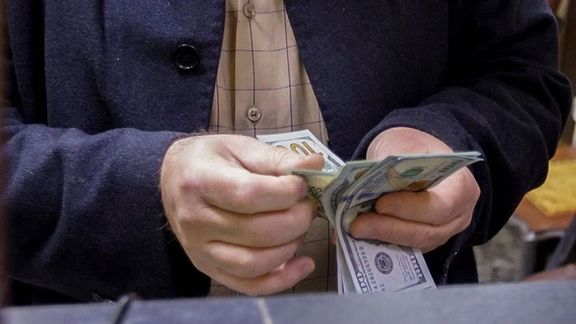
A man counts US dollars at a currency exchange shop in Baghdad, Iraq, January 23, 2023.

Amid reports that the Biden administration has allowed Iraq to pay Iran for electricity via non-Iraqi banks, the US has imposed a ban on 14 Iraqi banks from conducting dollar transactions.

According to a report by the Wall Street Journal on Wednesday, the ban, imposed by the Treasury Department and the Federal Reserve Bank of New York, is part of an effort to crackdown on the flow of US currency to Iran and other sanctioned Middle East countries.

The targeted banks are mostly small institutions, even by Iraqi standards. Some of these banks have ties to influential Iraqis, are known for financial connections with Iran, or have heavy involvement in dollar transactions. Among those on the US list are Al Mustashar Islamic Bank, Erbil Bank, World Islamic Bank, and Zain Iraq Islamic Bank.

The newspaper added that US officials have taken action against these Iraqi banks after uncovering information that they engaged in money laundering and fraudulent transactions, some of which may have involved sanctioned individuals, raising concerns about benefiting Iran.

"We have strong reason to suspect that at least some of these laundered funds could end up going to benefit either designated individuals or individuals who could be designated," a senior US official was quoted as saying by the Journal."And of course the primary sanctions risk in Iraq relates to Iran."

According to the officials, the main goal of the dollar restrictions was to choke off money-laundering in Iraq.

 A man counts Iraqi dinars on a money counting machine at a currency exchange shop in Baghdad, Iraq, January 23, 2023.
100%
A man counts Iraqi dinars on a money counting machine at a currency exchange shop in Baghdad, Iraq, January 23, 2023.

Iran International revealed in May that an aide to former IRGC’s Quds force commander Qassem Soleimani is a key figure in money laundering for Tehran. Earlier in the year, Iran International also unraveled some details about the inner workings of a Quds force unit tasked with smuggling money from Iraq to Iran, proving that the Islamic Republic’s embassy in Iraq is also involved in the money laundering operations aimed at funneling revenues from oil and gas exports back to Iran.

This financial network is bypassing the US sanctions at the cost of the Iraqi economy. An informed source in Baghdad told Iran International late in December that Washington has received reports that Iraq is still conducting trade with Iran using US dollars despite sanctions.

The new move by Washington, which probably provokes new tensions between Baghdad and Washington and could lead to more economic turmoil for ordinary Iraqis, was announced only hours after Reuters reported that Secretary of State Antony Blinken has signed a 120-day national security waiver allowing Iraq -- heavily dependent on Iranian electricity -- to deposit payments into non-Iraqi banks in third countries instead of into restricted accounts in Iraq.

Moreover, the Treasury recently approved a payment of 2.5 billion euros, equivalent to about $2.8 billion, toward unpaid debts by the Iraqi government for Iranian electricity and gas imports, which had been frozen by sanctions.

Despite rumors of the Biden administration's intentions to lower tensions with Iran, these new restrictions signal a hardening of sanctions enforcement against Iran. Earlier this week, the Pentagon also dispatched a warship and jet fighters to the region, saying it was in response to Iranian threats against commercial shipping in the Persian Gulf.

The United States has insisted that oil-rich Iraq, the OPEC group's second-largest producer, moves towards self-sufficiency, and has put pressure on Baghdad to stem the flow of dollars into neighboring Iran.

The dinar went into a tailspin against the dollar after the New York Federal Reserve imposed tighter controls on international dollar transactions by commercial Iraqi banks in November to halt the illegal siphoning of dollars to Iran.

Under the curbs that took effect in January, Iraqi banks must use an online platform to reveal their transaction details. But most private banks have not registered on the platform and resorted to informal black markets in Baghdad to buy dollars.


Most Viewed

Iran negotiators ordered to return after internal rift over Islamabad talks
1
EXCLUSIVE

Iran negotiators ordered to return after internal rift over Islamabad talks

2
ANALYSIS

US blockade enters murky phase as tankers spoof signals and buyers hesitate

3

US tightens financial squeeze on Iran, warns banks over oil money flows

4
INSIGHT

Ideology may be fading in Iran, but not in Kashmir's ‘Mini Iran'

5
INSIGHT

Hardliners push Hormuz ‘red line’ as US blockade tests Iran’s leverage

Banner
Banner

Spotlight

  • Hardliners push Hormuz ‘red line’ as US blockade tests Iran’s leverage
    INSIGHT

    Hardliners push Hormuz ‘red line’ as US blockade tests Iran’s leverage

  • Ideology may be fading in Iran, but not in Kashmir's ‘Mini Iran'
    INSIGHT

    Ideology may be fading in Iran, but not in Kashmir's ‘Mini Iran'

  • War damage amounts to $3,000 per Iranian, with blockade set to add to losses
    INSIGHT

    War damage amounts to $3,000 per Iranian, with blockade set to add to losses

  • Why the $100 billion Hormuz toll revenue is a myth
    ANALYSIS

    Why the $100 billion Hormuz toll revenue is a myth

  • US blockade targets Iran oil boom amid regional disruption
    ANALYSIS

    US blockade targets Iran oil boom amid regional disruption

  • Iran's digital economy battered by prolonged blackout
    INSIGHT

    Iran's digital economy battered by prolonged blackout

•
•
•

More Stories

Iranian Politician Says Tehran, Washington Have A 'Hotline'

Jul 19, 2023, 17:54 GMT+1
•
Iran International Newsroom

While the chances of reviving Iran’s 2015 nuclear appear dim, an Iranian politician claims that Washington and Tehran have established a hotline for communication. 

Former chief of the Iranian parliament's national security and foreign policy committee Heshmatollah Falahatpisheh said Wednesday that “What exists between Iran and the United States now is similar to the 'red telephone line' that existed between the United States and the Soviet Union during the Cold War.” 

He added, “I proposed a similar suggestion in the parliament to establish a direct hotline of communication between Iran and the United States to manage the tensions.” 

Established in 1963, the Moscow–Washington hotline links the Pentagon with the Kremlin. Although the hotline was never a telephone line, and no red phones were used, in popular culture it is known as the "red telephone.” 

His remarks come after recent reports that the two sides were striving to reach an unofficial unwritten agreement to prevent escalation. However, many US lawmakers from both sides of the aisle have called on the Biden administration to come clean about its dealings with the Iranian regime, particularly after the US special envoy Robert Malley was dismissed last month, with Congress in the dark. 

Former chief of the Iranian parliament's national security and foreign policy committee Heshmatollah Falahatpisheh (undated)
100%
Former chief of the Iranian parliament's national security and foreign policy committee Heshmatollah Falahatpisheh

Falahatpisheh said that in a situation when reviving the JCPOA (Joint Comprehensive Plan of Action) seems practically unattainable, this kind of communication is the best possible outcome Iran and the United States could achieved. 

“What is referred to as the 'unwritten agreement' is essentially the formation of this hotline for communication. Iran and the United States have not reached a formal agreement, but they are managing the existing tensions in their relationship,” he said. 

He underlined that “The establishment of this hot line does not imply anything specific except that the two countries have direct and indirect (mostly secretive) interactions with each other at any given time, discussing tensions and preventing crises from escalating.” He made it clear that “there is no written agreement taking shape.” 

The Biden administration says that it continues contacts with Tehran, but no nuclear or prisoner release agreement is imminent.

According to Falahatpisheh, Washington’s lax enforcement of sanctions on Iran's oil exports and Tehran’s tendency to avoid tensions in the Persian Gulf are the outcomes of such a mechanism to manage differences.

But some events could be seen as contradicting this scenario. The US military announced in early July that it intervened to prevent Iranian naval vessels from seizing two commercial ships in the Persian Gulf.

Pentagon announced on Monday that it was sending more warplanes and an additional warship to the region, mainly to provide maritime security.

Meanwhile, US lawmakers are intensifying efforts to restrict the Biden administration in its interactions with the Iranian regime. 

On Monday, Michael McCaul (R-TX), the chairman of the US House foreign affairs committee, threatened a subpoena if the administration does not brief Congress on the circumstances of Rob Malley’s dismissal, noting that the State Department has been less than candid with his security clearance investigation. 

However, the administration still sounds reluctant to divulge any information as White House Press Secretary Karine Jean-Pierre dodged questions about the investigation on Tuesday. 

Moreover, on the backdrop of a flurry of Congressional initiatives and letters to the administration, eight Republican Senators wrote to Secretary of State Antony Blinken and the Secretary of the Treasury Janet Yellen, demanding more serious enforcement of US sanctions on Iran. 

The senators raised the issue of China’s increasing oil imports from Iran, while US sanctions prohibit third parties from buying Iranian oil and oil products. “Despite sanctions, the People's Republic of China (PRC) has purchased roughly $47 billion in Iranian oil since President Biden took office,” the letter says. 

Despite the push by lawmakers, Washington has made a change in the way Iraq pays Iran for electricity. According to an exclusive report by Reuters, the Biden administration on Tuesday moved to let Iraq pay Iran for electricity via non-Iraqi banks. 


Nearly Half Of Iran's Population Exposed to Hazardous Dust Storms

Jul 19, 2023, 12:33 GMT+1

Iran's health ministry revealed that approximately half of Iran's population is currently facing hazardous dust storms, posing serious risks to people's health.

Abbas Shahsavani, the head of the air health and climate change group in the Ministry of Health, disclosed the alarming information three days after the meteorological organization had already warned about the dangers of dust storms in five provinces.

Shahsavani further elaborated that, in addition to the eastern, southeastern, western, and southwestern provinces, the central regions, including Fars, Qom, and Arak have also been affected by the harmful storms.

"Dust storms significantly impact the health of our citizens," stated Shahsavani, highlighting the increasing hospitalizations and instances of heart and respiratory diseases caused by the adverse weather conditions. Moreover, human vision is also negatively affected by these storms.

One particular city, Zabol, located in Sistan-Baluchestan province, was identified as the most polluted city last year due to dust storms. The annual average concentration of suspended particles in Zabol exceeded the standards set by the World Health Organization by 16-fold, as reported by Shahsavani.

The causes of the dust storms were attributed to drought and climate change in Sistan- Baluchestan, leading to intensified winds for approximately 120 days each year.

Desertification also plays a significant role, with approximately one million hectares being added to Iran's deserts each year. This process is driven by the drying of wetlands, transforming them into "fine dust centers," according to Vahid Jafarian, the Director General of Desert Affairs of the Natural Resources Organization.

Iranian Markets Eagerly Await Positive News On Deal With US

Jul 19, 2023, 11:41 GMT+1

Media in Iran speculated on Wednesday that the visit of Omani foreign minister Sayyid Badr Albusaidi a day earlier could signal a deal with the United States.

Many news websites in Tehran said that Albusaidi visited Iran for a crucial diplomatic mission, as part of Oman’s traditional mediating role with the United States.

In recent months, US officials have travelled to Oman and held indirect talks with Iranian counterparts, presumably over the fate of American dual nationals held hostage in Tehran. Reports have suggested that the US is willing to allow $7 billion of Iranian funds frozen in South Korea to be released in exchange for the freedom of these prisoners.

Tejarat News, a business website in Tehran said that the currency market is awaiting positive news from the visit of the Omani top diplomat to sell off US dollars. Iran’s rial is near an all-time low against the US currency due to a very high inflation rate said to be at least 70 percent.

On Wednesday, the rial was trading slightly higher at around 486,000 to the US dollar.

Iran’s economy has been starved of most of its oil export revenues since 2018 when the United States pulled of the 2015 JCPOA nuclear deal and imposed sanctions.

The Biden administration, which disagreed with its predecessor over the decision, has unsuccessfully tried to revive the accord as Iran has violated the deal and dangerously increased uranium enrichment.

Despite the secret diplomatic contacts, the Biden administration insists there are no imminent deals with Tehran.

US Agrees To Change Iraq's Payment Method To Iran For Energy

Jul 19, 2023, 08:02 GMT+1
•
Iran International Newsroom

Washington has made a change in the way Iraq pays Iran for electricity, seemingly to reduce Iranian pressure on Iraq, but it could potentially also weaken US sanctions.

According to an exclusive report by Reuters, the Biden administration on Tuesday moved to let Iraq pay Iran for electricity via non-Iraqi banks, a US official said, a step Washington hopes may keep Tehran from forcing unpopular power cuts during the sweltering Iraqi summer.

Secretary of State Antony Blinken signed a 120-day national security waiver allowing Iraq - heavily dependent on Iranian electricity - to deposit such payments into non-Iraqi banks in third countries instead of into restricted accounts in Iraq, said the official who spoke on condition of anonymity.

Reuters, apparently quoting the official, said that funds put into the non-Iraqi banks, like those deposited into Iraqi banks, will also be restricted, still requiring US permission for Iran to get access to them and only for spending on humanitarian goods.

Tehran has in the past pushed Baghdad to secure US permission to release such funds by cutting Iranian natural gas exports to Iraq, limiting Iraq's ability to generate power, and forcing deeply unpopular electricity cuts.

Iraqi Prime Minister Mohammed Shia al-Sudani visiting Iran meets Supreme Leader Ali Khamenei in November 2022
100%
Iraqi Prime Minister Mohammed Shia al-Sudani visiting Iran meets Supreme Leader Ali Khamenei in November 2022

Reuters said the change came at the request of the Iraqi government, apparently in the hopes that this might transfer some of the pressure that Iran has exerted on Baghdad to other countries.

But it is not clear if the change is not the result of an Iranian plan to gradually weaken the impact of US banking sanctions on its dealings with Iraq. Iran’s next move could be pressure on Iraq to ask the United States to lift all restrictions on the funds, enabling Tehran to withdraw cash dollars. The current Iraqi government has closer ties with Tehran than its predecessor.

"We have to help the Iraqis with this perennial pressure from the Iranians to access the money," the US official told Reuters.

"The Iraqis have requested, and now we have agreed, to expand the waiver," said the US official, adding that this might help ensure better compliance with the US requirement that any disbursements be for humanitarian purposes.

"It also helps the Iraqis, at least somewhat, to have an argument to make (to Iran) that they are not in control of the money that they have paid (into non-Iraqi accounts)," he added.

If this was a change resulting purely from an Iraqi-US agreement, it is not clear whether Iran might ease up on Iraq as a result. Tehran could decide it has greater leverage over Iraq than over other nations and continue to exert pressure.

Last week it was reported that Iraq was willing to barter oil with Iran instead of cash payments, which could also violate US sanctions.

Iraq exports at least four times more oil than Iran, with more than $100 billion annual revenues, but with its inefficient government and corruption it has not been able to tap its own natural gas to produce electricity.

Iran is under extensive US economic sanctions reimposed in 2018 after then-US President Donald Trump abandoned the nuclear deal that Tehran struck with major powers Britain, China, France, Germany, Russia and the United States in 2015.

Trump believed his policy of "maximum pressure" on Iran would force it to accept more stringent restrictions to its nuclear program, which the United States, European powers and Israel fear may be designed to obtain a nuclear weapon.

As a result of Trump's withdrawal from the deal and US President Joe Biden's failure to revive it, Iran could make the fissile material for one bomb in 12 days or so, according to U.S. estimates, down from a year when the accord was in force.

With exclusive reporting by Reuters

European Official: EU States Likely To Keep Iran Missile Sanctions

Jul 18, 2023, 20:08 GMT+1

A European official on Tuesday said he expected no difficulty persuading EU nations to maintain ballistic missile sanctions on Iran due to expire in October.

The official also said he sees a window of opportunity by the end of 2023 to try to negotiate a de-escalatory nuclear deal with Iran.

"We may have a small window of opportunity to try to resume discussions with them on (a) return to the JCPOA or at least to an agreement of de-escalation … before the end of the year,” the official told reporters in Washington, speaking on condition of anonymity.

In June, sources told Reuters there were three reasons to keep the sanctions in place: Russia's use of Iranian drones against Ukraine; the possibility Iran might transfer ballistic missiles to Russia; and depriving Iran of the nuclear deal's benefits given Tehran has violated the accord, albeit only after the United States did so first.

The United States has denied any movement toward a full or a partial deal with Iran.

Keeping the sanctions would reflect Western efforts to prevent Iran from developing nuclear weapons and the means to deliver them despite the collapse of the 2015 deal, which then-US President Donald Trump abandoned in 2018.

The crux of that pact, which Iran made with Britain, China, France, Germany, Russia and the US, limited Tehran's nuclear program to make it harder for it to get fissile material for a bomb in return for relief from economic sanctions.

As a result of Trump's withdrawal from the deal and US President Joe Biden's failure to revive it, Iran could make the fissile material for one bomb in 12 days or so, according to US estimates, down from a year when the accord was in force.

Reporting by Reuters