• العربية
  • فارسی
Brand
  • Iran Insight
  • Politics
  • Economy
  • Analysis
  • Special Report
  • Opinion
  • Podcast
  • Iran Insight
  • Politics
  • Economy
  • Analysis
  • Special Report
  • Opinion
  • Podcast
  • Theme
  • Language
    • العربية
    • فارسی
  • Iran Insight
  • Politics
  • Economy
  • Analysis
  • Special Report
  • Opinion
  • Podcast
All rights reserved for Volant Media UK Limited
volant media logo

Zarif's Latest Statements Ignite Controversy In Iran
Iran International Newsroom
Jun 8, 2023, 13:48 GMT+1Updated: 17:42 GMT+1
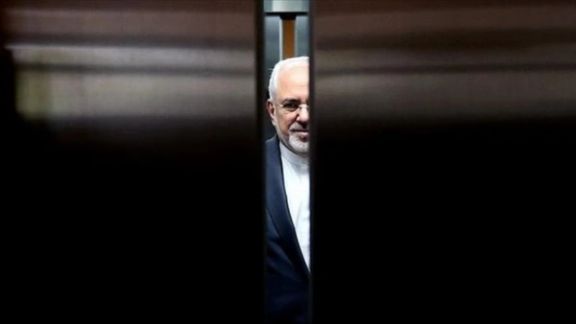
Former Foreign Minister Mohammad Javad Zarif behind the doors of an elevator

Iranian former foreign minister Mohammad Javad Zarif’s statements this week on a range of issues have led to discussions in Tehran about his intentions and plans.

Reactions to Former Foreign Minister Mohammad Javad Zarif's five-hour appearance in a chatroom on Club House June 6, and the statements he made about the 2015 JCPOA nuclear deal, relations with the United States, as well as Russia’s and China's role in Iran's foreign policy and a few domestic political issues have given way to varying interpretations of why he chose to speak and the timing of his move. 

Among many of his points, Zarif insisted that former President Donald Trump had invited him to the White House but superiors in Tehran had not allowed him to go.

On social media, the move has been interpreted as a kickstart in Iranian reformist's campaign for the March 2024 parliamentary and 2025 presidential elections. However, most social media users who commented on Zarif's move have said that he is a front for former Presidents Mohammad Khatami or Hassan Rouhani.

Iranian political analyst Mehdi Mahdavi Azad told Iran International TV that "It is unlikely Zarif would run in any elections, and it is even more unlikely that he would be allowed to run for a key elected position." He added that unlike his previous interviews, Zarif repeatedly blamed Supreme Leader Ali Khamenei for Iran's foreign policy failures particularly in the nuclear issue.

Political analyst Mehdi Mahdavi Azad (undated)
100%
Political analyst Mehdi Mahdavi Azad

A moderate-conservative newspaper in Tehran issued a call Thursday as a sign of support for the former foreign minister to have Zarif publicly debate hardliners on the nuclear issue and foreign policy. 

Political analyst Kambiz Ghafouri wrote in a tweet that Zarif is an obsolete political figure both inside Iran and on the international scene. Ghafouri opined that Zarif's renewed appearance in politics will inevitably be in a comical form. 

Meanwhile fact-cheking organization Fact Nameh highlighted ten false statements Zarif made during his Club House appearance. These included his assessment of Saudi Arabia's military budget being seven times higher than what Iran spends on its military. Another one of his false statements was that there are no non-elected permanent positions in the Iranian government. 

Former lawmaker Ezzatollah Yousefian-Molla told reporters in Tehran that Zarif is his own man and that he is not acting as a front for anyone else. He said: "Zarif believes himself to be as big as, if not bigger than all other politicians in Tehran."

Former lawmaker Ezzatollah Yousefian-Molla (undated)
100%
Former lawmaker Ezzatollah Yousefian-Molla

Yousefian-Molla said with a high degree of certainty that Zarif wishes to take run in the next presidential election and wishes to send a message to potential voters that he has done nothing wrong during his tenure as foreign minister. 

Nonetheless, what Zarif said was controversial and he might be pushed to explain some matters to clear himself of accusations that will come from hardliners, Yousefian-Molla argued. 

The first attack on Zarif came quickly and from nowhere other than the IRGC, the Revolutionary Guard’s mouthpiece Javan newspaper.

In a strongly-worded commentary Wednesday morning, Javan newspaper characterized Zarif's move as a media controversy aimed at defending his performance as the former Foreign Minister. Javan wrote that "What Zarif did was playing with words, an attempt that will get him to nowhere." The daily further accused Zarif of "ridiculing the ideas of faithfulness, hope and idealism, and the philosophy of resistance." 

Javan charged that some of Zarif's allies are now in jail on charges of embezzlement or have been hanged for espionage. The daily further asked how Zarif expected to get results from negotiating with the United States while he believed that "The United States can destroy all of our military capability with only one bomb?" Javan was referring to a remark Zarif had made in the distant past.

The IRGC's newspaper also accused Zarif of letting down the nation and leaving them in shallow waters in the hands of those who could hunt them down. The daily advised Zarif not to be "modest in front of the enemy and arrogant in front of the Iranian nation."


Most Viewed

Ghalibaf defends Iran-US talks amid hardline backlash
1
INSIGHT

Ghalibaf defends Iran-US talks amid hardline backlash

2
INSIGHT

A nation in limbo: 100 days after the massacre, has the world moved on?

3
ANALYSIS

From instability to influence: Pakistan’s pivotal role in US-Iran diplomacy

4
ANALYSIS

100 days on: why Iran’s January protests spread across social classes

5

War-hit homeowners feel abandoned as Iran’s reconstruction aid fades

Banner
Banner

Spotlight

  • War-hit homeowners feel abandoned as Iran’s reconstruction aid fades

    War-hit homeowners feel abandoned as Iran’s reconstruction aid fades

  • 100 days on: the anatomy of Iran’s January crackdown
    INSIGHT

    100 days on: the anatomy of Iran’s January crackdown

  • Ghalibaf defends Iran-US talks amid hardline backlash
    INSIGHT

    Ghalibaf defends Iran-US talks amid hardline backlash

  • 100 days on: why Iran’s January protests spread across social classes
    ANALYSIS

    100 days on: why Iran’s January protests spread across social classes

  • From instability to influence: Pakistan’s pivotal role in US-Iran diplomacy
    ANALYSIS

    From instability to influence: Pakistan’s pivotal role in US-Iran diplomacy

  • A nation in limbo: 100 days after the massacre, has the world moved on?
    INSIGHT

    A nation in limbo: 100 days after the massacre, has the world moved on?

•
•
•

More Stories

Iran’s Currency Rises On Talk Of A Deal With US

Jun 8, 2023, 13:09 GMT+1

Iran’s battered rial has broken through the psychological barrier of 500,000 to the US dollar on Thursday after media reports of secret talks between Washington and Tehran.

The rial was trading at 492,000 to the US dollar in Tehran’s free currency market on Thursday for the first time since March 28. 

The dollar had risen to almost 560,000 rials on May 1 and then the Iranian currency began to rise steadily but remained in the 510,000 range throughout May. 

In the beginning of June, media reportsboth in Iran and abroad began amplifying rumors that the United States was secretly negotiating with Iran for some sort of a deal, that would at least involve the release of three US hostages in exchange for $7 billion of Tehran’s frozen funds in South Korea. 

Although there has been no official confirmation of any talks, Iran did free three European hostages last week, reinforcing speculations of a bigger agreement.

Iran’s currency has lost value 12-fold since early 2018 when the Trump administration withdrew from the 2015 JCPOA nuclear accord and imposed crippling sanctions on Iran’s oil exports and international banking. The currency devaluation was coupled with rising inflation that according to reports in May has reached to around 70 percent.

This has created a serious economic crisis in the country that was at least partly the driving force behind anti-regime nationwide protests last year and continuing political instability.

Some politicians and commentators in Iran have been calling on the regime to put aside its anti-West ideology and begin talks with the United States.

Iranian Opposition Figure Wins Sydney Peace Prize For Activism

Jun 8, 2023, 12:13 GMT+1

The Sydney Peace Prize for 2023 has been awarded to Iranian-born actress and political activist Nazanin Boniadi for her work advancing human rights in Iran.

Her work brought human rights in Iran into sharp focus after the death of Mahsa Amini last year, presenting the case to the UN Security Council, US Senate Human Rights Caucus, British Parliament, and a number of other forums around the world.

The Peace Prize jury said Boniadi was selected from a strong field of nominations “for drawing attention to human rights violations, for lending a powerful voice to support Iranian women and girls and their Woman Life Freedom movement, and for using a high-profile platform to promote freedom and justice in Iran.”

On accepting the Prize, Boniadi said: “Receiving the Sydney Peace Prize is an extraordinary honor. As my compatriots in Iran are subjected to unspeakable assaults on their minds, bodies and souls and risk their lives to speak out against the injustices they experience daily, I can only dedicate this recognition to them.”

The Sydney Peace Prize is Australia’s international prize for peace that recognizes leading global voices that promote peace, justice and nonviolence.

Iran Insists Its Missile Activities Are Legitimate

Jun 8, 2023, 09:56 GMT+1

Iran’s foreign ministry claims Tehran's missile activities are conventional and legitimate, after its military unveiled what it says is a hypersonic weapon.

Spokesman Nasser Kanaani on Wednesday ruled out “the interventionist statements of some Western countries regarding the unveiling of the Fattah missile”, stating that the missile activities of the country are “defensive and are completely legitimate based on international laws”.

In a veiled criticism of the regime's enemies, he said: “These countries, which have a long history of violating international obligations in various fields, including nuclear tests, the non-proliferation regime and hosting nuclear missiles, as well as playing a destructive role in regional and international issues, have no right to comment on the legitimate and fully defensive capabilities of Iran.”

Iran unveiled what it described as its first domestically made hypersonic ballistic missile on Tuesday, while available facts about the weapon cast doubt on the claim.

The hypersonic missile allegedly has a range of 1,400 kilometers, can breach and overcome all anti-missile shields, and hits speeds of Mach 13-15, which means about 13 to 15 times faster than the speed of sound -- known as Mach 1.

Washington, for its part, did not directly comment on the missile, but National Security Council Strategic Communications Coordinator John Kirby said Washington “has been very … firm on pushing back on Iran’s destabilizing activities in the region, to include the development of an improving ballistic missile program”.

Israeli Defense Minister Yoav Gallant brushed aside Iranian claims that it had developed a new hypersonic missile Tuesday, saying Israel would always have a solution to counter it.

UK Must ‘Steer Its Own Ship’ On Iran Policy, Claims MP

Jun 7, 2023, 19:46 GMT+1
•
Iran International Newsroom

One of the UK’s leading MPs has claimed the country must break away from US and EU-led policy and take an independent approach against the Iranian regime.

Conservative MP Brendan Clarke-Smith told the House of Parliament this week: “Iran presents one of the most immediate threats to the UK’s national interest and domestic security.”

Clarke-Smith, who called for full proscription of Iran’s Revolutionary Guards Corp (IRGC), said more action must be taken against the regime as it gets closer to nuclear armament and continues its support of terror.

“The UK can play a decisive role here. Thanks to Brexit and our newly acquired autonomous sanctions capabilities, the UK has more room to act in this space than the EU,” he said.

Slamming the softly-softly Biden administration approach, he said separating Iran policy into different areas such as human rights abuses, the nuclear program, ballistic missiles and support for terrorism, is not working.

He said: “History has shown that those policy areas can only ever be dealt with as a whole, and it is my contention that the failed approach is no longer tenable, and that the UK should take the opportunity to pursue an independent Iran policy and steer our own ship.”

The British government has failed to ban the IRGC more than four months after MPs voted for it. The House of Commons unanimously passed a motion in January to urge the government to proscribe the IRGC as a terrorist group.

Although the vote was not binding, it put pressure on ministers to respond to violence against protesters in Iran by security forces controlled by the IRGC.

Clarke-Smith said that even sanctioning the IRGC in its entirety fails to adequately reflect the extent of the threat posed by the Islamic Republic’s brutal enforcers. "Reports suggest that the UK has come under pressure from the Biden Administration over the question of proscription, which jars with their active decision not to delist the organisation from their own proscription list. The UK Government must pay no heed to these overtures and instead put our national security interests first,” he urged MPs.

Defending the lack of proscription, The Minister of State for the Foreign, Commonwealth and Development Office, Andrew Mitchell, told the House of Commons: “We take very seriously the threatening behaviour of the Islamic Revolutionary Guard Corps. Not only have we sanctioned the organisation in its entirety, but we have sanctioned 29 individuals and entities affiliated with it since last October.

“That includes the Basij force—the arm of the IRGC that is mobilised to enforce brutal repression on the streets of Iran—and, most recently, four commanders under whose leadership IRGC forces have opened fire on arbitrarily detained and tortured protesters.”

Armored police vehicles are seen outside the headquarters of Iran International in November 2022
100%
Armored police vehicles are seen outside the headquarters of Iran International in November 2022

In February, Iran International was forced to close its offices in London after continued state-backed threats to the team led to security officials saying they could no longer protect reporters and staff. Forced to move operations to Washington DC, the issue became one of the sticking points as to the UK’s refusal to crack down on Iranian threats on British soil.

At the same time, police and the security services claimed to have foiled at least 15 plots by Iran to either kidnap or kill British or UK-based individuals it considers “enemies of the regime” since January 2022.

The toll of attempted assassinations and abductions was made public hours after Iran International announced it had moved operations to the US. Just last month, Masih Alinejad, a leading Iranian dissident based in the US, was put under 24-hour police protection during a visit to the UK after the Metropolitan police received credible threats to her life.

Now, calls are being made to close a British charity run by the UK representative of Iran's Supreme Leader Ayatollah Ali Khamenei, after the aid watchdog removed its trustees over links to Iran.

Showing Teeth To Iran, US Discusses Normalization Of Israel-Saudi Ties

Jun 7, 2023, 16:31 GMT+1
•
Iran International Newsroom

As US Secretary of State Antony Blinken is in Saudi Arabia for talks, Washington reiterated its commitment to respond to Iran’s aggression in regional waters.

Blinken, who arrived in Saudi Arabia late on Tuesday for a much-anticipated visit amid frayed ties due to deepening disagreements on everything from Iran policy to regional security issues, oil prices and human rights, met with Saudi Crown Prince Mohammed bin Salman on Wednesday.

According to a US official, the two had an "open, candid" conversation for an hour and forty minutes, covering topics including Israel, the conflict in Yemen, unrest in Sudan as well as Iran.

"They discussed the potential for normalization of relations with Israel and agreed to continue dialogue on the issue," the official said.

At a speech in Washington hours before departing for Saudi Arabia, Blinken said the United States had a "real national security interest" in advocating for normalizing Saudi-Israeli ties but cautioned about the time frame."We have no illusions that this can be done quickly or easily," Blinken said.

US Secretary of State Antony Blinken is greeted by Saudi officials at the King Khalid International Airport, Riyadh, Saudi Arabia, June 7, 2023.
100%
US Secretary of State Antony Blinken is greeted by Saudi officials at the King Khalid International Airport, Riyadh, Saudi Arabia, June 7, 2023.

Although Riyadh gave its blessing to Persian Gulf neighbors United Arab Emirates and Bahrain establishing relations with Israel in 2020, it has not followed suit. In contrast, in April, Saudi Arabia restored ties with the Islamic Republic, a regional rival and Israel's archnemesis.

Two days after Blinken's visit, Riyadh will host a major Arab-Chinese investment conference. Blinken is also set to travel to China for talks in the coming weeks, in a visit intended by Washington to be a major step toward what President Joe Biden has called a "thaw" in Sino-American ties.

The visit came two days after US and UK navies acted when a merchant ship was being harassed by Iran’s Revolutionary Guard’s Navy fast-attack boats in the Strait of Hormuz, in a sign of a more forceful policy in the Persian Gulf.

Condemning this behavior, a State Department spokesperson told Iran International on Tuesday that the move was a “clear attempt to threaten and interfere with commercial shipping” in the Middle East.

Emphasizing that the United States is committed to supporting regional maritime security coalitions within the Middle East region, the spokesperson said Washington does not seek conflict or escalation with Iran. "We are committed to responding to Iranian aggression together with our global Allies and our partners in the Middle East region to ensure the freedom of navigation through the Strait of Hormuz and other vital waterways.” the official added.

Iran has hundreds of fast attack boats that for years have not only harassed civilian vessels but, on many occasions, have come dangerously close to US and other warships in a show of force. Over the past two years, Iran has now harassed,attacked or interfered with the navigational rights of 16 internationally flagged merchant vessels in regional waters.

The recent incident in the Strait of Hormuz took place against the backdrop of reports about the formation of a new naval alliance in the region with Iran being a main force.The US says it “defies reason” for Iran to be part of a regional naval alliance while the Islamic Republic is the main reason for maritime insecurity in the Persian Gulf region.

Iranian media claimed in recent days that a regional naval coalition is in the offing though this was not confirmed by any mentioned parties. On Saturday, Iran's navy commander officially announced that his country and Saudi Arabia, as well as the United Arab Emirates, Qatar and Bahrain, plan to form a naval alliance, that would include Iraq, India and Pakistan.