• العربية
  • فارسی
Brand
  • Iran Insight
  • Politics
  • Economy
  • Analysis
  • Special Report
  • Opinion
  • Podcast
  • Iran Insight
  • Politics
  • Economy
  • Analysis
  • Special Report
  • Opinion
  • Podcast
  • Theme
  • Language
    • العربية
    • فارسی
  • Iran Insight
  • Politics
  • Economy
  • Analysis
  • Special Report
  • Opinion
  • Podcast
All rights reserved for Volant Media UK Limited
volant media logo

Hardliners In Iran Attack New Hijab Bill As Too Lenient

Maryam Sinaiee
Maryam Sinaiee

Iran International

May 25, 2023, 07:44 GMT+1Updated: 17:46 GMT+1
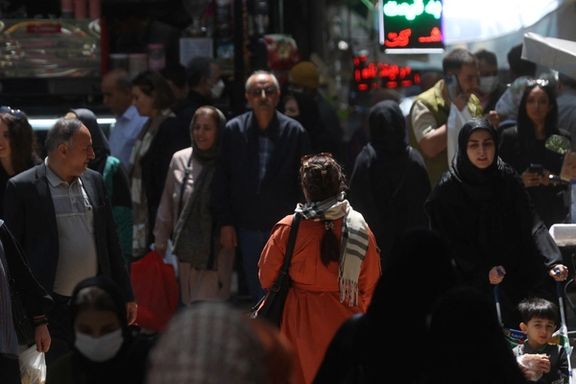
An Iranian woman walking unveiled in Tehran

Hardliners in Iran have strongly criticized a government hijab bill and claimed its leniency would only encourage further defiance of hijab rules. 

Minister of Justice Amin Hossein-Rahimi said Monday that the government modified and approved the double-urgency bill proposed by the judiciary and would present it to the parliament within the next few days. 

The bill is apparently more lenient than a motion by some ultra-hardliner lawmakers in March which has yet not been put to debate in the parliament. The motion proposed a fine of up to $60,000 for unveiling in public. 

Iran’s Judiciary operates under the supervision of Supreme Leader Ali Khamenei and their input into the new bill means it must have had his support.

Iran's Minister of Justice Amin Hossein-Rahimi (undated)
100%
Iran's Minister of Justice Amin Hossein-Rahimi

However, politics is more enigmatic in Iran than appearances usually indicate. Firebrand Hossein Shariatmadari, the editor of the flagship hardliner newspaper -- which is funded by the Supreme Leader -- strongly criticized the new bill on Sunday for “reducing punishments in the laws of the country for removing hijab into [small] cash fines.” 

“A look at the content of the bill and comparison with the existing laws suggests that the bill has been prepared with the (maybe unintentional) aim of removing the existing legal obstacles [against unveiling] and preparing the ground for the spread of this nasty and abominable phenomenon rather than taking action against unveiling,” he wrote. 

Shariatmadari also claimed that some of the women who were arrested for flouting the hijab on the streets have confessed that they were paid $3 per hour, presumably by the enemies of the Islamic Republic. 

Hossein Shariatmadari (undated)
100%
Hossein Shariatmadari

Tehran Municipality’s Hamshahri newspaper, a once reformist daily which has become ultra-conservative since hardliners took over the city council and in 2021, has also urged the government of President Ebrahim Raisi to revoke the bill. 

The newspaper argued that if turned into law it would tie the hands of the police and other hijab enforcers such as civilians who practice ‘amr-e be marouf’, that is, calling others to enjoin what is good and forbid them from doing what is wrong.

‘Amr-e be marouf’ by vigilantes has caused quite a few disputes and even scuffles in public over veiling between its proponents and women who are now defiantly appearing unveiled.

In April, a 59-year-old woman died of cardiac arrest in hospital in Kerman after a fight broke out when Revolutionary Guards (IRGC) affiliated Basij militia members who assaulted her family over hijab. Apparently, the Basij members ordered a member of the woman’s family to cover her hair, leading to an argument and a scuffle.

A video that became viral on social media in mid-April showed a young woman having a panic attack at a shopping arcade in Babol in northern Iran. The incident happened as a fight broke out when Basij militia tried to arrest some shopkeepers over hijab and fired their guns into the air during the scuffle.

In the past two months hardliners have intensified their efforts to enforce veiling laws more forcefully to put a stop to women’s increasing defiance of the compulsory hijab. Since popular protests after Mahsa Amini died at the hands of the morality police last September, many women walk in the streets without hijab. 

Many, even some women who wear the hijab by choice, are against government interference in the matter which they think should be a personal choice. 

“Better just say they should put a machine gun at the Revolution Square and kill those with inadequate hijab one by one,” Hossein Ghadiani, a former Kayhan journalist who has become critical of hardliners, told Shariatmadari in an audio file posted on Telegram post Tuesday. “What is it exactly that will satisfy you? Throwing 85 percent of the people in the sea to drown?” 


Most Viewed

US blockade enters murky phase as tankers spoof signals and buyers hesitate
1
ANALYSIS

US blockade enters murky phase as tankers spoof signals and buyers hesitate

2
INSIGHT

Ideology may be fading in Iran, but not in Kashmir's ‘Mini Iran'

3
INSIGHT

Hardliners push Hormuz ‘red line’ as US blockade tests Iran’s leverage

4
VOICES FROM IRAN

Hope and anger in Iran as fragile ceasefire persists

5

US sanctions oil network tied to Iranian tycoon Shamkhani

Banner
Banner

Spotlight

  • Hardliners push Hormuz ‘red line’ as US blockade tests Iran’s leverage
    INSIGHT

    Hardliners push Hormuz ‘red line’ as US blockade tests Iran’s leverage

  • Ideology may be fading in Iran, but not in Kashmir's ‘Mini Iran'
    INSIGHT

    Ideology may be fading in Iran, but not in Kashmir's ‘Mini Iran'

  • War damage amounts to $3,000 per Iranian, with blockade set to add to losses
    INSIGHT

    War damage amounts to $3,000 per Iranian, with blockade set to add to losses

  • Why the $100 billion Hormuz toll revenue is a myth
    ANALYSIS

    Why the $100 billion Hormuz toll revenue is a myth

  • US blockade targets Iran oil boom amid regional disruption
    ANALYSIS

    US blockade targets Iran oil boom amid regional disruption

  • Iran's digital economy battered by prolonged blackout
    INSIGHT

    Iran's digital economy battered by prolonged blackout

•
•
•

More Stories

Tehran Media Speculate On Security Chief’s Dismissal

May 24, 2023, 22:57 GMT+1
•
Iran International Newsroom

Iranian media are speculating on the implications of Ali Shamkhani’s replacement with Ali Akbar Ahmadian as secretary of the supreme national security council.

Etemad, one of the two leading reformist dailies in Tehran wrote in a commentary on Tuesday that Shamkhani’s replacement might have been the result of fears on the part of hardliners that following his success in forging the Beijing-brokered deal between Iran and Saudi Arabia in March, he could have played a key role in reviving the 2015 nuclear deal with the United States. 

According to Etemad, "the change was swift and odd." But this was not the only thing that was strange about the shift. The development completely played out on Twitter, a social media platform that is officially banned in Iran. Yet, first Shamkhani alluded to his departure by tweeting a piece of Persian poetry. Then Supreme Leader Ali Khamenei announced the replacement on his Twitter, and finally Ahmadian started his mission as security chief by tweeting a verse in Arabic from the holy Koran. 

Subsequently, social media users came up with all sorts of analyses. Some even said it was the end of Shamkhani’s political career and linked his removal from the key post to his family's alleged financial corruption. However, Khamenei quickly appointed him as his political adviser and a member of the Expediency Council, some sort of an upper house in Iran's parliamentary system. 

Ali Shamkhani and President Ebrahim Raisi   (undated)
100%
Ali Shamkhani and President Ebrahim Raisi

Within a few hours, many politicians including the hawkish Saeed Jalili, a Paydari Party figurehead, and a former nuclear negotiator, were mentioned as possible candidates for the post. Khamenei’s choice, however, was more pragmatic. 

Another odd thing was the Raisi administration's absolute silence on the matter, other than the releasing an official announcement everyone knew was coming from Khamenei's house rather than the presidential palace. 

Etemad pointed out that the execution of Shamkhani's former deputy Alireza Akbari, on charges of espionage, may have played a part in his replacement, as his hardliner political opponents were calling for his removal in recent months for the same reason. 

Tehran's other leading reformist daily Shargh wrote in a long commentary on Tuesday that the change was expected for a long time. But it also pointed out that it marked the 10th anniversary of Shamkhani's presence at the security council. Khamenei usually changes his appointees at different institutions after five or 10 years. However, there are exceptions such as his representative to ultraconservative Kayhan newspaper, Hossein Shariatmadari who has kept his posts for a few decades. 

Iran's new Secretary of the Supreme National Security Council Ali Akbar Ahmadian is seen next to the late Iranian Major-General Qasem Soleimani during a meeting in Tehran, Iran, in this undated picture obtained on May 22, 2023.
100%
Iran's new Secretary of the Supreme National Security Council Ali Akbar Ahmadian is seen next to the late Iranian Major-General Qasem Soleimani during a meeting in Tehran, Iran, in this undated picture obtained on May 22, 2023.

Shargh wrote that regardless of Shamkhani's denial of his links to his former deputy Akbari, it was clear that the system was getting rid of Shamkhani at such a prominent position. The move, according to Shargh, started when a week after Akbari's execution, vice President Mohammad Mokhber fired Shamkhani and his relatives from the Arvand Free Trade Zone in Khuzestan. 

According to Shargh, Paydari had a role in all those developments that were clearly part of the usual factional infighting in Iran. Some hardliners such as former lawmaker Hamid Rasaee openly called for Shamkhani's removal. 

Critics on social media have opined that Shamkhani's appointment as Khamenei's political adviser does not necessarily mean anything. They pointed out that former Prime Minister Mir-Hossein Mousavi who has been under house arrest more than a decade now, is still officially Khamenei's political adviser! And with the caliber of other Expediency Council members, it is obvious that the appointment is only an excuse to keep Shamkhani under control like others such as former President Mahmoud Ahmadinejad.

Nonetheless, Donya-ye Eghtesad newspaper wrote on Tuesday that Shamkhani who once ran for president as a reformist candidate in 2001, is likely to prepare himself for the next presidential election in 2025. The daily pointed out that Shamkhani is not one of those politicians who would sit at the Expediency Council and do nothing.

Ahmadinejad Admin, IRGC Accused Of Bagging Missing Carpets At Palace In Tehran

May 24, 2023, 22:39 GMT+1

The administration of former Iranian President Mahmoud Ahmadinejad and the Revolutionary Guard have been accused in a case of the missing carpets of Saadabad Palace in Tehran.

Hardliners revealed this weak that dozens of exquisite carpets are missing from the Saadabad Palace complex in Tehran, insinuating that they disappeared during the presidency of centrist Hassan Rouhani (2013-2021).

However, "an informed source", who seems to be close to Rouhani, told ILNA news agency on Wednesday that the disappearance of the carpets dates back to the presidency of Mahmoud Ahmadinejad (2005-2013).

He claimed that those raising the issue now want to "distract minds".

“The transfer of any documents or assets in public offices follows specific instructions, and the more sensitive the centers are, the more precise these instructions are. How is it that a bundle of carpets disappeared without the permission of the security guards that operate under the supervision of the Ministry of Intelligence and the IRGC,” he added.

The unnamed source also called for the intervention of "legal and judicial authorities" in this regard.

IRGC-affiliated Fars news agency reported Monday that 48 exquisite and expensive hand-woven carpets of Saadabad Palace were removed from a building and disappeared during the administration of Hassan Rouhani.

Sadabad is a 110-hectare complex built by the Qajar and Pahlavi monarchs, located in Shemiran, north of Tehran. Today, the official residence of the President is located adjacent to the complex.

The complex was initially built and inhabited by the Qajar dynasty of monarchs in the 19th century. After extensive expansions, Reza Shah of the Pahlavi Dynasty resided there in the 1920s. His son, Shah Mohammad Reza Pahlavi, moved there in the 1970s.

Large parts of the complex are museums, which are accessible to visitors.

US Rejects Ties To Journalists Who Reported Mahsa Amini’s Death

May 24, 2023, 15:01 GMT+1
•
Iran International Newsroom

The US has rejected any ties to the two journalists detained in Iran for breaking the news on how Mahsa Amini was killed in police custody.

During a briefing on Tuesday, State Department Spokesperson Matthew Miller said that over the course of the protests that engulfed Iran after the death of the 22-year-old Iranian-Kurd, the regime's authorities have repeatedly violated human rights, punishing people for executing their essential freedoms including protesters and journalists. (sorry but this quote was horrible - nothing to do with you.)

Niloufar Hamedi and Elaheh Mohammadi, the two journalists arrested for publicizing the death of Mahsa Amini, will stand trial as of May 29, according to the Judiciary Spokesman Masoud Setayeshi.

One of the charges against them is collaboration with the United States, which the Islamic Regime deems as a hostile enemy. Rejecting the charges, Miller said: “They are obviously not true.”

Iran's Ministry of information and the IRGC Intelligence Organization in a joint statement on October 28 accused Hamedi and Mohammadi of spying for several foreign agencies including the CIA, MI6 and Mossad.

“Sham trials and executions have been key components of the regime’s attempt to suppress any form of dissent,” the spokesperson stressed.

Miller also expressed worries over the recent escalation of executions by the regime, carried out by what he called "sham trials". According to the UN, over 200 Iranians have been executed since January.

The Islamic Republic has intensified its killing trend in recent weeks, fueling further protests across the country. Amid a spike in executions since late April, on May 19, authorities arbitrarily executed three tortured protesters, Majid Kazemi, Saeed Yaghoubi and Saleh Mirhashemi, who were unjustly convicted and sentenced to death in Esfahan (Isfahan).

On Tuesday, Amnesty International said at least seven individuals in Iran face the death sentence in connection with protests, while dozens of others are at risk of being sentenced to death. At least 259 Iranians have been executed since January alone, according to the United Nations.

The United Nations has called the record "abominable" and “appalling,” but at the same time it has appointed Tehran's UN ambassador Ali Bahraini to the chair of the UN Human Rights Council 2023 Social Forum, sparking anger and indignation, in spite of an open investigation underway by the UN into rights abuses in the country.

The rights forum, to be held in Geneva on November 2 and 3, will focus on the contribution of science, technology, and innovation to the promotion of human rights. In contrast, the Islamic Republic has been using technology to crack down on dissent and finding innovative ways to prosecute women who have revolted against its mandatory hijab rules.

Ambassador Michèle Taylor, US Permanent Representative to the United Nations Human Rights Council (March 31, 2023)
100%
Ambassador Michèle Taylor, US Permanent Representative to the United Nations Human Rights Council

Also on Tuesday, US Ambassador to the UN Human Rights Council Michèle Taylor said appointing a country with such a “deplorable human rights record severely undermines the credibility and purpose of both the UN Human Rights Council and the Social Forum.”

In a statement, she also referred to the latest report by UN Special Rapporteur on Iran, Javaid Rehman, which he said exposes “the stark reality of widespread human rights abuses in Iran, including state-endorsed violence against women and girls, summary executions of peaceful protestors, and stifling of freedom of expression, suggesting possible crimes against humanity.”

Calling upon all UN Human Rights Council member and observer states to prioritize the credibility and integrity of the Council by making decisions that truly embody its principles and values, she called for reforms within the UN’s human rights system that ensures “countries that perpetrate serious human rights violations and abuses do not hold positions of leadership.”

Brother Of Journalist Working Abroad Arrested By Iranian Regime

May 24, 2023, 14:14 GMT+1

An Iranian journalist working for a Farsi website abroad says the regime has arrested her brother because of her media activities.

Shima Shahrabi, editor-in-chief of IranWire’s Persian-language website said Wednesday that her brother has been in custody for more than three weeks.

“Because of my activities, which are entirely related to journalism and human rights, my family in Iran is under immense pressure from the security establishment of the Islamic Republic,” she wrote in a tweet.

Earlier, social media reports said that Sajjad Shahrabi, a dubbing artist and radio DJ, was arrested on May 2, but his charges are unknown.

“Six agents from the Intelligence Ministry raided my parents' home. After beating the superintendent, they entered the residential unit and searched the apartment. They seized laptops, mobile phones, banking cards and part of my father's US dollars and jewelry from his personal safe,” added the IranWire journalist.

According to her, the agents assured her father that they would release Sajjad after questioning; however, the same afternoon, he reported he had been transferred to the notorious Evin Prison.

“It has been 22 days since he was arrested but the court has not announced any charge against him. They say that he is under a one-month arrest warrant and, since he objected to his temporary arrest, he must remain in detention until the judge upholds or vacates the warrant,” Shima Shahrabi said.

The Iranian regime has always tried to put pressure on Farsi-speaking journalists abroad with the aim of stopping their activities. They put pressure on their family members inside and ban the journalists from buying and selling properties.

Khamenei Praises ‘Revolutionary Parliament’ For Tough Nuclear Bill

May 24, 2023, 11:48 GMT+1
•
Iran International Newsroom

Iran’s Supreme Leader Ali Khamenei Wednesday praised the country’s “revolutionary parliament” for passing a bill in 2020 that complicated nuclear negotiations.

“From the beginning of this parliament [2020], based on information I had, I believed that it is a revolutionary parliament, and now after three years I reiterate that,” Khamenei told 290 members of the legislature.

The parliament, dominated by hardliners, passed a bill in December 2020 dubbed the ‘Strategic Action To Eliminate Sanctions and Defend Iranian Nation's Interests.’ The bill authorized higher-level uranium enrichment to force the United States to lift economic sanctions imposed in 2018, when former President Donald Trump withdrew from the JCPOA nuclear agreement.

The bill also mandated restrictions on nuclear monitoring by the United Nations watchdog, the International Atomic Energy Agency (IAEA). Since the passage of the law, Iran has further restricted international monitoring and inspections, adding to the complicated dynamics of renewing the JCPOA.

Iran’s ruler Ali Khamenei during a meeting with parliament members on May 24, 2023
100%
Iran’s ruler Ali Khamenei during a meeting with parliament members on May 24, 2023

The current parliament was elected in February 2020 in a controversial vote when the Guardian Council, loyal to Khamenei, banned hundreds of relatively moderate candidates and allowed hardliners to gain a strong majority in the legislature. Few doubt that Khamenei was not aware or did not approve the engineering of the 2020 elections to pack the parliament with hardliners.

The timing of the bill in December 2020 was curious. The proposal emerged in parliament in early November just days after the US presidential election and Joe Biden’s victory. In September of that year, Biden had already announced thatif elected he would return to the JCPOA agreement to correct Trump’s “reckless” policy of dumping the nuclear deal that capped Iran’s uranium enrichment.

The Iranian regime knew that the incoming Biden administration wanted to restore the JCPOA, which would lift crippling sanctions, but nevertheless decided to pass the parliamentary law that made negotiations more difficult. 

The bill’s stipulation about higher levels of uranium enrichment was not an empty negotiating tactic. Iran actually began enrichment at 20 percent in early 2021, breaking the JCPOA limit of 3.65 percent. Subsequently, enrichment was increased to 60 percent during the talks, and by all estimates, Tehran now has enough fissile material for at least two nuclear bombs. Tehran also gradually restricted IAEA monitoring access to its nuclear facilities, introducing another complicating factor into the JCPOA talks.

The government of President Hassan Rouhani initially opposed the legislation, saying it will complicate talks, but the hardliners went ahead anyway.

However, Khamenei Wednesday told lawmakers, “The Strategic Action law brought the country out of a wandering state in the nuclear issue. This law fully clarified what we needed to do.”

Negotiation to revive the JCPOA began in Vienna on April 7, 2021, between the members of the JCPOA, Iran, the United Kingdom, France, Germany, Russia and China, with the US on the side lines as Tehran rejected any direct talks with Washington.

After 11 months of talks, the Vienna process ended without success in March 2022 after the Russian invasion of Ukraine. Subsequent efforts by the European Union to bridge the gaps failed and the talks reached a deadlock in September 2020.

In the meantime, Iran’s economic crisis triggered by US sanctions got much worse, with annual inflation nearing 70 percent and the national currency losing much of its value. This and continued domestic repression led to nationwide protests in the fall of 2022, destabilizing the clerical regime, with no immediate prospect of ending sanctions.