• العربية
  • فارسی
Brand
  • Iran Insight
  • Politics
  • Economy
  • Analysis
  • Special Report
  • Opinion
  • Podcast
  • Iran Insight
  • Politics
  • Economy
  • Analysis
  • Special Report
  • Opinion
  • Podcast
  • Theme
  • Language
    • العربية
    • فارسی
  • Iran Insight
  • Politics
  • Economy
  • Analysis
  • Special Report
  • Opinion
  • Podcast
All rights reserved for Volant Media UK Limited
volant media logo

Iranian Regime Punishing Lawyers For Supporting Protesters

Maryam Sinaiee
Maryam Sinaiee

Iran International

May 15, 2023, 06:35 GMT+1Updated: 17:39 GMT+1
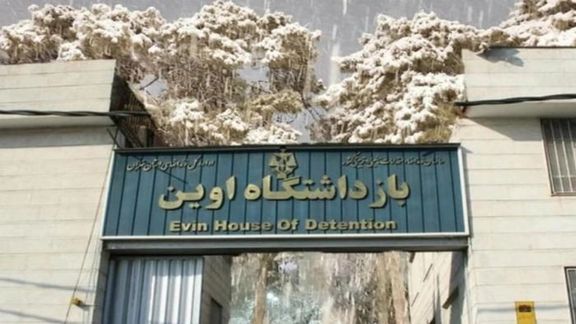
The entrance to Tehran's notorious Evin prison that also houses a prosecutor office

Iran's judiciary has been building cases against dozens of independent lawyers for representing dissidents and supporting the Women, Life, Freedom movement.

Iran International has learned that summoning lawyers to the Prosecutor’s Office in Tehran, which started in March, resumed last week after a pause due to the relocation of the prosecutor in charge.

The judiciary’s intelligence organization, sources in Iran said, is behind the prosecution of these lawyers most of whom had expressed their support for the Women, Life, Freedom movement on social media.

The case involves 170 lawyers of whom, sources told Iran International, 27 individuals from different parts of the country have already been summoned by the Evin prison prosecutor on charges of “propaganda against the regime” and “assembly and collusion with the intention of acting against [national] security”.

Iran International has also learned that lawyers who were summoned were forced to sign a pledge that implies acceptance of the charges. One of the two lawyers who refused to sign the pledge was detained for a few hours and another one for a few days.

UK-based lawyer and women’s rights activist Samaneh Savadi told Iran International that the regime is taking revenge on lawyers, many among whom volunteered to represent protesters. She said that the attorneys are being punished “for standing beside the people”.

Ali Mojtahedzadeh, one of the summoned lawyers, told Etemad newspaper Sunday that most of these lawyers had participated in the protests or voiced support on social media. He said he and some of his colleagues had received the letter to present themselves to the prosecutor in the past few days.

He pointed out that the cases against most of these lawyers were dropped following Supreme Leader Ali Khamenei’s “amnesty”, but now new charges have been brought against them.

In February, Khamenei agreed to a proposal by Judiciary chief Gholam-Hossein Mohseni Ejei to pardon some prisoners and reduce sentences for those arrested during antigovernment protests last year. The move appeared to be designed to show clemency after hundreds were killed and around 20,000 arrested, and to rescue the image of the regime amid a grim economic crisis and mass public rejection of Khamenei’s rule.

Another lawyer, Mitra Izadifar, told Etemad that she is being prosecuted again, after being pardoned earlier. She added that she has been summoned to Tehran although she lives and practices in Mashhad.

Mohammad-Hadi Jafarpour who practices law in Shiraz also told Etemad “I was once arrested on November 2 on charges of ‘propaganda against the regime’ and ‘assembly and collusion with the intention of acting against [national] security. At the time, I was mostly questioned by prosecutors about my media commentaries, [Instagram] posts, and tweets… I had to sign a pledge in order to be pardoned [by Khamenei].”

He added that he has also been summoned to Tehran by the Evin prosecutor although despite a legal requirement that says he should be prosecuted in his own city. Jafarpour pointed out that the summons letter he received did not mention the charges.

Earlier in March a Revolutionary court permanently deprived prominent lawyer Nemat Ahmadi, a member of the Union Internationale des Avocats or International Association of Lawyers, from practicing law in Iran.

Ahmadi, a former professor of law sacked from Azad University for his political activities and representing political prisoners, was sued by the intelligence ministry for the same reason.

Dissidents and protesters are often deprived of their right to choose their own lawyers and must accept defense attorneys the judiciary appoints from a government-trusted list.


Most Viewed

US blockade enters murky phase as tankers spoof signals and buyers hesitate
1
ANALYSIS

US blockade enters murky phase as tankers spoof signals and buyers hesitate

2
INSIGHT

Ideology may be fading in Iran, but not in Kashmir's ‘Mini Iran'

3
INSIGHT

Hardliners push Hormuz ‘red line’ as US blockade tests Iran’s leverage

4
VOICES FROM IRAN

Hope and anger in Iran as fragile ceasefire persists

5

US sanctions oil network tied to Iranian tycoon Shamkhani

Banner
Banner

Spotlight

  • Hardliners push Hormuz ‘red line’ as US blockade tests Iran’s leverage
    INSIGHT

    Hardliners push Hormuz ‘red line’ as US blockade tests Iran’s leverage

  • Ideology may be fading in Iran, but not in Kashmir's ‘Mini Iran'
    INSIGHT

    Ideology may be fading in Iran, but not in Kashmir's ‘Mini Iran'

  • War damage amounts to $3,000 per Iranian, with blockade set to add to losses
    INSIGHT

    War damage amounts to $3,000 per Iranian, with blockade set to add to losses

  • Why the $100 billion Hormuz toll revenue is a myth
    ANALYSIS

    Why the $100 billion Hormuz toll revenue is a myth

  • US blockade targets Iran oil boom amid regional disruption
    ANALYSIS

    US blockade targets Iran oil boom amid regional disruption

  • Iran's digital economy battered by prolonged blackout
    INSIGHT

    Iran's digital economy battered by prolonged blackout

•
•
•

More Stories

Police Says Safety Of Iranian-Made Cars Not Improved In A Decade

May 14, 2023, 23:29 GMT+1

Traffic police in Iran says in the last 10 years, the quality of domestically produced cars has not improved “even ne percent.”

Deputy Traffic Police Chief, Taymour Hosseini told Tasnim news agency on Sunday that Pride and Peugeot 405 still cause fatal accidents although their production has stopped. Both cars are copies of much older foreign cars produced with inferior quality.

“The authorities have announced the production of Pride and Peugeot 405 has stopped, but in practice similar cars are being produced,” he added.

According to Hosseini, the number of people killed in road accidents has even increased in recent years.

"According to figures announced in the past Iranian year [ending on March 20], 19,491 people lost their lives in traffic accidents, which shows a 16% increase compared to the previous year,” he underlined.

Meanwhile, Kamal Hadianfar, Traffic Police Chief, said in a press briefing on Sunday that "Last year, two to three people died in car accidents every hour, while 25 others were injured.”

Many Iranian officials and authorities, including President Ebrahim Raisi, are critical of the local car industry, with pundits blaming a “mafia-like” influential group behind a ban on car imports, to eliminate competition.

Hadianfar once described Iranian cars as “death wagons”, and criticized manufacturers for importing parts from China, saying there is no effective quality control.

Iran's automotive industry, the county’s largest after oil and gas, employs 700,000 workers.

With around 20,000 annual deaths, Iran has a poor traffic safety record. According to World Health Organization (WHO) data published in 2018, road traffic accident deaths in Iran reached 21,831 or 6.5 percent of all fatalities.

Iran Still Seeks To Cover Up Downing Of Ukraine Plane

May 14, 2023, 23:15 GMT+1
•
Iran International Newsroom

Father of two victims who died when Iran’s IRGC shot down a Ukrainian airliner says the regime still refuses to release documents proving the act it was intentional. 

Dr. Mohsen Asadi-Lari, a former high-ranking health ministry official who lost both his children, Mohammad-Hossein and Zeinab, in the downing of the Ukrainian plane on January 8, 2020,told Didbaniran website Sunday that there is evidence the shooting was intentional, but the authorities would not release the evidence.

Iranian authorities who first claimed it was air crash due to a mechanical problem, three days after the incident admitted the plane was shot down with 176 people onboard, but insisted that it was due to human error.

Asadi-Lari said they asked the court to investigate the evidence proving that firing of two anti-air missiles at he plane was intentional and also demanded that the data to be released to them, but the court did not pay attention. He said that the information recorded on the plane’s flight recorder – known as the black box -- would definitively impact the final rulings.

He added that the conversations between the plane and the control tower can shed light on the circumstances of the missile attack. “We are sure that he deliberately triggered the attack and we have raised this in the court in different ways," he said about the missile operator.

Asadi-Lari added that the prime suspect in the case, identified as a Major Mehdi Khosravi, will be released in the near future because according to Iran’s laws he has spent about a third of his sentence. More than three years have passed since the incident and Khosravi was sentenced to 10 years in prison.

Mohammad-Hossein and Zeinab who died when the IRGC shot down an airliner in January 2020
100%
Mohammad-Hossein and Zeinab who died when the IRGC shot down an airliner in January 2020

He claimed that Khosravi has been kept in solitary confinement since January 2020, saying, “Anyone familiar with Iran’s prison and judicial matters knows what it means to be in solitary confinement.” His remarks implicitly pointed to the fact that the regime does not want him to talk about the details of the incident.

“Compare the case of this plane with the case of the executed protestors, who were hanged for blocking a street or setting fire to a trash bin,” he said, adding that 176 innocent people were killed, and the culprit can go free after 40 months in prison.

Asadi-Lari clarified that the family do not seek execution for the officer because he was a service member and was doing his job, but they want the truth to be revealed.

Asadi-Lari and his wife Dr. Zahra Majd earlier insisted that the ten low-ranking military personnel on trial are not the real culprits. They claimed Khosravi was an expert in the Tor-M1 surface-to-air system that shot down the plane and that it was unbelievable that he had made the decision based by error.

Ukraine's flight PS752 was shot down on January 8, 2020, as it took off from Tehran’s Imam Khomeini International Airport. Only hours earlier, the IRGC had fired more than a dozen missiles at Iraqi bases hosting US troops in retaliation for the killing of the IRGC Qods Force Commander Qassem Soleimani by a targeted US drone strike just five days earlier.

Despite expecting retaliation from the US, the IRGC which is responsible for air defense of the capital did not close the civilian airspace in the early morning hours of January 8.

Asadi-Lari and his wife, both professors at Iran Medical Sciences University, say the whole family, including their two children who were students in Canadian universities, were devastated by Soleimani's killing and were very worried about a US retaliation for Iran's missile attack while the family was on their way to the airport. Before the flight took off, their son Mohammad-Hossein had been praying for Soleimani who was buried the day before.

Unlike parents and family members of many other victims of the tragedy, the Asadi-Lari family are not members of the Canada-based association representing victims' families. The association does not recognize the eligibility of the Islamic Republic's Judiciary for investigating the incident and has repeatedly called for top Iranian officials, including Supreme Leader Ali Khamenei, as commander-in-chief of the Armed Forces, to be held responsible.

Iranians In US, Europe Hold Rallies For Tehran's Political Prisoners

May 14, 2023, 19:00 GMT+1

Iranians abroad are holding rallies across Europe and America in support of rapper Toomaj Salehi and other political prisoners.

After a demonstration in the US on Saturday, protests took place on Sunday in London, Paris, Stuttgart and Antwerp and other European cities. A rally is also planned in Toronto, Canada.

At Saturday’s rally in Washington DC, protestors called for the release of political prisoners, including dissent rapper Toomaj Salehi. They also chanted slogans demanding an end to Iran’s current bloodthirsty execution spree.

In Iran, protestors expressed support for Salehi by putting up his pictures on walls in Tehran and the Kurdish city of Sanandaj.

Salehi is known for his protest songs about Iran's social issues and injustice by the government. He was arrested on October 30 as part of the crackdown on opponents.

His arrest came shortly after an interview with the Canadian Broadcasting Corporation in which he said: “You are dealing with a mafia that is ready to kill the entire nation... in order to keep its power, money and weapons.”

In his politically charged songs such as “Buy a Rat Hole” (2021), Toomaj, a 32-year-old metalworker in Esfahan, speaks out against repression, injustice, poverty, and the authorities’ own corruption and impunity from prosecution.

The 33-year-old singer is one of dozens of members of the artistic and entertainment community who have been arrested since protests surged across Iran last year as the regime struggles to contain widespread discontent.

French Hostage Held Prisoner By Iran ‘Very Weak’ After Release

May 14, 2023, 14:58 GMT+1

A French citizen released by Iran after three years in jail on trumped-up spying charges is “very weak”, his family have revealed.

President Emmanuel Macron announced on Friday that Benjamin Brière is going free along with fellow Frenchman Bernard Phelan.

The two men are among an unknown numbers of diplomatic hostages held by the regime.

In a statement on Friday, Briere’s family spoke of being able “to hold him in our arms after three years of hell," but added: “He is, however, very weak, physically and morally, a return to normal life will be long and certainly difficult, but now he is in good hands."

A lawyer for Briere said he had become “extremely weak and frail” after a hunger strike, adding: “If the release wouldn’t have happened by now, Benjamin would be at a major life risk.”

Macron tweeted: "We will continue to work towards the return of those of our fellow nationals who are still detained in Iran."

Brière had been held in Iran since May 2020. The traveller and blogger was arrested for allegedly taking photos with a drone in a restricted area near the Turkmenistan-Iran border and sentenced to eight years in jail.

Philippe Valent, his France-based lawyer, called the espionage charges against his client a "fiction" and his trial "a parody staged by the Revolutionary Guard".

Ties between France and Iran have deteriorated in recent months. Tehran had detained seven French nationals in what Paris described as arbitrary arrests equivalent to state hostage-taking.

In the past decade, Iran's Revolutionary Guard have arrested dozens of dual nationals and foreigners, mostly on unproven allegations of espionage and breach of security.

Tehran Politicians, Media Lash Out At Hardliners, Demand New Elections

May 14, 2023, 11:19 GMT+1
•
Iran International Newsroom

A leading reformist politician in Iran says a combination of Iran's weakest government and parliament has created “a regrettable situation for the country.”

Mohammad Javad Haghshenas, a prominent member of the reformist National Trust Party says the situation is like a fire under the ashes. Decision-makers in the Iranian government simply ignore the underlying reasons for last year's nationwide protests and attribute the crisis to the "enemies."

He also suggested that President Raisi should resign and call for early elections.

Haghshenas warned that "any moment, another mistake like what happened in September and led to the death in custody of Mahsa Amini, or a new problematic policy can lead to a new crisis and new waves of protest."

He pointed out that ignoring popular demands and the protests that are still continuing, as well as problems such as inflation, financial corruption, economic problems, red tape, government's intervention in people's private lives and the inefficiency of the government bureaucracy can deepen the ongoing crises.

He added that one of the ways out is returning to the Constitution, which is a document the nation agrees on. However, a major part of the Iranian opposition, and even former high-ranking officials, believe that the current Constitution, designating clerical rule, is one of the root causes of Iran's problems. Many among the opposition want a return to the 1905 constitutional monarchy and others want a secular, democratic republic.

100%

However, Haghshenas says the hard core of political power in Iran [meaning Supreme Leader Ali Khamenei] should pave the way for upholding the Constitution by September particularly because a parliamentary election is going to be held in March next year. He also pointed out that none of the crises that have led to major protests since 2019 have been resolved. Meanwhile, he suggested that Raisi should resign and call for an early Presidential election.

He also suggested that the Guardian Council should do away with its selective supervision of vetting candidates before elections. The Council, a constitutional body indirectly controlled by the Supreme Leader, has the power to disqualify candidates for no clear reason. It used its power in the 2020 parliamentary and 2021 presidential elections to bar hundreds of candidates many of whom had previously served as lawmakers or as senior officials. The result was a massive rejection of ‘reformist’ candidates and handing full control to hardliners.

Meanwhile, Mansoor Haghighatpur, a moderate conservative lawmaker close to Ali Larijani the former Speaker of the parliament charged that a certain political group [meaning the ultraconservatives] want to run the country with a team of only 30 to 40 individuals.

Mansoor Haghighatpur, a moderate-conservative politician
100%
Mansoor Haghighatpur, a moderate-conservative politician

Haghighatpur further charged that the ruling group only believes in its own members and considers other politicians as traitors and spies. His comment followed accusations of espionage against former President Hassan Rouhani and his aides and IRGC figurehead Hossein Taeb's call for putting Rouhani on trial.

He said that this group of 30 to 40 ultraconservatives came to the forefront of political leadership since former populist President Mahmoud Ahmadinejad came to power in 2005 and lately took over the entire political establishment after the 2020 and 2021 elections.

In another development, Iranian traditional conservatives flagship daily newspaper Resalat wrote on Saturday that President Ebrahim Raisi’s administration does not understand concepts such as inflation and repayment of loans. The daily told Raisi and his ministers: "Your daily journey starts from the parking at your home and ends in the parking lot of your office and you do not know anything about the people's problems."

Resalat added: "As a result, you constantly ridicule the people and subsequently the people turn their backs on you." The daily was referring to a statement by Raisi's Welfare Minister Solat Mortazavi who when asked last week how low-paid workers can make ends meet, he replied: “They should save!" Resalat called the minister's reaction "an outcome of ignorance."