• العربية
  • فارسی
Brand
  • Iran Insight
  • Politics
  • Economy
  • Analysis
  • Special Report
  • Opinion
  • Podcast
  • Iran Insight
  • Politics
  • Economy
  • Analysis
  • Special Report
  • Opinion
  • Podcast
  • Theme
  • Language
    • العربية
    • فارسی
  • Iran Insight
  • Politics
  • Economy
  • Analysis
  • Special Report
  • Opinion
  • Podcast
All rights reserved for Volant Media UK Limited
volant media logo

Iran’s Regime Harasses Activists Who Support Call For Referendum
Iran International Newsroom
Mar 14, 2023, 03:28 GMT+0Updated: 17:39 GMT+1
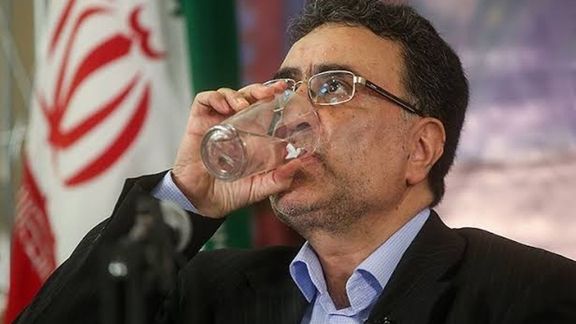
Reformist politician Mostafa Tajzadeh

Jailed reformist activist Mostafa Tajzadeh says his cell was raided by prison guards because he is supporting a referendum to change the constitution in Iran. 

In an open letter from prison addressed to Supreme Leader Ali Khamenei, Tajzadeh said that his cell, which he shares with two other political prisoners – Saeed Madani and Hossein Razzagh -- was attacked because all three expressed support for the proposal by opposition figure Mir-Hossein Mousavi for the referendum. Tajzadeh, a former deputy minister, protested that during “the unusual and long search” security forces confiscated some of his and Madani's personal notes. 

Tajzadeh and his cellmates, as well as a few other political prisoners, including Faezeh Hashemi, the daughter of Iran former president Akbar Hashemi Rafsanjani, issued a statement in February, saying, "they will do their best to advance this proposal and a peaceful and non-violent transition to a completely democratic and developed Iranian structure." “The only way out of the impasse for the government is to surrender to the right of the people to determine their own destiny,” read the statement.

In his letter to Khamenei, Tajzadeh said, "You repeatedly claim that your opponents have the right to criticize you,” but "I have been sentenced to a total of 15 years in prison in two cases for criticizing your performance.” "Why are you so afraid of a referendum”, he asked Khamenei, underlining that confiscation of personal notes is a clear violation of laws and regulations of the country’s Prisons Organization.

Mousavi and his wife Zahra Rahnavard casting their votes in June 2009
100%
Mousavi and his wife Zahra Rahnavard casting their votes in June 2009

In a statement early in February, Mousavi, a presidential candidate in 2009 who became an opposition figure and was put under house arrest, said Iran needs “fundamental change” based on “Woman, Life, Freedom” and a referendum on the constitution. Since he published the statement, his house arrest has become stricter. Mousavi was put under house arrest in 2011 because he challenged the highly suspicious presidential re-election of Mahmoud Ahmadinejad in 2009.

Referring to government violence against protesters, Mousavi said the rulers of the Islamic Republic are not willing “to take the smallest step to meet the demands of the people.”

Mousavi implicitly repeated what exiled Prince Reza Pahlavi and other opposition figures have been demanding since last September, when the ‘Women, Life, Freedom movement’ started following the death in custody of 22-year-old Mahsa Amini – transition from the Islamic Republic. Pahlavi has acknowledged Mousavi’s call for a referendum

Iranians have been hotly debating the need to form an opposition council to manage the protest movement and plan for transition to a new form of government. After months of unorganized opposition to the regime concurrent with protests and strikes, prominent activists abroad united and established a framework of coordination. Inside the country no such move is possible because of repression. The group, which calls itself the Alliance for Democracy and Freedom in Iran, announced its existence in February.

Alliance for Democracy and Freedom in Iran-Masih Alinejad-Nazanin Boniadi-Shirin Ebadi-Hamed Esmaeilion-Abdulla Mohtadi-Reza Pahlavi (file)
100%

Earlier in March, they issued a Charter of Solidarity and Alliance for Freedom, also called the Mahsa Charter. 

Exiled Prince Reza Pahlavi, Nobel peace prize laureate Shirin Ebadi and Canada-based activist Hamed Esmaeilion, as well as US-based author, journalist and women’s rights activist Masih Alinejad, actress and activist  and Secretary General of Komala Iranian Kurdish party  say the charter would lay the foundations for realizing the aspirations of protesters in Iran and gain international support for isolating the Islamic Republic.

The charter has been met with admiration and support as well as antipathy and criticism. Some people have denounced the charter saying it is not patriotic enough. However, the prominent opposition figures have called on people to put differences aside, saying that the charter is only a framework and a starting point for cooperation.


Nazanin Boniadi
Abdullah Mohtadi

Most Viewed

Iran International says it won’t be silenced after London arson attack
1

Iran International says it won’t be silenced after London arson attack

2
VOICES FROM IRAN

Hope and anger in Iran as fragile ceasefire persists

3

Iran halts petrochemical exports to supply domestic market

4
INSIGHT

How Tehran bends its own red lines to boost state rallies

5

US arrests Iranian national over alleged Basij-linked visa fraud

Banner
Banner

Spotlight

  • Hardliners push Hormuz ‘red line’ as US blockade tests Iran’s leverage
    INSIGHT

    Hardliners push Hormuz ‘red line’ as US blockade tests Iran’s leverage

  • Ideology may be fading in Iran, but not in Kashmir's ‘Mini Iran'
    INSIGHT

    Ideology may be fading in Iran, but not in Kashmir's ‘Mini Iran'

  • War damage amounts to $3,000 per Iranian, with blockade set to add to losses
    INSIGHT

    War damage amounts to $3,000 per Iranian, with blockade set to add to losses

  • Why the $100 billion Hormuz toll revenue is a myth
    ANALYSIS

    Why the $100 billion Hormuz toll revenue is a myth

  • US blockade targets Iran oil boom amid regional disruption
    ANALYSIS

    US blockade targets Iran oil boom amid regional disruption

  • Iran's digital economy battered by prolonged blackout
    INSIGHT

    Iran's digital economy battered by prolonged blackout

•
•
•

More Stories

Nighttime Protests Resume In Iran As New Year Approaches

Mar 13, 2023, 21:29 GMT+0
•
Maryam Sinaiee

Young Iranians took to the streets in several cities Monday after a call for three nights of protests, including the celebration of the ancient fire festival Tuesday.

Videos posted on social media show small groups of youth marching and chanting anti-government slogans in some neighborhoods of the capital Tehran, Mashhad, Qazvin, and Malayer. A few videos show burning trash bins and car tires on the streets and youth throwing firebombs at government buildings and banks.

Youth groups had called since late February for three nights of protests, including the Charshanbeh Souri fire festival on Tuesday. In its social media posts, the United Youth of Iran, an alliance of various “neighborhood youth” groups from around the country fighting to overthrow the regime, urged everyone to form “neighborhood-centered” groups and take to the streets to protest.

The group vowed in a statement to turn the fire festival into a “symbol” of battling the “suppressive and criminal regime” and “the reactionary Islamic culture” that “has eliminated or harshly suppressed individuals for their different beliefs for many years.”

Protesters in Malayer in Hamedan Province chanting “Death to the Dictator” and “Death to Khamenei”

The fire festival is celebrated on the eve of the last Wednesday of the year, just before the New Year (Nowruz), which marks the day of the Spring Equinox. The festival dates to pre-Islamic times and for the same reason, its celebration is considered as a pagan practice by the clerics running the country since the Islamic Revolution in 1979.

Celebration of ancient festivals such as Nowruz and Charshanbeh Souri have persevered despite the many efforts of religious fundamentalists who tried to obliterate and replace them with Islamic feasts.

An artwork created in support of protests in the last week of the Iranian year (Charshanbeh Souri) showing a police car on fire  (March 2023)
100%
An artwork created in support of protests in the last week of the Iranian year showing a police car on fire

Nowruz is still the most important calendar event of the year and celebrated as always, but Charshanbeh Souri has taken a quite different character. Authorities resorted to harsh measures to suppress its celebration in the streets, often bringing out the police, Basij militia, and vigilante groups who clashed with the youth and even arrested them for lighting bonfires.

Protesters in west Tehran chanting a slogan against Supreme Leader Ali Khamenei

Ancient Iranians lit fires on their rooftops during the last five days of the year to help the spirits of the dead to find their way and reunite with their families.

In more recent times, people made several small brushwood fires in their courtyards or outside the house and jumped over the flames chanting, “Take away my sickly pallor and give me your red glow! ” Firecrackers were also popular with the children and youth.

Jumping over fire was followed by a host of traditions including lighting candles, singing, dancing, poetry recitation, going door to door and banging on bowls with spoons to get treats, and sharing food.

Small firebomb thrown at a university campus entrance in west Tehran for housing security forces and providing them with a place for keeping detainees in previous protests as “warning”.

Over the years, massive bonfires and small homemade bombs have largely taken the place of brushwood fires and firecrackers. Streets often turn into battlegrounds between the dancing and merrymaking youth and the police on the last Tuesday of the year.

In a statement Tuesday, the ministry of intelligence said it had arrested members of terrorist teams” across the country including twenty-one members of a group linked with the Mujahedin-e Khalq Organization (MEK) in Tehran and confiscated a variety of explosives from them.

Those arrested were planning to set fire to public property such as buses, the ministry claimed and vowed to take decisive action against “terrorists” who, it said, aim to harm people and “cast the blame for their criminal actions on the security forces.”

Iran Regime Mounts Pressure On Students After Protests Against Poisonings

Mar 13, 2023, 15:40 GMT+0

Iran’s security forces have summoned dozens of students to punish them for staging protests against the poisoning of schoolgirls across the country.

Reports from Iran say dozens more students have been banned from entering the universities of Tehran and Tabriz, a tactic which has been used throughout the Woman, Life, Freedom protests which began in September.

Having been one of the main centers of popular protests, the regime has increased the number of security agents at campuses and beefed up inspection of the students’ belongings.

According to the country's Student Union Council, 40 students of Tabriz University of Medical Sciences were summoned to the disciplinary committee after they held protests against the mysterious chemical attacks which have taken place in scores of schools and dormitories since November.

Activist Zia Nabavi claimed that last week, he and a number of other students of Allameh University in Tehran were banned from entering the campus after they staged a protest against the serial poisonings which have affected hundreds of girls across the country.

Last week, over 300 university professors condemned the organized chemical attacks in a statement, declaring that the perpetrators of the "horrible crime" are among the "cruelest, most dangerous and most hated" enemies of children and teenagers.

"This is a shame that despite claims to protect domestic and cross-border security, the government has not taken preventive measures in the face of this obvious threat to national security," read the statement.

Iranian Diaspora In US, Canada Slam Chemical Attacks On Schoolgirls

Mar 12, 2023, 15:44 GMT+0

Demonstrations took place across the United States and Canada on Saturday to condemn the more than three months of chemical attacks on girls’ schools around Iran.

The United States is home to the world's largest Iranian community outside the country with almost 400,000 living there.

The Iranian diaspora led rallies in cities including New York and Washington, where hundreds of participants marched in front of the White House to demand the support of the US government and the international community for the protests inside Iran.

Similar events were also held in San Diego and Philadelphia. In Canada, Iranians joined forces in Montreal, Ottawa, Toronto and Vancouver to show solidarity with the hundreds of girls affected by mysterious chemical attacks in scores of schools across the country since November.

In Toronto, protesters held a rally in front of the Parliament of Ontario province, chanting slogans to censure the attacks on schoolgirls in different cities of Iran including Tehran, Qom, Karaj, Boroujerd, etc.

The government has aired ‘confessions’ of those allegedly responsible for the attacks which started three months ago as a man and his daughter forced to speak to national TV. The broadcast has all the trademarks of the regime’s forced confessions.


Civil Activists Condemn Prolonged Detention Of Two Baha’i Women

Mar 12, 2023, 10:16 GMT+0

A group of Iranian civil activists issued a statement protesting "heavy and unfair" sentences against two well-known Baha'i figures.

Bahai community leaders Fariba Kamalabadi, 60, and Mahvash Sabet Shahriari, 70, were handed new 10-year sentences in December after having served 10 years previously on charges of threatening national security.

”The two women have spent many days of their lives in prisons for being Baha'i. No one should be harassed or persecuted just because of their beliefs and religion," reads a statement signed by journalists, lawyers, former political prisoners and activists inside and outside Iran.

The group said the accusations against the women are “baseless”, the ‘trial’ conducted in November lasting just one hour. At the time, the Baha'i International Community said it was "an unbelievable injustice”.

It is four years since the two ladies were released from their first decade-long sentence, and activists including Shirin Ebadi and Atena Daemi, say the two are being persecuted on “unfounded charges".

The Shia clergy consider the Baha’i faith as a heretical sect. The Baha'i community, who number around 300,000 in Iran, are systematically prosecuted, discriminated against, and harassed. They cannot hold jobs in the public sector and are sometimes sacked from their jobs in the private sector under pressure from authorities.

In September, the BIC reported 245 incidents of persecution over 32 days, with arrests and imprisonment, the destruction of homes and confiscation of properties, raids on private and business premises, beatings, the denial of medication to detainees and the denial of higher education to more than one hundred young people.

Human rights defenders and international institutions always consider the behavior of the Islamic Republic of Iran in dealing with Baha’i citizens as a "systematic violation of human rights".

Iran Claims Over 100 Arrested For School Gas Attacks

Mar 11, 2023, 22:50 GMT+0
•
Maryam Sinaiee

Iran's interior ministry announced Saturday the arrest of over 100 people in eleven provinces in connection with poisoning attacks on dozens of girls’ schools.

The attacks that started three months ago have continued without any apparent effort by the government to seriously pursue the perpetrators or explain to terrified parents and students what was happening in so many schools.

In its statement, the ministry attributed some of the poisoning attacks to “pranks” by students using “foul smelling and harmless substances” in an attempt to get their classes dismissed.

“Among the detainees there are individuals with hostile motivations,” the statement said, adding that these individuals meant to cause fear and panic among the people to shut down schools and cast the blame on the regime.

“These individuals are under investigation to reveal their possible connection with terrorist organizations such as the monafeghin,” the statement said. Iranian authorities always refer to the Mujahedin-e Khalq Organization (MEK) as monafeghin (hypocrites).

A large "bus ambulance" outside a school taking students to hospital. March 2, 2023
100%
A large "bus ambulance" outside a school taking students to hospital. March 2, 2023

The statement reveals very little about the arrests but two days earlier the local channel of the state television in Fars province aired the so-called ‘confessions’ of a man and his daughter arrested and accused of attacking schools with N2 gas canisters. The statement provided no names for those arrested or any other information.

Many ordinary Iranians have been suspicious of involvement of the regime itself, or religious extremists protected by the regime, in the school attacks and call the acts “state terrorism”.

“There is strong suspicion that the purpose of the attacks is quashing the Woman, Life, Freedom movement by instilling fear among girls and their families,” an umbrella teachers' association said while calling the attacks “bioterrorism” and demanding Supreme Leader Ali Khamenei and other top religious figures to condemn the attacks expressly and decisively.

Diaspora Iranian held protests Saturday in 70 cities around the world to demand action to stop the school attacks.

A protest by diaspora Iranian in Germany on March 11, 2023
100%
A protest by diaspora Iranian in Germany on Saturday

The ministry said in its statement that there is a “considerable drop” in school poisoning attacks although seven more schools were affected on Saturday and tens of students had to be taken to hospital.

Attacks were reported in southwestern Khuzestan province where four schools were targeted. Tens of poisoned students had to be taken to hospitals also in southern Fars, western Kordestan and in northern Gilan provinces.

In a report Saturday, the judiciary claimed that “less than ten percent” of students reported poisoned so far had inhaled “an irritant gas which is not of weapons grade or deadly” and the remaining ninety percent were only affected by stress and other psychological factors.

In an article entitled “Casting Light On Psychological Operations Of Criminals In Student Poisoning Incidents” on Tuesday, the hardliner Mashregh news website accused a banned teachers’ association of using the attacks to wage psychological war against the Islamic Republic to revitalize the protest movement.

The article claimed that it was the MEK that described the school poisonings as ‘chemical attacks’ for the first time and alleged a connection between MEK and union activists who also referred to the incidents as chemical attacks on schools.

Earlier this month, the association urged its members and others to stage protests to demand urgent resolution to school attacks as well as teacher’s own problems including a wage increase for the next year that takes the factor of inflation into account.

In response to the association’s call, teachers and parents held rallies in dozens of cities and chanted slogans such as "death to the child-killing regime".

“Think-tanks of security and intelligence bodies are projecting their own responsibility over the poisoning of students and building new legal cases against union and civil activist,” Mohammad Habibi, spokesman of the Iran Teachers’ Trade Association, said in an Instagram post Saturday.

Habibi vowed that teachers would continue to defend “our children and their achievements [in the protest movement].” “Our message to them is clear: we will not withdraw [against pressures by the security forces].”