• العربية
  • فارسی
Brand
  • Iran Insight
  • Politics
  • Economy
  • Analysis
  • Special Report
  • Opinion
  • Podcast
  • Iran Insight
  • Politics
  • Economy
  • Analysis
  • Special Report
  • Opinion
  • Podcast
  • Theme
  • Language
    • العربية
    • فارسی
  • Iran Insight
  • Politics
  • Economy
  • Analysis
  • Special Report
  • Opinion
  • Podcast
All rights reserved for Volant Media UK Limited
volant media logo

Islamic Republic Uses Different Methods To Torture Protesters
Iran International Newsroom
Jan 25, 2023, 15:22 GMT+0Updated: 17:44 GMT+1
Protests in Iran
Protests in Iran

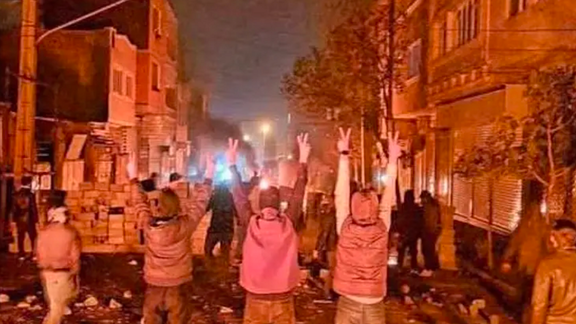
The Islamic Republic continues to use a wide range of punishments for anyone who protests its conduct, but the range of its torture techniques is increasing during the current protests. 

The regime’s security forces use violence against protesters on streets, kicking them violently, beating them with batons and shooting at them, but the psychological and physical torture that they exert on detained protesters are harsher and unrelenting. 

The regime’s agents beat protesters so badly that in some cases when they appear in court the scars and bruises are so obvious that people can easily understand confessions were made under duress. 

The Center for Human Rights in Iran said December 6 that there have been many reports of detained university students being tortured and sexually abused while in state custody. Soha Mortezaei, a former Tehran University female student, who has been repeatedly arrested for engaging in peaceful activism, was physically and sexually assaulted while being transferred to Evin prison after her arrest. “Officers tied Soha’s right hand to the top of one seat and her right leg to the top of another seat while suspended, she was beaten and sexually abused by a female officer,” reported the University Students Trade Unions Council on November 27. 

Most of the protesters who are being kept in main prisons are mainly subjected to psychological torture but reports of physical torture get more attention from the public and rights groups. The detainees are constantly threatened to be killed or raped and some of them are victims of white torture, in which prisoners are kept in solitary confinement without any human contact for very long periods of time. 

Some protesters, who were usually injured during their arrests or became ill inside prisons, are deprived of medical care or treatment for their wounds as a form of torture. The protesters who are suffering from chronic conditions and need daily medication are put under pressure by not giving them their medicines. 

Faraz Haghighatjou, a resident of Shiraz and a member of the oppressed Baha’i religious group, who was arrested during protests in December, once called his family and asked for his medicines and warm clothes but his family could not even find out where he is being kept. 

A political graffiti in support of the protests  (undated)
100%
A political graffiti in support of the protests

Imprisoned civil and human rights activist Narges Mohammadi last week recounted harrowing details of what is happening inside the women's ward of Tehran’s notorious Evin prison. She said almost all 60 female prisoners there have experienced "terrible inhumane tortures". These women spent from several months to about two years in solitary confinement, some without any human contact.

Another report released by an activist group earlier in the week says 16 young people arrested in Urumieh in November, including several minors, have been tortured and threatened with rape to incriminate each other. The group said that IRGC’s intelligence organization in West Azarbaijan Province has been torturing these young people to ‘confess’ against each other and say they are in contact with foreign intelligence services.

The protesters who were executed by the regime on trumped up charges in December were also said to have confessed to crimes they did not commit under physical and mental torture in prison. 

A victim from the religious city of Mashhad in northeastern Iran, said she and eleven others were stripped in front of male officers and then forced to squat jump while the officers “frenziedly laughed.” Others have also said officers had groped their backsides and squeezed their breasts during arrest and interrogations. Many say they were threatened with rape or even rape of their family members.

Armita Abbasi, a young woman of 20, was reportedly raped brutally after being arrested on October 10. She was taken to a hospital in Karaj on October 18 by security forces with multiple injuries including rectal bleeding and evidence of repeated rape. Reportedly, they tried to pressure the doctors to attribute the rape trauma evidence to a time prior to her arrest.

Influential Sunni cleric Mowlavi Abdolhamid in his Friday sermon December 23 referred to reports of rape and torture of detainees. In a tweet on December 5, Abdolhamid had said the accounts of sexual assault on female detainees to humiliate them or to force them to make false “confessions” against themselves corroborate the allegations made by the media.

In a report on December 21 entitled “Brutal Repression in Kurdistan Capital”, Human Rights Watch said it has documented serious abuses, including sexual harassment and assault against detainees.

Such incidents have been reported from detention centers, prisons, and sometimes in places outside the official system such as warehouses out of town in several major cities including Esfahan, Rasht, Tehran, Karaj, Bandar Abbas, Ahvaz, Tabriz, Sanandaj, Amol, and Mashhad.

The torture of prisoners is not limited to the protesters arrested in the current wave of nationwide rallies ignited by the death of 22-year-old Mahsa Amini. The regime is known for its inhumane methods regularly reported by human rights groups.

In a letter by Sepideh Kashani, one of the ecologists and environmentalists detained since 2018 based on accusations of spying for foreign governments, said her interrogators tortured and threatened her with sexual assault for over 1,200 hours during the eight months that she was held incommunicado. She said that her interrogators forced her to stand for hours and was not even allowed to lean his head against the wall. She added that she was being interrogated in a room whose walls were covered by the blood of other protesters.


Most Viewed

Ideology may be fading in Iran, but not in Kashmir's ‘Mini Iran'
1
INSIGHT

Ideology may be fading in Iran, but not in Kashmir's ‘Mini Iran'

2
INSIGHT

Hardliners push Hormuz ‘red line’ as US blockade tests Iran’s leverage

3
VOICES FROM IRAN

Hope and anger in Iran as fragile ceasefire persists

4

US sanctions oil network tied to Iranian tycoon Shamkhani

5

Iran International says it won’t be silenced after London arson attack

Banner
Banner

Spotlight

  • Hardliners push Hormuz ‘red line’ as US blockade tests Iran’s leverage
    INSIGHT

    Hardliners push Hormuz ‘red line’ as US blockade tests Iran’s leverage

  • Ideology may be fading in Iran, but not in Kashmir's ‘Mini Iran'
    INSIGHT

    Ideology may be fading in Iran, but not in Kashmir's ‘Mini Iran'

  • War damage amounts to $3,000 per Iranian, with blockade set to add to losses
    INSIGHT

    War damage amounts to $3,000 per Iranian, with blockade set to add to losses

  • Why the $100 billion Hormuz toll revenue is a myth
    ANALYSIS

    Why the $100 billion Hormuz toll revenue is a myth

  • US blockade targets Iran oil boom amid regional disruption
    ANALYSIS

    US blockade targets Iran oil boom amid regional disruption

  • Iran's digital economy battered by prolonged blackout
    INSIGHT

    Iran's digital economy battered by prolonged blackout

•
•
•

More Stories

US Senators Hail New Western Sanctions On Iran

Jan 25, 2023, 14:19 GMT+0

The US Senate Foreign Relations Committee has hailed the move by the western countries to impose a new round of sanctions on the Islamic Republic.

The Committee said in a tweet Wednesday that “it is pleased to see the US, UK, and the EU impose these latest sanctions on Iran, including on IRGC officials responsible for brutal violence against protesters.”

Iran has been the scene of anti-regime protests since mid-September when 22-year-old Kurdish woman Mahsa Amini was killed in police custody. The Iranian authorities used deadly violence in dealing with protesters killing over 500 and detaining almost 20,000.

The clerical rulers have also executed four young protesters on charges of “War against God” and “corruption on earth” so far.

“Our message to the regime in Tehran is stronger when we speak with one voice,” the US Senate Foreign Relations added.

Meanwhile, Republican Senator Rick Scott told Iran International that "We should not be negotiating with Iran except to make sure they start giving liberty and freedom to their citizens and stop being a menace to the world.”

The brutal suppression of the popular protests by the Islamic Republic has been widely condemned in the world by governments, politicians and influential public figures.

The United States and its European allies say that they are not focused on nuclear talks with Iran because of Tehran’s human rights violations and its supply of military drones to Russia.

Former Iran Spokesman Says Only Ballot Box Can Save The Country

Jan 25, 2023, 11:51 GMT+0
•
Iran International Newsroom

Four months after the start of nationwide protests in Iran, politicians and academics have begun probing into the consequences and implications of the movement.

Speaking at a seminar about the protests and their socio-economic and political implications, Former Government Spokesman Ali Rabiei opined that the Iranian government can still prevent an upcoming crises by correcting its policies and reform its domestic politics.

Rabiei, who served under former President Hassan Rouhani, said that recent developments showed that what can save the country from further trouble is the ballot box. He added: "Ballot boxes can turn the outcry in the streets into systematic behavior.

Hardliners in Iran have controlled latest parliamentary and presidential elections tightly, disqualifying so-called reformist from running and establishing full control over the government. Those who were prevented from a share of power, including many from Rouhani administration, blame the current political and economic crisis on this monopoly of power by hardliners.

Rabiei added that reforms also need to be made in the economic, cultural and media policies, stressing that cultural values in Iran should be made consistent with the modern thinking of the young generation.

"Those involved in business have very well realized that the most important impact of recent protests is lack of confidence in the economy and lack of predictability of economic trends. Lack of investment in recent years is an outcome of insecurity. Now it is not only academic and scientific elites that leave the country for good; investors and entrepreneurs are also emigrating," Rabiei said.

Participants at the seminar on protests. January 24, 2023
100%
Participants at the seminar on protests. January 24, 2023

He pointed out that unlike what Iranian hardliners say, sanctions have left a badly hurt the economy and the poor working class in Iran. At the same time, if Iran does not send signals of reform to the outside world, further sanctions will be on their way to exert more pressure on the economy. He urged officials to avoid further tensions in Iran’s foreign policy by refraining from provocative and outlandish analyses."

Meanwhile, prominent sociologist Mohammad Fazeli said at the conference sponsored by Donya-ye Eqtesad daily that "Both sides in the Iranian protests need to make concessions. But this needs to start with the government, although both sides should come forward step by step."

Economist and former Central bank Governor Hossein Abdoh Tabrizi said: "By looking at the protests, one might think initially that they are not predominantly rooted in the economy. Nonetheless, there are massive economic grievances such as the problems of recession, inflation, unemployment, financial corruption, and lack of investment lingering for a long time. Undoubtedly, a majority of the people are concerned about these problems."

He said: "Iranian officials have never looked at economics as a science. So, everyone including officials tend to express opinions without having any expertise.

Meanwhile, Iranian journalist and political analyst Ahmad Zeidabadi, said that during the protests "If the government's instinct for survival gives way to changes, and protesters show some flexibility, then everything will look better. Previous government supporters have now turned into militant elements while former militants have become more violent. This is not in anyone's interest."

Zeidabadi is one of a few people who is not a hardliner but allowed to regularly express opinions in newspapers as long as he does not question Supreme Leader Ali Khamenei and the essence of the regime.

He then expressed concern about a revolution, echoing the regime’s alarmist propaganda to dissuade the people from pursuing a regime change. "My preference is not to choose confrontation and regime change as there is no chance for our victory in the short-run. If the situation becomes too unstable, then there will be a collapse. Then, the masses might follow a Fascist individual and totalitarianism might prevail. The only chance for the government is to show signs of change. We have only these two approaches ahead of us."

Two Dozen Iranian Journalists Still Behind Bars

Jan 25, 2023, 10:35 GMT+0

Iranian Journalists Association has published a new list of two dozen journalists who are still in detention after widespread arrets during antigovernment protests.

The Committee to Follow up on Situation of Arrested Journalists has prepared a list of these people saying at least 24 journalists are still under arrest.

Based on official and unofficial reports, the association says almost 100 journalists have been arrested or summoned since the beginning of anti-regime protests in mid-September, and some of them released on bail.

Elaheh Mohammadi and Niloufar Hamedi, who published the news about the death of Mahsa Amini in police custody for the first time, are among the ones behind bars.

The committee also noted that it will soon publish a separate list of the names of journalists who have been temporarily released on bail.

Meanwhile, the reformist Ham-Mihan daily in a report on Wednesday said large bails are set for the temporary release of the detained protesters.

According to this report, the bail set for journalists was usually between 30 to 40 thousand US dollars, an astronomical sum for most Iranians.

In the past weeks, a number of detained journalists received heavy jail sentences, including Ehsan Pirbornash, who was sentenced to 18 years in prison.

In its 43-year history, the Islamic Republic has arrested hundreds of journalists, and many have been killed inside and outside prisons. The regime keeps tight control over all print media and has a monopoly over radio and television. It also tightly censors Internet content by blocking thousands of websites and major social media platforms.

Ex-Hostages Call On World To Stand Up Against Islamic Republic

Jan 25, 2023, 09:54 GMT+0

Several former foreigners and dual citizens held hostage in Iran as well as their families have launched an online campaign to demand release of Iranian political prisoners. 

Several former foreigners and dual citizens held hostage in Iran as well as their families have launched an online campaign to demand release of Iranian political prisoners. 

British-Iranian businessman Anoosheh Ashoori and his daughter Elika, Kylie Moore-Gilbert, an Australian academic previously jailed in Iran for over two years, Ghazal Sharmand, the daughter of German-Iranian journalist and software engineer Jamshid Sharmahd – facing execution in Iran, and the daughter of Nahid Taghavi, another German-Iranian rights activist sentenced to 10 years in Iran since October 2020 are among the most prominent figures in the campaign. 

Sharmand’s daughter said the campaign is aimed at showing the world “that the Islamic Regime’s terror extends outside of Iran’s borders, and no one is safe until we all stand up.”

Ashoori’s daughter said in a tweet that “The Islamic Republic continues its cruel practice of hostage taking, rape, torture and murder to rule by fear.” 

“We’re merely a handful of families affected by this barbarity. We come together to raise awareness on the issue and appeal to the public to stand up against this regime,” she added. 

Earlier in the week, Siamak Namazi, who has been kept in jail since October 2015 on trumped-up espionage charges, finished a one-week hunger strike. He released a statement saying that the seven-day hunger strike has left his body a bit weaker, but also, thanks to strong support, his spirit is greatly invigorated. 

Iranian Security Forces Fired Pellets, Blinding Many Protesters

Jan 24, 2023, 20:11 GMT+0
•
Maryam Sinaiee

Several young Iranians who lost one or both eyes after security forces fired pellets at their faces, say they do not regret having protested against the regime.

“I don’t feel miserable because of what happened. I lost some things but gained many others,” Kowsar (Mahbanou) Khoshnoudi-Kia, a young athlete who was shot in the left eye during an anti-government protest in Kermanshah in western Iran on December 9 said in a video post.

Khoshoudi-Kia, a member of the Iranian women’s archery national team and the runner-up of the Asian Archery Championships in 2021, said despite several operations in the past two months doctors have not been able to restore her eyesight.

The incident happened while Khoshnoudi-Nia and her father participated in a “silent march”. “The anti-riot police shot at us, and we were both wounded. Two pellets hit my father’s left arm. I was hit with three in the left arm and one in the left eye,” she said in the video.

Security forces in Iran use a shotgun shell known as ‘bird shot’ with small metal pellets that is less likely to kill from a distance but can indiscriminately blind people in a crowd. Some protesters who were shot at close range died from the birdshots.

Farideh Salavatipour, another victim who was shot in Sanandaj in west Iran on November 17 has lost both eyes and there is no hope to restore her eyesight. A photo of her showing her injuries with blood trickling down from one of her eyes down her face dotted with at least eighteen birdshots was published on social media because she said she did not want to remain anonymous and be forgotten.

On December 14, the head of the accident and emergency ward of Sina Hospital in Tehran, Hossein Kermanpour, told Ham Mihan newspaper that eye injuries were at the top of all injuries sustained by protesters who were shot with pellets and birdshots.

Kermanpour added that security forces who are not properly trained cause the high number of serious injuries because they shot the victims from close distances. He also pointed out that in some instances the shooting caused injuries in the lungs and in the genital area.

A woman targeted by shotgun 'birdshots' during protests in October
100%
A woman targeted by shotgun 'birdshots' during protests in October

Some of the victims have, however, claimed that they were purposely shot in the face or in the genital area. “Why did you shoot me? Why were you smiling when you did?” Ghazal Ranjkesh who has lost one of her eyes asked her assailant in an Instagram post. A photo she has shared of her face shows injuries from tens of birdshots. Ranjkesh was shot during a protest in Bandar Abbas in southern Iran.

According to Kermanpour, some of the victims fearing arrest if they’d sought treatment in hospitals, sometimes only did so several days after the injury and when infection had set in.

The number of protesters who were wounded in the eye during the recent protests is not known but is estimated to amount to hundreds of cases.

A group of ophthalmology professors and doctors in November warned about the high number of eye injuries caused by pellets, birdshots and paintball guns during the protests that started four months ago, and said in many cases the injuries had led to the loss of one or both eyes.

During protests in November 2021 in Esfahan in central Iran tens of protesters were also shot in the eyes. A medical official told Iranian state television at the time that 40 people had been treated for eye injuries sustained during the protests, with 19 hospitalized. An injured eye became a social-media symbol for the suppression of the protests, with many activists posting images of bloody eyes or people holding bandage to an eye