• العربية
  • فارسی
Brand
  • Iran Insight
  • Politics
  • Economy
  • Analysis
  • Special Report
  • Opinion
  • Podcast
  • Iran Insight
  • Politics
  • Economy
  • Analysis
  • Special Report
  • Opinion
  • Podcast
  • Theme
  • Language
    • العربية
    • فارسی
  • Iran Insight
  • Politics
  • Economy
  • Analysis
  • Special Report
  • Opinion
  • Podcast
All rights reserved for Volant Media UK Limited
volant media logo

Iran Hit By Arctic Winter, Gas Shortage And Shambolic Management
Iran International Newsroom
Jan 16, 2023, 11:26 GMT+0Updated: 17:41 GMT+1
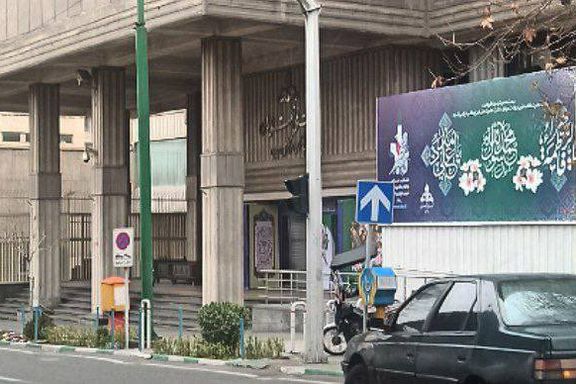
Iran's oil ministry's main office closed due to shortage of natural gas. January 15, 2023

Damning evidence of shambolic management by the government has surfaced in Iranian media as freezing arctic weather and energy shortages have hit the country.

According to Rouydad24 website, during the past days the government has been so overwhelmingly surprised by the impact of a mixture of cold weather and a natural gas shortage that different officials announced several conflicting plans ranging from a total closure of private and public businesses and schools to shutting down factories and poultry breeding farms causing massive financial loss.

"Not only they do not know how to supply gas to homes, schools and businesses, they also don’t know how to handle the scandal," Rouydad 24 quoted a citizen in Tehran.

The government spent all Friday evening and Saturday morning correcting or cancelling previous announcements. In the meantime, parts of the country including the Khorasan region spent days in darkness and freezing cold. In Torbat-e Jaam, the local governor said no one in the government can do anything for the problem.

Social media users and other media outlets in Iran sarcastically noted that while Iranian officials including nuclear negotiating team member Mohammad Marandi and Oil Minister Javad Owji had predicted a difficult winter for Europe, no European country is facing a winter harder than what Iranians are currently experiencing.

But hardliner media such as Kayhan newspaper as well as hardliners on social media repeated fabricated stories about Europe's inability to cope with the winter cold. Kayhan said people in the UK are burning cat pooh to keep their homes warm!

People have lined up in Torbat-e Jaam, northeast Iran to refill gas capsules. January 14, 20233
100%
People have lined up in Torbat-e Jaam, northeast Iran to refill gas capsules. January 14, 20233

Visiting a gas supply center Sunday morning, President Ebrahim Raisi promised to solve the problem by no later than 2026! At the same time, people in many parts of Iran rushed to dangerous makeshift gas supply centers where profiteers filled their small capsules with liquid gas out of pressurized larger cylinders. Iran International TV showed citizens in Babol in northern Iran going from one gas station to another only to find out that neither gasoline nor natural gas (LNG) was available.

During the past two days all that the government could think of as a solution was closing down offices and businesses and suggesting that people should put on warm clothing. Even pro-government media such as the ultraconservative Farhikhtegan newspaper criticized the government.

Rouydad24 recalled a statement by Majles Speaker Mohammad Bagher Ghalibaf who had said to Fars news agency: "The government has no plan or objective about what it needs to do. And where it has a plan, it lacks a will to carry it out." This comes while the government understands it cannot produce enough gas to keep everyone warm during winters and to keep industry going.

Meanwhile, Khabar Online website attributed the problems to the government's wrong analysis and its failure to see that the winter was going to hit Iran harder than Europe. The website charged that Raisi is lost among his ill-informed advisers such as Mohammad Marandi.

Khabar Online recalled that Oil Minister Javad Owji had said last year that "Iran is capable of supplying gas to its neighbors and even to Europe." Later, like Marandi, the oil minister also predicted on live TV that "Europe will be facing a difficult winter." According to Khabar Online, Iranian "experts" working with the Raisi administration are still not quite sure whether Iranian are burning more gas at home or at their outdated industries. The website said that what the "experts" tell the government is based on "wrong data."

Iran has massive oil and gas resources, but it desperately needs investment and Western technology to utilize those resources. But this is not likely to materialize before Tehran can resolve its foreign policy impasse with the West.


Most Viewed

Ghalibaf defends Iran-US talks amid hardline backlash
1
INSIGHT

Ghalibaf defends Iran-US talks amid hardline backlash

2
ANALYSIS

From instability to influence: Pakistan’s pivotal role in US-Iran diplomacy

3
ANALYSIS

100 days on: why Iran’s January protests spread across social classes

4

War-hit homeowners feel abandoned as Iran’s reconstruction aid fades

5

Iran says no decision yet on talks as Pakistan prepares to host US team

Banner
Banner

Spotlight

  • Iran diplomacy wobbles as factions compete to avoid looking soft on US
    INSIGHT

    Iran diplomacy wobbles as factions compete to avoid looking soft on US

  • The politics of pink: how Iran uses cuteness to rebrand violence
    ANALYSIS

    The politics of pink: how Iran uses cuteness to rebrand violence

  • Bread shortages, soaring prices strain households in Iran, residents say
    VOICES FROM IRAN

    Bread shortages, soaring prices strain households in Iran, residents say

  • 100 days on: the anatomy of Iran’s January crackdown
    INSIGHT

    100 days on: the anatomy of Iran’s January crackdown

  • Ghalibaf defends Iran-US talks amid hardline backlash
    INSIGHT

    Ghalibaf defends Iran-US talks amid hardline backlash

  • From instability to influence: Pakistan’s pivotal role in US-Iran diplomacy
    ANALYSIS

    From instability to influence: Pakistan’s pivotal role in US-Iran diplomacy

•
•
•

More Stories

Iran’s Steel Production To Be Cut Dramatically Amid Gas Shortage

Jan 15, 2023, 22:28 GMT+0

An Iranian industrialist says the gas and electricity shortage will probably lead to a two-million-ton decrease in the country’s steel production.

In an interview with ILNA on Sunday, Reza Shahrestani said there is a severe gas shortage in steel companies, adding that the steel industry needs 40 million cubic meters of gas daily, but at present their consumption has reached 15 million cubic meters per day.

He further added that almost 50% of the electricity supply for industries has been cut off too.

“Gas shortage has also led to electricity shortage because the current amount of natural gas does not meet the needs of power plants to produce electricity,” he underlined.

“It seems that the gas and electricity shortage will be more severe next year and if it continues like this. It will have a tangible impact on the production rate of all industries,” said the member of board of directors of the Steel Manufacturers Association.

“In my opinion, the people, who are in office at the oil ministry, are not up to the task, so we are witnessing inefficiency in all fields,” reiterated Shahrestani.

While the Islamic Republic officials predicted a bad winter in Europe, offices and schools in Iran have been closed for days due to a serious natural gas shortage.

Iran has failed to invest in its gas production sector, although it has the world’s second largest reserves. The distribution network also needs upgrades as more than 25 percent of the gas is lost during transfer.

UK Reconsidering Support For Iran Deal After Akbari’s Execution

Jan 15, 2023, 13:22 GMT+0
•
Iran International Newsroom

After Iran executed British-Iranian national Alireza Akbari reports say London is reconsidering its support for reviving the 2015 Iran nuclear deal.

Tehran announced on Saturday that it executed the former deputy defense minister, Alireza Akbari, after sentencing him to death on charges of spying for Britain’s MI6.

Before his death, an audio file was leaked where he claimed to have been tortured for 3,500 hours. Akbari said in the tape the regime had forced him to confess to crimes he had not committed.

Following the execution, The Sunday Telegraph said the UK is reconsidering its support for the 2015 nuclear deal known as the JCPOA, dealing another blow to the chances of reviving the accord. Britain has been a key player in the talks on restoring the Obama-era deal, abandoned by former US President Donald Trump.

The Sunday Telegraph cited senior – but unnamed -- British government sources as saying that the “landscape” has changed significantly since negotiations began in 2021, and as such Britain is now reviewing its options regarding its future involvement in renewing the deal.

“During the time we have been dealing with it, the landscape and proposition has completely changed – largely because of the behavior of the Iranian regime,” a government source said. The sources pointed out that the relationship with Tehran has been under severe strain in recent months due to its brutal repression of protests, ignited by the death in custody of Mahsa Amini. Meanwhile, Downing Street said “all options are under review” following the execution of Akbari.

Foreign Secretary James Cleverly has also announced a series of measures in response to the execution, including sanctioning the regime’s prosecutor general and summoning Iran’s charge d’affaires to convey Britain’s “disgust”. He said the sanctions show that the UK is serious about holding Iran to account for its “appalling human rights violations”.

The British ambassador to Iran has also been temporarily recalled to the UK for urgent talks about possible next steps. Cleverly is also set to travel to Washington DC on Monday for talks with US Secretary of State Antony Blinken where the two will discuss Iran.

UK Foreign Secretary James Cleverly (left) and US Secretary of State Antony Blinken (September 2022)
100%
UK Foreign Secretary James Cleverly (left) and US Secretary of State Antony Blinken

On Saturday, Rishi Sunak accused the regime of a “callous and cowardly act, carried out by a barbaric regime with no respect for the human rights of their own people”.

Ramin Forghani, Akbari’s nephew who fled to Luxembourg because of his opposition to the regime, has said that continuing the discussions with Iran would be “unthinkable”.

Britain is already drawing up plans to proscribe Iran’s Revolutionary Guard (IRGC) as a terrorist organization.

Britain has also received support from the United States, France and Germany, all signatories of the JCPOA, in its condemnation of the execution.

Since negotiations to revive the nuclear deal or JCPOA broke down in September, the Biden administration and its European allies have put the talks on the backburner and even President Joe Biden said in early November that “JCPOA is dead.” 

Akbari’s execution is a major escalation in tensions between the West and the Islamic Republic, which were already sour over Tehran’s crackdown on nationwide antigovernment protests and its military support for Russia’s invasion of Ukraine.

Akbari had been deputy defense minister under the reformist President Mohammad Khatami, from 1997 to 2005. He was an advocate of the Iran nuclear deal known as the JCPOA that was eventually signed in 2015 with world powers.

He was also close to Ali Shamkhani, the secretary of the Supreme National Security Council of Iran. A source close to the Islamic Revolutionary Guard Corps has provided information to Iran International showing that the execution of Akbari is aimed at weakening Shamkhani’s position in the clerical regime. It seems that President Ebrahim Raisi, Intelligence Minister Esmail Khatib and Interior Minister Ahmed Vahidi are exerting pressure to remove Shamkhani from the post.

Ideological, Propaganda Outfits In Iran Receive Hefty Budget Boosts

Jan 15, 2023, 09:14 GMT+0
•
Iran International Newsroom

Iran's government has allocated 75 trillion rials or almost $200 million in its proposed annual budget for the state broadcaster IRIB, its main propaganda outfit.

The IRIB's budget for the Iranian year 1402 which starts on March 21, has grown by 42 percent compared to last year's budget.

Some observers have attributed the rise in the state TV's budget to IRIB Chief Payman Jebelli's development plans for the organization. But the 7-fold rise in IRIB's annual budget since 2018 or its 4-fold increase since the inauguration of President Ebrahim Raisi in 2021 can be explained as a way of helping the state television to cope with the sharp devaluation of Iranian currency.

The Raisi administration started with a rate of exchange for US dollar of 250,000 rials which has so far risen to around 400,000 rials.

Last year, the state TV's budget was larger than the budgets allocated of 16 government ministries. This year, it is more than the budget for any Iranian province other than the Fars Province. Nonetheless, according to many critics and media including Khabar Online its audience has been declining since 2017.

While the budgets of the education ministry or other essential institutions have in real terms declined because of the worthless rials they receive, the hardliners ruling in Iran have made sure their main propaganda and repression outfits are well compensated for the de facto devaluation of the national currency.

Despite this, IRIB's output has been decreasing. Some of the TV series made on hefty budgets has had only 16 percent popularity according to the IRIB's own research center. Meanwhile, the broadcaster had to pull several entertainment programs that TV host Reza Dorostkar called "rubbish".

IRIB "journalists-interrogators" Ameneh Sadat and Ali Rezvani in an undated photo
100%
IRIB "journalists-interrogators" Ameneh Sadat and Ali Rezvani in an undated photo

But for the regime perhaps the more important thing is that IRIB broadcasts confessions of dissidents obtained under torture. Two of its so-called journalists are active interrogators of political prisoners.

The 42-percent rise in IRIB's budget becomes meaningful when we consider a minimal 20-percent salary increase for government employees in the face of an at least 50-percent inflation rate. An example of the extravagant rise in IRIB's budget is the amount allocated to the broadcaster's supervisory board which has only 6 members, all regime insiders. The budget for the supervisory board has increased from 70 billion rials two years ago to 90 billion rials last year and 145 billion rials for the coming Iranian year on March 21.

Nonetheless, the state TV is not the only organization receiving a hefty annual budget for the coming year. There are tens of religious and ideological propaganda organizations that are not accountable to anyone and have no checks and balances for their financial turnover.

According to economic journalists in Iran, The budget for Propaganda Office of the Qom Seminary has increased by 54.4 percent, The organization that runs Ruhollah Khomeini's tomb has received a 71.4 percent rise, the organizations that protects the relics of the 1980s war with Iraq received a 159.2 percent boost and the office of Supreme Leader Ali Khamenei's representatives at the universities rose by over 40 percent.

Reports also say that among Iranian security organizations, the Intelligence Ministry got a 43 percent rise while the the police force got is 41 percent, the Army's Joint Chief of Staff got 32.5 percent, the IRGC 48 percent and the Basij 11.5 percent.

The substantially enlarged draft state budget, which is heavily dependent on tax revenues, will kickstart a month-long review of the bill before parliament holds a vote to approve it and turn it into a law. Last year the Majles changed some of the figures presented by the government in budget bill, but the parliament complained later that the Raisi administration spent the budget in its own way rather than sticking to the what the Majles had approved.

Natural Gas Shortage In Iran Shuts Schools, State Organizations

Jan 14, 2023, 17:12 GMT+0
•
Iran International Newsroom

While Islamic Republic officials predicted a bad winter in Europe, offices, and schools in Iran have been closed for days due to a serious natural gas shortage.

Gas supplies to homes, which the government tried to protect in past cold season crunches, have also been interrupted in some regions.

In addition to power outages and the closure of some CNG (Compressed natural gas) stations due to the shortages, the crisis is getting graver day by day and it is estimated that natural gas will be cut off in more regions of Iran this week.

However, Iran’s Foreign Minister Hossein Amir-Abdollahian, said during his meeting with the Lebanese authorities on Friday that Iran is ready to send diesel fuel to Lebanon claiming that the country already exports natural gas to Iraq and some other countries as well.

Several social media users reacted to Amir-Abdollahian's comments, saying that the Islamic Republic is begging Lebanon to accept Iran's diesel, while people in Iran do not have natural gas amid the cold snap.

Iranians on social media believe sending of fuel to Lebanon in a situation that Iran is facing an energy crisis, shows the adventurism of the Islamic Republic in the region.

With natural gas shortage, Iran resorts to burning mazut at power stations, which is an extremely polluting fuel compared with cleaner diesel.

The natural gas shortage, which had put more than half of the cities in a semi-closed state in the past days, continued Saturday. In capital Tehran, in addition to schools and educational centers, government offices except for banks were closed.

Iran's oil minister Javad Owji, who asked people to alert intelligence services if neighbors use too much gas. June 2, 2022
100%
Iran's oil minister Javad Owji, who asked people to alert intelligence services if neighbors use too much gas

In the provinces of Mazandaran, Esfahan, Qazvin, East Azarbaijan, Alborz, Gilan, Qom and South Khorasan, offices, organizations, schools, and universities were shut down.

Amid this crisis, however, Iranian Oil Minister Javad Owji, went as far as asking people to report "suspicious cases of excessive gas consumption by neighbors" or "enemies' movements to disrupt the gas network" to the intelligence ministry or the IRGC intelligence.

This was a typical example of Iranian officials resorting to threats by intelligence agencies and claims of “enemy” activity as the reason for a problem entirely due to their shortcomings.

Iran has failed to invest in its gas production sector, although it has the world’s second largest reserves, while with extremely cheap prices for consumers, usage has been increasing ever faster. The distribution network also needs upgrades as more than 25 percent of the gas is lost during transfer.

Iran's gas production and extraction capacity is limited to around 800 million cubic meters per day.

According to the ministry of energy, about 650 million cubic meters are consumed in the domestic, commercial, and administrative sectors, however, the data has changed a lot in different years and contradict international estimates.

The international energy organizations say less than 40% of Iran's natural gas is consumed at homes, but the Islamic Republic is trying to blame the shortage of gas on home users.

Some Iranian officials including Mohammad Marandi, who was a member of the Iranian nuclear negotiating team, have been saying since last summer that "a hard winter in Europe" will force European powers to come back to the negotiating table. Marandi had predicted: "The winter is coming, and the EU will have to face a paralyzing energy crisis."

Hard-line officials were making these claims while Iran does not produce enough to export and has no way of shipping it to Europe.

Big Divide Between People, Government In Iran Raises ‘Red Warning’

Jan 14, 2023, 10:59 GMT+0
•
Iran International Newsroom

Political pundit Mehrdad Lahouti in Tehran says the divide between officials and the people is so serious as if there was a concrete wall between them.

Lahouti also criticized the Iranian government for not communicating with the world in the right way. Referring to the ideological divide between Iran and the international community, He said: "We should communicate with the world while preserving our values." Lahouti added in his interview with Nameh News website that "In an interconnected world, we cannot remain isolated."

Without mentioning the ongoing protests in Iran, Lahouti said: "The current political atmosphere has convinced some Iranian officials that the system of governance should be changed." He added that this s in fact what the Iranian nation is demanding.

Explaining what he means by changing the system of governance, Lahouti said: "First of all, we need to break the international consensus against Iran by communicating with the world. The second point is that we need to reform our economic structure." He explained that the government currently controls 80 percent of the economy, and this means it does not trust the people.

"The same distrust also exists in the political space. The government does not seek the people's views in matters such as accepting the terms of the FATF while the parliament and the Guardian Council are still undecided about that. The same is also true about the JCPOA."

Iranian pundit and politician Mehrdad Lahouti
100%
Iranian pundit and politician Mehrdad Lahouti

The Financial Action Task Force is an inter-government financial watchdog that has blacklisted Iran, demanding legal reforms to prevent money laundering and financing of terrorism.

Tehran has dragged its feet since 2017 on passing compatible legislation.

Meanwhile, the secretary general of the reformist Jomhouriat party Rasoul Montajabnia warned the government by saying: "You cannot silence the people by using force against them." Referring to harsh treatment of jailed protesters in Iran, he said, "No one can be convinced by use of force." He reiterated: "By use of force you might be able to silence the people, but you cannot convince them and the fire under the ashes will flare up once again on the smallest pretext."

Montajabnia quoted Iranian officials that hundreds of protesters have been killed and thousands wounded so far, and a lot of damage done to public assets. However, he continued, "The hardest blows were dealt to the prestige and image of the Iranian political system and the Islamic revolution while at the same time, a vast divide was created between officials and the people, particularly the Iranian youth."

Iranian 'reformist' politician Rasoul Montajabnia
100%
Iranian 'reformist' politician Rasoul Montajabnia

"People's religious beliefs also received a hard blow, and the resulting suspicion of the government's intentions can be hardly compensated for," the reformist figure said.

Referring to the country's current all-conservative political establishment, Montajabnia charged that "A particular gang has taken over the political system by pushing everyone else aside and dividing the people into outsiders and insiders."

A report on Khabar Online website also referred to this divide and asked Expediency Council Ahmad Tavakoli about prospects. Tavakoli issued a "red warning" to the government about this divide and said that the poor might take over the streets.

Khabar Online also quoted Iranian economist Mohammad Khoshchehreh as saying that the current situation is the outcome of the regime's miscalculation in its attempt to concentrate power with conservatives. He said: "Some Iranian politicians believe that people can be controlled better when they are poor. When they are better off they begin to question the government. Now a majority of Iranians have become poor. Part of the middle class has disappeared. Only one fourth of Iranians can afford buying milk. These are serious threats that cannot be ignored."

He added that generally, the pattern of economic growth and development in Iran has become problematic and the system cannot go any further before these problems are solved.






