• العربية
  • فارسی
Brand
  • Iran Insight
  • Politics
  • Economy
  • Analysis
  • Special Report
  • Opinion
  • Podcast
  • Iran Insight
  • Politics
  • Economy
  • Analysis
  • Special Report
  • Opinion
  • Podcast
  • Theme
  • Language
    • العربية
    • فارسی
  • Iran Insight
  • Politics
  • Economy
  • Analysis
  • Special Report
  • Opinion
  • Podcast
All rights reserved for Volant Media UK Limited
volant media logo

Law Firm Says It Has ‘Top Secret’ Iranian Documents On Tanker Tragedy
Iran International Newsroom
Jan 14, 2023, 23:05 GMTUpdated: 17:40 GMT+1

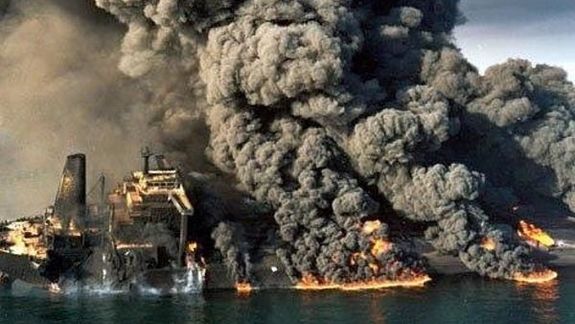
Two years after launching a case in Washington, law firm Herischi & Associates have announced a complaint in the British Maritime Court over the Sanchi tanker disaster.

Herischi & Associates, who are based in Bethesda, Maryland, say they have taken a case in the United Kingdom against the National Iranian Tanker Company (NITC), and against insurers for NITC and the Sanchi. The Panamanian-flagged, Iranian-owned tanker caught fire in January 2018 after colliding in the East China Sea, 530km south east of Shanghai, with a Hong-Kong registered Chinese cargo ship, the CF Crystal.

While the 21-strong Chinese crew were rescued, Iran announced that all 30 crew members on the Sanchi – 30 Iranians and two Bangladeshis - had died due to explosions, fire, and release of noxious gases resulting from a volatile 136,000-tonne cargo of natural-gas condensate.

But in a press release to publicize its latest case, Herischi & Associates claimed that the crewmen successfully left the ship, that the Sanchi was carrying a “secret cargo to be delivered secretly to North Korea,” and that 22 crew were alive in Iranian custody “weeks after the accident.” The press release gave no indication of what the secret cargo was.

Letter from Kim Jun Un

The law firm said it had discovered all this through gaining access to emails and recordings of Iranian officials, “volunteered sensitive information” from Iranian security forces, as well as “top secret Iranian documents” including a message from Revolutionary Guards intelligence to Iran’s Supreme Leader Ali Khamenei. Herischi & Associates even claimed to have a letter from North Korean leader Kim Jung Un to Iranian supreme leader Ali Khamenei “thanking him for delivery of the cargo and his sadness [sic] for the accident.”

Iran at the time announced that the Sanchi was sailing from Asaluyeh, Bushehr province, southern Iran, to South Korea. Nader Pasandeh, a senior official at Iran’s Ports and Maritime Organization, told reporters that the Crystal had caused the collision through human error.

But in early 2019, Iranian media carried reports of family members protesting outside the foreign ministry, the Chinese embassy and the presidential office. Relatives told Shargh, Hamshahri and other newspapers that they had received telephone calls, broken off as soon as answered, from sailor relatives who had been on the Sanchi. Mohammad Mehdi Boroumandi, who chaired a government committee into the disaster, said claims “about the Sanchi crew being taken hostage” were “based on hearsay,” while parliament member Mohammad Reza Kouchi called for an investigation into hoax calls.

‘Undisclosed location’

In December 2019, Herischi filed a lawsuit in a district court in Washington DC against the ‘National Iranian Tanker Company’ and named officials on behalf of families of ten crewmembers of the Sanchi. According to the law firm’s press release at that time, the families alleged “the crew of the Sanchi were seized after the collision” and had “been held in detention for nearly two years in an undisclosed location.” Herischi cited “the key piece of evidence” as “multiple phone calls…made from crewmembers’ cellphones to their relatives in the months following the ship’s destruction.”

In October 2020, Herischi announced thy were seeking over $1 billion damages for US citizens who lost relatives when a Ukrainian passenger airliner bound for Kyiv was January 2020 shot down over Tehran by a mobile missile launcher during high tensions with the US.


Most Viewed

US terminates green cards of 3 Iranians tied to Islamic Republic
1

US terminates green cards of 3 Iranians tied to Islamic Republic

2
PODCAST

Worst outcome is Islamic Republic’s survival, ex-CIA official says

3
ANALYSIS

Iran brings unusually broad team to US talks to blunt future blame

4
INSIGHT

Tehran sends tough message but keeps diplomacy door open

5

Zoroastrian religious figure arrested in Iran

Banner
Banner

Spotlight

  • Tehran sends tough message but keeps diplomacy door open
    INSIGHT

    Tehran sends tough message but keeps diplomacy door open

  • Worst outcome is Islamic Republic’s survival, ex-CIA official says
    PODCAST

    Worst outcome is Islamic Republic’s survival, ex-CIA official says

  • Why the Iran-US truce is more likely to buy time than peace
    ANALYSIS

    Why the Iran-US truce is more likely to buy time than peace

  • Engaged but uncommitted: China watches Iran and US fight and talk
    ANALYSIS

    Engaged but uncommitted: China watches Iran and US fight and talk

  • A truce for the world, a reckoning for Iran’s economy
    ANALYSIS

    A truce for the world, a reckoning for Iran’s economy

  • Why the world failed to bypass the Strait of Hormuz
    ANALYSIS

    Why the world failed to bypass the Strait of Hormuz

•
•
•

More Stories

Iran Regime To Execute More Protesters In Esfahan Province

Jan 14, 2023, 21:05 GMT

Concerns are growing over the possible execution of three more detained Iranian protesters, as reports say they have been transferred to solitary confinement.

Majid Kazemi and Saeed Yaqoubi arrested in Esfahan are reportedly taken to solitary confinement which is suggesting that they would be hanged soon.

Colleagues and family members of Majid Kazemi, who is sentenced to death have made a video appeal Saturday, demanding the release of the young protester.

In an audio file from prison on Friday, Majid Kazemi said he was forced to make false confessions under duress.

Saeed Yaqoubi and Saleh Mirhashmi are two other defendants in the case known as “Esfahan House” who have received the death penalty along with Majid Kazemi.

Saleh Mirhashmi said earlier that he has been tortured in detention and the agents have injured his ears and broken his teeth while beating him.

At the same time, Amir Nasr-Azadani, who used to play for several Iranian football teams, has released an audio file asking the sports community to support him.

Nasr-Azadani is another defendant in the case who earlier received a 26-year jail term. In his audio file, the former football player asked athletes and his friends to be his voice and support him.

The Islamic Republic accused several people in connection with an armed attack on November 16 on “Esfahan House” neighborhood claiming that two security forces and a police officer were killed by protesters.

Macron Condemns Execution Of British-Iranian National

Jan 14, 2023, 17:44 GMT

The execution of British-Iranian dual national Alireza Akbari is a heinous and barbaric act, French President Emmanuel Macron said on Saturday.

Macron said he stood in solidarity with Britain which has condemned the execution, which defied British and US calls for the 61-year-old Akbari's release after he was handed a death sentence on charges of spying for Britain.

“His name is added to the too long list of victims of repression and the death penalty in Iran. Solidarity with the United Kingdom. Solidarity with the Iranian people,” Macron said.

Macron’s statement came after both the British prime minister and foreign secretary harshly condemned Tehran’s act.

"I am appalled by the execution of British-Iranian citizen Alireza Akbari in Iran," British Prime Minister Rishi Sunak said on Twitter. "This was a callous and cowardly act, carried out by a barbaric regime with no respect for the human rights of their own people."

British Foreign Secretary James Cleverly also tweeted to say: "This barbaric act deserves condemnation in the strongest possible terms. This will not stand unchallenged."

In an audio recording from Akbari and broadcast by BBC Persian and Iran International, he said he had confessed to crimes he had not committed after long interrogation and extensive torture.

"After more than 3,500 hours of torture, psychedelic drugs, and physiological and psychological pressure, they took away my will. They drove me to the brink of madness. They instilled in me what they wanted and forced me to make false confessions at gunpoint and threats of death," Akbari said.

Natural Gas Shortage In Iran Shuts Schools, State Organizations

Jan 14, 2023, 17:12 GMT
•
Iran International Newsroom

While Islamic Republic officials predicted a bad winter in Europe, offices, and schools in Iran have been closed for days due to a serious natural gas shortage.

Gas supplies to homes, which the government tried to protect in past cold season crunches, have also been interrupted in some regions.

In addition to power outages and the closure of some CNG (Compressed natural gas) stations due to the shortages, the crisis is getting graver day by day and it is estimated that natural gas will be cut off in more regions of Iran this week.

However, Iran’s Foreign Minister Hossein Amir-Abdollahian, said during his meeting with the Lebanese authorities on Friday that Iran is ready to send diesel fuel to Lebanon claiming that the country already exports natural gas to Iraq and some other countries as well.

Several social media users reacted to Amir-Abdollahian's comments, saying that the Islamic Republic is begging Lebanon to accept Iran's diesel, while people in Iran do not have natural gas amid the cold snap.

Iranians on social media believe sending of fuel to Lebanon in a situation that Iran is facing an energy crisis, shows the adventurism of the Islamic Republic in the region.

With natural gas shortage, Iran resorts to burning mazut at power stations, which is an extremely polluting fuel compared with cleaner diesel.

The natural gas shortage, which had put more than half of the cities in a semi-closed state in the past days, continued Saturday. In capital Tehran, in addition to schools and educational centers, government offices except for banks were closed.

Iran's oil minister Javad Owji, who asked people to alert intelligence services if neighbors use too much gas. June 2, 2022
100%
Iran's oil minister Javad Owji, who asked people to alert intelligence services if neighbors use too much gas

In the provinces of Mazandaran, Esfahan, Qazvin, East Azarbaijan, Alborz, Gilan, Qom and South Khorasan, offices, organizations, schools, and universities were shut down.

Amid this crisis, however, Iranian Oil Minister Javad Owji, went as far as asking people to report "suspicious cases of excessive gas consumption by neighbors" or "enemies' movements to disrupt the gas network" to the intelligence ministry or the IRGC intelligence.

This was a typical example of Iranian officials resorting to threats by intelligence agencies and claims of “enemy” activity as the reason for a problem entirely due to their shortcomings.

Iran has failed to invest in its gas production sector, although it has the world’s second largest reserves, while with extremely cheap prices for consumers, usage has been increasing ever faster. The distribution network also needs upgrades as more than 25 percent of the gas is lost during transfer.

Iran's gas production and extraction capacity is limited to around 800 million cubic meters per day.

According to the ministry of energy, about 650 million cubic meters are consumed in the domestic, commercial, and administrative sectors, however, the data has changed a lot in different years and contradict international estimates.

The international energy organizations say less than 40% of Iran's natural gas is consumed at homes, but the Islamic Republic is trying to blame the shortage of gas on home users.

Some Iranian officials including Mohammad Marandi, who was a member of the Iranian nuclear negotiating team, have been saying since last summer that "a hard winter in Europe" will force European powers to come back to the negotiating table. Marandi had predicted: "The winter is coming, and the EU will have to face a paralyzing energy crisis."

Hard-line officials were making these claims while Iran does not produce enough to export and has no way of shipping it to Europe.

Iran Summons British Ambassador Over 'Subversive Activities'

Jan 14, 2023, 14:46 GMT

Iran summoned the British ambassador in Tehran Saturday to protest “the unconventional interferences, including in the security arena” of the Islamic Republic.

The Iranian regime announced earlier in the day that it had executed a former deputy defense minister and a dual British-Iranian citizen, soliciting a harsh condemnation by London.

"I am appalled by the execution of British-Iranian citizen Alireza Akbari in Iran," British Prime Minister Rishi Sunak said on Twitter. "This was a callous and cowardly act, carried out by a barbaric regime with no respect for the human rights of their own people."

Relations have deteriorated with the West after talks to restore the 2015 nuclear deal ended without a resolution in September, followed by deadly government violence against Iranian protesters that is estimated to have killed around 500 civilians. The government has also executed four protesters after holding sham trials.

Tehran has also supplied kamikaze drones to Russia, which are used against Ukraine’s civilian targets.

Fars news website affiliated with the Revolutionary Guard reported that Iran’s foreign ministry told the British ambassador Simon Shercliff about his country’s “subversive” activities incompatible with the national security of the Islamic Republic.

Shercliff has been summoned by the foreign ministry six times since antigovernment protests began in Iran in mid-September. Tehran rejects all Western criticism of its human rights violations and says the unrest is fomented by “enemies”, a term usually referring to the United States and its allies.

Iranian Politician Defends Death By Stoning ‘As Good Islamic Law’

Jan 14, 2023, 11:28 GMT

Iranian conservative politician and former diplomat Javad Larijani has defended stoning for adultery, saying it is a good Islamic law protecting “family values.”

Stoning, or lapidation, is a method of capital punishment where people throw stones at a person until the subject dies from blunt trauma. It is attested as a form of punishment for unlawful sexual intercourse.

In an interview with Fars website of the Revolutionary Guard Saturday, Iran’s former Secretary of High Council for Human Rights claimed some good laws have been passed by the Islamic Republic to protect women's rights.

He said stoning is one of the good Islamic laws and has been a very nice deterrent so far.

“When we say our women should enter the community, we should have provided them with a very safe work and social environment,” added Larijani stressing that “Stoning is a very important restraining law to protect the marriage contract of families.”

Stoning is not mentioned as a form of capital punishment in the canonical text of the Quran. However, Islamic scholars have traditionally postulated that there is a Quranic verse about it.

Death by stoning came into force in Iran after the 1979 revolution, but the judiciary placed a moratorium in 2002 and it was replaced by the death penalty more than a decade ago.

Victims are put in a ditch filled with sand. The stoning then begins, with rocks relentlessly pummeling the victims until they die.

A doctor recruited to oversee the execution will pause the stoning periodically to check whether the victim is dead. If not, the battering continues.