• العربية
  • فارسی
Brand
  • Iran Insight
  • Politics
  • Economy
  • Analysis
  • Special Report
  • Opinion
  • Podcast
  • Iran Insight
  • Politics
  • Economy
  • Analysis
  • Special Report
  • Opinion
  • Podcast
  • Theme
  • Language
    • العربية
    • فارسی
  • Iran Insight
  • Politics
  • Economy
  • Analysis
  • Special Report
  • Opinion
  • Podcast
All rights reserved for Volant Media UK Limited
volant media logo

Prominent Iranians Urge UN To React To Regime’s Killing Of Protesters

Dec 11, 2022, 09:53 GMT+0
Mohsen Shekari hanged in Iran on December 8, 2022

Tens of Iranian human rights activists have called on the UN Secretary General to react to the execution of 23-year-old protester Mohsen Shekari and the heavy-handed crackdown on protesters.

In an open letter December 10, 45 Iranian activists told António Guterres that only a prompt reaction of the United Nations, democratic governments and influential figures can stop the execution and repression machine of the Islamic Republic of Iran.

Condemning Shekari's execution, the signatories called his trial “horrifying, hasty and extra-judicial” saying it was similar to “Kangaroo and war time court(s).”

Mohsen Shekari, who was convicted of injuring a security guard with a knife and closing off a street in the capital Tehran, was hanged December 8 as the first detained protester to receive the death penalty.

“We, the undersigned…strongly condemn this murder [and] urgently ask your excellency, as the highest authority at this august institution…to use every legal lever to mobilize the international community…to directly and immediately call on the Islamic Republic to cease issuing such sentences,” reads the letter.

Lawyer Nasrin Sotoudeh, Nobel laureate Shirin Ebadi, Mahmoud Amiri Moqqadam, Saeed Dehqan, Parastou Forouhar are among the prominent activists who have signed the letter.

Most Viewed

Ghalibaf defends Iran-US talks amid hardline backlash
1
INSIGHT

Ghalibaf defends Iran-US talks amid hardline backlash

2
VOICES FROM IRAN

Bread shortages, soaring prices strain households in Iran, residents say

3
ANALYSIS

From instability to influence: Pakistan’s pivotal role in US-Iran diplomacy

4
ANALYSIS

100 days on: why Iran’s January protests spread across social classes

5

War-hit homeowners feel abandoned as Iran’s reconstruction aid fades

Banner
Banner

Spotlight

  • Iran crackdown reaches cemeteries as graves of slain protesters defaced
    EXCLUSIVE

    Iran crackdown reaches cemeteries as graves of slain protesters defaced

  • Iran diplomacy wobbles as factions compete to avoid looking soft on US
    INSIGHT

    Iran diplomacy wobbles as factions compete to avoid looking soft on US

  • The politics of pink: how Iran uses cuteness to rebrand violence
    ANALYSIS

    The politics of pink: how Iran uses cuteness to rebrand violence

  • Bread shortages, soaring prices strain households in Iran, residents say
    VOICES FROM IRAN

    Bread shortages, soaring prices strain households in Iran, residents say

  • 100 days on: the anatomy of Iran’s January crackdown
    INSIGHT

    100 days on: the anatomy of Iran’s January crackdown

  • Ghalibaf defends Iran-US talks amid hardline backlash
    INSIGHT

    Ghalibaf defends Iran-US talks amid hardline backlash

•
•
•

More Stories

Iranians Slam China’s Endorsement Of UAE Territorial Claim

Dec 11, 2022, 08:33 GMT+0
•
Iran International Newsroom

A joint statement at the end of Chinese President Xi Jinping’s visit to Saudi Arabia has led to a strong backlash by Iranians who read it as betrayal by Beijing.

In the statement, the Gulf Cooperation Council and the Chinese side made a reference to three small islands in the Persian Gulf that Iran took over as its historic territory in 1971 but the United Arab Emirates claims as its own.

After Britain withdrew its forces from the region and decided to give independence to the small Arab littoral Sheikdoms, Iran’s Mohammad Reza Shah decided to take over the Greater and Lesser Tunbs and Abu Mousa. The UAE was just being formed and there was a serious political and military vacuum on the Arab side of the Persian Gulf.

Among other things, the concluding statement of the meeting that was attended by GCC dignitaries as well as the visiting Chines President Xi Jinping said: "The leaders affirmed their support for all peaceful efforts, including the initiative and endeavours of the United Arab Emirates to reach a peaceful solution to the issue of the three islands; Greater Tunb, Lesser Tunb, and Abu Musa, through bilateral negotiations in accordance with the rules of international law, and to resolve this issue in accordance with international legitimacy."

The Iranian official news agency did not translate this part of the statement in its report about the GCC meeting, but Iranians on social media were already harshly criticizing their government for a major failure. They asked the clerical rulers, what exactly went wrong that its ally, China acquiesced to such a statement.

An aerial view of Abu Musa Island in the Persian Gulf
100%
An aerial view of Abu Musa Island in the Persian Gulf

Later on Saturday, Tehran had no choice but to start to react. Iran's Foreign Minister Hossein Amir-Abdollahian wrote in a tweet: "The three Persian Gulf islands are inseparable parts of Iran and are part of the eternal belongings of our motherland. We firmly insist on the need for respecting Iran's territorial integrity." The foreign ministry also invited the Chinese ambassador in Tehran to a meeting and expressed its displeasure about the statement.

The opponents of the Islamic Republic have been arguing for decades that Tehran should establish normal relations with the West and not isolate itself relying on meagre support from China and Russia. Now, these critics found the perfect example to slam the government for putting itself in this latest humiliating position.

Following the issuance of the statement, former Iranian diplomat Abdolreza Faraji Rad told Entekhab news website in Tehran: "It is unlikely that China would be the same for Iran following this statement. I have never imagined before that China would ever take a step against Iran's interests."

Faraji Rad added: "If this trend in China's behavior continues, in less than a decade, China will cause as much as concern for Iran as America does." The former diplomat also said: "It appears that China has given up its 25-year cooperation deal with Iran."

Foreign policy commentator Diako Hosseini tweeted: "Xi Jinping's contribution to the GCC statement about the three islands was an unfriendly behavior against Iran's territorial integrity and against China's claim of not interfering with the internal affairs of other countries. Summoning China's ambassador to the Foreign Ministry and demanding an official apology is the least that should be done."

However, foreign Policy analyst Amir Ali Abolfath tweeted that "warm relations between Saudi Arabia and China will serve Iran's interests if it leads to a reduction in US influence in Saudi Arabia."

Iranian journalist Sadra Mohaqeq wrote: "Iran's official stance about the ownership of the three islands has always been that Iran's ownership of the islands cannot be questioned. Calling on Iran to negotiate about this non-negotiable issue is a direct intervention in Iran's internal affairs and undermines Iran's territorial integrity."

Iranian analyst Ali Hossein Ghazizade wrote in a tweet: "The three Persian Gulf islands have been the subject of the most important security threats against Iran in recent decades. The Chinese, as the Islamic Republic's strategic allies did not stand by Iran. Do people still believe that Iran's territorial integrity will be preserved with such allies?"

Iran Summons China's Envoy Over Joint Statement With GCC

Dec 10, 2022, 22:11 GMT+0

Iran summoned China’s envoy in Tehran to express unhappiness over a joint statement issued at a meeting between President Xi Jinping and regional Arab states.

China’s Xi visited Saudi Arabia this week and also met members of the Gulf Cooperation Council, followed by a joint statement in which the issue of three Iranian islands in the Persian Gulf was mentioned as a claim pursued by the United Arab Emirates.

The Iranian public showed a strong reaction once the joint statement was reported by Persian media, accusing the Islamic Republic authorities of being so weak that its ally China was subtly endorsing the UAE claim.

The three islands, Greater Tunb, Lesser Tunb, and Abu Musa have been in dispute since the British withdrew their armed forces from what today is the UAE in 1971 and Mohammad Reza Shah sent the Iranian navy to secure all three in November of the same year. Iranian forces remain on the islands, with only Abu Musa having much of a civilian population of several thousand.

The statement issued on December 9 said, “The leaders affirmed their support for…all endeavours of the United Arab Emirates to reach a peaceful solution to the issue of the three islands; Greater Tunb, Lesser Tunb, and Abu Musa, through bilateral negotiations in accordance with the rules of international law...”

According to Iran’s semi-official ISNA, the Chinese ambassador told an a foreign ministry official in Tehran that his country “respects Iran’s territorial integrity.” He added that China’s deputy prime minister will visit Iran in the coming days.”

Amnesty: Protest Deaths Of Under-18s Mainly In Iran’s Sunni Regions

Dec 10, 2022, 19:17 GMT+0
•
Iran International Newsroom

Amnesty International this week criticized Iran for stopping families questioning the circumstances of under-18s’ deaths in current unrest.

Amnesty said it had identified 13 cases in which security forces had “subjected them to coercion including arbitrary arrest and detention” or had made “ threats to bury the bodies of their loved ones in [an] unidentified location.” There had also been “been threats to kill, rape, detain or otherwise harm bereaved parents and their surviving children.”

Forty-four under-18s – children and teenagers had been killed either as protestors or bystanders, the group said Friday. This was 14 percent of a total 300 deaths Amnesty refers to, a figure that appeared not to include the 61 dead members of security forces or state employees given by Norway-based group HRANA this week. HRANA put the number of dead protestors at 475.

Of the 44 under-18s killed, said Amnesty 18 were Baluchi, of which 13 were killed on September 30 in Zahedan, when violence broke out around a Sunni mosque. Ten of the under 18s were Kurds. Over half therefore – 60 percent – were from the most restive parts of Iran, where non-Persians are also part of the minority Sunni sect. The other 16 were killed in six provinces elsewhere in Iran.

Amnesty quoted a relative of a young person killed in Sistan-Baluchistan province saying the testimonies of witnesses were deemed “worthless” as Baluchis were not considered human. In nine cases of under-18s killed in Sistan-Baluchistan, Iran has told the United National Human Rights Council there was no record of their deaths.

Heba Morayef, Amnesty International’s Regional Director for the Middle East and North Africa (file photo)
100%
Heba Morayef, Amnesty International’s Regional Director for the Middle East and North Africa

Victims overwhelmingly male

The 44 under-18 victims verified by Amnesty were overwhelmingly (39) male, with the youngest aged two. Of the five females, one was 17, three 16, and one aged six. Thirty-four were shot with live ammunition, four killed by metal pellets, “five died from injuries consistent with fatal beatings, and one girl was killed after being struck on the head with a tear gas canister.”

Heba Morayef, Amnesty International’s Regional Director for the Middle East and North Africa, said a UN fact-finding mission on authorities’ actions during the protests, set up in November, should lead “all states to exercise universal jurisdiction to criminally investigate Iranian officials involved in militarized attacks on demonstrators, including children.”

Javaid Rahman, the UN special rapporteur on human rights in Iran, has also called for the application of universal jurisdiction against individuals by both national and international courts. But there is widespread international skepticism of the UN probe, partly due to its main sponsor the US having a long history of opposition to international jurisdiction, and little expectation it will lead to judicial proceedings.

Javaid Rahman, the UN special rapporteur on human rights in Iran (file photo)
100%
Javaid Rahman, the UN special rapporteur on human rights in Iran

Immunity to prosecution?

While Washington had levied further sanctions on Iran over ‘human rights,’ it has long refused to join the International Criminal Court. The Biden administration recently told a US court that Saudi crown prince Mohammad bin Salman, believed by US intelligence to have ordered the killing of dissident journalist Jamal Khashoggi, is “immune from prosecution” as Saudi prime minister.

Twitter posts Friday alleged attendance was restricted at the funeral of a 23-year-old man hanged in Iran the previous day after conviction in a Revolutionary Court over a knife attack on a member of a Basji security group. Social media also carried footage said to be people in the man’s neighborhood chanting they would “kill the one who killed out brother” and threatening the death of Ali Khamenei, Iran’s Supreme Leader.

Iran Tortures, Sexually Abuses Detained Protesters: Reports

Dec 10, 2022, 17:08 GMT+0
•
Iran International Newsroom

The Iranian regime keeps up pressure on detained protesters with physical, sexual, and mental torture in prison, reports from family members and others say.

Activists reported on Saturday that Mohammad Mehdi Karami, who is sentenced to death for the alleged murder of a pro-regime Basij member during a protest on November 3, has told his family about his “severe physical and mental abuse by government agents.”

According to him, “he was beaten so hard [during arrest] that he lost consciousness and security forces thought he was dead and threw his body near a courthouse but as they were leaving, they realized he was still alive.”

Karami further told the family that regime agents sexually harassed him during detention and “threatened to rape him while touching his genitals.”

Karami along with a few others is accused of murdering a Basij security agent named Ruhollah Ajamian, who was sent to Karaj, near Tehran to confront protesters. Karami has been accused of “corruption on earth,” a serious crime under Iran’s Islamic laws, which carries the death sentence.

This is not the first report of regime’s torture and abuse of detained protestors.

Family members of another protester say their 22-year-old son, Shadman Ahmadi, has died in prison after being tortured for hours following his detention during a protest in the western city of Dehgolan in Kordestan province.

The France-based Kurdistan Human Rights Network quoted his family as saying that Shadman was killed on December 8 as the result of torture during detention.

A Telegram channel affiliated with the Islamic Revolutionary Guard in Kurdistan has implicitly confirmed Shadmani’s arrest on charges of “destroying public property, intimidation and disrupting public order” during the popular protests in Dehgolan.

The Center for Human Rights in Iran (CHRI) said December 6 that there have been many reports of detained university students being tortured and sexually abused while in state custody.

“Many cases of sexual assaults against individuals in Iranian custody have gone unreported, due to fears of further retaliation by Islamic Republic forces,” added CHRI.

CHRI identified some university students, who have been abused and detained for long periods without access to legal counsel.

Soha Mortezei, a former Tehran University female student, who has been repeatedly arrested for engaging in peaceful activism, was physically and sexually assaulted while being transferred to Evin prison after being arrested, reports CHRI.

“Officers tied Soha’s right hand to the top of one seat and her right leg to the top of another seat while suspended, she was beaten and sexually abused by a female officer,” reported the University Students Trade Unions Council on November 27. “When she complained, she was injured with punches to the leg and stomach.”

Melika Gharegozlou, is another female student arrested on October 2 who was taken to a psychiatric hospital where she was tortured, added CHRI.

Earlier a Kurdish-Iranian woman told CNN she both witnessed and suffered sexual violence while detained. “There were girls who were sexually assaulted and then transferred to other cities,” she said. “They are scared to talk about these things.”

Thousands of unidentified inmates are tortured in Iran’s prisons. Some have been condemned to death or charged with heavy sentences, without having access to a lawyer. Many others are also tortured to make false confessions. Under such circumstances, Iran Human Rights Monitor in its 2022 annual report said only 25 cases of detainees’ death under torture have been recorded while the true figure might be much higher.

Iran's Battered Currency Drops To A New Historic Low

Dec 10, 2022, 16:59 GMT+0

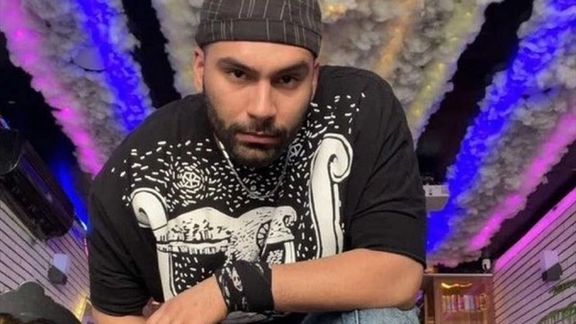
The Iranian currency rial dropped to a new historic low Saturday amid popular protests, strikes and a government determination to use force against all opposition.

The battered rial dropped to a low of 370,000 against the US dollar, an almost 50-percent decline in 15 months. It was trading at 280,000 in August 2021 when the current hardliner president Ebrahim Raisi was elected.

Iran has been rocked by nationwide antigovernment protests since September after a 22-year-old woman, Mahsa Amini, was killed in police custody. She was arrested for violating the country’s forced hijab rules. But since then, protests have turned against the ruling regime, with many Iranians demanding a secular and democratic form of government.

The Iranian currency began to lose most of its value in 2018 when the United States pulled out of the nuclear accord known as JCPOA and imposed crippling economic sanctions. Since then, the currency has fallen more than tenfold against the dollar.

Although the Islamic Republic has been able to partly circumvent the sanctions by illicit oil exports to China at discounted prices, but the volume of around one million barrels per day is not sufficient to sustain the economy, which is mostly dependent on oil export revenues.

Negotiations with the Biden administration for a new nuclear agreement have failed.

The effective devaluation of the rial will make the already 50-percent annual inflation rate even worse and the ensuing financial pressure on ordinary people can deepen antigovernment resentments and intensify the protests.