• العربية
  • فارسی
Brand
  • Iran Insight
  • Politics
  • Economy
  • Analysis
  • Special Report
  • Opinion
  • Podcast
  • Iran Insight
  • Politics
  • Economy
  • Analysis
  • Special Report
  • Opinion
  • Podcast
  • Theme
  • Language
    • العربية
    • فارسی
  • Iran Insight
  • Politics
  • Economy
  • Analysis
  • Special Report
  • Opinion
  • Podcast
All rights reserved for Volant Media UK Limited
volant media logo

No Better Nuclear Offer On Table As Tehran Playing Hot And Cold – France

Sep 19, 2022, 19:07 GMT+1
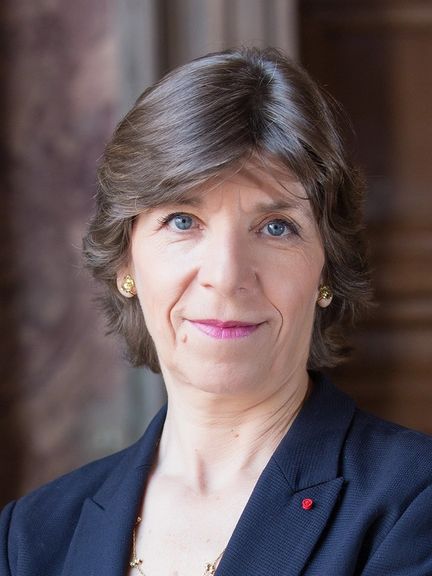
France's foreign minister Catherine Colonna

France's foreign minister said on Monday that there would not be any better offer for Iran to revive the 2015 nuclear deal with world powers as Tehran is dragging out the talks. 

Catherine Colonna said on the sidelines of the United Nations' General Assembly in New York that "There will not be a better offer on the table and it's up to Iran to take the right decisions," adding that there are no initiatives underway to unblock the situation. 

She reiterated that it was up to Tehran to decide now because the window to find a solution was closing.

She added that the United States and its European partners have similar positions on Iran’s demand for the International Atomic Energy Agency to drop its probe over uranium traces at three previously undeclared sites in Iran, the contentious issue that seems to be stalling a final agreement. 

In two separate interviews ahead of leaving Monday for the United Nations General Assembly (UNGA) in New York, where President Ebrahim Raisi is due to speak this week, he said Iran is ready to revive the agreement given guarantees that the United States and Europe will uphold it.

“If there were guarantees, then the Americans could not withdraw from the deal,” Raisi said. “The Americans broke their promises, they did it unilaterally…We cannot trust the Americans because of the behavior we have already seen from them.”

Most Viewed

Ghalibaf defends Iran-US talks amid hardline backlash
1
INSIGHT

Ghalibaf defends Iran-US talks amid hardline backlash

2
INSIGHT

100 days after carnage: Iran economy reels from war, inflation, unemployment

3
INSIGHT

A nation in limbo: 100 days after the massacre, has the world moved on?

4
ANALYSIS

From instability to influence: Pakistan’s pivotal role in US-Iran diplomacy

5
ANALYSIS

100 days on: why Iran’s January protests spread across social classes

Banner
Banner

Spotlight

  • War-hit homeowners feel abandoned as Iran’s reconstruction aid fades

    War-hit homeowners feel abandoned as Iran’s reconstruction aid fades

  • 100 days on: the anatomy of Iran’s January crackdown
    INSIGHT

    100 days on: the anatomy of Iran’s January crackdown

  • Ghalibaf defends Iran-US talks amid hardline backlash
    INSIGHT

    Ghalibaf defends Iran-US talks amid hardline backlash

  • 100 days on: why Iran’s January protests spread across social classes
    ANALYSIS

    100 days on: why Iran’s January protests spread across social classes

  • From instability to influence: Pakistan’s pivotal role in US-Iran diplomacy
    ANALYSIS

    From instability to influence: Pakistan’s pivotal role in US-Iran diplomacy

  • A nation in limbo: 100 days after the massacre, has the world moved on?
    INSIGHT

    A nation in limbo: 100 days after the massacre, has the world moved on?

•
•
•

More Stories

Tehran Says Diplomacy Needed To Resolve Baku-Yerevan Conflict

Sep 19, 2022, 16:26 GMT+1
•
Maryam Sinaiee

Iran's foreign ministry reiterated Monday that only political solutions can resolve the conflict between Armenia and Azerbaijan, its northwestern neighbors.

"We believe in the necessity of using political approaches and solutions to end conflicts and reduce tension and political dialogues to resolve the differences between the two countries," the ministry’s spokesman Nasser Kanaani told reporters at his weekly press briefing in Tehran.

Kanaani said Iran did not spare any efforts to help end the conflict after border clashes broke out between its northwestern neighbors Tuesday and said the Iranian president spoke with Armenian Prime Minister Nicole Pashinyan while foreign minister Hossein Amir-Abdollahian held a phone conversation with his Azerbaijani counterpart to resolve the situation.

“Escalation of tensions and instability in South Caucasus will not serve the interests of any of the involved and neighboring countries. What can solve the crisis is dialogue between the two countries and the use of regional capacities to stabilize the region," he added while stressing that Tehran considers any other approach “provocative”.

Iran has to an extent supported Armenia in the conflict with Azerbaijan and has warned that it would not allow any seizure of territory from Armenia proper by Baku. Tehran in the past has also expressed alarm at alleged Israeli military presence in Azerbaijan. Amir-Abdollahian also warned in October 2021that Iran would not tolerate "geopolitical change" in the region and at its borders.

In response to a question about US House of Representatives Speaker Nancy Pelosi's visit to Armenia and her expression of support for Yerevan, callingBaku an occupier, and American presence in the Caucasus, Kanaani reiterated that Iran viewsthis issue within the framework of Tehran’s afore-declared “principled political view of the developments in the South Caucasus and the conflict”.

Pelosi on Sunday said it was obvious that the border fighting was triggered by Azeri assaults on Armenia and that the chronology of the conflict should be made clear and pledged American support for Armenia’s sovereignty.

Pelosi's candid support for Yerevan has hugely angered Baku, which Armenia says has occupied some of its territories when the border clashes broke out a week ago.

The Armenian Prime Minister has accused Baku of attacking Armenian towns to avoid negotiating over the status of Nagorno-Karabakh, an Armenian-populated enclave inside Azerbaijani territory, while Azerbaijan accuses its neighbor of carrying out intelligence activity along the border and moving weapons and attacking it's military positions along the border.

Speaker of Armenia’s parliament, Alen Simonyan, last week criticised the response of a Russian-led military alliance to Yerevan's request for help. Russia, which operates a military base in Armenia, sent thousands of peacekeepers to the region in 2020 as part of a deal to end six weeks of hostilities during which Azerbaijan make significant territorial gains in and around Nagorno-Karabakh.

Nearly 300 people were killed, and dozens were injured in the recent conflict which marked a major escalation in the 2020–2022 Armenia–Azerbaijan border crisis.

The escalation of decades-old hostilities between the south Caucasus countries has fuelled fears that a second full-fledged war could break out in the post-Soviet world in addition to Russia's invasion of Ukraine.

Israel Military Chief Denounces Iran’s President For Doubting Holocaust

Sep 19, 2022, 16:01 GMT+1

Israeli Defense Forces chief Aviv Kohavi has criticized comments by Iranian President Ebrahim Raisi expressing doubts about the Holocaust. 

“You don’t have to be a historian or a researcher to understand the horrors of the Holocaust — you have to be a human being,” he said during a visit to the Nazi Auschwitz-Birkenau camp in Poland on Monday in reaction to Raisi’s remarks. 

Quizzed over the Jewish holocaust and Israel’s “right to exist,” Raisi told CBS News that “Historical events should be investigated by researchers and historians. There are some signs that it happened. If so, they should allow it to be investigated and researched,” and evading the question by bringing up the rights of Palestinians “forced to leave their homes and motherland.” He also said Israel’s accords with some Arab states meant those states “were stabbing the very idea of Palestine in the back.”

“Anyone who lies and denies the painful and solid truth of history, easily lies today, and will naturally lie in the future,” Chief of Staff Lt.-Gen. Kohavi added, referring to Raisi. 

“This is another reminder that such people should not be allowed to possess any capacity of any kind for development of weapons of mass destruction,” the IDF noted in reference to the Islamic Republic’s nuclear program.

"We stand here today on human ground, while our military boots carry the ground of Israel, the country we protect. We created a home, not just for the Jewish people, but for those who worked with us — Druze, Christians and Muslims."


Strikes, Protests Raging In Iran Over Death Of Hijab Victim

Sep 19, 2022, 13:37 GMT+1

People in several Iranian cities are holding strikes while security forces have attacked protesters in a couple of cities as the country is enraged over the death of a young hijab victim.

Mahsa Amini’s death in the custody of hijab enforcement patrols, has shaken the country, with reports saying police forces fired at protesters in Divandarreh, where at least 10 people were injured, and Saqqez in the Kurdistan province on Monday. People in the capital Tehran and the central city of Esfahan (Isfahan) are also holding on-and-off protests with bouts of clashes with security forces. 

Business owners in the cities with large Kurdish populations such as Baneh, Marivan, her hometown Saqqez, and Kurdistan provincial capital have staged a general strike to protest the murder of Mahsa Amini, also known as Zhina, announcing that they will continue the strikes for several days despite warnings by the authorities. 

Videos sent to Iran International show police using tear gas against people while many citizens have opened the doors of their houses to shelter the protesters. 

In one video, a group of students stand outside the office of their university’s cleric, most probably the representative of the Supreme Leader at the university, chanting “Mullahs Must Get Lost” as the cleric is watching them through his window.

While authorities are lying about the circumstances of Mahsa Amini’s death and defending the Islamic religious patrols, Tehran’s “morality” police chief Colonel Mirzaei has been “suspended” until further investigation into Mahsa’s death. 

Raisi Says Iran Wants 'Guarantees' From West For Nuclear Deal

Sep 19, 2022, 13:14 GMT+1
•
Iran International Newsroom

President Ebrahim Raisi has said Iran is ready to revive the 2015 nuclear agreement given guarantees that the United States and Europe will uphold it.

In two television interviews ahead of leaving Monday for the United Nations General Assembly (UNGA) in New York, where he is due to speak this week, Raisi stressed Tehran’s lack of trust in both Washington and European states. This, he said, followed US withdrawal from the 2015 deal – the JCPOA, Joint Comprehensive Plan of Action – and Europe’s failure to support Iran economically in the face of US ‘maximum pressure’ sanctions.

Speaking last Tuesday to America’s CBS in Tehran in an interview broadcast over ten minutes Sunday, and to Qatar’s al-Jazeera in a half-hour slot Friday in Samarkand during the Shanghai Cooperation Organization (SCO) summit, Raisi said that while Iran wanted to expand trade globally with sanctions lifted it was ready to emphasize links with other countries facing sanctions.

“If there were guarantees, then the Americans could not withdraw from the deal,” Raisi said. “The Americans broke their promises, they did it unilaterally…We cannot trust the Americans because of the behavior we have already seen from them.”

CBS billed the interview as Raisi’s “first with a western reporter” while Raisi might receive more media coverage while in New York.

Meeting Biden ‘not beneficial’

Asked about Iranian-Americans detained in Iran, Raisi referred to Iranian nationals imprisoned in the US “because they tried to circumvent sanctions.” He reiterated talks “between the two countries” on this “humanitarian issue” were possible aside from the nuclear talks.

Raisi ruled out a “face to face” meeting in New York with President Joe Biden, which he said “would not be beneficial” as Iran had “not witnessed in reality” any changes since the administration of President Donald Trump, who in 2018 withdrew the US from the nuclear agreement and imposed ‘maximum pressure.’ But Iran’s foreign ministry spokesman Nasser Kanaani on Monday kept the door open to contacts during the UN summit.

Interviewer Lesley Stahl quizzed Raisi over 1988 prison executions, at time when the president was deputy prosecutor in Tehran. Raisi dismissed “allegations and claims made by a terrorist group” – the Mujahideen-e Khalq, whose members were most of those executed. CBS highlighted Amnesty International calling the executions as “a crime against humanity.”

Quizzed over the Jewish holocaust and Israel’s “right to exist,” Raisi evaded the question by bringing up the rights of Palestinians “forced to leave their homes and motherland,” and said Israel’s accords with some Arab states meant those states “were stabbing the very idea of Palestine in the back.” He also called for “justice” over the “heinous crime” of the US 2020 killing of Iranian general Qasem Soleimani.

Building confidence

Raisi’s interview with Jazeera focused on Iran’s strategy in looking to expand ties with other SCO members – China, India, the Kyrgyz Republic, Kazakhstan, Pakistan, Russia Tajikistan, and Uzbekistan – to create “balance” and as a bulwark against current or future US sanctions.

“Those who are violators of their commitment, they need to build confidence again,” he said. Asked over 40 years of poor relations with the US, Raisi evoked US support for the ‘terrorist’ MEK, for Saddam Hussein during the 1980-88 war, its 1988 shooting down of the civilian Iran Air Flight 655, and decades of sanctions – all of which he called a “very long list.”

In fact, the Soviet Union rendered greater support to Iraq with large arms shipments, but the Islamic Republic maintained ties with Moscow and later expanded relations. Also, there is no evidence of the US administrations having helped the MEK, although some US lawmakers support the organization.
Mahsa Amini’s CT Scan Shows Skull Fractures Caused By Severe Blows

Sep 19, 2022, 10:39 GMT+1

The skull CT scan of Mahsa Amini, the Iranian woman who died in religious police custody, shows bone fracture, hemorrhage and brain edema, Iran International has learned. 

The medical documents and dozens of exclusive images sent to Iran International by a hacktivist group vividly show a skull fracture on the right side of her head caused by a severe trauma to the skull, which corroborate earlier accounts by her family and doctors about her being hit several times on the head, proving that the Iranian police's claim that she suffered a heart attack was untrue.

Images of her chest show bilateral diffuse alveolar hemorrhage and damage due to aspiration pneumonia, secretion retention and superimposed infection. Doctors say the results are compatible with acute respiratory distress syndrome due to brain trauma.

100%

The 22-year-old woman’s death in custody by the hijab police has led to indignation among Iranians and several anti-regime protests in different cities.

A source from the hospital where she died told Iran International on Saturday that her brain tissue was crushed after "multiple blows" to the head, adding that Amini was taken to Kasra Hospital in capital Tehran while she was not responsive and brain dead.

The source added that her lungs were filled with blood when she was transferred to the hospital and it was clear that she “could not be revived." 

This source emphasized that Mahsa's condition "was such that she could not be saved nor was surgery possible because her brain tissue was seriously damaged and it was clear that the patient was not injured by a single punch and must have received many blows to her head."






