• العربية
  • فارسی
Brand
  • Iran Insight
  • Politics
  • Economy
  • Analysis
  • Special Report
  • Opinion
  • Podcast
  • Iran Insight
  • Politics
  • Economy
  • Analysis
  • Special Report
  • Opinion
  • Podcast
  • Theme
  • Language
    • العربية
    • فارسی
  • Iran Insight
  • Politics
  • Economy
  • Analysis
  • Special Report
  • Opinion
  • Podcast
All rights reserved for Volant Media UK Limited
volant media logo

For Washington, ‘Constructive’ Means Accepting Its Terms – Iranian Official

Sep 2, 2022, 11:52 GMT+1
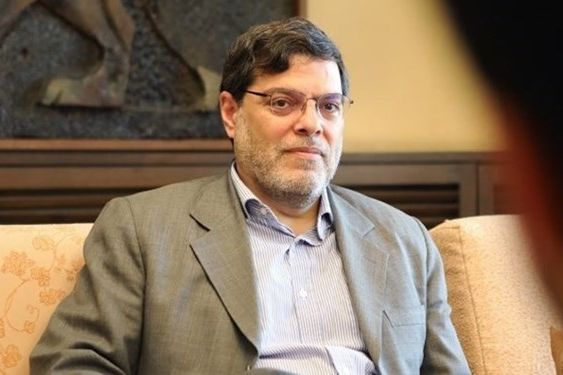
Mohammad Marandi, who acts as de facto spokesman for Iran’s nuclear negotiating team

An advisor to Iran’s negotiating team has criticized Washington’s reaction to Tehran’s latest position on reviving the 2015 nuclear deal, saying for the US "constructive" means accepting its terms.

Mohammad Marandi, who acts as de facto spokesman for the Islamic Republic’s nuclear negotiating team, said in a tweet on Friday that “It's time for the Biden team to make a serious decision.”

Noting that If the United States makes “the right decision, an agreement can be swiftly concluded,” he said that “For the US 'constructive' usually means accepting US terms; for Iran it means a deal that is balanced and protected.”

Iran’s Foreign Ministry spokesperson Nasser Kanaani said early on Friday that Tehran has sent a "constructive" response to US proposals, but the US State Department gave a different assessment.

"We can confirm that we have received Iran's response through the EU," a White House National Security Council spokesperson Adrienne Watson said. "We are studying it and will respond through the EU, but unfortunately it is not constructive,” adding that "Some gaps have closed in recent weeks, but others remain."

Also on Friday, Tasnim news, affiliated with the Revolutionary Guard, quoted Ebrahim Azizi, the deputy chairman of the Iranian Parliament's National Security and Foreign Policy Committee, as saying that the US should decide whether it wants to finalize the agreement or not. “Iran's most important demand is economic benefit,” he said, reiterating that “the safeguard issues must be also resolved and all allegations about Iran's nuclear issue must be dropped.”

Most Viewed

Ghalibaf defends Iran-US talks amid hardline backlash
1
INSIGHT

Ghalibaf defends Iran-US talks amid hardline backlash

2
ANALYSIS

From instability to influence: Pakistan’s pivotal role in US-Iran diplomacy

3
ANALYSIS

100 days on: why Iran’s January protests spread across social classes

4

War-hit homeowners feel abandoned as Iran’s reconstruction aid fades

5

Iran says no decision yet on talks as Pakistan prepares to host US team

Banner
Banner

Spotlight

  • The politics of pink: how Iran uses cuteness to rebrand violence
    ANALYSIS

    The politics of pink: how Iran uses cuteness to rebrand violence

  • Bread shortages, soaring prices strain households in Iran, residents say
    VOICES FROM IRAN

    Bread shortages, soaring prices strain households in Iran, residents say

  • War-hit homeowners feel abandoned as Iran’s reconstruction aid fades

    War-hit homeowners feel abandoned as Iran’s reconstruction aid fades

  • 100 days on: the anatomy of Iran’s January crackdown
    INSIGHT

    100 days on: the anatomy of Iran’s January crackdown

  • Ghalibaf defends Iran-US talks amid hardline backlash
    INSIGHT

    Ghalibaf defends Iran-US talks amid hardline backlash

  • From instability to influence: Pakistan’s pivotal role in US-Iran diplomacy
    ANALYSIS

    From instability to influence: Pakistan’s pivotal role in US-Iran diplomacy

•
•
•

More Stories

Iranian Media Not Convinced About A Lasting Nuclear Deal

Sep 2, 2022, 10:59 GMT+1
•
Iran International Newsroom

A hardliner lawmaker in Tehran, IRGC General Mohammad Esmail Kowsari, has threatened that Iran can boost Uranium enrichment to weapons grade 93 percent purity.

Iranian analysts speaking to Iran International TV said that they believe the threat is aimed at making the United States even more eager than before to forge an agreement with Tehran.

Kowsari said in his remarks, as reported by Etemad Online, that Iran can boost uranium enrichment from the current 60 percent to the bomb-grade 93 percent. He added that it is the United States that needs Tehran and not vice versa.

Meanwhile, he denied that Iran's ailing economy badly needs the benefits of an agreement that would lift sanctions on its oil exports and international banking.

In another development, conservative website Nameh News wrote in a commentary on September 1, that although officials and media on both sides are hopeful, it is unlikely that an agreement can be concluded in the next few days. However, the commentary reminded that the delay would lead to losses for Iran, for which the opponents of agreement should be held accountable.

Nameh News said many in Iran believe that President Ebrahim Raisi's comments in a press conference earlier this week could be taken as an early "No" to an agreement.

IRGC General Mohammad Esmail Kowsari. File
100%
IRGC General Mohammad Esmail Kowsari

Iran submitted its response late on September 1 and a US official’s first response was that Tehran’s reply was “not constructive”.

The commentary also reminded that Israeli's are working hard in the meantime to dissuade the United States from signing a deal to revive the 2015 nuclear deal, JCPOA. The commentary further claimed that France is also against a nuclear agreement with Iran and is trying to obstruct the deal. The website claimed that if an agreement is made, Iran will be able to export 2.5 million barrels of oil per day and earn $7.5 billions per month.

Rouydad24, another Iranian website claimed based on Israeli media reports that the new agreement is a weaker document than the original 2015 deal. The website argued that difference between the new and old agreements is not simply about a change in political situation, but it is also the fact that the new version is not as strong as ‘JCPOA-1’.

The website also wrote that the fast-changing international political situation has cast a shadow of doubt on the fate of the agreement, and it is difficult to make a prediction with a good degree of certainty. What is certain, wrote Rouydad24, is that currently more observers who believe the JCPOA can be revived only if a dead man can be returned to life. The website called the revival of the nuclear deal "a fantasy."

The website added that any agreement, if and when it is reached, will not be something like a JCPOA-2. It will certainly be a new deal.

Meanwhile, proreform news website Fararu wrote that given the existence of numerous differences and disputes between Iran and the United States, a stand-alone nuclear deal cannot be long-lasting.

“Even if this happens, as in 2015, it will only be an expression of tactical tolerance of the other side, and the foundations of such an agreement will be shaky. Chances of Iran and the US reaching a sustainable agreement will remain very low as long as the problems between them are not addressed in a fundamental manner,” Fararu said.

US Finds Iran's Latest Response In Nuclear Talks 'Not Constructive'

Sep 2, 2022, 08:04 GMT+1
•
Iran International Newsroom

Iran says it has sent a "constructive" response to US proposals for reviving the 2015 nuclear deal, JCPOA, prompting a less positive response from Washington.

"The text that was sent (by Iran) has a constructive approach aimed at finalizing the negotiations," Foreign Ministry spokesperson Nasser Kanaani was quoted as saying by state media on Friday.

But the US State Department gave a different assessment.

"We can confirm that we have received Iran's response through the EU," a spokesperson said. "We are studying it and will respond through the EU, but unfortunately it is not constructive."

White House National Security Council spokesperson Adrienne Watson said: "Some gaps have closed in recent weeks, but others remain."

Iranian state media did not mention the American response on Friday, but Kanaani emphasized that Tehran expects “the lasting removal of sanctions in a guaranteed manner.” He also said that no outstanding issues should remain “to be used as a lever of pressure against Iran."

This was a possible reference to ongoing demands by the UN nuclear watchdog, the International Atomic Energy Agency to receive full answers from Tehran regarding its past secret nuclear activities. Iran insists the probe should be shelved before parties conclude a nuclear deal.

The Iranian foreign ministry said Iran's response was sent to EU representative in the talks Enrique Mora, who has been coordinating the negotiations. It gave no further details.

After almost 17 months of indirect talks between Tehran and Washington, Borrell said on August 8 the EU had laid down a final offer to overcome an impasse for the revival of the agreement.

Iran needs stronger guarantees from Washington for the revival of a 2015 nuclear deal, its foreign minister said on Wednesday, adding that the U.N. atomic watchdog should drop its "politically motivated probes" of Tehran's nuclear work.

Under the 2015 pact, UN Security Council sanctions and many Western sanctions were lifted in exchange for a strict limit on Iran's uranium enrichment to leave a one-year nuclear break-out time if Tehran decided to build a bomb.

Then-US President Donald Trump reneged on the deal in 2018, arguing that it was too generous to Tehran. He reimposed US sanctions on Iran, leading Tehran to resume previously banned nuclear activities and reviving US, European and Israeli fears that Iran may seek an atomic bomb.

Iran denies any such ambition.

President Joe Biden announced before the 2020 US presidential election that he would restore America’s participation in the JCPOA and soon after taking office launched indirect talks with Iran in Vienna.

Most Republicans and some Democrats oppose his decision to return to the agreement, since most of its sunset clauses would expire in a few years, leaving Iran free to expand its nuclear program. They also argue that an agreement will remove key economic sanctions, giving Iran hundreds of billions of dollars in revenues in the next few years and enabling it to more forcefully pursue its aggressive policies in the Middle East.
Iran Delivers Its ‘Constructive’ Comments In Nuclear Talks

Sep 1, 2022, 23:47 GMT+1

Iran’s foreign ministry says it has finalized its comments on the US response to the EU’s draft for reviving the 2015 nuclear deal and sent it to EU coordinator of talks Enrique Mora.

Foreign ministry spokesman Kanaani said in the early hours on Friday that the Islamic Republic’s response was prepared based on a "constructive approach."

“After receiving the American response, the expert team of the Islamic Republic carefully examined it and after evaluation at different levels, Iran's response was compiled and delivered to the coordinator tonight,” Kanaani said. "The text that was sent has a constructive approach aimed at finalizing the negotiations."

American journalist Laura Rozen quoted the unnamed EU official as saying that the bloc has received Iran’s response “just now”.

Earlier in the day, French President Emmanuel Macron expressed hope for a renewed Iran nuclear deal as President Ebrahim Raisi proclaimed defeat for US ‘maximum pressure.’

“I hope that in the next few days the JCPOA will be concluded,” Macron told French ambassadors in a Paris speech, referring to the Joint Comprehensive Plan of Action as the 2015 Iran nuclear agreement is officially named.

In Washington, criticism of JCPOA revival has been stepped up both by Congresspeople and the advocacy group, American Israel Public Affairs Committee (AIPAC).

Fifty lawmakers, mostly Democrats sent a letter to Biden on Thursday asking him to “provide Congress with the full text of any proposal to rejoin the Iran nuclear agreement…including any side agreements, and consult with Congress prior to reentering that agreement.”

Iran Morality Official Calls For Gender Segregation In Universities

Sep 1, 2022, 22:26 GMT+1
•
Maryam Sinaiee

A top official in charge of Islamic morals in Iran has defended gender segregation in higher education, claiming that families will welcome its introduction.

In a video interview earlier this week, Mohammad-Saleh Hashemi-Golpaygani, in charge of a government organization called Enjoining Good and Forbidding Evil Headquarters, claimed that gender segregation in higher education institutions will contribute to the progress of science and knowledge.

“I don't have an answer when I'm asked why students are kept separate before they reach adulthood but are mixed when they go to university,” he said.

Boys and girls are strictly separated from primary school, but most universities are mixed gender.

“Families will welcome gender segregation [in higher education]. They want a safe environment [for their children],” he said wildly claiming that there are twenty-one universities and colleges in the world that segregate including some in the United States. He also claimed that the average grade point rose by 1.5 in these universities after separating men and women.

Hashemi-Golpaygani’s remarks have outraged many on social media and websites and newspapers have criticized him for his controversial remarks.

In an editorial Tuesday, the moderate conservative Asriran told Hashem-Golpaygani that with his “imprudent and incorrect statements” -- including the undocumented claim that many of the world's top universities have implemented gender segregation and achieved better academic results as well as existence of facial recognition software that can help identify women with insufficient hijab -- he obliterates the Islamic concept of ‘enjoining good and forbidding evil’ and provides sensational stories for foreign-based Persian language media.

University students in Tehran protesting harassment by campus morality police. April 24, 2022
100%
University students in Tehran protesting harassment by campus morality police. April 24, 2022

Some social media users have pointed out that Hashemi-Golpaygani’s own daughter has been studying in a mixed-gender university in Belgium.

In the same interview, Hashem-Golpaygani said that public CCTV cameras, including those in metro stations, are programmed to use facial recognition technology to take photos of unveiled women and to compare against photos in a national database to identify those who break the hijab rules. He suggested that the rule breakers be fined in the same way that people are fined for violating traffic regulations.

Hashem-Golpaygani said recently that about half of Iranian women do not abide by the mandatory hijab rules.

In its editorial entitled “Watch Fewer Sci-Fi Movies”, Asriran also told the offical that he should present himself to Iran’s state-run Cinema Organization if he is interested in the science fiction genre. His suggestion that fining hijab-rule-breakers by using blurry CCTV images will help convert them to hijab “would only be possible in sci-fi or comic films,” Asriran wrote.

The website also suggested that such technology, if it were available in the country, would better be used to find dangerous criminals. The police have numerous burglaries, car thefts, and mugging cases on their hands with footage of the culprits who they cannot identify.

In recent months government and security agencies have intensified their efforts to pressure women into abiding by the hijab laws and several rounds of anti-hijab civil disobedience campaigns have followed.

The patrols by the ‘morality police’ have increased on the streets and videos of violent arrests of women and girls as well as confrontations between people and hijab enforcers, including a recent incident in Shiraz which resulted in the closure of the shopping center where it happened, are becoming too common on social media.

Lawmakers Warn Biden Against Deal With Iran Before Consulting Congress

Sep 1, 2022, 22:24 GMT+1

A bipartisan group of 50 US lawmakers have sounded the alarm on a looming agreement over Iran’s nuclear deal, urging the administration to immediately consult with Congress. 

The group, comprised of 34 Democrats and 16 Republicans led by Congressman Josh Gottheimer (D-NJ) and Andrew Garbarino (R-NY), wrote to President Joe Biden on Thursday to express deep concern about reported provisions in the potential agreement with the Islamic Republic that they described as “the world’s leading state sponsor of terrorism.” “If the regime in Iran has proven anything, it's that it can’t be trusted,” they said. 

Their concerns include weakening the effectiveness of terrorism-related sanctions on Iran’s Revolutionary Guard (IRGC) and allowing Russia to have a role in nuclear projects with Iran — including a $10-billion contract to build atomic reactors.

“The IRGC has directly, or through its proxies, including Hezbollah, Hamas, Ansar Allah (Houthis), Palestinian Islamic Jihad (PIJ), and scores of Shiite militias in Iraq, killed hundreds of Americans, and attacked our bases and our allies in the region,” they said, noting that an estimated one trillion dollars in sanctions relief over a decade would strengthen Iran and the IRGC as an enormous danger to Americans at home and abroad. 

They also criticized the deal for enabling Russia to be “the de facto judge of compliance and the keeper of Iran’s enriched uranium, without any oversight mechanisms by the United States or our European partners.”







