• العربية
  • فارسی
Brand
  • Iran Insight
  • Politics
  • Economy
  • Analysis
  • Special Report
  • Opinion
  • Podcast
  • Iran Insight
  • Politics
  • Economy
  • Analysis
  • Special Report
  • Opinion
  • Podcast
  • Theme
  • Language
    • العربية
    • فارسی
  • Iran Insight
  • Politics
  • Economy
  • Analysis
  • Special Report
  • Opinion
  • Podcast
All rights reserved for Volant Media UK Limited
volant media logo

Opinion Survey Shows Disappointed Iranians Want A Nuclear Deal
Iran International Newsroom
Jun 30, 2022, 10:20 GMT+1Updated: 17:34 GMT+1
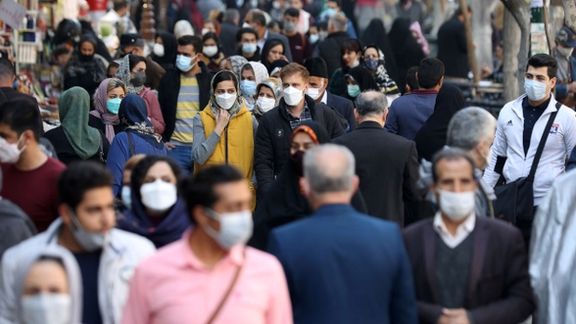
People in a Tehran street in November 2021

Iran’s president Ebrahim Raisi faces a dismal approval rating of 28 percent, as 87 percent surveyed recently named the ailing economy as their number one issue.

An important factor contributing to the economic and social crisis the Islamic Republic faces is United States’ sanctions in the absence of a nuclear deal with the West.

“The single factor that Iranians thought could positively impact the future of the country is a successful nuclear agreement between Iran and the West, which might improve their economic situation,” the company that conducted the survey said in a press release.

Raisi’s approval rating is the lowest since 1997 when data has been collected on Iranian presidents, Stasis, a consulting and survey company based in Washington DC said on Wednesday [June 29], when it released the results of aa survey conducted from June 12-16.

Stasis Consulting conducted the survey through phone interviews, as the Iranian government would not allow a foreign-based company to independently conduct a field study. The sample of 1,197 people aged 18 and older were included from every Iranian province.

The results are not surprising given the deterioration of economic conditions since Raisi assumed office last August and with the media, politicians and citizens fiercely criticizing the hardliner president for the unfolding economic chaos.

It is not just the impact of United States’ sanctions on the economy, as critics blame Raisi for lack of a credible plan to deal with runaway inflation, above 50 percent, and food prices rising to an alarming level above 80 percent in May-June compared to same period last year.

“The result of this survey shows that most Iranian citizens have distrust in government, are pessimistic about their future, and are dissatisfied with the direction of the government and the performance of the president,” said Arash Ghafouri, President of Stasis, known for its regular polling on Iran-related issues.

However, it is clear to most Iranians that a nuclear agreement with the West would lift economic pressure and improve the situation for the average citizen. Iran has so far refused to accept an offer made by the US to return to the 2015 nuclear agreement, capping its program in exchange for removal of sanctions imposed since 2018.

“Most Iranians (55 percent) believe that Iran should make a deal with the West regarding Iran’s nuclear issues, as opposed to only 17 percent who are explicitly against such an agreement. Younger Iranians, between the ages of 18 and 29, are more likely (60 percent) to favor the agreement,” Stasis said, summarizing its survey results.

Raisi was elected in June 2021 in the lowest turnout presidential election in the Islamic Republic’s 43-year history, with official results saying 48 percent cast ballots, while some critics claimed the real number was even lower.

The survey asked respondents about the low turnout and 46 percent answered “distrust in the regime” as the leading reason. Half of those who voted for Raisi would not for him or not participate in the election again.

Another interesting survey result was Iranian attitudes toward the Russian invasion of Ukraine.

“Thirty-five percent of respondents mentioned they have sympathy toward Ukraine, as opposed to just 12 percent who favor Russia. Another 24 percent have no sympathy toward either country. The level of sympathy toward Ukraine is higher among Iranian youth between the ages of 18 and 29 (41 percent),” Stasis Consulting said.


Most Viewed

Ghalibaf defends Iran-US talks amid hardline backlash
1
INSIGHT

Ghalibaf defends Iran-US talks amid hardline backlash

2
ANALYSIS

From instability to influence: Pakistan’s pivotal role in US-Iran diplomacy

3
ANALYSIS

100 days on: why Iran’s January protests spread across social classes

4

War-hit homeowners feel abandoned as Iran’s reconstruction aid fades

5

Iran says no decision yet on talks as Pakistan prepares to host US team

Banner
Banner

Spotlight

  • The politics of pink: how Iran uses cuteness to rebrand violence
    ANALYSIS

    The politics of pink: how Iran uses cuteness to rebrand violence

  • Bread shortages, soaring prices strain households in Iran, residents say
    VOICES FROM IRAN

    Bread shortages, soaring prices strain households in Iran, residents say

  • War-hit homeowners feel abandoned as Iran’s reconstruction aid fades

    War-hit homeowners feel abandoned as Iran’s reconstruction aid fades

  • 100 days on: the anatomy of Iran’s January crackdown
    INSIGHT

    100 days on: the anatomy of Iran’s January crackdown

  • Ghalibaf defends Iran-US talks amid hardline backlash
    INSIGHT

    Ghalibaf defends Iran-US talks amid hardline backlash

  • From instability to influence: Pakistan’s pivotal role in US-Iran diplomacy
    ANALYSIS

    From instability to influence: Pakistan’s pivotal role in US-Iran diplomacy

•
•
•

More Stories

Iranians Praise Footballer Excluded For Criticizing Government

Jun 30, 2022, 07:55 GMT+1
•
Maryam Sinaiee

Many Iranians are praising a football star who was fired from his team for criticizing the government, and they condemn the authorities for pressuring athletes.

Fans took to social media when it became clear on Tuesday that the Persian Gulf Pro League Esteghlal FC had no intention of renewing the contract of its captain, Voria Ghafouri and pushed the hashtag “Voria is not alone” to the top of Persian Twitter. A group of Esteghlal fans also held a protest rally outside the club’s headquarters after the announcement was made on Wednesday.

Ghafouri’s future with his club and the national team became highly doubtful in May when he rebuked the government for its handling of protests sparked by a sudden rise in prices and many feared that the authorities would push for his exclusion from his team as punishment.

“Voria Ghafouri was excluded because he did not consent to side with the government against the Iranian people,” dissident blogger Hossein Ronaghi tweeted. “In the Islamic Republic sports is totally political ... Elimination of popular athletes [who speak up] is meant to cover up the crimes of the government,” he wrote.

Hardliners deny any connection between the footballer’s political views and his exclusion from his team due to alleged interference of state authorities.

In a tweet Wednesday, Abdolreza Davari, one of former President Mahmoud Ahmadinejad's advisors and confidants who later turned against him, accused the former captain of Esteghlal FC of making controversial statements “to play victim” because he knows but at the age of 35 he is no longer physically fit to play and that the renewal of his contract is not likely.

Ghafouri wearing a jersey in hono of a femal fan who set herself on fire for being denied entry into the stadium
100%
Ghafouri wearing a jersey in hono of a femal fan who set herself on fire for being denied entry into the stadium

“It is the right of the Iranian people to live a happy life,” the national team star said in a post-match interview in May in reference to the economic and social pressures Iranian people have been enduring and said authorities responsible for it must feel shame.

The outspoken footballer has been in trouble with the authorities for quite some time. In 2019 he was summoned for explanations after he criticized Foreign Minister Mohammad-Javad Zarif in an Instagram post for saying Iranians were “proud of being under pressure defending the people of Palestine, Lebanon, Yemen and Syria.”

"You are not under pressure … It is the ordinary people who are under pressure," Ghafouri retorted to Zarif.

Ghafouri’s criticism of Iran’s regional policies and the authorities for downplaying the impact of US sanctions on ordinary Iranians also drew an angry response from Supreme Leader Ali Khamenei.

"Some people, who benefit from the country's peace and security enjoying their jobs and their favorite sports, bite the hand that feeds them,” Khamenei said in a clear reference to Ghafouri in a public speech on February 18, 2019.

Ghafouri was summoned by the Ministry of Sport for an explanation for his comments within a few hours of Khamenei's speech.

The footballer is also known for supporting women's right to watch football in stadiums from which they have been banned for over four decades.

In 2019, a young girl, Sahar Khodayari, died in hospital after setting herself on fire outside a court in Tehran where she was to go on trial for attempting to enter a stadium disguised as a man to watch her favorite team. She became known as ‘The Blue Girl’ for the color of her club. Ghafouri wore a jersey with Blue Girl written on his chest to honor herbefore a match.

Iran's Reform Front Calls For A Nuclear Deal, New Foreign Policy

Jun 29, 2022, 08:56 GMT+1
•
Iran International Newsroom

Iran's Reform Front has urged President Ebrahim Raisi to reach a nuclear deal and embrace reforms to avert serious harm to the country before it is too late.

The Reform Front, an umbrella organization formed by several Iranian reformist parties, told Raisi that Iran's negligible economic growth rate and high inflation coupled with wrong economic and foreign policies have created the current crisis in the country.

The letter as published by Aftab News in Tehran, has been also sent to Parliament Speaker Mohammad Bagher Ghalibaf. In the letter, the Reform Front has accused the Raisi administration and the parliament (Majles) of failing to recognize the country's problems, determining priorities, and choosing the right solutions.

Iran’s reform movement is led by politicians and public figures loyal to the principle of having an Islamic government but are opposed to some of the radical policies of hardliners who follow Supreme Leader Ali Khamenei. A reformist president, Mohammad Khatami, was elected in 1997 and served two terms until 2005, but hardliners gradually disarmed the reform movement and by 2020 pushed them completely out of power and even public service.

The Reform Front also warned that time is running out for addressing widespread dissent that seriously threatens Iran's security. The front also advised Raisi to work hard to improve per capita income and restore the people's purchasing power amid rising inflation and the constant devaluation of the national currency.

The letter added that despite government slogans of self-sufficiency, people's livelihood is tied to the fate of the 2015 nuclear agreement, the JCPOA. In the meantime, the government needs to reduce its irrelevant expenses by taking measures including cutting the budget of parallel institutions that duplicate the efforts of other organizations.

Meanwhile, the Reform Front charged that many of the measures the government pretends to be taking to solve the economic crisis, including increasing prices for essential commodities, are in fact initiatives that are solely meant to make up for its budget deficit, and are not serious efforts for structural change.

The Reform Front then offered six solutions for the country's economic problems. The first is reviving JCPOA and lifting of sanctions. This, said the letter, is the government's most important responsibility. The front advised Raisi "To seek the necessary permissions [from Supreme Leader Ali Khamenei] and take quick brave measures to have this done in order to serve the country's national interests."

The letter also urged “détente” in foreign policy based on national interests and reconstituting Iran’s international banking ties, currently sanctioned by the United States, and blacklisted by the international financial watchdog, the FATF.

The Reform Front also called for boosting Iran's oil output within a short period of time with the objective of increasing government revenues and returning to the international oil markets as a key player. It also called of creating conditions favorable to international financial and technological investments.

Reformists also asked the government, dominated by hardliners, to reduce tensions within the country, as economic hardship and a harsh enforcement of religious dress code have unnerved the people and increased instability.

In fact, almost all proposed solutions can be summarized in the first suggestion: Returning to the JCPOA. All the other solutions proposed by reformists depend on reaching a nuclear agreement.

Khamenei Says 'God's Path' Has Protected Iran's Regime From Enemies

Jun 28, 2022, 16:20 GMT+1
•
Mardo Soghom

Enemies of Iran's regime have always miscalculated its stamina to survive, Supreme Leader Ali Khamenei said on the anniversary of a massive bombing in Tehran.

On June 28, 1981, a bomb hidden in the microphone, or the audio system, exploded at a meeting of the Islamic Republican Party killing around 70 top officials of the new revolutionary government. The chief prize for whoever was behind the plot was ayatollah Mohammad Beheshti, seen at the time as the number two figure after the founder of the clerical regime, ayatollah Ruhollah Khomeini. Beheshti died.

The Supreme Leader paid his utmost respects to Beheshti in his speech, but introduced him as a top judicial official, not as the powerful figure he was at the time.

Khamenei reminisced the tough months in the summer of 1981, when the Mujahedin organization (MEK) and a variety of leftist and Marxist groups challenged Khomeini and the Islamic Republic.

“They threw everything they had at us,” but the regime survived and has continued to survive for four decades, the aging leader boasted.

Indeed, the regime has survived, but Khamenei did not mention the methods used for survival. For one, he failed to mention the hundreds of people executed right after the revolution, all without a real trial, including Amir-Abbas Hoveida, the long-time prime minister during the monarchy, who had no trace of financial corruption and was known for his diligent pursuit of economic development.

A wall of photos showing the victims of the 1988 prison killings in Iran
100%
A wall of photos showing the victims of the 1988 prison killings in Iran

Khamenei also failed to mention the jailing of thousands of MEK members and other leftists in the 1980s, and Khomeini’s decision to massacre them in prisons while they were serving their sentences. Around 5,000 prisoners were killed in 1988 in a matter of 30 days.

He also did not mention the ‘chain murders’ of intellectuals in the early 1990s and the thousands of journalists, dissidents and ordinary people killed during protests or use of excessive force by the government in the three decades since.

Khamenei also claimed in his speech that Islamic Republic’s enemies have been looking for its demise for more than four decades, seeing signs of weakness as potential good news, but they have been disappointed.

“The enemy cannot understand that in this world, other than political calculations, there are also other considerations, which are God’s rules and traditions,” he said. Khamenei has been reinforcing his legitimacy by claiming that he is the highest Shiite authority on earth, and it is the hand of God that has secured his rule.

Khamenei also did not mention Iran’s economic decline since 1979, especially in the past 15 years as his foreign policy and nuclear program have brought about devastating sanctions. The currency rial has fallen by close to 4,500-fold since 1978, from 70 rials to the dollar to over 300,000.

Facing serious economic problems and continuing anti-government protests, he called on his followers to stick with “God’s rules”, meaning “jihad” to defend the regime.

He then repeated worn-out slogans, such as fighting corruption, while just this week news emerged about another massive embezzlement case of more than $700 million dollars in animal feed imports.

Khamenei also asked the hardliner judiciary, which is controlled by him, to deal with cyperspace to protect "people's psychological peace", implicitly encouraging a push by his followers to restrict access to the Internet.

Iranian, Russian Presidents Set To Meet In Turkmenistan June 29

Jun 28, 2022, 14:38 GMT+1

Iranian President Ebrahim Raisi and his Russian counterpart Vladimir Putin will hold a meeting during their visit to Ashgabat, the capital of Turkmenistan, on Wednesday.

Assistant to the Russian President for Foreign Policy Yuri Viktorovich Ushakov said on Tuesday that the meeting will take place on the sidelines of the 6th summit of the heads of state of the Caspian Sea littoral states. 

This is Putin's first known trip abroad since the Russian invasion of Ukraine. Kremlin spokesman Dmitry Peskov said Putin would return to Moscow Wednesday evening.

The meeting is the second between the two presidents since Raisi took office in August 2021. They met in the Russian capital Moscow in January 2022.

Raisi is also scheduled to hold separate meetings with his counterparts from the other three participating countries in the summit, namely Turkmenistan, Kazakhstan, and Azerbaijan Republic.

The meeting of the foreign ministers of these countries kicked off on Tuesday to “review cooperation in the Caspian Sea and discuss the further collaboration modalities for the upcoming meeting of leaders of five Caspian littoral states.”

Russian Foreign Ministry Spokeswoman Maria Zakharova said, "The meeting, organized on the eve of the Fifth Caspian Summit, witnessed the signing of a historical Convention on the Legal Status of the Caspian Sea.”

Addressing the event, Iran’s Foreign Minister Hossein Amir-Abdollahian said, “We support Russia's recent proposal to develop and establish a structure of cooperation in the Caspian Sea. This initiative strengthens and systematizes the five-way cooperation in the Caspian Sea.”

Iran's Leader Appoints New IRGC Counter-Intelligence Chief

Jun 27, 2022, 17:45 GMT+1
•
Maryam Sinaiee

Iran's Supreme Leader Ali Khamenei has appointed a new IRGC intelligence security chief following a series of similar high-level changes last week.

Defa Press, the news agency of Iran’s Armed Forces, reported Monday that Brigadier General Majid Khademi, head of the Defense Ministry’s Intelligence Security, has been appointed by the Supreme Leader to succeed Mohammad Kazemi as the new chief of the IRGC Intelligence Organization’s information security (SAS InfoSec).

Kazemi replaced the controversial cleric Hossein Ta’eb as chief of the IRGC Intelligence Organization (SAS).

The SAS IntelSec is responsible for protecting the IRGC against espionage, infiltration by undesirable political fractions, leakage of secret information to the outside as well as political and security monitoring of the forces’ commanders and the staff. The organization is directly accountable to the Supreme Leader and works under his supervision.

Ta’eb’s replacement after 13 years at the helm of SAS which was announced on Thursday came as a big surprise and fueled many speculations about the reasons for his dismissal.

The change considered to be a pivotal move by Supreme Leader Ali Khamenei came after a series of unexplained deadly attacks against IRGC officers and other breaches of security in Iran’s nuclear and military installations.

On June 19, following Ta’eb’s recent threats against Israelis, the Israeli Prime Minister Naphtali Bennet said that Israel would continue to strike those who send terrorists to attack Israelis in various overseas locations. “Our new rule is: Whoever sends – pays,” he said. This has been interpreted as a direct threat against the head of the IRGC’s SAS.

Taeb’s dismissal has also been linked to Turkey's announcement Thursday that the National Intelligence Organization (MIT) thwarted a planned attack against Israeli diplomats and tourists in Istanbul. MIT said that it detained eight suspects allegedly working for an Iranian intelligence cell.

There are also rumors that Ta’eb was replaced due to long-simmering opposition by other top security figures, including the chief commander of IRGC’s Quds (Qods) Force Esmail Ghaani (Qaani) and Intelligence Minister Esmail Khatib.

Media linked to the IRGC such as Javan newspaper have downplayed the importance of Ta’eb’s dismissal, claiming that the shift in the leadership of the IRGC’s SAS by Khamenei was nothing out of the ordinary and should even be considered as a step towards an “intelligence onslaught on the enemy” and an “increase in operations against Israel” by the SAS.

On Saturday, two days after Ta’eb’s dismissal, which officials say was a mere shift in positions, the head of the IRGC's special unit responsible for the Supreme Leader’s protection (Sepah-e Vali-ye Amr) was also replaced. Sepah-e Vali-ye Amir is solely responsible for protection of the Supreme Leader. It was officially established in mid-1980s and is believed to consist of as many as 12,000 highly trained forces.

In an interview with the Iranian Labour News Agency (ILNA) Monday, hardliner lawmaker Mohammad Kowsari who hails from the top brass of the IRGC stressed that Ta’eb’s replacement was normal after his long years in the position.

The IRGC Intelligence Organisation (SAS) was created by Supreme Leader Ali Khamenei in 1997 after the election of reformist President Mohammad Khatami and gradually turned into an organization with broad powers and responsibilities.



