• العربية
  • فارسی
Brand
  • Iran Insight
  • Politics
  • Economy
  • Analysis
  • Special Report
  • Opinion
  • Podcast
  • Iran Insight
  • Politics
  • Economy
  • Analysis
  • Special Report
  • Opinion
  • Podcast
  • Theme
  • Language
    • العربية
    • فارسی
  • Iran Insight
  • Politics
  • Economy
  • Analysis
  • Special Report
  • Opinion
  • Podcast
All rights reserved for Volant Media UK Limited
volant media logo

Can Iran Survive Yet Another 'Economic Surgery', Media Ask
Iran International Newsroom
May 23, 2022, 01:53 GMT+1Updated: 17:34 GMT+1
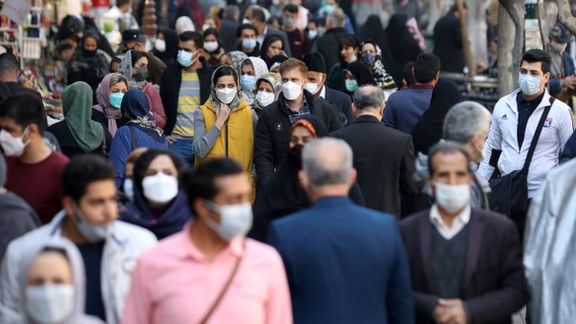
People walking in a busy Tehran street, November 2021

Iranian president Ebrahim Raisi's painful 'economic surgery' would not have been possible without the full support of the hardliner parliament, the media say.

Unlike all previous conservative dominated parliaments which obstructed plans by successive presidents to change the system of subsidizing essential commodities, the current ultraconservative parliament helped the Raisi government to do away with the heavy subsidies.

Moderate conservative Khabar Online website quoted economists in a new report published on Sunday, that without this support, Raisi would have faced the same obstacles as former Presidents Mohammad Khatami, Mahmoud Ahmadinejad and Hassan Rouhani.

The website argued that President Akbar Hashemi Rafsanjani (1988-1997) had managed to further his post-war reconstruction plans thanks to the people and the parliament's support, but he did not eradicate the subsidy system.

In fact, none of Iran’s post-war presidents were able to reduce the government’s role in the economy and stop cash handouts and subsidies, which in a way are part of the same state-centric economic model.

Khabar Online however argued that pragmatic President Hassan Rouhani (2013-2021) managed to further the nuclear talks with the West in his first term (2013-2017) thanks to the people's support.

However, the website did not mention that the talks could have not been furthered without the support of Supreme Leader Ali Khamenei and help by former parliament (Majles) Speaker Ali Larijani who had the nuclear agreement famously ratified within 20 minutes.

The Rouhani administration also tried to deal with the issue of state subsidies and its first step was to increase fuel prices, which led to Iran’s biggest anti-government protests in November 2019 during which security forces reportedly killed some 1,500 protesters.

This stopped any attempt to overhaul the subsidies until 2022, when the Raisi administration called on the ultraconservative-dominated parliament to allow a deep change. The surgery proved to be so painful that thousands of Iranians took to the streets in protest to rising prices and the administration banned using the term "economic surgery" by the media.

While anecdotal reports indicate that Raisi's recent remarks about imminent "tough decisions" are about the next step to further fuel prices hikes, reformist Sharq newspaper warned in an article by lawyer Siamak Qajar Qiunlu that this might not be the last surgery aimed at correcting Iran's ailing economy. The article quoted former conservative Majles Speaker Gholam Ali Haddad Adel as saying that "No patient should be annoyed by tough surgeries because without them the patient will not be cured."

Qiunlu called Haddad's remarks an attempt at "justification" and asked: "What will remain of a patient who has been undergoing surgical operations by domestic and foreign surgeons for years?"

He then went on to argue that Iran’s confrontation with the West and the ensuing years of sanctions were also “surgeries” that ruined the lives of countless Iranians.

Sharq asked in a metaphorical style: "Will this latest operation cure Iran's ailing economy?" The paper added that Iran's history is full of stories about such surgical operations and the process appears to be endless. "But can we ask why we have fallen ill? What has caused the illness? Can anyone explain why the latest attempts to cure the patient had worsened his condition? And what is to be done if the patient can no longer take it and knows that another operation will kill him?"

Most Viewed

Iran International says it won’t be silenced after London arson attack
1

Iran International says it won’t be silenced after London arson attack

2
VOICES FROM IRAN

Hope and anger in Iran as fragile ceasefire persists

3
INSIGHT

How Tehran bends its own red lines to boost state rallies

4

Iran halts petrochemical exports to supply domestic market

5

US arrests Iranian national over alleged Basij-linked visa fraud

Banner
Banner

Spotlight

  • Too early to tell who is winning Iran war, experts say
    PODCAST

    Too early to tell who is winning Iran war, experts say

  • How Tehran bends its own red lines to boost state rallies
    INSIGHT

    How Tehran bends its own red lines to boost state rallies

  • Iran blackout cripples freelancer, small business incomes
    VOICES FROM IRAN

    Iran blackout cripples freelancer, small business incomes

  • Ideology may be fading in Iran, but not in Kashmir's ‘Mini Iran'
    INSIGHT

    Ideology may be fading in Iran, but not in Kashmir's ‘Mini Iran'

  • US blockade enters murky phase as tankers spoof signals and buyers hesitate
    ANALYSIS

    US blockade enters murky phase as tankers spoof signals and buyers hesitate

  • Why the $100 billion Hormuz toll revenue is a myth
    ANALYSIS

    Why the $100 billion Hormuz toll revenue is a myth

•
•
•

More Stories

Iran Exempts Armed Forces, Intel Ministry, Nuclear Organization From Transparency

May 22, 2022, 14:16 GMT+1

The Iranian parliament has exempted the Armed Forces, the Intelligence Ministry and the nuclear organization from a plan aimed at augmenting transparency of the executive, legislative and judicial branches of the government. 

According to IRNA on Sunday, the National Security Council as well as the provincial and city security councils are also excluded from the plan that is expected to obligate members of parliament and state officials to make their votes and decisions available to the public. The details of the negotiations in various parliamentary committees will also be available to the public.

The parliament also makes the publication of final rulings of the general and revolutionary courts conditional upon "observance of security standards".

Moreover, the Guardian Council and the Assembly of Experts are not included in the plan in the first place. 

However, according to the bill, all private institutions in charge of public services, including Iran Central Bar Association, Medical Council of the Islamic Republic, and Justice Experts' Association, as well as non-governmental organizations and charities will be included in the transparency plan and will be fined for non-compliance.

The measure also makes it mandatory for the entities as well as municipalities of cities with over one million population to register and regularly update data about their financial statements, budgetary performance, project investments, and number of employees.

According to the annual ranking of countries released by Transparency International earlier this year, Iran ranks 150 out of 180 countries in the 2021 Corruption Perceptions Index.

Iran's Raisi Talks About Upcoming Hard Economic Decisions

May 22, 2022, 11:29 GMT+1
•
Iran International Newsroom

President Ebrahim Raisi spoke at length about the economy first time after protests rocked parts of the country in response to government raising food prices.

The official news agency IRNA reported on Saturday, May 21, that “Hundreds of experts and businessmen took part in the gathering” the agency called “the first international privatization event in Iran.”

Speaking at the event, Raisi did not mention last week’s protests or the security forces violent treatment of protesters particularly in Iran’s western provinces. However, as economic journalist Maryam Shokrani has observed, he emphasized “hard decisions to be made which some people may not agree with.”

Raisi also focused on the controversial issue of privatization in Iran and opined that “Privatization does not mean abandoning industrial units. It is the beginning of the government’s supervision on privatized companies.”

The Islamic Republic’s government, religious institutions and the Revolutionary Guard (IRGC) directly or indirectly own 80 percent of the economy, amid nepotism and corruption which has led to paralyzing mismanagement.

For the past 15 years successive governments have talked about privatization, but with a fearsome security apparatus and with power concentrated in the hands of insiders, only they have been able to benefit from the sell-off of government assets.

During the past years, hundreds of workers of privatized companies, particularly in Khuzestan and in the Central Province, protested to the privatization process that has handed over many government companies to well-connected but often disinterested and non-expert individuals who only used the assets to take hefty loans from government banks with no intention to pay back.

Many of these companies including the Sugar Mill at Haft Tappeh and the Heavy Equipment Factory in Arak which used to be profitable in the past, are currently on the verge of bankruptcy according to their workers.

Post-revolution privatization during the past four decades has been criticized by the people, workers and businesses alike. Many believe that profitable businesses have been handed over to the IRGC which effectively owns the lion’s share of productive companies in Iran.

While Raisi said on Saturday that privatization empowers the private sector, many have often charged that the IRGC’s acquisition of companies has left little room for the private sector in Iran.

However, Raisi called for looking back and reviewing the privatization process that has taken place. He said, “fair and critical review of the past is essential and inevitable,” so that lessons could be learned, and corruption could be prevented.

Raisi spoke about motivating “non-government businesses” while the government’s intervention in the market has led to an increase in the price of essential commodities and inflation in Iran that led to protests, during which people called on Raisi and Supreme Leader Ali Khamenei to step down and chanted slogan in favor of a secular government.

In an interview published by Didban Iran website, Iranian sociologist Mohammad Reza Mahboobfar warned that the current economic situation, particularly the policy and eliminating food and fuel subsidies has already led to social problems such as an increase in crime including stealing food.

He said the protests last week raised the alarm for the statesmen that Iranian society is being divided into a majority of extremely poor people and a minority of super-rich individuals. Mahboobfar warned that what has been characterized by government officials as an “economic surgery” should be stopped at once as the widening gap between socio-economic classes has become cause for concern.

Mahboobfar warned: “Making the masses apprehensive is dangerous.”

Iran Denies Demanding Property Deeds To Let Athletes Go Abroad

May 22, 2022, 01:25 GMT+1

Iran’s Ministry of Sports has rejected reports that athletes have to provide a property deed to be allowed to leave the country for international competitions.

The ministry’s public relations manager Mohsen Motamedkia denied the news that the ministry takes collateral from athletes for foreign travel in a tweet on Friday, saying he enquired about the issue and the ministry’s authorities denied the claims.

He made the remarks in reaction to a post by sport journalist Hiva Yousefi, who had publicized the issue on twitter.

Replying to the journalist, a member of Iran’s national rowing team, Ahmad Ahmadi, said the property must be at least 5 billion rials (about $20,000) and owned by the athlete or a family member, adding that if the athlete does not return to the country, it will be transferred to the relevant sport federation's treasury.

Ahmadi said a notarized pledge to transfer the property is signed before the trip, adding that the federation also gets two guarantee-of-return undated checks of about $500 and $1,000 from the athletes.

Earlier in the month, Yekta Jamali, the first Iranian female weightlifter who won medals in international tournaments, sought asylum in Germany after she left Iran’s team at the World Junior Weightlifting Championship in Greece.

About 30 Iranian athletes in recent years have defected from national teams and sought asylum in other countries, due to alleged threats and corruption in sports federations as well as Iran’s policy of not allowing athletes to compete against Israeli peers. For women mandatory hijab is also an issue.

Iran’s New Islamic Propaganda Song Likened To Nazi Brainwashing

May 22, 2022, 01:08 GMT+1
•
Maryam Sinaiee

Critics say promoting ‘Hello Commander’, a pop genre religious and ideological song among Iranian children is reminiscent of Hitler Youth in Nazi Germany.

State propaganda organizations and the ministry of education have been promoting ‘Hello Commander’ in schools since it was broadcast from state television for the first time this year after Supreme Leader Ali Khamenei’s Iranian New Year speech on March 20.

Teaching the song to children has apparently become compulsory in schools. In the past two months it has been performed at huge gatherings of school children in city squares and stadiums and broadcast by the state television (IRIB) in news and other programs.

‘Hello Commander’ is a song dedicated to Mahdi, the 12th Imam of Shiites who has been in occultation since the 9th century according to believers. The song and its promotion are unusual as the music is in the often frowned upon pop genre which has no place on Iran’s state media.

“Me, the little me, will become your general,” children sing to the Imam, promising him to rise up, to sacrifice everything to him, and to become his Ghasem Soleimani, the Revolutionary Guard’s Qods Force commander who was killed by the United States in Baghdad in 2020.

The song also mentions 313, the number of the Imam’s helpers when he returns to earth, and is full of words such as “soldier, general, commander, and “uprising” as well as other religious terminology and notions.

‘Hello Commander’ also mentions Supreme Leader Ali Khamenei who is believed by his devotees to be the Imam’s representative on earth and has to be obeyed as the Imam would be if he were present among believers. “Hello Commander! Sayyid Ali [Khamenei] has called his children [to mobilize]!” children sing.

The education ministry is now planning a 100,000-strong gathering at Tehran’s Azadi Stadium to perform the song at a special ceremony next Thursday (May 26) although a football match this week at the same stadium was held with no spectators “to prevent the spread of Covid.” Many alleged that the decision to hold the match without spectators was a measure against eruption of an anti-government protest during or after the match

The promotion of the song by the state media is meant to indoctrinate children and brainwash them, critics allege. They also say the promotion of the song by state media and the Islamic Republic’s propaganda organizations is reminiscent of Nazi propaganda methods which included teaching children and the youth songs in praise of the Führer.

Many social media users have seen the song as propaganda for Khamenei as the Imam’s deputy, and commander-in-chief of Iran’s Armed Forces, and drawn a parallel between him and Hitler by sharing a video of Nazi Youth gatherings with the original audio replaced with ‘Hello Commander’.

“In his last years, like all other dictators, Hitler resorted to performance of a ‘Hello Commander’ song in schools to reassure his supporters but this didn’t save him from defeat because it was too late,” one of the many such tweets by critics said.

London-based Iranian journalist Morteza Kazemian also shared photos of Nazi Germany’s huge gatherings in Hitler’s support on Twitter with the ‘Hello Commander’ hashtag and said dictators are destined to fall, even if they are as powerful as Hitler.

Iran Football Manager To Visit Canada Seen With Man Wanted By FBI

May 22, 2022, 00:31 GMT+1

The Iranian national soccer team’s manager, who is going to Canada for a controversial friendly next month, recently attended a party with a man wanted by the FBI for attempted kidnapping.

Photos of the party show Hamid Estili beside Mahmoud Khazein, who is sought by the FBI in relation to a plot to kidnap international targets, including three people in Canada, CBC News reported on Saturday.

The event was a birthday party in Tehran on April 8, almost a year since a warrant had been out for the arrest of the alleged Iranian intelligence informant.

According to the FBI list, Khazein is facing criminal charges in the United States, including conspiracy to kidnap; conspiracy to violate the international emergency economic powers act; conspiracy to commit bank and wire fraud; and conspiracy to commit money laundering.

One of the alleged targets of the kidnapping plot was journalist and rights activist Masih Alinejad, who told CBC News that the FBI is now looking into a possible connection between Estili and Khazein.

"I want the Canadian police to consider that as well … Sports federations are being controlled by members of the Revolutionary Guards. Would you allow anyone associated with the kidnappers to come to Canada to enjoy freedom?” she said.

Iran's soccer team, known by its nickname Team Melli, is headed to Vancouver for an exhibition game on June 5 despite objections by those who lost loved ones in Iran’s downing of Flight PS752 in 2020.