• العربية
  • فارسی
Brand
  • Iran Insight
  • Politics
  • Economy
  • Analysis
  • Special Report
  • Opinion
  • Podcast
  • Iran Insight
  • Politics
  • Economy
  • Analysis
  • Special Report
  • Opinion
  • Podcast
  • Theme
  • Language
    • العربية
    • فارسی
  • Iran Insight
  • Politics
  • Economy
  • Analysis
  • Special Report
  • Opinion
  • Podcast
All rights reserved for Volant Media UK Limited
volant media logo

Belgian Court Upholds Sentences In Iranian Bombing Plot

Maryam Sinaiee
Maryam Sinaiee

Iran International

May 11, 2022, 01:18 GMT+1Updated: 17:25 GMT+1
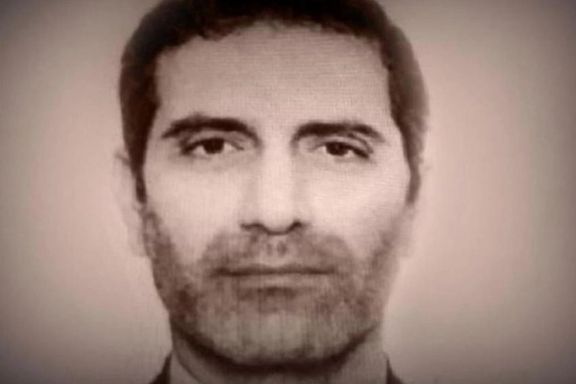
Iranian diplomat and intelligence operative convicted by Belgium for a bombing plot

A Belgian court has dismissed appeals by three accomplices of an Iranian diplomat who was convicted of plotting to bomb an opposition rally in France in 2018.

Amir Saadouni (41), Nasimeh Naami (37), and Mehrdad Arefani (58) were arrested in Brussels in June 2018 for involvement in a bombing plot masterminded by Asadollah Assadi (50), the third secretary of the Iranian embassy in Austria.

Saadouni and Naami, a Belgian couple of Iranian origin, were carrying 500 grams of the explosive triacetone triperoxide (TATP) and a detonator in a toiletry bag in their car at the time of their arrest.

The bomb was intended to be used at a gathering of members and supporters of the exiled Iranian opposition group Mujahedin-e Khalq Organization (MEK) in Villepinte near Paris on June 30, 2018.

Arefani, a former supporter of the MEK, was arrested simultaneously at Villepinte, France.

The three have accepted their involvement in the plot but claim they were coerced by Assadi, their handler, and the Iranian intelligence to participate in it. Assadi has always maintained that he did not know the other three defendants.

Iran's foreign ministry spokesman Saeed Khatibzadeh late Tuesday condemned media coverage of the court's decision as an "orchestrated attempt" against Assadi and condemned his arrest and trial as a violation of diplomatic immunity.

The Antwerp appeals court has upheld Naami and Arefani's sentence of 18 and 17 years in prison but increased Saadouni’s sentence from 15 to 18 years. “The court finds the allegation by Saadouni and Naami that they assumed that the explosives would only cause noise and fireworks to be implausible,” the judgment handed down on Tuesday said according to De Morgen, a Dutch Flemish newspaper.

“Everything was meticulously prepared beforehand and the modus operandi to be used was also discussed in detail,” the court said while declaring that there is no doubt that Assadi and the three others worked for the Iranian intelligence ministry.

Assadi, the mastermind of the operation, was arrested in Bavaria, Germany, where he did not enjoy diplomatic immunity, while he was on holiday. German authorities later extradited Assadi to Belgium. He has not appealed his twenty-year sentence.

He is the first Iranian diplomat ever brought to trial in Europe for direct involvement in terrorism. The MEK in a statement in July 2020 alleged that Assadi was a senior official of the Iranian intelligence ministry and the station chief in Austria.

In October 2020 the Belgian Police released the minutes of a meeting with Assadi that indicated he had threatened that an unfavorable verdict in his case could entail possible retaliation by unidentified groups.

Iranian officials say there are no plans to trade EU citizens held in Iran including Ahmadreza Djlali (Jalali), a Swedish-Iranian doctor that Iran says it will execute soon on charges of spying for Israel, with Iranians held in EU countries such as Assadi in Belgium or Hamid Nouri in Sweden. Swedish prosecutors have requested life imprisonment for Nouri over his alleged role in a wave of prison executions in 1988.

The trials of the four suspects and the allegation that Iranian intelligence was behind the bombing plot continues to strain Iran's relations with European countries. Tehran has always dismissed the allegations against its diplomat and in July 2018 summoned the French and Belgian ambassadors and Germany's chargé d'affaires in protest to his arrest.

Tehran accuses European countries of sheltering the MEK which it has for decades persecuted as a terrorist group. MEK which carried out many terrorist attacks of its own in Iran, particularly in the 1980s, was designated as a terrorist organization by the US State Department in 1997 but was delisted in 2012 when it renounced violence.


Most Viewed

US blockade enters murky phase as tankers spoof signals and buyers hesitate
1
ANALYSIS

US blockade enters murky phase as tankers spoof signals and buyers hesitate

2

US tightens financial squeeze on Iran, warns banks over oil money flows

3
INSIGHT

Ideology may be fading in Iran, but not in Kashmir's ‘Mini Iran'

4
INSIGHT

Hardliners push Hormuz ‘red line’ as US blockade tests Iran’s leverage

5
VOICES FROM IRAN

Hope and anger in Iran as fragile ceasefire persists

Banner
Banner

Spotlight

  • Hardliners push Hormuz ‘red line’ as US blockade tests Iran’s leverage
    INSIGHT

    Hardliners push Hormuz ‘red line’ as US blockade tests Iran’s leverage

  • Ideology may be fading in Iran, but not in Kashmir's ‘Mini Iran'
    INSIGHT

    Ideology may be fading in Iran, but not in Kashmir's ‘Mini Iran'

  • War damage amounts to $3,000 per Iranian, with blockade set to add to losses
    INSIGHT

    War damage amounts to $3,000 per Iranian, with blockade set to add to losses

  • Why the $100 billion Hormuz toll revenue is a myth
    ANALYSIS

    Why the $100 billion Hormuz toll revenue is a myth

  • US blockade targets Iran oil boom amid regional disruption
    ANALYSIS

    US blockade targets Iran oil boom amid regional disruption

  • Iran's digital economy battered by prolonged blackout
    INSIGHT

    Iran's digital economy battered by prolonged blackout

•
•
•

More Stories

Iran Needs At Least 7 Million Tons Of Wheat Imports This Year

May 10, 2022, 23:59 GMT+1

Iran must import at least seven million tons of wheat to meet its domestic needs until March 2023, the chairman of Iran's Grain Union said on Tuesday, amid rising bread prices.

Iran imported a record eight million tons of wheat in the previous year to March 2022 due to the drought that had a huge toll on domestic production, Kaveh Zargaran said in a conference.

He added that the projected imports would be part of a total of 25 million tons of grains, soybean meal and oilseeds.

The forecast seems plausible as it is close to figures announced by other officials in the sector, such as the head of the Flour Producers Association who said earlier this month that the country needs to import at least 20 million tons of grain this year, including six to seven million tons of wheat. Mohammad-Reza Mortazavi admitted that the country has never been so dependent on imports.

Iran, which has in some years been self-sufficient in the production of the staple cereal, is among countries in the Middle East whose production is heavily dependent on the amount of rainfall and has been suffering from a dry spell as authorities have predicted even less precipitation this year.

The importers are now facing extra difficulties as Russia's invasion of Ukraine has disrupted Black Sea grain shipments, increasing the global prices.

In March, reports revealed that Iran has signed a deal with Russiato import 20 million tons of basic goods, including vegetable oil, wheat, barley and corn.

Iran Rules Out Prisoner Swap With Sweden As It Threatens Execution

May 10, 2022, 12:40 GMT+1
•
Iran International Newsroom

Iran once again has threatened to execute a Swedish Iranian dual national scientist held hostage in Tehran, ruling out a prisoner swap with Sweden.

The Judiciary spokesman Zabihollah Khodayan on Monday ruled out a prisoner swap, as initially the media had speculated would be the case.

Last week Iranian semi-official media reported that a death sentence for “espionage” against Hamidreza Djalali (Jalali) was approved by the supreme court and would be carried out soon. Djalali was arrested in 2016 when he traveled to Iran on the invitation of a university and later sentenced to death for "espionage."

The news came as the long trial of Hamid Nouri, a former Iranian judicial official in Sweden came to an end and the prosecution demanded in April the maximum sentence of life in prison.

The threat of executing Djalali was seen as pressure by Tehran to reduce the possible conviction of Nouri on charges of war crimes in the 1988 prison executions of thousands of political detainees in Iran.

Sweden arrested the man in 2019 when he arrived at Stockholm for a vacation, having been tipped off about his alleged crimes in 1988. Sweden has claimed universal jurisdiction in taking the action, since accusations against Nouri amounted to war crimes.

Judiciary’s Khodayan on Tuesday insisted that the scientist death sentence is not related to Nouri’s trial in Sweden and the government will take steps to carry it out. But Tehran had demanded Nouri’s release on May 2, and there is little public doubt that the Islamic Republic is pressuring Sweden.

Hamid Nouri who is awaiting a verdict by a Swedish court in the case of mass prisoner killings in Iran. Undated
100%
Hamid Nouri who is awaiting a verdict by a Swedish court in the case of mass prisoner killings in Iran

On Monday, the spokesman of Iran’s foreign ministry Saeed Khatibzadeh criticized Nouri’s trial, insisting that Sweden has no jurisdiction to prosecute the former official, who is accused of having had an active role in the summary trials and executions of political prisoners more than three decades ago.

Khatibzadeh complained that Nouri’s “basic rights” have been violated, but few governments or human rights organizations would take this charge seriously while Iran is notorious for its secret trials of political prisoners without due process of law.

Kazem Gharibabadi, deputy head of the Judiciary also announced that the Islamic Republic “will not tolerate the violation of Nouri’s human rights.” Gharibabadi was previously Iran’s envoy to international organizations in Vienna and participated in nuclear talks last year. He also repeated Tehran’s unproven accusations that Djalali was an Israeli spy.

“Sweden is Mossad’s intelligence partner and has pursued recruitment of certain individuals and actions against our national security,” he said. He claimed to have proof and said that he threatened the Swedish ambassador that if he complained again about Djalali’s case, Tehran would share the documents with the media.

Amid attempts by Europe to jump start stalled nuclear negotiation between Iran and the United States, the execution of Djalali would be damaging step, to say the least.

Both Sweden and the United States expressed deep concern last week over Iran’s threat to execute Djalali. The European Union and its foreign policy officials have not publicly condemned Iran’s latest threat, perhaps not to derail efforts to restart nuclear talks, but privately they might have brought the issue up with the Iranians.

Enrique Mora, the EU’s coordinator in the talks is scheduled to visit Tehran later Tuesday to discuss the stalled negotiations.

Venezuela Begins Imports Of Iranian Heavy Crude For Refining

May 10, 2022, 10:41 GMT+1

Venezuela is expanding crude imports from Iran to feed its refineriesas as both countries struggle with United States sanctions, Reuters reported Monday

Documents cited by the agency suggested at least 200,000 barrels of Iranian crude arrived in mid-April at the Cardon refinery, Venezuela's second largest, which processes 310,000 barrels per day (bpd), with another 400,000 barrels discharging this week at the country's Jose port from the tanker (VLCC) Dino I.

Fars News Agency recently reported that under a new agreement reached under Iranian President Ebrahim Raisi, Iran had exported to Venezuela 2 million barrels of condensate – a light liquid produced during gas extraction – in seven months, expanding trade begun under the previous administration in Tehran. Venezuela mixes condensate with its own heavy crude to produce a suitable feed for refining.

Iran in return is offering through National Iranian Oil Company (NIOC) a way for Venezuela to dilute and export its heavy crude, Reuters reported. The Dino I is scheduled to sail later this month with Venezuela oil for NIOC’s Naftiran Intertrade Company. Meanwhile the Venezuela-owned Maximo Gorki will discharge 2 million barrels of Iranian condensate at the port, while the Iran-flagged Derya waits in Venezuelan waters with another cargo.

Congress To Probe US Tour Of Iranian Actor With IRGC Links

May 10, 2022, 09:28 GMT+1

The US Congress has started probing why the Biden administration granted visa to an Iranian actor who is reportedly close to the country’s Revolutionary Guard (IRGC).

According to a letter obtained by the Washington Free Beacon, Indiana’s Republican member of the House Armed Services Committee, Jim Banks, has asked the administration for explanation about the visa to Parviz Parastui (Parastouei), saying he has an "overt connection" to the IRGC and the former commander of its Qods (Quds) force Ghasem Soleimani.

“Parastui has been directly involved in IRGC funded propaganda projects, promoting a hardliner ideology that seeks to shape Iran’s culture to the agenda of the Iranian regime”, the letter read.

During a film screening event in Los Angeles late last month that was organized by the far-left anti-Israel group Code Pink, Parastouei was caught on camera during a row with an Iranian dissident.

Before the event, Sam Rajabi, a former judoka champion who now lives in the US, insisted that Parastui explain his relationship with Soleimani, while filming him on his mobile phone. Parastoueire refused to respond, and the encounter ended in Parastui knocking the mobile out of Rajabi's hand. The video taken by Rajabi went viral on social media with hundreds commenting in support of or against Parastui.

Code Pink introduces itself as a women-led grassroots organization "working to end US wars and militarism" and supporter of peace and human rights initiatives. Code Pink condemns US sanctions on Iran.

Ukraine Invasion Created Wheat Supply Problems For Iran– US Lawmaker

May 10, 2022, 08:09 GMT+1

An American lawmaker says the Russian invasion of Ukraine has created a tough time for Iranians and many others regarding the supply of wheat.

Alabama Republican senator Tommy Tuberville told Iran International on Monday, “Iran and a lot of (other) people are going to have problems because of this (Russian war)”, noting that “Iranians are not going to be the only ones that will have problems with wheat and corn and things like that. It’s going to be a tough time for a lot of people”.

Reacting to how the Islamic Republic is handling the wheat shortages that has sent bread and pasta prices soaring and prompted popular protests, Tuberville said, "You can do a lot of things to people, but you'd better feed them. You need to feed your people and take care of them, or obviously that could be a huge problem”.

“The wheat shortage is a problem for all of us. We’re starting to see shelves empty and it’s going to be a tough time with this (Ukraine war) going on, because 30 to 35 percent of the world’s grain comes from that area - Russia and Ukraine”, he said, warning that “So that’s serious, going to get very serious”.

Security forces in Iran are on high alert to prevent unrest over rising bread prices, as unrest has been reported in Khuzestan Province in the past few days.