• العربية
  • فارسی
Brand
  • Iran Insight
  • Politics
  • Economy
  • Analysis
  • Special Report
  • Opinion
  • Podcast
  • Iran Insight
  • Politics
  • Economy
  • Analysis
  • Special Report
  • Opinion
  • Podcast
  • Theme
  • Language
    • العربية
    • فارسی
  • Iran Insight
  • Politics
  • Economy
  • Analysis
  • Special Report
  • Opinion
  • Podcast
All rights reserved for Volant Media UK Limited
volant media logo

China Grossly Underreported Oil And Other Imports From Iran

Dalga Khatinoglu
Dalga Khatinoglu

Oil, gas and Iran economic analyst

Feb 20, 2022, 15:57 GMT+0Updated: 17:28 GMT+1
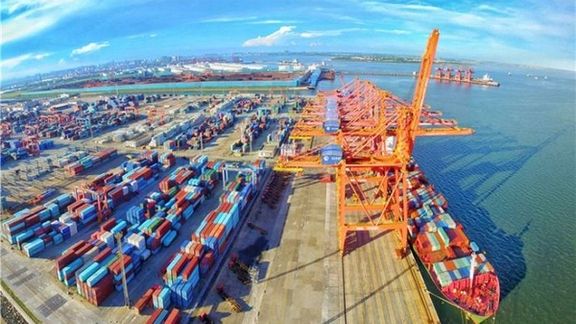
China's Zhanjiang port that accommodates some of the imports from Iran.

China has reported just $6.5 billion of imports from Iran in 2021, while other data show it imported more than $20 billion of Iranian crude and oil biproducts.

Firms such as TankerTrackers that monitor shipments and vessel movements worldwide, and the advocacy group United Against Nuclear Iran have reported that China imported a daily average of 850,000 barrels of oil and biproducts from Iran in 2021, much higher than in the previous year.

Data released by China’s Customs Administration, however, shows there was no increase year-on-year in Iranian imports. (We cannot use the link to the figures because China's Customs website indicates it is 'insecure'.)

The average price of Iranian oil is believed to have been $70 per barrel in 2021 and China bought more than 300 million barrels, which would make the total more than $20 billion.

When the United States imposed full sanctions on Iran’s oil exports in May 2019, China continued to buy 100,000-200,000 bpd until the third quarter of 2020. But before the US presidential elections, reports emerged that Iran was shipping more crude to China and the volume steadily increased, reaching the current levels.

Throughout last year, major American business publications such as The Wall Street Journal and Bloomberg were reporting that China had substantially increased its oil imports from Iran, which could undercut Washington’s leverage in the nuclear talks.

A report issued this week by Iran’s Customs Organization puts the country’s non-oil exports to China in 2021 at more than $13 billion, which is twice what China claims it imported from Iran. If this figure is correct, it means Iran’s total exports, including oil, reached $35 billion versus $6.5 billion announced by Beijing.

The figure for non-oil exports to China announced by Iranian customs must have included petrochemicals and minerals, since its overall figure for exports in these sectors in 2021 was more than $20 billion. China is the biggest customer for Iran’s petrochemicals and minerals.

United States has also sanctioned many of Iran’s petrochemical companies for their ties with the Revolutionary Guards, which is designated as a terrorist organization by Washington. There are also sanctions on many Iranian mining companies, especially dealing in metals.

This could be the reason why China has not disclosed the real monetary value of imports from Iran.

Critics say the Biden Administration has failed to enforce sanctions imposed by former president Donald Trump on Tehran, as it has been trying to revive the 2015 nuclear agreement (JCPOA) with Iran. China seems to have taken advantage of this.

In 2018, Iran’s Supreme Leader Ali Khamenei signaled a new emphasis in Iran’s foreign policy dubbed ‘Looking East’ and in March 2021 Tehran and Beijing signed a 25-year strategic cooperation agreement with details kept secret. Iran expects China to invest up to $400 billion, which would include what many fear privileges for Chinese companies, particularly in oil and gas.

Most Viewed

US blockade enters murky phase as tankers spoof signals and buyers hesitate
1
ANALYSIS

US blockade enters murky phase as tankers spoof signals and buyers hesitate

2
INSIGHT

Ideology may be fading in Iran, but not in Kashmir's ‘Mini Iran'

3
INSIGHT

Hardliners push Hormuz ‘red line’ as US blockade tests Iran’s leverage

4
VOICES FROM IRAN

Hope and anger in Iran as fragile ceasefire persists

5

US sanctions oil network tied to Iranian tycoon Shamkhani

Banner
Banner

Spotlight

  • Hardliners push Hormuz ‘red line’ as US blockade tests Iran’s leverage
    INSIGHT

    Hardliners push Hormuz ‘red line’ as US blockade tests Iran’s leverage

  • Ideology may be fading in Iran, but not in Kashmir's ‘Mini Iran'
    INSIGHT

    Ideology may be fading in Iran, but not in Kashmir's ‘Mini Iran'

  • War damage amounts to $3,000 per Iranian, with blockade set to add to losses
    INSIGHT

    War damage amounts to $3,000 per Iranian, with blockade set to add to losses

  • Why the $100 billion Hormuz toll revenue is a myth
    ANALYSIS

    Why the $100 billion Hormuz toll revenue is a myth

  • US blockade targets Iran oil boom amid regional disruption
    ANALYSIS

    US blockade targets Iran oil boom amid regional disruption

  • Iran's digital economy battered by prolonged blackout
    INSIGHT

    Iran's digital economy battered by prolonged blackout

•
•
•

More Stories

Tanker Carrying Iranian Oil Caught Fire Near China’s Shores

Feb 20, 2022, 13:50 GMT+0

A tanker carrying half a million barrels of oil originating in Iran caught fire near China’s shores on Friday but the crew controlled the blaze.

One day after the incident, Iran’s official IRNA news agency denied there was any link between the country and the oil tanker.

The IRNA report tried to use vague wording in its denial, suggesting that the cargo had been sold by Iran to an intermediary for delivery to a final customer, saying, “IRNA has learned from informed sources that this oil tanker does not belong to Iran and the only possibility is that its cargo belongs to one of Iran’s customers.”

Tanker tracking firm TankerTrackers confirmed the news in a tweet on Saturday, saying that “an old uninsured foreign-flagged tanker carrying half a million barrels of Iranian oil caught fire in the Far East”.

TankerTrackers added that they informed clients of the vessel’s identity and location.

According to reports, Iran normally transfers oil to different tankers in the sea to get round US sanctions since 2018 and send oil to China.

Fars news agency affiliated with the Revolutionary Guard said earlier in February that Iran’s oil export income grew by 494 percent in the first 5 months of the Raisi administration.

Earlier in January, a report detailed Iran’s large diesel smuggling network, revealing the role of the Revolutionary Guard and private shipping companies in the illicit trade.

Saudi Arabia Says Ready To Hold More Talks With Iran

Feb 20, 2022, 08:24 GMT+0

Saudi Arabia's foreign minister said Saturday the kingdom was looking to schedule a fifth round of direct talks with Iran despite a "lack of substantive progress" in previous rounds.

Prince Faisal bin Farhan Al Saud, speaking at the Munich Security Conference, also voiced hope there was a serious desire by Iran to find a "new modus operandi" in the region.

The two countries held talks in April last year with Iraqi mediation. Tehran said the talks were productive, while Riyadh said no serious progress took place.

Iran’s president Ebrahim Raisi who took office last August announced that his government’s priority was to improve relations with regional countries, but no visible change has taken place in Tehran’s regional policies, including support for Houthis in Yemen or militant militias in Iraq and elsewhere.

Sunni Muslim Saudi Arabia and Shi'ite Iran are locked in several proxy conflicts around the region, including in Yemen.

Houthis have continued missile and drone attacks against civilian targets in Saudi Arabia and in January also launched missile strikes against Riyadh’s ally, the United Arab Enirates.

Cargo Ship Reportedly Owned By Iran Security Chief Impounded In India

Feb 19, 2022, 10:24 GMT+0

A cargo ship reportedly belonging to the sons of Iran's top security official Ali Shamkhani has been impounded in one of India’s ports.

The container vessel, named Kabul, belongs to the Admiral Shipping Company that Iranian media said is owned by Hassan and Hossein Shamkhani, the sons of the secretary of Iran’s Supreme National Security Council.

ILNA news agency reported on Friday that an Indian court has ordered the seizure of the ship and cargos originating or destined to Iran about 10 days ago.

The container ship is impounded on charges of possessing false documents, and has been anchored at Kandla, officially Deendayal Port -- a seaport and town in Kutch district of Gujarat state in Western India -- for 10 days ago.

According to Marine Traffic, KABUL is a container ship that was built in 2001 and is sailing under the flag of Saint Kitts and Nevis.

In recent years, the economic activities of Shamkhani’s family, including his brother and son-in-law, have been widely criticized and made headlines in Iran. Shamkhani was an admiral in Iran’s navy and a former IRGC commander.

He has recently been an outspoken critic of the Vienna talks to revive the Iran nuclear deal. After news about the impounded ship broke, critics quipped that continuation of United States’ sanctions are apparently good for Shamkhani family’s business interests.

This week, the publication of an audio recording implicated top commanders of the Revolutionary Guards in a massive corruption scheme in mid-2010s.

What Ordinary Iranians Say About Direct Talks With US

Feb 19, 2022, 07:59 GMT+0
•
Maryam Sinaiee

Except for the state-run broadcaster (IRIB), street interviews about controversial issues such as direct negotiations with the US are rare in Iranian media.

But a reformist website, Ensaf News, on Friday published vox pops from several provinces and explained that due to media restrictions it has edited out some of the remarks.

The initiative is quite unique because when it comes to controversial matters, most news websites in Iran do not even allow readers to comment, or edit the comments before publishing, to prevent the closure of their publication by the authorities.

"What are they expecting to happen that they are dallying so much? Why are they delaying it when eventually they will accept to directly talk with the US? Why shouldn't we do it when we can live better if we make a deal with the US, so we won't need Russia and China?", Ensaf News quoted Sattar, a carpenter in Sabzevar in eastern Iran, as saying.

Mohammad-Hesam, a student at Khorasan seminary, told Ensaf News that direct negotiation with the US is banned by Supreme Leader Ali Khamenei because it "entails many harms and no benefit at all." He added that if the US changes its “wolfish behavior” there will not be a problem to "negotiate with the enemy".

A professor of Tabriz University in northwestern Iran whose first name was not mentioned in the article noted the "bitter experience of the JCPOA" during which Iran and the US engaged in direct negotiations with Khamenei's permission, but former US president Donald Trump unilaterally left the deal. He said repetition of that experience is "not only stupid but also treachery". "Authorities should take action against those who still speak about this subject and sadly are not few even in universities," he added.

"The alternative to negotiation with the US is war with that country. Are we prepared for such a war? Even if we are militarily prepared, do we have enough financial resources for such a war? a lawyer in Ahvaz in the southwestern province of Khuzestan, told Ensaf News while Faezeh, a photographer in Tabriz, said what people think and want is clear. "But nobody cares what people want. They do whatever they please," she said.

"To resolve this issue, they must hold a referendum. The most peaceful and legal solution, as long as people and the authorities think differently, is to hold a referendum and let people's vote decide the matter. Rouhani spoke about holding a referendum a few times but did not follow it with action. There wouldn't be so many problems now if a referendum had been held about negotiations between Iran and the US," Saleh, a student at Isfahan University of Technology said according to Ensaf News.

A retired teacher in Isfahan, Nahid, argued that the US is a country like all other countries but has been unduly singled out. "In fact, Israelis hope for the enmity between Iran and the US to continue because it them who profit from it."

Conspiracy theories are abundant too. Mojtaba, a taxi driver in Mashhad, accused the government of secretly negotiating with the US. "The president's visit to Russia was to make a deal with Russia and the US [over Ukraine]. They don't announce it in order not to contradict themselves, otherwise, they have always negotiated behind the scenes and the rest is only a game because they don't want to tell people."

Rights Groups Say Iran’s Raisi Must Stay On US Sanctions List

Feb 18, 2022, 13:16 GMT+0

Nine human rights organizations have called on world powers negotiating with Iran in Vienna “not to lift human rights sanctions on the Islamic Republic of Iran.”

The group, including the Netherlands-based Center for Human Rights in Iran, issued a statement Friday told world power trying to revive the 2015 Iran nuclear deal they should be “maintaining” sanctions against Iran’s President Ebrahim Raisi.

Raisi was designated by the United States in 2019under an executive order signed by President Donald Trump allowing sanctions against anyone linked to the office of Iran Supreme Leader Ali Khamenei. The rights’ groups’ statement attributed Raisi’s listing to his role 31 years earlier in the 1988 prison executions, which the US Treasury cited in its press release announcing the designation.

Iran, backed by other participants, has argued that talks in Vienna should stick to the original logic of the 2015 deal, the JCPOA (Joint Comprehensive Plan of Action), in isolating the nuclear from other issues.

The rights groups statement said US “human rights sanctions” were imposed due to “the Iranian government’s egregious rights violations and abuses,” and that Raisi had “personally participated in ‘Death Commissions’” in 1988.

Hadi Ghaemi, executive director of the Center for Human Rights in Iran, said: “We cannot sacrifice human rights at the mantle of the nuclear negotiations with the Islamic Republic.”

as/ms