• العربية
  • فارسی
Brand
  • Iran Insight
  • Politics
  • Economy
  • Analysis
  • Special Report
  • Opinion
  • Podcast
  • Iran Insight
  • Politics
  • Economy
  • Analysis
  • Special Report
  • Opinion
  • Podcast
  • Theme
  • Language
    • العربية
    • فارسی
  • Iran Insight
  • Politics
  • Economy
  • Analysis
  • Special Report
  • Opinion
  • Podcast
All rights reserved for Volant Media UK Limited
volant media logo

OPEC+ Prepares To Bring Iran Back Into Oil Supply Deal After Sanctions
Feb 18, 2022, 13:04 GMT+0

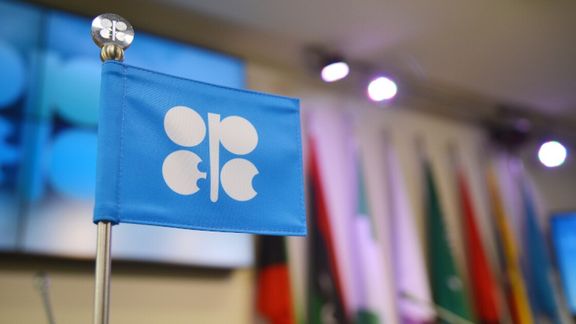
OPEC and its oil exporting allies will integrate Iran into their oil supply accord should a nuclear agreement be reached in Vienna and US sanctions lifted.

Quoting sources close to the group the report said OPEC+ seeks to avoid market share competition that could hit prices.

A successful outcome to the talks will lift United States’ sanctions on Iran's exports, according to the International Energy Agency, potentially bringing 1.3 million barrels per day (bpd) of Iranian oil back into the market. That could ease tight global supply and take some heat out of a rally that has taken benchmark prices to just a few dollars short of $100 a barrel.

Iran has been under full US oil sanctions since May 2019, and it was under partial sanctions from mid-2018. Its finances and the economy have suffered gravely as a result, and it is eager to sell as much crude as possible once sanctions are lifted.

The sanctions have also made Iran exempt from the existing export limit deal between the Organization of the Petroleum Exporting Countries and allies, known as OPEC+. While that exemption allows Iran to boost output, OPEC+ would eventually seek to bring Iran into the accord, sources said.

"It is very likely OPEC will adjust Iran into the deal, as there is no other option," an OPEC+ source told Reuters, who added that an agreement on reviving the nuclear accord looked close.

A source familiar with Iranian thinking said Iran would first seek to restore its lost output, but would likely, after talks with OPEC+, agree to a quota. Iran is one of the five founding members of OPEC.

Iranian officials are trying to restore they market share with previous customers like South Korea, Japan and India. Contacts and talks have already begun to coordinate post-sanction shipments.

Iran is pumping about 2.5 million bpd, some 1.3 million bpd less than in 2018 when former US President Donald Trump withdrew the United States from the nuclear accord and re-imposed sanctions, drastically cutting Tehran's oil income.

"With the lifting of sanctions, Iran will increase its oil production according to its facilities, capabilities and interests, to compensate for its lost oil revenues," the source familiar with Iranian thinking said.

"In my opinion, OPEC+ will set a quota for Iran's oil production but will apply it gradually, and Iran will accept the quota with some bargaining to show its support for OPEC."

'OPTIMISTIC' ON IRAN ISSUE

OPEC Secretary General Mohammad Barkindo, asked if OPEC+ would work out a new supply agreement that included Iran, said the group's track record gave grounds for confidence.

"Having survived the last five years since the establishment of the historic partnership between OPEC and non-OPEC that helped us to navigate through two oil cycles, we have every reason to remain reasonably optimistic going forward," he told Reuters.

OPEC+ is gradually boosting oil output after making record cuts in 2020 when demand collapsed due to the pandemic. But it has failed to hit its target because some producers did not make the investment or do the maintenance needed on oilfields during the pandemic to keep those facilities ready to increase output quickly.

For the United States, it would make sense to lift the sanctions on Iran to help lower prices given the domestic pressure the administration of President Joe Biden is facing due to rising inflation. The United States may also be considering that any output from Iran would ease the impact on global oil markets of any conflict between Russia and the Ukraine, a source familiar with Russian oil thinking said.

"The US will surely lift the sanction from Iran as soon as they decide to put more pressure on Russia given the current tensions over Ukraine," the source said. "Iranian oil will cool oil prices."

Reporting by Reuters

Most Viewed

Iran International says it won’t be silenced after London arson attack
1

Iran International says it won’t be silenced after London arson attack

2
VOICES FROM IRAN

Hope and anger in Iran as fragile ceasefire persists

3

Iran halts petrochemical exports to supply domestic market

4
INSIGHT

How Tehran bends its own red lines to boost state rallies

5

US arrests Iranian national over alleged Basij-linked visa fraud

Banner
Banner

Spotlight

  • Too early to tell who is winning Iran war, experts say
    PODCAST

    Too early to tell who is winning Iran war, experts say

  • How Tehran bends its own red lines to boost state rallies
    INSIGHT

    How Tehran bends its own red lines to boost state rallies

  • Iran blackout cripples freelancer, small business incomes
    VOICES FROM IRAN

    Iran blackout cripples freelancer, small business incomes

  • Ideology may be fading in Iran, but not in Kashmir's ‘Mini Iran'
    INSIGHT

    Ideology may be fading in Iran, but not in Kashmir's ‘Mini Iran'

  • US blockade enters murky phase as tankers spoof signals and buyers hesitate
    ANALYSIS

    US blockade enters murky phase as tankers spoof signals and buyers hesitate

  • Why the $100 billion Hormuz toll revenue is a myth
    ANALYSIS

    Why the $100 billion Hormuz toll revenue is a myth

•
•
•

More Stories

Indian Refiners Willing To Resume Oil Imports From Iran

Feb 18, 2022, 11:18 GMT+0

An oil refiner from India has started negotiations with the Islamic Republic to resume crude imports as soon as the nuclear deal is finalized.

Reuters cited an Indian refining source on Thursday that the Indian company is in talks with Iran for sourcing its oil, but the sources declined to be identified due to sensitivity of the matter.

India, which used to be Iran's No. 2 customer, halted oil imports in 2019 after former US President Donald Trump withdrew from the nuclear deal and re-imposed sanctions on Tehran's oil exports.

According to the unnamed source, New Delhi is waiting for more clarity on the nuclear deal, which apparently is close to tangible results.

A new deal can potentially pave the way for more oil supplies on global markets and soften prices about $5-10 a barrel, because Iran can contribute five percent to the world’s crude volume.

Earlier on Thursday, Japanese oil and energy corporation ENEOS announced its readiness to resume oil imports within two to three months of any revival of the 2015 Iran nuclear deal.

Tsutomu Sugimori, chairman of Japan’s largest refiner, said Thursday that ENEOS would not be able to resume Iranian imports immediately as it needed to set up insurance and arrange shipping. He called a two to three-month period a “possibility.”

Also, in preparation for the possible easing of US sanctions, Iran and South Korea, another major Iranian oil customer before 2018-19, opened detailed talks on freeing Tehran's money frozen by Korean banks fearful of punitive US measures.

as/ms

Iran's Foreign Minister Leaves For Munich Security Conference

Feb 18, 2022, 10:02 GMT+0

Iranian Foreign Minister Hossein Amir-Abdollahian left Tehran Friday morning for Germany to participate in the 58th Munich Security Conference (MSC).

Amir-Abdollahian is set to join many world leaders who have converged for the three-day event annual security gathering, known as "Davos for defense", which kicks off on Friday at the luxurious Bayerischer Hof hotel in Munich.

The weekend conference will be dominated by the Ukraine crisis, but the event serves as a platform for other global issues.

Roundtables on Saturday, the main day of events, will also address the fate of the Vienna talks to revive Iran’s nuclear deal with world powers and the fragile security situation in the Sahel.

Both issues have flared up this week with reports about the finalization of a new US-Iranian deal and the French withdrawal of troops from Mali after almost a decade fighting Islamist insurgents.

Over the weekend there will also be high-profile panels on cryptocurrency, climate change and the pandemic.

The chairman of the conference, Wolfgang Ischinger, has told reporters that he could not recall a time when there were "so many overlapping crises".

This is the first no-show by a Russian delegation in years, highlighting how much East-West relations have deteriorated.

The official agenda of the Iranian foreign minister is not announced but much of the action is likely to take place on the sidelines of the main stage.

Iran's Parliament Rejects Ditching Food Subsidy, Fearing Unrest

Feb 18, 2022, 08:45 GMT+0
•
Iran International Newsroom

Parliament has dealt a blow to the Iranian government’s plan to balance the budget by refusing to ditch indirect food subsidies, fearing a public backlash.

The parliament’s move earlier this week has been described as the most serious confrontation so far between the parliament and President Ebrahim Raisi.

According to the news agency of the Iranian parliament, ICANA, Hamid-Reza Hajibabaei, the chairman of the budget committee of the Majles has said that the parliament has stood by the nation by not letting the government to stop providing cheap dollars to importers for essential commodities such as wheat, sugar and meat.

In January, parliament had already indicated its opposition to scrapping the subsidy.

Iran has spent between 8-14 billion dollars a year since 2018 to offer importers the cheap dollars. This has been a tremendous burden on its finances since US sanctions stopped most of its oil export earnings in dollars. The Raisi government wants to end the practice to balance its budget, but lawmakers say this will boost the already high rate of inflation and could cause unrest in the country.

A nuclear agreement with the United States and an end to oil sanctions can boost revenues and enable the government to keep the indirect subsidy.

In its leading frontpage report, reformist daily Sharq wrote that Planning and Budget Organization Chief Massoud Mirkazemi who went to parliament on Monday to justify the elimination of the preferential rate of exchange came out of the Majles at the close of business tired and frustrated.

One of the lawmakers who supported the elimination of the preferential rate in the next year's budget, was Alireza Abbasi, the chairman of the Agricultural Committee of the Majles who believed that doing so, will be in the interest of producers of agricultural goods in Iran. He said there are so many loopholes in regulations and traders use them to benefit from the preferential rates while some 80 percent of agricultural producers can never use the advantage.

According to Sharq, Ali Rezaei, the spokesman for the budget committee explained that the reason for the committee's opposition is that it could lead to social and security problems, meaning that doing away with the preferential rate will lead to an increase in prices that could bring about widespread protests.

He said the Majles has asked the government how it can guarantee that the elimination of the subsidy will not lead to social problems and make life difficult for the people, and the government answered: "Inshallah, God Willing, there will be no problem!" Rezaei added that Majles remains concerned about the problem and its impact on low-income people.

Budget Committee Chairman Hajbabaei on Wednesday described the decision as a determining one. "This is the country's most important problem, and many Iranians are concerned about it." He added that "the committee has approved allocating$9 billion dollars in the budget for next year. MirKazemi has said earlier that in the current year there was $8 billion dollars in the budget for purchasing essential commodities, but that amount finished well before the end of the year.

Meanwhile, figures released in September showed prices for essential commodities rose 150 percent, which means doing away with the preferential dollar rate could lead to more price increases.

Sharq has described the difference between the parliament and the government as the first dispute between President Raisi and Majles Speaker Mohammad Bagher Ghalibaf and similar to past instances, Supreme Leader Ali Khamenei will have to intervene to end the dispute. There is still time before the final vote at the Majles on the budget. In the meantime, by leaning to either side, Khamenei will reveal his favorite politician between Raisi and Ghalibaf.

Japanese Refiner Prepares To Resume Iranian Oil Imports

Feb 17, 2022, 19:14 GMT+0

Japanese oil and energy corporation ENEOS has announced its readiness to resume Iranian oil imports within two to three months of any revival of the 2015 Iran nuclear deal.

Tsutomu Sugimori, chairman of Japan’s largest refiner, said Thursday that ENEOS would not be able to resume Iranian imports immediately as it needed to set up insurance and arrange shipping. He called a two to three-month period a “possibility.”

Japan suspended Iran oil imports in 2019, as the expiry of a limited United States sanctions waiver raised the threat of US punitive action against Japan for buying Iranian oil. Sugimori Thursday reflected his company’s interest in Iranian oil, which is suitable for refining and likely to be competitive as global prices rise.

"Once reaching agreement, [Iranian oil] will be a choice for our crude oil procurements, and that's when we start our consideration,” he said. "Without the lifting [of the US threat to penalise the company], there will be no deal [to resume imports] because the current sanctions are weighed heavily…”

Sugimori suggested that the easing of US ‘maximum pressure sanctions’ would bring an extra 2 million barrels of oil a day onto the world market.

Also in preparation for the possible easing of US sanctions, Iran and South Korea, another major Iranian oil customer before 2018-19, opened detailed talks on freeing Tehran's money frozen by Korean banks fearful of punitive US measures.

East Tehran Water To ‘Run Out In Days’, As Dry Summer Looms

Feb 16, 2022, 17:22 GMT+0

Tehran is set for severe drinking water supply shortages in the coming summer due to low precipitation and evaporation from dams.

Mohsen Mousavi Khansari, board member of NGO aimed at raising awareness of Iran’s water and soil issues, made the projection in an interview with Tasnim news agency Wednesday.

Khansari said that the five dams around Tehran, the main sources of drinking water for the metropolitan region, currently have 300 million cubic meters (m3) of water, which is not enough to avert a water shortage in the summer.

Latyan and Lar dams, which supply water to the eastern parts of Tehran province, have a total 20 million m3 of water that will run out in coming days, he said. Water in Amirkabir Dam, in the west of Tehran, is down two thirds from a year ago to 30 million m3, “which is deeply worrying,” Khansari told Tasnim.

“If we add Mamlu and Taleqan Dams to the other dams, there will be a total of 300 million cubic meters of water, and if we consider the rate of evaporation and decrease in precipitation, we will definitely have many problems in the summer to supply drinking water to Tehran,” Khansari concluded.