• العربية
  • فارسی
Brand
  • Iran Insight
  • Politics
  • Economy
  • Analysis
  • Special Report
  • Opinion
  • Podcast
  • Iran Insight
  • Politics
  • Economy
  • Analysis
  • Special Report
  • Opinion
  • Podcast
  • Theme
  • Language
    • العربية
    • فارسی
  • Iran Insight
  • Politics
  • Economy
  • Analysis
  • Special Report
  • Opinion
  • Podcast
All rights reserved for Volant Media UK Limited
volant media logo

Politicians Warn About Dictatorship Leading To Upheaval In Iran
Iran International Newsroom
Jan 19, 2022, 09:27 GMT+0Updated: 17:26 GMT+1
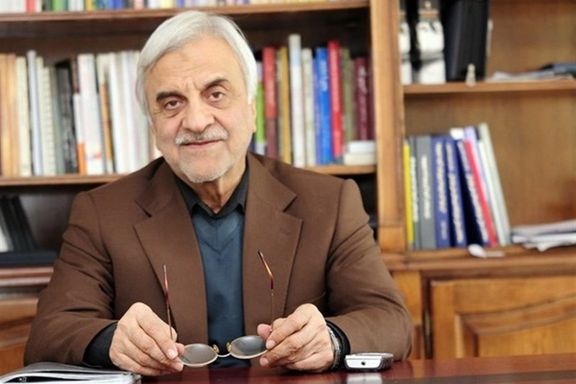
Mostafa Hashemi-Taba, reformist politician in Iran.

Reformist politician and former presidential candidate Mostafa Hashemi-Taba says rising hardships in Iran might lead to mass protests and even ethnic conflicts.

Hashemi-Taba told Aftab News in Tehran that increasing economic pressure on people has led to social abnormalities and Iranians are feeling that authorities are not responsive to their demands. This can lead to a new wave of protests, he warned.

Hashemi-Taba said that there has been a lot of pressure on the Iranian middle class during the past few years and some sociologists even say that the middle class has been eliminated. As a result, the remaining affluent class have are facing the poor and this can have dangerous consequences.

"The problem is not simply one of class differences. The problem is that people are frustrated and there is no bright prospect for the future. When people are poor and frustrated at the same time, this means that they have nothing to lose," Hashemi-Taba said.

He said one of these consequences is migration from the villages to the marginal areas of large cities. He added that the problem will not be solved by distributing small handouts. "Giving away bread coupons will not solve the problem” he said.

He highlighted protests by workers from various sectors of the economy and asked how long people can remain patient. He also criticized officials who ignore the volatile situation and make statements to please top leaders, adding insult to injury.

Massoud Pezeshkian, member of Iran's parliament and owner of Ensaf News website. FILE PHOTO
100%
Massoud Pezeshkian, member of Iran's parliament and owner of Ensaf News website.

Meanwhile, reformist lawmaker Massoud Pezeshkian has told Ensaf New, a media outlet he owns, that Iran's current situation is similar to the former Soviet Union and the Eastern bloc in the final years before the collapse of Communism.

He said there are many lessons for decision-makers in Iran such as the collapse of Communist governments in East Germany, Hungary, Czechoslovakia, Rumania and Bulgaria. There are many lessons in the history of that period for "the dictators, totalitarian rulers and those who are sure of themselves and think they are the only ones who know the truth."

The lawmaker made the comments after the picture of a book about the fall of the Soviet Union on his desk at parliament became controversial. The book was Revolution 1989, The Fall of the Soviet Empire (Victor Sebestyen). He also quoted the Koran as advising the people to go around the world and see what became of those who oppressed the people.

Pezeshkian said, he reads that book when he does not need to participate in parliamentary discussions, adding that he has also read other books during session, including Why Nations Fail (D. Asemoglu and J. A. Robinson) and the Narrow Road to Freedom (Michael Leitman) as well as religious books.

Pezeshkian said Eastern bloc countries failed because of the wrong behavior of totalitarian their totalitarian leaders. When rulers create dictatorships, societies tend to become chaotic. In such a situation, as soon as the government is weakened the society will rise and this leads to chaos and massacre, he argued.

Since 2018 Iranian cities have experienced major protests and the government's crackdown on protests led to hundreds of deaths as security forces fired military weapons into the crowds and often shot people to death at point blank range. During the latest protests in Iran in November, security forces used shotguns against farmers protesting the government's mismanagement of water resources, often shooting them in the face. During protests since 2017, “Death To the Dictator” has been a recurrent slogan by angry demonstrators.


Most Viewed

Ideology may be fading in Iran, but not in Kashmir's ‘Mini Iran'
1
INSIGHT

Ideology may be fading in Iran, but not in Kashmir's ‘Mini Iran'

2
INSIGHT

Hardliners push Hormuz ‘red line’ as US blockade tests Iran’s leverage

3
VOICES FROM IRAN

Hope and anger in Iran as fragile ceasefire persists

4

Iran International says it won’t be silenced after London arson attack

5

US sanctions oil network tied to Iranian tycoon Shamkhani

Banner
Banner

Spotlight

  • Hardliners push Hormuz ‘red line’ as US blockade tests Iran’s leverage
    INSIGHT

    Hardliners push Hormuz ‘red line’ as US blockade tests Iran’s leverage

  • Ideology may be fading in Iran, but not in Kashmir's ‘Mini Iran'
    INSIGHT

    Ideology may be fading in Iran, but not in Kashmir's ‘Mini Iran'

  • War damage amounts to $3,000 per Iranian, with blockade set to add to losses
    INSIGHT

    War damage amounts to $3,000 per Iranian, with blockade set to add to losses

  • Why the $100 billion Hormuz toll revenue is a myth
    ANALYSIS

    Why the $100 billion Hormuz toll revenue is a myth

  • US blockade targets Iran oil boom amid regional disruption
    ANALYSIS

    US blockade targets Iran oil boom amid regional disruption

  • Iran's digital economy battered by prolonged blackout
    INSIGHT

    Iran's digital economy battered by prolonged blackout

•
•
•

More Stories

Lawmaker Says Iran Should Learn From China How To Control The Internet

Jan 18, 2022, 17:00 GMT+0

An Iranian lawmaker has said that the Islamic Republic should emulate China’s “success” in creating a unique national intranet to control the cyberspace.

Iran’s hardliner parliament has been discussing ways to intensify Internet censorship by establishing an intranet that would essentially ban foreign social media networks which allow Iranians to receive uncensored information and communicate with others.

The government has blocked thousands of websites in Iran for nearly 20 years both for ideological and political reasons. Almost all news and political websites not controlled by the government are inaccessible except by special software people need to use to get around the filtering.

Ali Yazdikhah, representing the capital Tehran, said on Tuesday that Iran should learn from China and Russia in restricting access to the Internet. His remarks came as Iran has signed a 25-year cooperation agreement with China and is expected to expand cooperation in many areas.

Facebook, You Tube and Twitter are also blocked. Instagram is the only major international platform still accessible, which Iranians use extensively to conduct ecommerce. This is one major impediment to parliament’s plan for shutting down all foreign social media networks.

Yazdikhah mentioned that plans call for free domestic intranet for users who have to pay to have access to foreign sites and platforms “without restriction”, but this is highly unlikely given the sensitivity of the clerical regime.

Blaming Iran’s Problems On Rouhani Will Backfire, Says Pundit

Jan 18, 2022, 09:22 GMT+0
•
Iran International Newsroom

A leading conservative commentator in Tehran says some statements by President Ebrahim Raisi's supporters to help him, might damage his popular support base.

In an interview with the conservative news website Nameh News, Mohammad Mohajeri said, "Some statements made by the government's supporters enrage the people," adding that "When people become angry their demands will increase, and this is costly for the government."

Hardliners recently often highlight multiple crises Iran faces, as a way to say that Raisi’s job is hard, and people should be patient. But the negative comments reflect badly on the regime itself, which many people see as incompetent.

Mohajeri was also talking about cases such as a lawmaker who told people not to listen to music or buy musical instruments and to leave the country if they don’t like the restriction. Other cases include statements by Labor Minister Hojjat Abdolmaleki who said he is not responsible for creating jobs.

Conservative pundit, Moammad Mohajeri. FILE PHOTO
100%
Conservative pundit, Moammad Mohajeri.

Other examples of outrageous statements by hardliners include Mashad Friday Prayers Imam Ahmad Alamolhoda saying those who criticize clerics in the government should be punished for throwing stones at the prophet or the cleric who said on the state television that every Iranian couple should have 14 children. Even Supreme Leader Khamenei's chief political adviser Ali Akbar Velayati said people in Iran should wear aprons like the Yemenis and eat nothing but dried out bread.

Mohajeri said: "Some of the government supporters want a change in the people's lifestyle to reduce pressures that are being exerted on Raisi to solve [the current economic] crisis. But theseremarks prompt the people to have a negative attitude toward the government."

"Some of those who make such statements about people's private life are the members of the ultraconservative Paydari party who say these things only to milk the government. They are telling the government indirectly: Give us our share [of wealth and power]!" and we will defend you, said Mohajeri.

Another group of supporters are Raisi's uneducated friends, he said. "They think they are helping the government by making those outlandish remarks, but they are not aware that these statements backfire and will make Raisi’s weak government even weaker," he said. "We know that Raisi was elected in a low-turnout election and enjoys very little social support."

The third group, said Mohajeri, are Raisi’s real supporters. "They make these comments deliberately as they think they are still campaigning in the elections. What they do is magnify problems they say the previous government created” and blame the Rouhani administration for the country's multiple crises. “What they ignore is that the Raisi has been in office for six months now and the people are more likely to lash out at his administration for shortcomings," Mohajeri argueded, adding that sometimes claims made by this group are not true in the first place.

The commentator added that these three groups have different intentions. Yet the outcome of what they say is the same because whatever they say will eventually weaken Raisi, while he may not realize this and think that they are exerting pressure on his political rivals.

"There is an expiration date for comments that blame the previous government for the country's problems. After a while, nobody will believe them,” Mohajeri noted, as people tend to demand solutions from those who are in charge.

"Blaming the previous government will only increase people’s anger. And when they are angry, they demand things more insistently, and this will be even more costly for the current administration," Mohajeri stressed.

Iranians Demand Fundamental Changes, Secularism, Says Official

Jan 17, 2022, 07:19 GMT+0

An Interior Ministry official has warned that Iranians are increasingly demanding "fundamental changes in the country," and a secular government and lifestyle.

Deputy Interior Minister Taghi Rostamvandi said in a conference in Tehran on Sunday, [January 16] that social trends in the country are largely alarming. Some of these trends indicate an interest in a secular government, he said.

"This will be extremely alarming if we find out that as a result of the incompetency of the government, people feel that the religious government is incapable of solving the country's problems and that a secular government can be effective," Rostamvandi added.

The official did not explain how four decades of Shiite clerical rule have made the people turn their backs to the Islamic Republic government

A study published in September showed that only 32 percent of Iranians identify themselves as "Shiite Muslim," and nearly half of the population have moved on from religiosity and are "atheists."

The official said that rising tendency toward immigration among Iranian of all walks of life indicates that there are too many reasons to leave the country. One of the main reasons, he said, was the difficult economic situation and the rise of unemployment.

Last January, a study conducted by the Iranian Immigration Monitoring Agency indicated that the number of Iranian students in Turkey has risen by 1,300 percent during the past few years. There were 438 Iranian students in Turkey in 2013, but the number rose to 6,099 in 2017, the agency said.

In December 2017, an adviser to the Roads and Transportation Minister said that 5.1 million Iranians, mainly educated individuals and skilled workers, were in the waiting list for immigration to Australia and Canada.

This comes while President Ebrahim Raisi (Raeesi) has said recently that "Western cultures and political systems are not attractive for the Iranian youths. No young Iranian would want to live in a Western cultural atmosphere.

According to Rostamvandi demand for fundamental changes in Iran are on the rise.

During the past years over 100 Iranian cities have been the scene of nationwide protests that were eventually violently suppressed by the security forces.

Expounding on the reasons for the rise in protests, the official said, "There has been a decline in the people's resilience during recent years as there has been a rise in economic and financial difficulties."

The Islamic Republic has described the protests in recent years as "riots" and has violently cracked down on civil rights and women activists. Interior Minister Ahmad Vahidi, an IRGC general, said last month that the most serious blow to the Islamic Revolution is likely to come from among the country's female population."

Highlighting Iranians’ defiance against the government and the clerical rule, the Interior Ministry official said while the consumption of Alkohol in Iran has been banned since the 1979 Islamic revolution, around 10 percent of the population between 15 to 64 years of age drink alcohol.This is more than five million people, he said.

Meanwhile the ban on alcoholic drinks in Iran has made smuggled and bootleg booze popular and every year dozens of drinkers lose their sight or their lives to contraband alcoholic drinks.

Many Iranians Critical Of Long-Term China, Russia Deals

Jan 16, 2022, 16:25 GMT+0
•
Maryam Sinaiee

Many Iranian have been expressing resentment over a 25-year cooperation agreement with China and a proposed 20-year deal with Russia, saying it is a sell-out.

Although Iran has not revealed the details of the agreement with China and what it will entail in political, economic and military terms, some social media users go as far as claiming that the Islamic Republic is "selling out the country and its people" to China and Russia.

Not only politicians and the reformist media, but also many ordinary Iranians are wary of the consequences of too much reliance on the two powers, without simultaneously improving relations with the West to create a balance.

Others are wary of Russia's proactive role in the ongoing nuclear talks in Vienna and insist that Iran should directly negotiate with the US instead of allowing the interference of mediators like Russia.

"It is true that striking a deal with China is not a problem, but such agreements should not be limited to China and Russia. There should be long-term agreements with China and Russia as well as the United States and Europe to create a balance in foreign relations and reap the political and economic benefits of such balance for the nation," one Twitterati opined Sunday.

A man holding a sign in Iran that says, "Iran not for sale - China, Russia get lost".

Many also say they do not believe that China and Russia can be considered as Iran's strategic allies and partners. As permanent members of the UN Security Council, Russia and China did not block punitive UN sanctions resolutions over Iran's nuclear program a decade ago. "A sanctioned Iran is a gold mine for them," another Twitterati wroteSunday.

Some ordinary Iranians who are opposed to long-term deals with the two Eastern powers have been posting photos of themselves with posters expressing their disapproval. Some have taken their photos in front of government buildings and other landmark buildings to prove that they are posting from inside Iran, not from foreign countries as officials often claim, to discredit domestic critics.

Hardliners claim that closer economic and political relations with the East and Asian countries, which Iran's Supreme Leader Ali Khamenei has promulgated with the catchphrase "Looking East", will help Iran's development and strengthen it against Western powers, particularly the United States. Since 2018, and Khamenei's advocation of the policy, "Looking East" has become one of the centerpieces of a 'revolutionary economy' which hardliners have been hard at work to theorize.

Although Iranian officials for months said a 20-year strategic agreement with Russia had entered the final stages of drafting and even been almost finalized, the spokesman of the parliament's National Security and Foreign Policy Committee said Sunday that signing an agreement will not be on the agenda of President Ebrahim Raisi's visit to Moscow this month.Such an agreement requires further investigation and preparations, Mahmoud Abbaszadeh-Meshkini told Fars news agency, and added that the two sides will discuss the preliminaries of the agreement during the visit.

The Russian side has not shown any enthusiasm about the deal sought by Iran's hardliners although the two countries had a 20-year agreement which expired.

According to an opinion survey by Gamaan polling agency in the Netherlands with a sample population of over 20,000 Iranians living inside Iran that was published October 27, 65 percent of respondents had a negative view of China and Russia. In the same survey 40 percent said they viewed the United States negatively.

Creator Of Iran's 'Uncle Napoleon' Passes Away In California Exile

Jan 16, 2022, 08:51 GMT+0
•
Maryam Sinaiee

Iraj Pezeshkzad who immortalized the phrase, "It's the work of the British" in the most popular satirical Persian novel of the 20th century, passed away this week in California at the age of 94.

The highly acclaimed work, My Uncle Napoleon, was published in the early 1970s and was made into an extremely successful TV series. It was banned after the Islamic Revolution of 1979 but is still among the most sought after underground works of literature and film in Iran.

In Pezeshkad's novel set at the onset of the Second World War in Tehran, the small local wars that the main character of the book, a low-ranking officer once fought, gradually evolve into great wars against the British on par with the Napoleonic Wars. Uncle Napoleon's orderly, the simple and uneducated Mash Ghasem, not only begins to believe, or pretend to believe in the stories of Uncle Napoleon's heroic wars against the British, but also increasingly attempts to weave stories of his own heroism into it but the imaginary adventures only make the delusional patriarch the laughingstock of the family.

Pezeshkzad, a former French-educated judge and diplomat, captured the imagination of Iranian readers with his most vivid characters in a manner that no other contemporary author has. There is almost no one in Iran who is not familiar with his characters and its many famous catchphrases including, "It's the work of the British."

'Uncle Napoleon' in a TV series. Undated
100%
'Uncle Napoleon' in a TV series

The main character of My Uncle Napoleon has gradually come into believing his own stories, identifying himself with Napoleon, and living in constant fear of British plots to kill, or failing that, to dishonor and discredit him. "It's the work of the British", the old man will say in the face of any mishap that befalls him or his family. Even a sex scandal involving a niece of the family in Uncle Napoleon's delusional mind, is cited as proof that there is a British conspiracy against him.

The fame of the book and its catchphrase is such that British diplomats in Iran in the years following the publication of the book came to know about it probably within the first few days from their arrival. Former British Foreign Secretary Jack Straw even took inspiration from it to write a book entitled "The English Job: Understanding Iran and Why It Distrusts Britain".

Amongst British diplomats, there’s a poignant joke that ‘Iran is the only country in the world which still regards the United Kingdom as a superpower’. For many Iranians, it’s not a joke at all," an introduction to Straw's book said.

Nearly two centuries of Iranian politics, particularly the 19th century, was deeply influenced by the British-Russian embassies and their rivalries. Many Iranians still see the hand of the British in everything. Probably with the historical fear of the Iranians toward the British in mind, Iran's Supreme Leader Ali Khamenei in 2009 cast the blame for nationwide unrest following a disputed election on the British government. Hardliners claimed the British were behind the "sedition" against the Islamic

Pezeshkzad never singled out a real-life inspiration for the pathetic, delusional and bullying character who the children of the family including the narrator always called Uncle Napoleon amongst themselves. In a speech at the University of California, Los Angeles, Pezeshkad said the character originated in his memories of his childhood when grownups would indiscriminately label most politicians as "British lackeys".

Pezeshkzad made every episode of love or feud in Uncle Napoleon's family into funny, yet often very tender, narratives. His book, he told BBC Persian years ago, was inspired by the story of his own naive teenage love and memories from his own extended family. Pezeshkzad's book has been translated into several European languages including English.