• العربية
  • فارسی
Brand
  • Iran Insight
  • Politics
  • Economy
  • Analysis
  • Special Report
  • Opinion
  • Podcast
  • Iran Insight
  • Politics
  • Economy
  • Analysis
  • Special Report
  • Opinion
  • Podcast
  • Theme
  • Language
    • العربية
    • فارسی
  • Iran Insight
  • Politics
  • Economy
  • Analysis
  • Special Report
  • Opinion
  • Podcast
All rights reserved for Volant Media UK Limited
volant media logo

Trade Official Says Bartering Oil Amid Sanctions Is A Loss For Iran

Maryam Sinaiee
Maryam Sinaiee

Iran International

Jan 3, 2022, 08:36 GMT+0Updated: 17:20 GMT+1
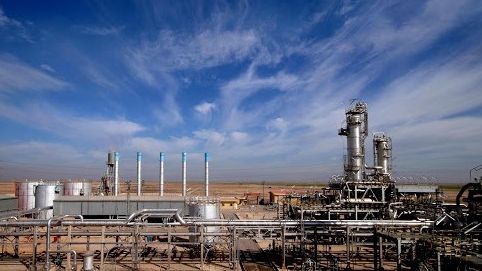
An oil installation in Iran's Khuzestan province.

A business representative in Tehran has criticized the government's sanctions-busting oil barter deals with buyers like China saying Iran gets little in return.

"We had not signed clear agreements with China for bartering. We gave them oil and told them to pay in kind. In such circumstances, they give us all their inferior quality products including the pesticides that have caused so much damage to our agricultural exports," Masoud Daneshmand told the Iranian Labour News Agency (ILNA) Sunday.

US banking sanctions and international restrictions on Iran have practically cut the country off from the global financial system, making it impossible to receive cash for oil exports.

Daneshmand also criticized an agreement to receive tea from Sri Lanka for its nearly a decade-old oil debt. In late December, Sri Lanka's minister of plantation, Ramesh Pathirana, signed an agreement with the head of Iran's Trade Promotion Organization in Colombo to settle the country's $251 million debt in monthly instalments of $5 million.

Sri Lanka will release the equivalent of the $5 million in rupees which will then be paid to the country's state-run Tea Board to distribute to individual exporters of tea to Iran.

Daneshmand said Sri Lanka has no other product to barter with Iran. "They will be giving Iran second and third grade quality tea instead of top quality and we will have to accept it. This kind of barter is nothing but loss to Iran."

In a tweet December 27, prominent reformist politician Mostafa Tajzadeh called the barter agreement "victorious"for Sri Lanka and referring to Iranian officials' insistence that US sanctions are an opportunity and blessing for Iran and will make the Islamic Republic stronger, used the hashtag "sanctions are not blessing".

Iran produces around 85,000 tons of tea in the Caspian Sea region in the north and is among the world's ten top tea producing countries. Domestic production meets around 30 percent of the national consumption. Sri Lanka is the second top tea exporter to Iran after India.

Some social media users have pointed out that bartering oil for tea could increase tea imports from Sri Lanka and damage domestic tea farmers' livelihood.

There have also been reports about plans to receive payments for oil exported to India and Pakistan in kind. Both countries export rice to Iran. Ahmad Donyamali, an official of Iran's Housing Council recently said Iran was also negotiating with Chinese and Turkish companies for building affordable government housing in a possible oil barter deal oil.

Speaking to ILNA December 24, the chairman of Iran-Switzerland Chamber of Commerce, Sharif Nezam-Mafi, criticized the government's plans to increase barter transactions with other countries and pointed out that Iran needed technology which developed countries are not likely to accept to transfer to Iran through barter.

Nezam Mafi added that many Swiss companies remained in Iran after the US withdrawal from the 2015 nuclear deal, Joint Comprehensive Plan of Action (JCPOA) but most of the companies that are still active cannot transfer their profits out of Iran, pay their shareholders, or even make payments to import raw materials or spare parts due to the sanctions. "I will not be surprised if the number of these companies drops if there is no [positive] conclusion in the JCPOA talks."

Hamidreza Salehi, a member of Tehran Chamber of Commerce on 7 December told ILNA that bartering could cause serious harm despite alleviating some of the problems the country is facing in international trade. He argued that bartering would eliminate the other side's competitors and let them dictate their own terms such as demanding discounts. "We will have to make concessions for business to take place."

Most Viewed

Iran negotiators ordered to return after internal rift over Islamabad talks
1
EXCLUSIVE

Iran negotiators ordered to return after internal rift over Islamabad talks

2
ANALYSIS

US blockade enters murky phase as tankers spoof signals and buyers hesitate

3
ANALYSIS

Why the $100 billion Hormuz toll revenue is a myth

4

US tightens financial squeeze on Iran, warns banks over oil money flows

5
ANALYSIS

US blockade targets Iran oil boom amid regional disruption

Banner
Banner

Spotlight

  • Hardliners push Hormuz ‘red line’ as US blockade tests Iran’s leverage
    INSIGHT

    Hardliners push Hormuz ‘red line’ as US blockade tests Iran’s leverage

  • Ideology may be fading in Iran, but not in Kashmir's ‘Mini Iran'
    INSIGHT

    Ideology may be fading in Iran, but not in Kashmir's ‘Mini Iran'

  • War damage amounts to $3,000 per Iranian, with blockade set to add to losses
    INSIGHT

    War damage amounts to $3,000 per Iranian, with blockade set to add to losses

  • Why the $100 billion Hormuz toll revenue is a myth
    ANALYSIS

    Why the $100 billion Hormuz toll revenue is a myth

  • US blockade targets Iran oil boom amid regional disruption
    ANALYSIS

    US blockade targets Iran oil boom amid regional disruption

  • Iran's digital economy battered by prolonged blackout
    INSIGHT

    Iran's digital economy battered by prolonged blackout

•
•
•

More Stories

Official Says Iran's Claim Of Self-Sufficiency In Medicines Not True

Jan 2, 2022, 17:47 GMT+0

An official of Iran’s drug importers union says official claims of self-sufficiency in production of raw materials for medicine and pharmaceutical products is not true.

In an interview with Iran’s labor news agency on Sunday, the deputy head of the Iranian Pharmaceutical Importers Association, Mojtaba Bourbour, said about 80 to 90 percent of the needed raw materials are imported from China and India. He added that some medicines are imported from China but sold as made in Iran.

Noting that there is no precise data on the amount of the imports of drugs packaged abroad, Bourbour said that unofficial figures indicate a $400 million dollar decrease to about $700 million since last year.

He added that most of Iran’s imports of packaged medicines are from the United States and European countries, followed by India and Turkey.

He also criticized the government’s policies that led to the decrease in imports, warning that medication prices may rise dramatically in the coming months as a result ofrestrictions by the health ministry and not foreign sanctions.

Also on Sunday, Iran’s Health Minister Bahram Eynollahi talked of further restrictions on imports of medicine and pharmaceutical products, while the Food and Drug Administration announced a ban on the imports of COVID-19 vaccines.

Eynollahi urged people to trust drugs made in Iran and warned Iranian doctors against prescribing foreign brands of medicine.

Readers Tell Tehran Website, People Can No Longer Tolerate High Prices

Jan 2, 2022, 12:19 GMT+0

A conservative news website in Tehran has published readers' comments about the nuclear talks and Iran's economic crisis, that despite censorship are revealing.

The comments, if published on any website in Iran, are strictly moderated to avoid possible insult against state officials, yet they reveal how the Iranian society perceives developments reported by the media.

Commenting on how likely is a nuclear agreement between Iran and the West, one reader said on Alef website, "Clearly Iran should fulfil its commitments under the JCPOA. An agreement would be possible if Iran does so, otherwise, there will be no agreement." As the comment looks contrary to Tehran's official view, the website replied: "Let the West do it first for once."

Another reader commented: "The United States wishes to return to the JCPOA so that it could activate the trigger mechanism and return all the UN resolutions against Iran. What the Iranian people want is a sustainable long-term agreement with the West."

Yet another user said: "We, and not the West, urgently need to negotiate and to reach an agreement. It is our economy that suffers from an 85-percent inflation [in some cases], not their economy. Prices change by the hour here, not in the West. Almost everyone has come to the conclusion that what we needed in Iran is an end to sanctions rather than a change of government."

The website replied that due to the mismanagement of the economy during the past 50 years, the rise in inflation will continue even if the sanctions are lifted.

Recently, when Iranian officials admit serious problems like inflation and drought, they refer to 50 years, to include the last few years of monarchy in Iran when the economy was in fact booming.

Another reader said, "They call themselves economists and still want to raise the income tax by 64 percent. Even the current tax rate is too much for some businesses." A third user opined that "the wave of immigration from Iran is caused by high prices and inflation."

One reader summed up a sentiment often evident in social media posts by Iranians. "If you cannot solve the problem of Iran's economy, what is wrong with asking the views of some international economists? Stop coming up with temporary solutions that redouble poverty and hunger in this country and increase inflation. The people can no longer tolerate price rises."

Referring to selling government assets as a way of coping with the country's massive budget deficit, one user commented: "Please do not sell government assets to plunderers. Instead of selling government assets to corrupt individuals, take back their illegitimate wealth and punish them for disrupting the national economy."

"It is a fact that the government is confused about many things particularly about the economy. Economic figures in the government do not work in coordination with each other and it is every man for himself. However, none of them has a solution," one of the comments said.

An article on the website that said the reason why lawmakers want to impeach Minister of Industry Reza Fatemi Amin is that he has not been able to control car prices also attracted attention. One reader said that "car prices can be controlled if the government allows the import of foreign-made cars to end the monopoly of Iranian automobile makers in the market. The competition will also lead to an improvement in the quality of domestically manufactured vehicles."

Another user said that "someone should first impeach the lawmakers who wish to impeach the Minister. Their performance is no better than the members of the cabinet."

New Chinese Consulate Looks To Expand Foothold In Iran’s South

Jan 1, 2022, 19:17 GMT+0
•
Maryam Sinaiee

An ex-Iranian ambassador has said a new Chinese consulate in Bandar Abbas port city will foster Beijing’s economic presence on Iran’s Gulf of Oman coastline.

Mohammad-Hossein Malaek, former ambassador to China and Switzerland, told the Iranian Labour News Agency (ILNA) that Bejing anticipated a leading role in developing the Makran region, the coastal strip along Iran’s Sistan-Baluchestan province and Pakistan’s Balochistan, where Beijing already has a 40-year multi-billion-dollar agreement with Islamabad to develop Gwadar port.

Malaek added that China's decision to open its consulate in Bandar Abbas is a calculated move as the it will be able to offer support to the many companies that the Chinese expect to establish in Makran as well as those already active in Chabahar Free Trade and Industrial Zone and Bandar Abbas, Iran's most important southern sea transportation hub.

The Iranian cabinet approved the opening of the consulate, China’s first in Iran, December 29. Malaek pointed out that Iran had three consulates in China, which under the Vienna Convention entitled China to same number in Iran.

Majid-Reza Hariri, Chairman of Iran-China Trade Chamber, told ILNA that several agreements were signed during Chinese President Xi Jinping's visit to Tehran in 2016 to establish industrial towns in both the port of Jask, Hormozgan, and in Sistan-Baluchestan.

Hariri said cooperation would expand given 25-year strategic pact between the two countries, and that Chinese investment in south and south-eastern Iran − including oil, gas, petrochemicals, and infrastructure could also expand. Hariri said many Chinese citizens based in Iran lived in the region.

India already has a project for developing the port at Chabahar, which is only 170km west of Gwadar. Both ports aim at opening a trade corridor with Afghanistan and Central Asia.

Looking east

President Ebrahim Raisi has said he wants to expand relations with Iran’s neighbors and with both China and Russia, and that he plans on a visit to Moscow with the next few weeks to sign a strategic pact similar to the one signed with China in March 2021.

While some Iranians view with suspicion both the pact with Beijing and the proposed pact with Moscow, Beijing is already Tehran's top trading partner at around $19 billion and trade with Russia is around $2 billion despite US ‘maximum pressure’ sanctions introduced in 2018. China’s Belt and Road Initiative, covering 142 countries and including port development and sea routes as well as land links, has been estimated to give a $7-trillion annual boost to world GDP by 2040 and boost China’s political and economic influence, especially when it comes to isolated countries like Iran or Venezuela.

China and Russia both reduced economic connections with Iran after the US began ‘maximum pressure,’ which threatened punitive action against any third party buying Iranian oil or dealing with its financial sector.

But whereas Iran’s European oil customers and US-allied Asian customers stopped buying Iranian crude, Chinese companies have been buying 600-700,000 barrels a day through unofficial channels.

Pipeline Fire Stops Operations At Iran Gas Platform In Persian Gulf

Jan 1, 2022, 15:09 GMT+0
•
Iran International Newsroom

A large fire sparked from an underwater pipeline has interrupted production at one of the platforms in Iran’s South Pars gas field in the Persian Gulf.

According to reports, the fire broke out Friday night in one of the transmission pipelines of phase 16 of the gas field, shutting down the platform.

Pars Oil and Gas Company said in a statement on Saturday that the production unit went out of operation although there was no fire on the platform itself and the accident had no human casualties.

It added that planning for repair work began as soon as the fire in the nearby pipeline was contained. Repairing such a pipeline may take several weeks.

The statement said lightning was the cause of the fire, noting that it ignited gas, which was leaking from the underwater pipeline. "The gas emitted to the water level was ignited by lightning 15 kilometers from the platform," the operating company stated.

An expert speaking to Iran International commented that the leak must have been a significant one to have caused a fire and the pipeline should be considered out of actions for a long time. Apparently, Iran used domestically produced pipes for laying the line in 2015, which would not meet industry standards, he said.

A source has told the semiofficial Mehr news agency that the 100-kilometer pipeline had many technical problems, and 70 kilometers of it had been replaced, but the remaining 30-kilometer segment was under repair. He added that the accident happened after 15 million cubic meters of methane-rich gas was injected into the pipeline.

After a video footage began circulating on social media, the state broadcaster moved to react and said the damage was not large.

The frequency of accidents in Iran’s energy facilities is increasing with some blaming lack of proper maintenance of the aging infrastructures and some suspecting sabotage by other countries, presumably Israel.

Production at the South Pars gas field has been dropping gradually in recent years as Iran is unable to make the necessary investments and improve its technology due to various sanctions. Last year, the field produced 70 percent of Iran’s daily 690 million cubic meters of natural gas output.

Meanwhile, with the world’s second largest gas reserves, Iran is unable to keep up with growing domestic demands, leading to frequent power cuts, although dirty fuels are substituted at power stations.

The incident must have reduced at least 15 million cubic meters of daily production, which can put further pressure on domestic gas supplies amid cold winter months.

Last winter, Iran experienced large power cuts in major cities. Protests broke out on a few occasions. When authorities started burning mazut, a dirty unrefined fuel to generate electricity, it led to heavy pollution in cities adding to the popular anger.

Floods Hit Large Swaths Of Drought-Stricken Iran

Jan 1, 2022, 13:19 GMT+0

Floods caused by torrential rains have swept through drought-stricken Iran disrupting electricty and clean water in the worst-hit areas of the south and east.

Head of the crisis management taskforce of Hormozgan province said on Saturday that an eight-year-old girl was drowned by floodwater in Bandar Abbas. He added that about 30 villages lost power and a lot of roads are blocked, making rescue operations even harder and slower. Floods have also caused damage to agricultural lands, houses and infrastructure.

In the eastern province of Sistan-Baluchestan, the flood has caused enormous material damage, leading to the closure of schools, shops and offices. The province was already suffering from lack of clean water amid a drought.

The director of the Bushehr meteorological office said on Saturday that heavy rain has caused seasonal rivers to overflow their banks which led to flooding of thoroughfares in several cities. He also spoke about serious damage to the farmlands and orchards.

Mehdi Valipour, the head of Iran’s Red Crescent Society, said on Friday that rescue operations were underway in about a dozen flood-stricken provinces.

Iran’s Meteorological Organization has predicted more rains, blizzards, thunderstorms, and hails for almost all the country in the next five days.