• العربية
  • فارسی
Brand
  • Iran Insight
  • Politics
  • Economy
  • Analysis
  • Special Report
  • Opinion
  • Podcast
  • Iran Insight
  • Politics
  • Economy
  • Analysis
  • Special Report
  • Opinion
  • Podcast
  • Theme
  • Language
    • العربية
    • فارسی
  • Iran Insight
  • Politics
  • Economy
  • Analysis
  • Special Report
  • Opinion
  • Podcast
All rights reserved for Volant Media UK Limited
volant media logo

Iran Says IAEA Camera To Be Replaced After 'Meticulous Examination'

Maryam Sinaiee
Maryam Sinaiee

Iran International

Dec 16, 2021, 20:10 GMT+0Updated: 17:35 GMT+1
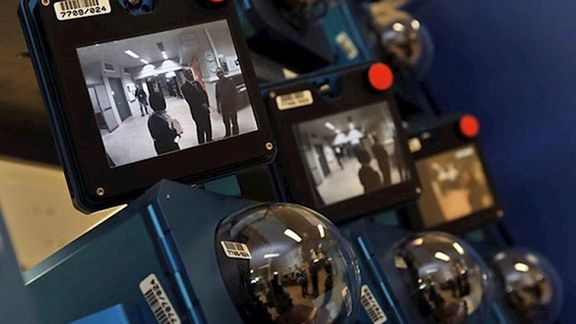
IAEA surveillance cameras.

Iran’s atomic energy spokesman said Thursday that Tehran and the IAEA had agreed to reinstall cameras at the Karaj plant after examination by Iranian experts.

Behrouz Kamalvandi,of the Atomic Energy Organization of Iran (AEOI), said staff from the International Atomic Energy Agency would “answer the technical questions of our security and safety experts… [and that] after careful and necessary checks, the agency’s cameras will be re-installed.”

An IAEA statement Wednesday said surveillance cameras removed from the facility would be back in place in coming days.

The Karaj plant, which makes components for the Iranian nuclear program, was in June hit by a drone strike, widely attributed to Israel. Months later Tehran said it suspected security breaches and refused to allow the replacement of surveillance cameras damaged in the attack, complicating talks between Tehran and the IAEA over an already delicate temporary access arrangement agreed in February.

Kamalvandi noted that, according to the usual protocols, Iran would not open the cameras without IAEA consent. He said footage would be sealed jointly by Iran and the IAEA.

Under a law passed in Iran in December 2020, the Iranian authorities will not allow the agency access to the footage until Tehran resumes applying its Additional Protocol, which allowed greater IAEA access to Iranian nuclear sites.

Such access was required under the 2015 nuclear deal, which talks in Vienna between Iran and world powers are seeking to revive after the United States in 2018 left the agreement, the JCPOA (Joint Comprehensive Plan of Action), and imposed ‘maximum pressure’ sanctions.

‘Preventing excuses’

Mohamad Eslami, AEOI chief, said Thursday Iran had agreed to allow access to Karaj to "prevent giving excuses to enemies who try to bar the Iranian negotiation team from reaching its aim of the lifting of [US] sanctions.” While the IAEA is not directly part of the Vienna nuclear talks, the US has threatened a motion censuring Iran at the IAEA governing board, so complicating matters in Vienna.

Opponents of the JCPOA in Iran criticized the IAEA agreement over Karaj as an unnecessary concession. In a commentary headlined "Questionable Agreement with IAEA Before Progress in Vienna Talks,” hardliner Kayhan newspaper called it "a gift to the pressure and sabotage trio," referring to the western European JCPOA signatories, France, Germany, and the United Kingdom.

“The recent pressures are a kind of division of labor among Iran's adversaries,” Kayhan observed. “The US uses diplomatic pressure in the talks through the European troika, the dirty work of sabotage and terror lies with Israel, and the IAEA leads the propaganda and pressure on Iran under the guise of technical [issues.”

The aim of the US and the three European powers, the paper argued, was to “re-impose JCPOA's restrictions [on Iran’s nuclear program] without real and effective lifting of sanctions.”

Kayhan, which is the flagship ultra-conservative newspaper is financed by Supreme Leader Ali Khamenei’s office.

Most Viewed

Iran negotiators ordered to return after internal rift over Islamabad talks
1
EXCLUSIVE

Iran negotiators ordered to return after internal rift over Islamabad talks

2
ANALYSIS

US blockade enters murky phase as tankers spoof signals and buyers hesitate

3
ANALYSIS

Why the $100 billion Hormuz toll revenue is a myth

4

US tightens financial squeeze on Iran, warns banks over oil money flows

5
ANALYSIS

US blockade targets Iran oil boom amid regional disruption

Banner
Banner

Spotlight

  • Hardliners push Hormuz ‘red line’ as US blockade tests Iran’s leverage
    INSIGHT

    Hardliners push Hormuz ‘red line’ as US blockade tests Iran’s leverage

  • Ideology may be fading in Iran, but not in Kashmir's ‘Mini Iran'
    INSIGHT

    Ideology may be fading in Iran, but not in Kashmir's ‘Mini Iran'

  • War damage amounts to $3,000 per Iranian, with blockade set to add to losses
    INSIGHT

    War damage amounts to $3,000 per Iranian, with blockade set to add to losses

  • Why the $100 billion Hormuz toll revenue is a myth
    ANALYSIS

    Why the $100 billion Hormuz toll revenue is a myth

  • US blockade targets Iran oil boom amid regional disruption
    ANALYSIS

    US blockade targets Iran oil boom amid regional disruption

  • Iran's digital economy battered by prolonged blackout
    INSIGHT

    Iran's digital economy battered by prolonged blackout

•
•
•

More Stories

Iran Ultra-Conservative Paper Says All Sanctions Must Go

Dec 16, 2021, 11:46 GMT+0
•
Maryam Sinaiee

All sanctions on Iran should be lifted, Kayhan newspaper said Thursday after Tehran’s agreement over UN inspections raised hopes for the Vienna nuclear talks.

Hossein Shariatmadari, the paper’s hardline editor and a long-time critic of nuclear negotiations, criticized Iranian representatives for recent remarks referring to lifting of "JCPOA-related" instead of "all" sanctions as the aim of talks.

The veteran editor, whose newspaper is financed by Supreme Leader Ali Khamenei’s office, was a critic of the 2015 nuclear deal, the JCPOA (Joint Comprehensive Plan of Action), which talks in Vienna are working to revive after the United States left in 2018 and imposed ‘maximum pressure’ sanctions on Iran.

Shariatmadari argued that the recent statements from Iranian negotiators were inconsistent with promises made by President Ebrahim Raisi (Raeesi) when he took office in August.

"What's the use of Vienna talks, what's the purpose behind them, and how can they be justified if the lifting of sanctions is to be limited to JCPOA-related sanctions and the same sanctions are to remain under other delusive, hostile pretexts such as human rights, terrorism, missile industries, regional presence, and so on," Shariatmadari wrote.

Hossein Shariatmadari, the ultra-hardliner editor of Kayhan daily, financed by Khamenei.
100%
Hossein Shariatmadari, the ultra-hardliner editor of Kayhan daily, financed by Khamenei.

During the June election, Raisi said he would, if it were in “the people’s interests,” support restoring the JCPOA, which imposed limits on Iran’s nuclear activities that it has breached since 2019. But Raisi’s victory enthused many opponents of the deal, including the Kayhan editor.

Shariatmadari demanded in his editorial that talks be stopped until Israel, India, Pakistan signed the Nuclear Non-Proliferation treaty and gave up their nuclear weapons. "Why should Iran remain an NPT member when it can leave the treaty according to its Article 10?” he asked.

Hopes for the Vienna talks were boosted Wednesday as the United Nations’ International Atomic Energy Agency (IAEA) announced Tehran had agreed to allow agency inspectors to service equipment at the Karaj manufacturing plant.

Tehran had barred the IAEA from the site, which manufactures parts used in the nuclear program, following an attack in June widely attributed to Israel. IAEA chief Rafael Mariano Grossi claimed Iran had agreed in September, under the latest temporary arrangement for access, to inspectors replacing equipment, including cameras, at the site. Early in the year, Tehran cut back access more or less to that requited by the NPT.

‘Real breakthrough’

"This is important for verification under the Iran nuclear deal, and work will continue to address other outstanding safeguards issues," the IAEA chief Rafael Grossi tweeted Wednesday. While the IAEA is not directly involved in the Vienna talks, it would be expected to monitor a revived JCPOA and is the main source of information internationally on the Iranian nuclear program.

Tehran's move apparently improved the atmosphere in Vienna. Mikhail Ulyanov, Russia’s lead negotiator in the talks, tweeted that the agreement was a “real breakthrough” that “fully corresponds to the needs of int. [sic] community.”

"At least I don’t hear anymore rumours [sic] about extraordinary IAEA Board of Governors meeting,” Ulyanov wrote, referring to US threats to raise a motion censuring Iran at the agency’s governing body.

A US official told Reuters Wednesday that the US would not seek an IAEA board meeting if Iran implemented the agreement." Of course, if there are any new nuclear escalations, we would react accordingly," the official added.

IAEA Strikes Deal With Iran On Replacing Cameras At Nuclear Site

Dec 15, 2021, 15:10 GMT+0
•
Iran International Newsroom

The UN nuclear watchdog reached a deal with Iran on replacing its cameras at a nuclear workshop, easing a months-long standoff impacting wider nuclear talks.

Those wider, indirect talks between Iran and the United States on salvaging the 2015 Iran nuclear deal are deadlocked, but Washington had threatened to confront Tehran at the International Atomic Energy Agency's 35-nation Board of Governors if it did not relent on allowing monitoring at a facility in Karaj, west of Tehran this month.

Any such confrontation could have caused the collapse of the talks altogether, diplomats said.

"The agreement with Iran on replacing surveillance cameras at the Karaj facility is an important development for the IAEA's verification and monitoring activities in Iran," the IAEA said in a statement after diplomats told Reuters an agreement had been reached.

"It will enable us to resume necessary continuity of knowledge at this facility," the IAEA said, adding the new cameras would be installed "in coming days".

At the same time, IAEA chief Rafael Grossi told AP on Tuesday that Iran's "level of enrichment is one that requires an intense verification effort to make sure that the material is where it must be".

He warned that the restrictions faced by his inspectors in Iran threaten to give the world only a "very blurred image" of Tehran's program as it enriches uranium closer than ever to weapons-grade levels.

Iranian media insisted that the footage from the camera will not be shared with IAEA and remain with Iran, based on limitations Tehran imposed earlier this year on all IAEA monitoring.

Iran limited monitoring access by the IAEA at its nuclear facilities in February and later refused to allow the replacement of cameras at the Karaj facility that manufactures uranium enrichment centrifuges. Just on Tuesday the head of Iran’s Atomic Energy Organization, Mohammad Eslami, had said Tehran would not allow access to the Karaj facility, which was the target of a drone attack in June.

The news came as the three European countries, the United Kingdom, France and Germany, signatories of the 2015 nuclear agreement with Iran, repeatedly criticized Tehran in recent days for being inflexible in talks aimed at restoring the JCPOA and making “maximalist” demands.

One of the IAEA's four cameras at the workshop in the TESA Karaj complex was destroyed in an apparent sabotage attack in June that Iran blamed on Israel. Iran then removed the cameras and has not let the IAEA return to replace them, angering the United States and its allies.

Iranian media said Wednesday that IAEA has agreed to condemn “the terrorist attack” against the Karaj facility.

Iran has shown the IAEA the cameras and "data storage media" containing their footage, except for the one containing the destroyed camera's footage. The IAEA and Western powers have called on Iran to explain where it is.

The bigger the gap in knowledge of what happened at Karaj, the greater the concern among Western states will be that Iran has secretly siphoned off key parts for centrifuges, machines that enrich uranium.

A senior diplomat said last month the IAEA does not know whether Karaj is operational.

With Reporting by Reuters and AP

Iran Allows IAEA Access To Nuclear Workshop, Tehran Website Says

Dec 15, 2021, 12:23 GMT+0

Iran has allowed the UN nuclear watchdog, the IAEA, to replace its cameras at a centrifuge parts workshop, according to a website affiliated to Iran's top security body.

"Due to the completion of judicial and security checks on the affected cameras, as well as the IAEA's steps to condemn the act of vandalism against the Tessa complex, Iran has voluntarily authorized the agency to replace the damaged cameras with new ones," Nournews said.

Iran limited monitoring access by the IAEA, to its nuclear facilities in February and later refused to allow the replacement of cameras at the Karaj facility that manufactures uranium enrichment centrifuges. Just on Tuesday the head of Iran’s Atomic Energy Organization, Mohammad Eslami, had said Tehran would not allow access to the Karaj facility, which was the target of a drone attack earlier this year.

The news came as the three European countries, the United Kingdom, France and Germany that are signatories of the 2015 nuclear agreement with Iran repeatedly criticized Tehran in recent days for being inflexible in talks aimed at restoring the JCPOA and making “maximalist” demands.

Iran needs to reach an agreement over limiting its nuclear program with the West if it wants crippling economic sanctions imposed by the United States to be lifted.

Europeans Escalate Criticism Of Iran Over Nuclear Activities

Dec 15, 2021, 10:30 GMT+0
•
Maryam Sinaiee

Three European powers warned Tuesday evening that chances of reviving the 2015 Iran deal were quickly diminishing due to Tehran’s “continued nuclear escalation.”

This was the second statement criticizing Iran in one day from France, Germany and the United Kingdom, the three European powers that signed the JCPOA (Joint Comprehensive Plan of Action) alongside China, Russia and the United States in 2015. The US left the deal in 2015 and unilaterally imposed ‘maximum pressure’ sanctions on Iran.

"Iran’s continued nuclear escalation means that we are rapidly reaching the end of the road," the E3 statement said. Tehran had accelerated “the pace of most sensitive violations of the JCPOA,” curtailed monitoring by the International Atomic Energy Agency (IAEA), and left “the international community with less knowledge of the status the Iranian nuclear programme [sic].” This all undermined “international peace and security and the global non-proliferation system.

The statement was issued ahead of the United Nations Security Council discussion of its resolution 2231, passed in 2015 to endorse the JCPOA and which enhanced inspections and required the lifting of most international sanctions on Iran.

Since the US left the JCPOA in 2018 and Iran began to exceed JCPOA nuclear limits the following year, the E3 has placed onus on both the US and Iran to revive the agreement. But Tuesday’s statement made no reference to US ‘maximum pressure’ sanctions.

‘Robust response’

The E3 insisted they remained committed to implementing the JCPOA, and placed responsibility on Tehran to choose between the "collapse of the JCPOA and a fair and comprehensive deal, for the benefit of the Iranian people and nation" while the diplomatic door was "firmly open."

In her speech to the UNSC, Britain's ambassador Barbara Woodward alleged that Iran had introduced "new maximalist demands," many beyond the JCPOA, since talks were suspended in June for Iran’s presidential election.

"If Iran continues its current path of nuclear escalation, in weeks, not months, it will be responsible for collapsing the JCPOA and provoking a serious crisis, which would require a robust response from this Council," she said. The US and Israel have recently been flagging up possible military action against Iran, but Russia and China would be very unlikely to endorse this at the UNSC.

Ali Bagheri-Kani, Iran's lead negotiator in Vienna, tweeted Tuesday that the Europeans were engaged in a "blame game habit instead of real diplomacy" while Iran was "working constructively and flexibly to narrow gaps."

Russia’s ambassador to the International Atomic Energy Agency Mikhail Ulyanov quoted Bagheri-Kani's tweet while insisting that all participants in Vienna talks should see diplomacy as a two-way street. "Of course I address these words first of all to myself," he tweeted.

Gaps with IAEA ‘narrow’

Aside from the Vienna talks and the UNSC meeting, Tehran said Tuesday that gaps with the International Atomic Energy Agency (IAEA) over access had narrowed. “I don't want to go into details, but I can anticipate that the two sides reach an understanding soon,” Saeed Khatibzadeh, foreign ministry spokesman told Press TV.

Nournews website, which is affiliated to the Supreme National Security Council, later reported that Iran and the IAEA had reached agreement over the agency replacing and servicing equipment at the Karaj manufacturing plant after Tehran had completed security checks, which followed June’s attack on the facility.

Earlier in the day, Mohammad Eslami, head of the Atomic Energy Organization of Iran, reiterated that IAEA access to a centrifuges manufacturing plant at Karaj was not required under Iran’s safeguards agreement of the Nuclear Non-Proliferation treaty (NPT). IAEA chief Rafael Mariano Grossi has said access to service monitoring equipment was agreed by Tehran in September in the latest temporary arrangement following Iran’s decision early in 2021 − following attacks on its nuclear sites and continuing US sanctions − to limit IAEA access to that required under the JCPOA.

"When they do not fulfill their commitments and impose harsh, illegal and unjust sanctions on Iran and expand them every day, there is no reason to force us to comply with them,” he said. “We act within the framework of IAEA safeguards and NPT and do not accept anything other than that.”

UN Inspector Warns Of Possible ‘Gaps’ In Iran Nuclear Program

Dec 14, 2021, 18:13 GMT+0
•
Iran International Newsroom

Rafael Grossi, the UN nuclear agency’s chief, has told Associated Press Tuesday that his agency’s picture of the Iranian atomic program was becoming “blurred.”

Speaking in Abu Dhabi, Grossi, head of the International Atomic Energy Agency (IAEA), said the agency faced a special problem with restricted access to the Karaj manufacturing plant, which was hit by a drone strike in June.

The IAEA chief said this would remain challenging even if better access were restored. “When we start to put that jigsaw puzzle together again there might be gaps,” he explained. Karaj’s role in producing “parts for centrifuges, radars, tubes,” Grossi continued, was “essential for the rest of the process, for the enrichment itself.”

Diminishing access

Grossi has argued for some time that Iran has backtracked over Karaj since he reached an arrangement in Tehran September over agency inspectors’ access to service monitoring equipment, including cameras.

September was the latest in temporary IAEA-Iran understandings since Tehran decided early in 2021 to limit inspections more or less to those required under the Nuclear Non-Proliferation agreement. Iran has justified limiting access to Karaj in terms of a security review following the drone strike, which was widely attributed to Israel.

The IAEA chief’s remarks to AP came as Iran’s talks with world powers continued in Vienna with the aim of reviving the lapsed 2015 nuclear deal, the JCPOA (Joint Comprehensive Plan of Action).

While the IAEA has no direct role in the talks, it would have responsibility for monitoring the JCPOA once revived. In the meantime, the agency is the main source of information on Iran’s nuclear program, both from its inspectors and as the conduit for direct Iranian reports.

Grossi told AP that the IAEA’s ability was diminishing to provide comprehensive information, including over the manufacture at Karaj of centrifuges, the devices used to enrich uranium.

Iran’s use of more advanced centrifuges than those permitted under the JCPOA has emerged as a bone of contention in talks, as more advanced models allow quicker and more efficient enrichment of uranium. Mikhail Ulyanov, Russia’s representative in the Vienna talks and its IAEA ambassador, said Monday that centrifuges were an “acute issue” in negotiations.

Grossi told AP that the agency needed a clear idea of centrifuges production. While this is not required as part of Iran’s ‘safeguards commitments’ under the NPT, which are limited to direct nuclear work, it was possible under the JCPOA.

‘An illusion’

“If the international community through us, through the IAEA,” Grossi told AP, “is not seeing clearly how many centrifuges, or what is the capacity that they may have, then…what you have is a very blurred image…an illusion of the real image, but not the real image…It sounds technical and boring, but it's very important."

Grossi noted that his contacts since September had shown the new government under President Ebrahim Raisi (Raeesi) had “a different take from the previous administration.” As well as “strong views about the interactions that Iran has been having with its counterparts within the JCPOA, and beyond,” Grossi said, “the president himself and the people around him have been saying very clearly that they have views about the nuclear program.”

Grossi said he wanted to tell Iran there was "no way around" the IAEA and its inspectors if Iran wanted to be "a respected country in the community of nations." He stressed: "We have to work together.”