• العربية
  • فارسی
Brand
  • Iran Insight
  • Politics
  • Economy
  • Analysis
  • Special Report
  • Opinion
  • Podcast
  • Iran Insight
  • Politics
  • Economy
  • Analysis
  • Special Report
  • Opinion
  • Podcast
  • Theme
  • Language
    • العربية
    • فارسی
  • Iran Insight
  • Politics
  • Economy
  • Analysis
  • Special Report
  • Opinion
  • Podcast
All rights reserved for Volant Media UK Limited
volant media logo

Students Accuse Raisi Of Insults, Humiliation During Campus Meeting
Iran International Newsroom
Dec 9, 2021, 16:08 GMT+0Updated: 17:39 GMT+1
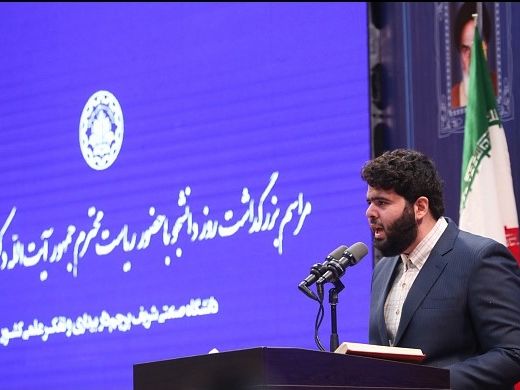
A university student addressing president Ebrahim Raisi. December 7, 2021

Two days after President Ebrahim Raisi faced criticism by university students, state media are still praising him, portraying the meeting as a win for Raisi.

On Tuesday, several students lashed out at Raisi for his economic policies and his administration's approach to human rights, when he met them to mark Iran’s Student Day. An Islamist student harshly attacked him and the ruling elite during a public meeting in Tehran’s Sharif University of Technology.

Mohammad Hossein Bayat, the student who addressed Raisi as the leader of the Islamic Association, told him in all frankness:“You got elected in the least competitive election in the history of the Islamic Republic, with the lowest rate of voter participation.” He added, “We are speaking to you not as a president elected with the free vote of the people in a free election. We are speaking to you as a representative of the ruling system.”

Nonetheless, the press, particularly those such as the Iran Daily, owned by the Raisi administration, pretended in glamorous reports that the meeting was an opportunity for Raisi to present a report to students on his performance during the past four months.

Sara Shabani, a student whose picture appeared on the front-page of the daily while making a point during the meeting with Raisi, wrote in a December 9 tweet: "Presenting a report to students? As the person standing next to Raisi in this picture, I wish to say that he put some security-laden labels on the students in the auditorium and told them 'To repent for what they said.' Outside the auditorium, his answers to the students' questions were nothing but insults and humiliation. Do not try to fabricate beautiful pictures and headlines."

Iran Daily, showing president Raisi with student on December 7, 2021
100%
Iran Daily, showing president Raisi with student on December 7.

Another student tweeted about the body language in the front-page picture: "The body language is interesting, both Raisi and the chancellor of the university are looking the other way while you are talking to him. Yet another student, Meysam, said that the entire meeting was a show for the media, otherwise individuals such as Raisi never care about the students and what they say.

The Raisi administration has already proven its naivety in the area of putting up "shows" for the media. In a video circulating on social media, his media team filmed the people in overcrowded Iranian taxis reacting to a mock radio news program that says Raisi has been killed in a helicopter crash during a provincial visit.Many of those who posted this video and those who commented on it pointed out that the video has been carefully "directed" and "edited" in a way to prove that young Iranians love Raisi.

While most of what appears to be criticism of Raisi and his administration by young people are about hypocrisy and lies, some media and politicians criticize him for his inaction in foreign and economic policies, co-opting unpopular pro-Ahmadinejad politicians in his cabinet and selecting the members of his team and lower layers of government managers from among his or his aides' relatives.

In one of the latest examples of such critiques, reformist political activist Majid Mohtashami pointed out in an interview with Arman daily on Thursday that the Raisi administration is an example of a populist governmentthat promises to build four million homes in four years.

Mohtashami said that meanwhile, the national currency has fallen 25 percent during Raisi’s first 100 days in office. He added that the president had promised a non-factional administration, but most of his men come from one hardliner group, while new faces in his government were chosen based on kinship rather than merits. This has made Raisi hostage to two oligarchies one made up of relatives and another one formed by the members of pro-Ahmadinejad Paydari Party.


Most Viewed

Ghalibaf defends Iran-US talks amid hardline backlash
1
INSIGHT

Ghalibaf defends Iran-US talks amid hardline backlash

2
INSIGHT

100 days after carnage: Iran economy reels from war, inflation, unemployment

3
INSIGHT

A nation in limbo: 100 days after the massacre, has the world moved on?

4
ANALYSIS

From instability to influence: Pakistan’s pivotal role in US-Iran diplomacy

5
ANALYSIS

100 days on: why Iran’s January protests spread across social classes

Banner
Banner

Spotlight

  • War-hit homeowners feel abandoned as Iran’s reconstruction aid fades

    War-hit homeowners feel abandoned as Iran’s reconstruction aid fades

  • 100 days on: the anatomy of Iran’s January crackdown
    INSIGHT

    100 days on: the anatomy of Iran’s January crackdown

  • Ghalibaf defends Iran-US talks amid hardline backlash
    INSIGHT

    Ghalibaf defends Iran-US talks amid hardline backlash

  • 100 days on: why Iran’s January protests spread across social classes
    ANALYSIS

    100 days on: why Iran’s January protests spread across social classes

  • From instability to influence: Pakistan’s pivotal role in US-Iran diplomacy
    ANALYSIS

    From instability to influence: Pakistan’s pivotal role in US-Iran diplomacy

  • A nation in limbo: 100 days after the massacre, has the world moved on?
    INSIGHT

    A nation in limbo: 100 days after the massacre, has the world moved on?

•
•
•

More Stories

Hardliner Paper Says Closing Hormuz Is Iran's 'Incontrovertible' Right

Dec 9, 2021, 11:38 GMT+0

The Chief Editor of hardliner Kayhan daily in Tehran says that closing the Hormuz Strait is the “incontrovertible right” of Iran and “we should not hesitate.”

Hossein Shariatmadari, who is Supreme Leader Ali Khamenei’s representative at the flagship conservative paper wrote the commentary after the United States this week issued a statement reiterating past seizure of Iranian arms destined to Yemen’s Houthis and oil for Venezuela in international waters.

Washington also announced new sanctions on Iranian security officials and entities for human rights violations, including killing protesters and abuse in prisons.

Shariatmadari also said that these US actions coincide with the resumption of nuclear talks in Vienna, and show “the empty-handedness of America and the West” in the negotiations. He added that the United States should know it cannot get concessions from Iran by “empty promises”.

Iran has made similar threats in the past, but the closure of the strait will also chock off Iran's trade amid its current economic crisis.

Iran’s new hardliner negotiating team is demanding all post-2018 American sanctions to be lifted all at once before Iran agrees to revive the 2015 nuclear deal, the JCPOA.

The United States has expressed dismay at Iran’s position and has said that if talks in Vienna do not show Tehran’s seriousness, it is ready to ramp up pressure.

As Diplomacy Stutters, US, Israel Mull Military Drills For Iran Scenario

Dec 9, 2021, 08:06 GMT+0

US and Israeli defense chiefs are expected on Thursday to discuss possible military exercises for a worst-case scenario to destroy Iran's nuclear facilities.

The option could be exercised should diplomacy fail and if their nations' leaders request it, a senior US official has told Reuters.

The scheduled US talks with visiting Israeli Defense Minister Benny Gantz follow an October 25 briefing by Pentagon leaders to White House national security adviser Jake Sullivan on the full set of military options available to ensure that Iran would not be able to produce a nuclear weapon, the official said on Wednesday, speaking on condition of anonymity.

The US-Israeli preparations, which have not been previously reported, underscore Western concern about difficult nuclear talks with Iran that President Joe Biden had hoped would revive a 2015 nuclear deal abandoned by his predecessor, Donald Trump.

No results from talks

But US and European officials have voiced dismay after talks last week at sweeping demands by Iran's new, hardline government, heightening suspicions in the West that Iran is playing for time while advancing its nuclear program.

The US official declined to offer details on the potential military exercises.

"We're in this pickle because Iran's nuclear program is advancing to a point beyond which it has any conventional rationale," the official said, while still voicing hope for discussions.

Gantz, in a post on Twitter as he departed for the United States, said: "We will discuss possible modes of action to ensure the cessation of (Iran's) attempt to enter the nuclear sphere and broaden its activity in the region." He did not elaborate.

Israeli officials have been urging the Biden Administration not to accept a “bad deal” which would leave a path for Iran to acquire nuclear weapons in the future. Any agreement now means that Washington has to drop its most effective sanctions against Iran and there would be no second chance to get concession from Tehran.

Nuclear negotiations will resume on Thursday, according to the European Union official chairing the talks, and the US special envoy for Iran plans to join them over the weekend.

Iran has been enriching uranium to 20 and 60-percent purity, with the latter having no civilian use. As the talks drag on, the West and countries in the region are concerned that Tehran is getting closer to the critical point of a nuclear break-out.

The 2015 agreement gave Iran sanctions relief but imposed strict limits on its uranium enrichment activities, extending the time it would need to produce enough fissile material for a nuclear weapon, if it chose to, to at least a year from around two to three months. Most nuclear experts say that period is now considerably shorter.

Compromised

With the deal's nuclear benefits now badly compromised, some Western officials say there is little time left before the foundation of the deal is damaged beyond repair.

Such drills by the United States and Israel could address calls by Dennis Ross, a former senior US official and Middle East expert, and others to openly signal to Iran that the United States and Israel are still serious about preventing it from obtaining a nuclear weapon.

"Biden needs to disabuse Iran of the notion that Washington will not act militarily and will stop Israel from doing so," Ross wrote last month.

Ross even suggested the United States should perhaps signal a willingness to give the Israeli's the US military's bunker-busting Massive Ordnance Penetrator, a 30,000-pound bomb.

Asked about such remarks about deterrence, the senior US official said: "When President Biden says Iran will never get a nuclear weapon, I mean, he means it."

Central Intelligence Agency Director Bill Burns said on Monday that the CIA does not believe Iran's supreme leader has decided to take steps to weaponize a nuclear device but noted advances in its ability to enrich uranium, one pathway to the fissile material for a bomb.

Burns cautioned that, even if Iran decided to go ahead, it would still require a lot of work to weaponize that fissile material before attaching a nuclear weapon to a missile or other delivery system.

"But they're further along in their mastery of the nuclear fuel cycle and that's the kind of knowledge that is very difficult to sanction away or make disappear, as well," he said.

US officials have also long worried about America's ability to detect and destroy dispersed components of Iran's nuclear weaponization program once enough fissile material for a bomb were produced.

Exclusive report by Reuters

Iran Parliament Speaker Ghalibaf Joins ‘Slap Or Shove’ Controversy

Dec 9, 2021, 07:33 GMT+0
•
Maryam Sinaiee

A controversy about a lawmaker slapping a traffic cop last year has resurfaced in Iran amid public criticism of officials who feel immune from the law.

The lawmaker involved has criticized parliament speaker Mohammad Bagher Ghalibaf for retracting his support under public pressure.

Ali-Asghar Annabestani told Rouydad24 news website Wednesday Ghalibaf (Qalibaf) had acted from his “longing for presidency. "In January 2021, Annabestani was in a melee with a conscripted soldier, Abed Akbari, who was serving as a traffic cop in Tehran and stopped Annabestani’s car in a bus lane in a busy street.

The soldier took the matter to social media immediately, garnering backing from Twitterati and others, and later sued the lawmaker for slapping him. Although there was no conclusive footage, several witnesses backed Akbari’s account.

What was notable in the incident was the public's attitude of immediately believing the cop rather than the lawmaker. Many politicians seeing an opportunity to be on the popular side of an issue, demanded accountability from the lawmaker.

Annabestani first denied any altercation, and then admitted to "shoving" the warden after Akbari had insulted him. The parliament member made a public apology, but has denied there was any more to the incident.

Police spokesperson Mehdi Hajian said a few days after the fracas that the chief of law enforcement, Brigadier General Hossein Ashtari, had ordered the police’s legal department to defend the warden's rights, but Akbari later dropped his lawsuit, feeding speculation but not explaining why.

Ghalibaf revived the controversy Tuesday when asked about the case during a question-and-answer session with university students, when he backed Annabestani’s version of events.

The speaker noted it was better not to repeat “whatever we see” on social media. “Annabestani would have committed a crime if he had slapped the warden and should then have been punished," Ghalibaf noted. "He didn't slap the warden but shoved him."

The speaker's support first drew Annabestani’s praise and gratitude. But within hours Akbari took to an Instagram live session to suggest a court had accepted his claim that he had been slapped. He accused both the judiciary and parliament of protecting Annabestani.

After hearing this, Ghalibaf noted Annabestani had found guilty of "assault without causing bodily harm" and apologized in line with his “promise of honesty” to Iranians.

Ghalibaf’s shift was “hilarious,” Annabestani responded. “He has told me several times that he watched the traffic-camera footage of the incident released by the police and it did not look like slapping and showed shoving. Now, under media pressure, he is accusing me of lying."

Putin Says He Has Invited Iran's President To Visit Russia

Dec 8, 2021, 22:16 GMT+0

Amid nuclear talks with Iran, Russian President Vladimir Putin has said that he hopes his Iranian counterpart Ebrahim Raisi will visit Moscow in early 2022.

Putin was speaking to reporters on Wednesday after talks in Sochi with visiting Greek Prime Minister Kyriakos Mitsotakis.

Putin said that he discussed Iran with Mitsotakis and “I hope Iran’s president will accept my invitation” and visit Russia early next year.

President Joe Biden discussed Iran nuclear negotiations with Putin on Tuesday when they held a two-hour teleconference on tensions surrounding Russian troop concentrations on the border with Ukraine.

US National Security Advisor Jake Sullivan later told a briefing that the two presidents has “good discussion on Iran”, and announced that both oppose a nuclear Iran.

Talks in Vienna are set to resume on Thursday, but there is little certainty about a breakthrough. Russia, a diplomatic ally of Iran, is a participant in the 2015 Iran nuclear agreement, JCPOA, and takes part in the Vienna negotiations.

Iran’s President Criticized For Blaming Currency Fall On Manipulators

Dec 8, 2021, 13:27 GMT+0
•
Maryam Sinaiee

Iran’s president has blamed saboteurs after the rial fell to 300,000 to the dollar Saturday with European and US officials airing pessimism over nuclear talks.

At a meeting of a government economic taskforce Tuesday evening President Ebrahaim Raisi (Raeesi) ordered authorities to identify "manipulators and destabilizers in the forex market" while exercising their powers to manage the exchange rate.

"Some of these people in the country and others abroad are trying to push up the forex rates," he said, presumably referring to media briefings by US and European officials suggesting talks in Vienna to revive Iran’s 2015 nuclear deal had been stymied by proposals Tehran presented last week.

"We have concrete information that a group of people are trying day and night to raise the foreign exchange rate…in order to tie the [Vienna nuclear] talks to the economy and impose their own demands on the nation," Raisi had said hours before, in a speech to university students.

Blaming speculators and resorting to arrests and even executions is not new for the government. In 2018, Iran executed two men − including Vahid Mazloumin, the ‘Sultan of Coins’ arrested allegedly with two tons of gold coins − for illegal currency transactions.

The administration of President Donald Trump argued that the considerable damage inflicted, by ‘maximum pressure’ − including recession and a continuing currency depreciation − would lead Tehran into a range of concessions. President Joe Biden, who took office in January, expressed a commitment to revive the JCPOA but has continued ‘maximum pressure’ as leverage.

The rial-dollar exchange rate passed the important threshold of 300,000 Saturday, a day after European and American negotiators returned to their capital from Vienna downplaying prospects for an agreement. The dollar traded close to 310,000 Wednesday despite assurances from Raisi and the Central Bank governor that the currency would stabilize.

Local media on Wednesday criticized and even ridiculed Raisi’s attempt to blame the rial’s fall on speculators, rather than admit that US sanctions should be lifted and oil revenues to increase before Iran’s economic crisis somewhat subsides.

The conservative Jomhouri Eslami newspaper wrote Wednesday that Raisi's remarks recalled the case of forex dealer Jamshid Besmellah, arrested in 2012 after a public denunciation by vice-President Mohammad-Reza Rahimi for large-scale profiteering. Besmellah, who served two years in jail, insisted he had done nothing wrong and was a scapegoat.

"He was arrested … but the rise of the dollar and other currencies continued,” Jomhouri Eslami noted. “The market went its own way and neither orders nor arrests made any difference. We hope Mr Raisi proves in action that [his recent allegations] are not only a projection [of blame]."

While currency depreciation is not solely tied to sanctions, the squeezing of Iran’s foreign currency reserves by US third-party sanctions has led to daily liquidity growth of over 50 trillion rials a day based on Central Bank figures, and consumer price inflation that has reached 45 percent according to Iranian government figures.

Raisi identified tacking the fiscal deficit as a priority in his television interview Sunday, when he argued that his government had managed to pay civil servants' salaries without borrowing from the Central Bank.

In a commentary Tuesday, entitled "The Mystery of Printing Money", Etemad newspaper said that Raisi's government has not directly borrowed from the Central Bank but has borrowed from other banks, which are all state or quasi-state banks. Etemad argued, that this is tantamount to borrowing from the Central bank, because the other lenders in turn have to borrow from the Central Bank, which has to print money. Liquidity fueling inflation has grown fourfold since 2018 when the United States imposed sanctions.





