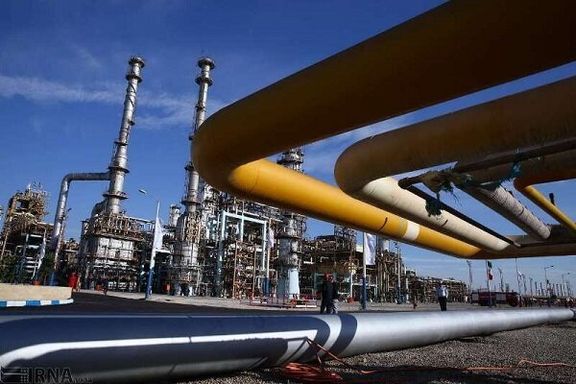
Iran’s oil refining capacity has declined by 11 percent in 8 years and its share of global refining is just 2 percent, despite its large reserves of crude oil.
Meanwhile, its regional rival Saudi Arabia has been investing billions of dollars in setting up new refineries with the ability to produce more feed for petrochemicals, a sector that aspires to make up for projected reductions in the consumption of fossil fuels in coming decades.
Iran Student News Agency (ISNA) in an article expresses hope that the new government of President Ebrahim Raisi (Raeesi) would pursue plans to expand Iran’s refining capacity. But the biggest hurdle would be Iran’s lack of resources for making the necessary investments amid a deep economic crisis.
Amid US sanctions and deep disputes with Western countries, the chance to secure foreign investments is almost non-existent. If Iran’s ally China shies away from openly doing business with Tehran. Although Beijing is buying some illicit Iranian oil, it has shifted its purchases to other countries, including Saudi Arabia.
Iran might be missing the boat in significant ways to shift from a crude oil exporter to provider of refined products and feed for petrochemicals, as other countries plan for a shift with green technologies bound to reduce fossil fuel consumption.
Iranian media and politicians have been arguing that the country should reduce its dependence on crude exports for two reasons. First, crude oil is vulnerable to sanctions, as the reality with stringent US sanctions have shown since 2018. Iran’s crude exports dropped from a height of 2.5 million barrels a day in 2017-2018 to around 200,000 bpd in the second half of 2019, when Washington imposed full sanctions. But the US never sanctioned Iran’s gasoline exports.
Second, exporting crude oil has much less profit than exporting refined products such as gasoline, Iranian officials say. But daily refining capacity has dropped to 2.1 million barrels of crude, even according to Iranian officials who usually boast about production. That can produce around 800,000 barrels of gasoline, when daily domestic consumption is 550,000 barrels. This leaves relatively little to export and make money.
If Iran exports the remaining gasoline, it is difficult to estimate how much money it makes. There are no official records of buyers, who cannot pay Iran through regular banking channels, again because of US third-party sanctions on banks that deal with Iran. If international gasoline prices would be any guide, Iran could fetch more than $20 million a day by exporting its remaining 10 million gallons, but in this case the real prices would be much lower.
Nevertheless, Iran makes a few billion dollars a year by selling gasoline and diesel in the region to buyers who find ways to pay for the discounted fuel. This has helped Tehran in getting much needed foreign currency when crude oil export, its main source of revenues, has been slashed.
If US sanctions are lifted and Iran is able to return to its previous level of crude exports, perhaps it can make some investments in its refining capacity. But to seriously prepare for the coming decades it would need billions of dollars to compete in modern refining. This level of resources would need foreign investments, since Iran’s oil revenues are barely able to feed an inefficient, centrally mismanaged economy.
Contradicting trade officials, the IRGC-linked Fars news agency has once again insisted that Iran is selling more than a million barrels p/d of oil to China.
In a report Sunday, Fars accused officials of the Tehran Chamber of Commerce of wrongfully declaring that Iran's crude oil exports to China have dropped to around 1,000 bpd, because they are allegedly opposed to "neutralization of [US] oil sanctions". Fars also accused the chamber of sabotaging Iran's relations with China.
In a tweet Saturday, Chairman of the Tehran Chamber of Commerce Masoud Khansari said Iran's oil exports to China "drastically dropped" in the first seven months of the current Iranian calendar year which began 21 March. According to Khansari in the first seven months of 2021 Iran exported just $11 million of crude oil to China in comparison with $9.5 billion in 2018 before Donald Trump imposed sanctions on Iranian oil in November of that year.
Since then, Khansari said, other countries in the region, presumably Saudi Arabia, which is now exporting more oil to China, have taken Iran’s market sahre. "With the continuation of sanctions, the Iranian economy will lose more [trade] opportunities," he argued.
"Why does an entity such as the Tehran Chamber of Commerce which is fully aware of the [extent of the] Iran, China oil trade try to sabotage the relations between Iran and China in the domestic sphere with such wrong information?" Fars asked in a section of its report under the subhead "Tehran Chamber of Commerce's Conflict of Interest with Expansion of Iran, China Cooperation in Neutralizing Oil Sanctions".
Fars also alleged that reports published by the Tehran Chamber of Commerce on the subject "all of a sudden spread suspiciously in the society by certain news websites".
Fars also argued that data from OPEC, tanker-tracking companies and government reports prove that the total crude and natural gas condensates that Iran exports to China still exceed one million barrels a day.
In fact, observers believe that the oil shipments are not directly going from Iran to Chinese buyers. Middlemen buy the oil and through illicit means sell it to China claiming a different origin for the oil.
China is a diplomatic ally of the Islamic Republic but so far it has avoided openly challenging US sanctions. China might be indeed clandestinely importing hundreds of thousands of barrels of crude a day via third party channels, but Iran gains little from this trade as intermediaries take most of the profits and often deliver goods instead of cash.
Official figures released by China's Customs show no direct oil purchase from Iran in 2021. But in March Bloomberg claimed that details from third-party sources indicated that Iranian oil was often re-branded as purchases from other countries and such exports had even surged.
There have also been reports recently that China is enforcing US sanctions on Iranian shipping. According to some officials, Chinese vessels now avoid Iranian ports and Iranian ships are not allowed into Chinese ports.
The news about China’s compliance with US sanctions might be embarrassing for hardline supporters of Supreme Leader Ali Khamenei who have been trumpeting Iran’s “Looking East” policy. Khamenei promulgated the policy in 2018, saying that Iran should adopt an Eastern orientation of relying on China and Russia for business and commerce in the face of US sanctions.
Iran's President Ebrahim Raisi during his TV interview. October 18, 2021
President Ebrahim Raisi should tell the truth to the people instead of giving "formal" television interviews, a well-known conservative newspaper has said.
The Islamic Republic newspaper (Jomhouri-ye Eslami), enjoying close connections with the office of Supreme Leader Ali Khamenei, in an editorial note wrote that there is a lot to say about an October 18 interview by state television with Raisi, but most of all “an interview with the president should not be a formality”.
The paper, established after the revolution in 1979, is managed by Masih Mohajeri, a widely respected veteran cleric known for eschewing factions.
The newspaper noted that despite earlier promises to accept questions from the public, no such opportunity was offered, and the interviewer did not challenge Raisi when he repeatedly blamed the former administration for current problems people face. The paper asked that more than two months have passed since Raisi took office and why there is no positive movement toward solving the economic hardship people face.
Masih Mohajeri, chief editor of 'Islamic Republic' newspaper
Iran’s hardliners were lambasting former president Hassan Rouhani in the media for the deteriorating economic conditions since the United States withdrawal from the Iran nuclear agreement (JCPOA) in 2018. The criticism usually left out the fact that without oil export income constituting half of the government’s budget Rouhani’s hands were tied. The same applies to Raisi.
The Islamic Republic daily wrote that when the price of poultry increased, the state television was attacking Rouhani but now when egg prices have doubled in two months it does not question Raisi.
The paper said that everyone knows the answer as to why egg prices have jumped but Raisi should have been asked about it, so he could have explained that his government is also challenged by the same “external factors”, Rouhani faced, which are beyond the president’s powers to address.
The sharp statement implicitly refers to Iran’s nuclear program and negotiations with the West that have so far not succeeded, leaving the country to struggle amid US sanctions.
The newspaper advised the president “to tell the people the reality, openly and honestly.” In this case, people would welcome his conduct and he would have a better chance of success. In other words, Raisi should come out and admit that US sanctions have led to the serious economic crisis, but the power to change that with a nuclear agreement rests with Khamenei.
Raisi was handpicked by Khamenei to become president after all serious rivals were barred from running in the June election by a constitutional body under the Supreme Leader’s control.
Both before the vote and after assuming office, Raisi has been echoing Khamenei’s slogans for self-sufficiency, and making lofty promises of revolutionary solutions to modern day economic issues. He issues a dozen orders a day for local and national problems to be solved, without saying how his officials can build roads, provide drinking water and electricity or pay workers when there is close to 50-percent budget deficit.
Food prices have jumped 61 percent in Iran in the past 12 months compared with the previous 12-month period, the latest figures published on Saturday show.
The Statistical Center of Iran (SCI), the only government outfit publishing regular inflation and other economic figures, said this was a record inflation rate in Iran.
While overall inflation is more than 45 percent, food prices have soared higher leading to recent local media references to “hidden hunger” among Iranians.
Prices for basic food items, such as cooking oil jumped by 94 percent and dairy products by 71 percent.
Us sanctions since 2018 have deprived the country of oil export revenues forcing a defiant government to print money, fueling inflation and effectively devaluing the national currency. The rial has dropped almost ninefold since late 2017.
Governmental bodies have usually under-reported inflation and unemployment and based on media reports on prices, the real rate of inflation could be much higher than official figures. Earlier this year there were reports of triple-digit rise in food prices.
There are increasing calls from former officials and influential personalities in Iran for the government to act and try to reach an agreement with the United States over Iran’s nuclear program.
Days of protests took place in Iran in June for lack of water and hardships.
Various public figures in Iran are calling on the government to overcome differences with the US, in a bid to revive the nuclear deal and see sanctions lifted.
Voices outside the government have emerged as several reports in the Iranian media say as the country faces its worst economic crisis ever, a large part of the Iranian population cannot make ends meet. Inflation is at least 50 percent and food prices have claimed even faster.
Former President Mahmoud Ahmadinejad said in an interview with Al-An TV in the United Arab Emirates during his visit to that country last week, "both Iran and the United States have sustained losses during the past 40 years" because of the impasse in their relations, adding that "it is time now for Tehran and Washington to start a dialogue in this direction based on a fair framework."
Speaking also about the impasse in talks to revive the 2015 nuclear agreement, Ahmadinejad said that "the JCPOA was initially intended to solve existing problems between the two countries, but after several years not only it failed to achieve that, but it has led to more complication." Ahmadinejad acknowledged that "This means the agreement was not successful because it was not fair."
Former president Mahmoud Ahmadinejad meeting provincial supporters in Fras in May 2021
"Six countries oppose Iran's nuclear activities and Iran has been holding talks with all of those six countries to reach a settlement. This means Iran will always be the loser because it has one vote against six votes by those countries," Ahmadinejad explained.
"So, what are Iran and those countries going to return to? I do not think any one of those seven parties would want to return to that agreement. The US side might want to return to the JCPOA, but what about the Iranian side," he asked.
However, Ahmadinejad concluded that "the nuclear issue is only a pretext. The differences between Iran and the United States are deeper than that. They have a bigger problem, which the JCPOA failed to solve. Wise men from both sides should sit together and solve that problem."
Meanwhile, Grand Ayatollah Lotfollah Safi Golpayegani, a former Guardian Council member who is said to be 104 years old and has at times offered ideas different from Supreme Leader Ali Khamenei, has called for an end to Iran's isolation in the world and said in a meeting with Majles Speaker Mohammad Bagher Ghalibaf on Frida: "I am seriously concerned about the country's economic situation and the people's problems."
Grand Ayatollah Lotfollah Safi Golpayegani. File photo
The Grand Ayatollah suggested: "We should maintain relations with all the countries in the world. It is not good to be sulking with many other countries. In order to restore the rights of the people and put an end to the current situation which Iranians do not deserve, we should maintain relations with the world."
Meanwhile former Lawmaker and one of the leaders of Iran's reform camp, Mohammad Reza Khabbaz has said in a commentary published by reformist daily Arman on Thursday that "the people of Iran are waiting for a brave decision to be made by the government in order to solve difficulties people face."
Explaining the economic hardships Iranians are experiencing, Khabbaz said that although the problem is serious, it can still be solved with a surgical operation and the sooner this surgery is done, the less painful it will be. But if remained untreated, more serious and dangerous consequences will follow.
Khabbaz was in fact saying in his cryptic language that if the sanctions are not lifted and the country's economic problems continue to worsen hungry people will take to the streets and endanger the regime's existence. This is what several sociologists and economists have predicted throughout the year.
He said the government's problem is that it is consisting of a bunch of like-minded individuals, and everyone is supporting the government's approach. During the past week, many conservatives have criticized the Raisi Administration's inaction and indecision about restarting the negotiations for reviving the JCPOA.
Khabbaz suggested that the Raisi administration has only two options: waiting and seeing the gradual collapse of the country's economy or surrendering to a surgical operation by experts.
Reports published last week in Iran, including one in the proreform Fararu website said a typical government employee spends one-third of his or her salary to buy for a family's requirements for only a few days. Another report by Nemat Ahmadi, a prominent lawyer in Tehran, which was published in Arman on Thursday, listed the price of some staples and warned that Iran is headed toward a situation that happened during the 1918 famine which killed millions of Iranians.
The US State Department has implicitly rejected the idea of any new demands by Iran, saying nuclear negotiations should resume “precisely where they left off.”
Indirect nuclear talks that the Biden Administration started in April in Vienna with Iran stopped in June when Tehran arguing that its new president needed time to form a government suspended participation.
There have been references by Iran’s foreign minister and other officials that Washington must “take concrete steps” or “show goodwill” for the negotiation to resume and succeed. Foreign Minister Hossein Amir-Abdollahian even said in early October that while in New York the previous month he had told intermediaries the US should unfreeze $10 billion of Iran’s blocked funds.
Spokesperson Ned Price who was answering a question from a reporter during his press briefing on Friday said that the United States and other world powers are “united in the belief that diplomacy continues to provide the most effective pathway to verifiably and permanently prevent Iran from obtaining a nuclear weapon, and we are united in the belief that negotiations should resume in Vienna as soon as possible and that they should resume precisely where they left off after the sixth round.”
By rejecting the idea of new demands or changes to the process, Price also used the words “permanently prevent Iran from obtaining a nuclear weapon.” The existing nuclear agreement, the Joint Comprehensive Plan of Action (JCPOA) that Donald Trump abandoned in 2018, has sunset clauses which end in the next few years, theoretically allowing Iran to pursue its nuclear program as it wishes. Critics have always said this constitutes the agreement’s main weakness.
It is not clear if the reference to ‘permanently’ means other, more stringent arrangements have been discussed in Vienna. Those who opposed Biden’s decision to negotiate a return to the JCPOA have been arguing that even if the deal is restored and Iran resumes compliance with its restrictions, in a few years most would go away, and it can do what it wishes.
Price was also asked if a discussion that took placeearlier this month between US Special Envoy for Iran Rob Malley and a South Korean diplomat signaled a move to have Seoul free Iran’s $7 billion frozen by two of its banks. If true, this would have meant that Washington was trying to entice Tehran to return to the talks.
Price did not directly address the issue of the frozen funds and argued that Malley is always in touch with US allies, and South Koreans “are important across a range of fronts, and that includes Iran.” He added, “That includes with the enforcement of the sanctions regime that continues to be in place on Iran unless and until there is a negotiated return to compliance with the Joint Comprehensive Plan of Action.”
But South Korea has never been involved with the JCPOA except as an oil customer of Iran that stopped doing business once US sanctions were imposed and froze $7 billion it owed Iran.