• العربية
  • فارسی
Brand
  • Iran Insight
  • Politics
  • Economy
  • Analysis
  • Special Report
  • Opinion
  • Podcast
  • Iran Insight
  • Politics
  • Economy
  • Analysis
  • Special Report
  • Opinion
  • Podcast
  • Theme
  • Language
    • العربية
    • فارسی
  • Iran Insight
  • Politics
  • Economy
  • Analysis
  • Special Report
  • Opinion
  • Podcast
All rights reserved for Volant Media UK Limited
volant media logo

More Pundits In Iran Call For Nuclear Agreement To Save Economy
Oct 7, 2021, 15:19 GMT+1Updated: 15:40 GMT+0
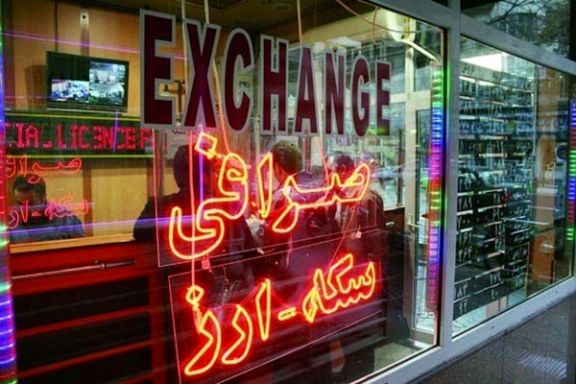
A foreign currency exchange outlet in Tehran, Iran. FILE PHOTO

Iran’s deteriorating economic situation under heavy US sanctions have become a daily subject of discussion in the country, even in government-controlled media.

More pundits and economists warn that the country cannot continue in this manner a few more months, with some openly saying that talks with the United States are an urgent matter, while others implicitly convey the same message.

Ali Bigdeli, a respected professor of politics in Tehran told Fararu website on Wednesday that Iran should avoid making new demands in talks with the West over its nuclear program. He was commenting about remarks by Foreign Minister Hossein Amir-Abdollahian who on October 2 told the state television that while in New York last month he had refused to meet with US officials demanding that Washington unfreeze $10 billion of Iran’s assets.

Bigdeli said the important issue is a return to the talks in Vienna, which Iran hass suspended since June. He added that $10 billion is a small issue compared with the much larger gain awaiting Tehran if it reaches a deal with the West.

Since 2018, US banking and oil export sanctions have left Iran with very little income in foreign currency, forcing the government to print money which has led to almost 50 percent annual inflation, and impoverished millions of people.

Bigdeli said that the United States and Europe appear to be ready for a deal and overall, Iran also seems to have moderated its demands. Otherwise, he said, the West will not make any new concessions. Even in current circumstances, he said, any deal would be based on a step-by-step approach of reducing sanctions in return for Iran to giving up its uranium enrichment and returning to the requirements of the Joint Comprehensive Plan of Action (JCPOA).

A financial analyst, Maysam Radpur told Khabar Online website said Iran’s Central Bank is no longer able to control the national currency. The US dollar has hit 280,000 rials, rising 20 percent since May and unlike in the past when the central bank had foreign currency reserves to have an impact on the market, now it can no longer play a role. She added that the Iranian rial will further lose its value.

In answer to whether a nuclear deal would help strengthen the Iranian currency, Radpur expressed doubt. She argued that when the 2015 nuclear agreement was reached, the rial gained just 10-15 percent, while there were much higher hopes about the effects of the deal at that time than there is now.

The financial analyst said she believes that in case of an agreement over the nuclear issue Iran would increase its crude oil exports and the central bank would be able to stabilize the rial, however, there is no expectation in the local market that the currency could recoup its losses.

The rial has fallen from around 35,000 to the dollar in 2017 to 280,000 now.

“A nuclear agreement can postpone the impact of long-term economic pressures, and even if the rial gains, it would only be a 10-20 percent uptick,” Radpur said.


Most Viewed

Ideology may be fading in Iran, but not in Kashmir's ‘Mini Iran'
1
INSIGHT

Ideology may be fading in Iran, but not in Kashmir's ‘Mini Iran'

2
INSIGHT

Hardliners push Hormuz ‘red line’ as US blockade tests Iran’s leverage

3
VOICES FROM IRAN

Hope and anger in Iran as fragile ceasefire persists

4

Iran International says it won’t be silenced after London arson attack

5

US sanctions oil network tied to Iranian tycoon Shamkhani

Banner
Banner

Spotlight

  • Hardliners push Hormuz ‘red line’ as US blockade tests Iran’s leverage
    INSIGHT

    Hardliners push Hormuz ‘red line’ as US blockade tests Iran’s leverage

  • Ideology may be fading in Iran, but not in Kashmir's ‘Mini Iran'
    INSIGHT

    Ideology may be fading in Iran, but not in Kashmir's ‘Mini Iran'

  • War damage amounts to $3,000 per Iranian, with blockade set to add to losses
    INSIGHT

    War damage amounts to $3,000 per Iranian, with blockade set to add to losses

  • Why the $100 billion Hormuz toll revenue is a myth
    ANALYSIS

    Why the $100 billion Hormuz toll revenue is a myth

  • US blockade targets Iran oil boom amid regional disruption
    ANALYSIS

    US blockade targets Iran oil boom amid regional disruption

  • Iran's digital economy battered by prolonged blackout
    INSIGHT

    Iran's digital economy battered by prolonged blackout

•
•
•

More Stories

US Appears To Be Asking Seoul To Release Iran's Frozen Funds

Oct 7, 2021, 10:40 GMT+1

US Special Envoy for Iran held spoke Thursday with a South Korean diplomat to discuss cooperation over negotiations to restore the 2015 Iran nuclear deal.

The South Korean news agency Yonhap issued a brief report on Robert Malley’s discussion with First Vice Foreign Minister Choi Jong-Kun but provided no details about how South Korea can help in the process of talks with Tehran.

Two South Korean banks hold $7 billion of Iran’s funds from the time when Seoul was purchasing oil from Tehran before full US sanctions on Iran’s crude exports were imposed in May 2019.

Iran has been hinting that the United States should release frozen Iranian funds before it returns to the talks. Iran’s Foreign Minister Hossein Amir-Abdollahian told Iranian state television on October 2 that he refused overtures to meet with US officials while he was attending the UN General Assembly in New York in September, asking that Washington should first unfreeze $10 billion.

It is not clear if Malley’s conversation with the South Korean diplomat was related to the issue of the frozen funds, or whether the US intends to release them to convince Iran to return to the Vienna negotiations. Malley asked for South Korea to play a “constructive” role in efforts to resume the negotiations.

However, Choi reiterated South Korea’s willingness to provide support necessary for the resumption of the nuclear talks "in consideration of the importance of Seoul-Tehran relations,” Yonhap quoted the foreign ministry as saying.

Iran left the Vienna multilateral nuclear talks aimed at restoring the 2015 nuclear deal, JCPOA, in June, saying its new president needed time to form a government, but has so far not set a date for its return.

The United States, the United Kingdom, France and Germany that have been negotiating with Iran since April have warned that time is running out for fruitful talks as Iran continues to enrich uranium and advances its nuclear program that would make the revival of the agreement impossible.

Washington and its European allies have said they will make no new concession to Tehran until it returns to the talks based on what has so far been offered by the West.

Blinken Says US And Russia Have Shared View On Restoring Iran Nuclear Deal

Oct 7, 2021, 08:19 GMT+1

US Secretary of State Antony Blinken has again warned in Paris that time is running out for reaching an agreement on restoring the nuclear agreement with Iran.

Blinken said on Wednesday that he has spoken with his Russian counterpart, Sergei Lavrov, on restoring Iran's nuclear deal with the world powers and that Moscow and Washington had a shared interest restarting talks as soon as possible.

"We had an opportunity to compare notes on where we stand and where we hope to go," Blinken said at a news conference.

Lavrov said that talks to restore the deal "should be resumed as soon as possible." But Lavrov stressed that the world wants the US to “return to the obligations of the nuclear deal” and in reference to US sanctions, stop the "illegal restrictions on Iran and all of its trading partners," he said.

"The United States and Russia, I think, (are) sharing an interest in seeing a mutual return to compliance with the JCPOA … We had an opportunity to compare notes on where we stand, and where we hope to go," Blinken said at a press conference in Paris.

Iran Appoints Financial Functionary As Central Bank Chief

Oct 6, 2021, 11:51 GMT+1

The government of President Ebrahim Raisi on Wednesday approved the appointment of a 43-year-old economic functionary as Chairman of Central Bank of Iran (CBI).

Ali Salehababdi is now another younger member of Raisi’s team. He was during the revolution in Iran, which overthrew the monarchy and established the Islamic Republic.

Although Iran’s central bank does not have the independence that many other central banks around the world enjoy, its chairman can still have an input in economic decisions such as the extent of the money supply and interest rates.

Salehabadi, who was appointed as the first chairman of Iran’s securities and exchange commission when he was 28, has a PhD from Tehran University in “financial management” according to local media. He also held other positions in the quasi-governmental financial system, such as chairman of the state-owned Export Development Bank of Iran (EBDI) since 2014.

The bank was sanctioned by the United States in 2008, for violating United Nations sanctions in “providing or attempting to provide financial services to Iran's Ministry of Defense and Armed Forces Logistics (MODAFL).”

Salehabadi is yet another member of president Raisi’s team, along with several others, who have been either sanctioned in person or associated with sanctioned entities. Raisi, himself, has been sanctioned by the Trump administration.

Local media in Tehran said there are expectations that Salehabadi would lower interest rates and boost the Tehran stock market, which has a checkered history of government manipulation. In 2020, the market index grew to 2 million units encouraged by the government and then fell by 50 percent, wiping out the savings of many small investors, who had flocked to the exchange to protect their capitals from depreciation of the local currency against the dollar.

Iran has been printing money to finance government operations since the United States imposed sanctions in 2018, banning crude oil exports. This led to a huge growth in liquidity and a 50-percent inflation rate.

The only economic salvation for Iran would be an agreement with the United States over its nuclear program and other issues and lifting of economic sanctions.

US Still Committed To Iran Diplomacy But Has Options If It Fails -Biden Aide

Oct 5, 2021, 22:16 GMT+1

President Joe Biden's national security adviser told his Israeli counterpart on Tuesday that diplomacy is the best way to rein in Iran's nuclear program.

Biden senior aide Jake Sullivan also reaffirmed Biden's warning to Tehran that Washington could turn to other options if negotiations fail.

Sullivan hosted Israeli national security adviser Eyal Hulata for talks which, according to a US official, gave the two allies a chance to share intelligence and develop a "baseline assessment" of how far Tehran's nuclear program has advanced.

Under a 2015 deal, Iran curbed its uranium enrichment program, a possible pathway to nuclear arms, in return for the lifting of economic sanctions. Then-US President Donald Trump quit the deal in 2018 and the Israeli government opposes US efforts to revive it.

US experts believe the time it would take Iran to achieve nuclear "breakout" – enough enriched uranium to build a nuclear bomb – has "gone from about 12 months down to a period of about a few months" since Trump pulled out of the pact, the US official said earlier, speaking on condition of anonymity.

Iran, Israel's regional arch-foe, has consistently denied it is developing a nuclear bomb.

Sullivan in Tuesday's talks "emphasized President Biden’s fundamental commitment to Israel’s security and to ensuring that Iran never gets a nuclear weapon," the White House said in a statement.

"Mr. Sullivan explained that this administration believes diplomacy is the best path to achieve that goal, while also noting that the president has made clear that if diplomacy fails, the United States is prepared to turn to other options," it added.

Sullivan's words echoed the message that Biden gave Israeli Prime Minister Naftali Bennett during a White House meeting in August.

Tuesday's meeting of the US-Israel Strategic Consultative Group included military, intelligence and diplomatic officials and came amid stalled international diplomacy with Iran.

Western powers have been trying for weeks to get Tehran to commit to resume indirect negotiations with the United States in Vienna. The talks have been on hold since June, after hardline cleric Ebrahim Raisi was elected Iran's president, and Tehran has been vague about when it might return to the table.

US officials have declined to specify what actions are under consideration if diplomacy with Iran collapses.

Asked whether that includes military options, the senior US official, who briefed reporters ahead of Tuesday's talks, said only that "we'll be prepared to take measures that are necessary."

Behind Tehran's stalling is an attempt to gain leverage to extract more concessions when negotiations do eventually resume, some officials and analysts have said, including by advancing its uranium enrichment program.

Bennett, a far-right politician who ended Benjamin Netanyahu's 12-year run as prime minister in June, has made clear he wants Biden to harden his stance against Iran, which Israel considers an existential threat.

Iran Had Negative Investment Rate For The Past Ten Years

Oct 5, 2021, 19:19 GMT+1

The Tehran chamber of commerce in a report has said that investments in the Iranian economy have steadily declined in the past decade, reaching negative growth.

The worst declines have been from March 2019 to March 2021, as US sanctions reduced the government’s ability to invest, and the private sector was weakened by a declining economy.

In the past Iranian year ending on March 20, investments totaled $4 billion that was less than capital depreciation, leading to a 4.8 percent negative rate of investments.

As assets, such as machinery and buildings, break down or fall into disrepair capital is needed to rejuvenate infrastructure. If new investments are less than what is needed for upkeep, the result is a negative rate of investments.

In the past decade in Iran investments in machinery declined by 7.3 percent and in buildings 4 percent.

The chamber of commerce calculated that if US sanctions are lifted now, Iran would need 13 years from to return to the rate of investments it had in 2011, if it can muster a 5 percent annual economic growth rate.